



How to Fix Copper Deficiency in Cannabis: A Guide to Symptoms, Causes & Fixes
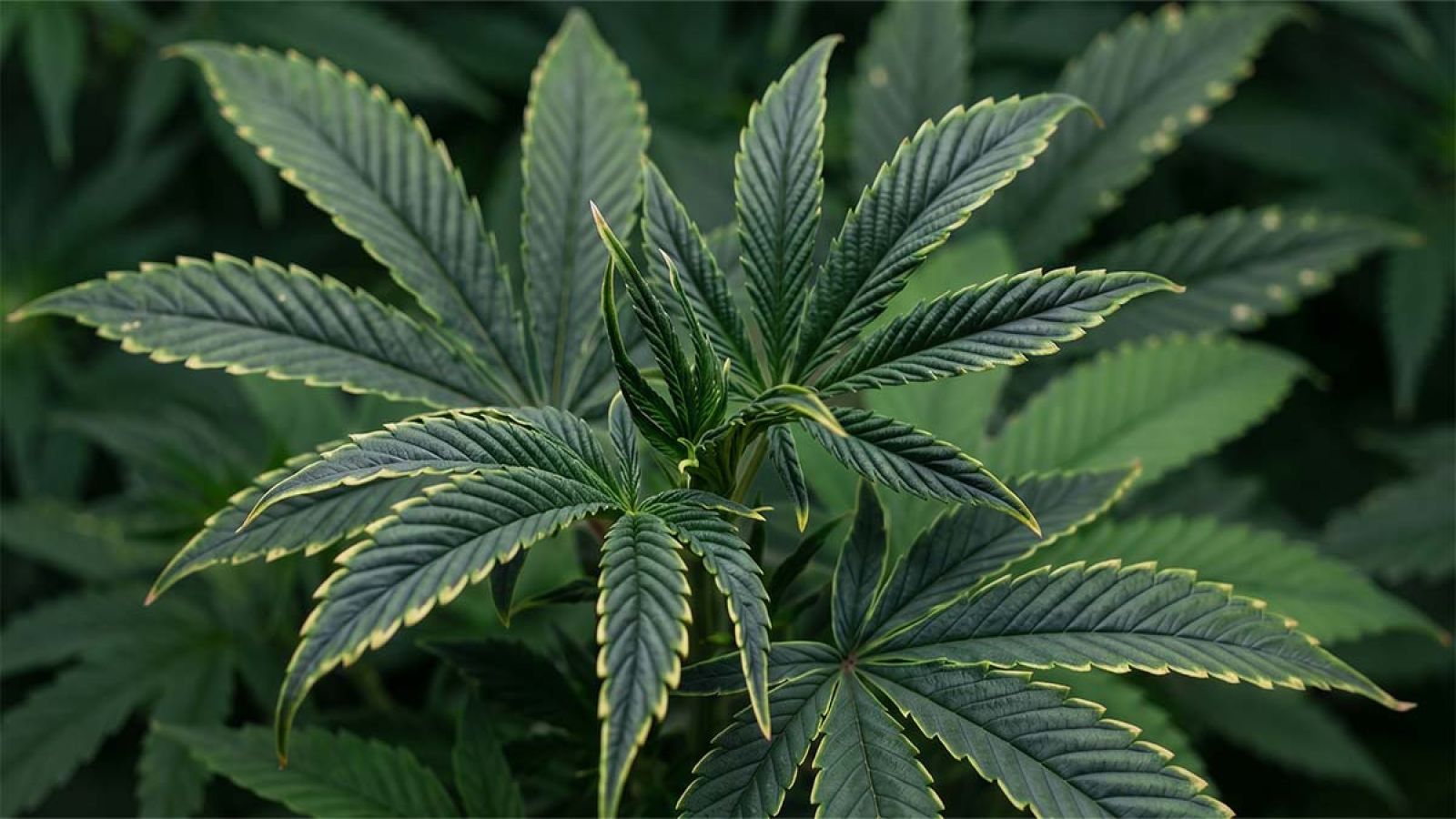
A copper deficiency in cannabis is uncommon and the cause is almost never a real shortage. In most cases, it's an out-of-range pH that locks copper out at the roots. Because it’s immobile, signs show up on the newest growth first: leaves look limp and distorted with dark bluish-purple hues, a metallic sheen, and yellowing tips and margins. During flowering, bud growth also stalls.
This guide covers copper deficiency symptoms, causes, lookalike issues, and the right fixes for your growing medium, because the popular "pH your water and flush" advice gets part of it wrong.
The short version: Fixing pH lockout is the first call, but soil, coco coir, and hydro setups each require a different approach. If pH checks out, look at secondary causes: RO or filtered water, mineral-poor media, organic-matter binding, competing nutrients, or overwatering, each with its own fix. Once uptake is restored, new growth should come in green within several days.
What Is a Copper Deficiency in Cannabis?
A copper deficiency in cannabis develops when the plant can't absorb enough copper (Cu), a trace micronutrient it needs in small amounts for photosynthesis, enzyme function, and healthy flowering. Copper is low-mobility, so the plant can't move it from old leaves to new ones. That’s why symptoms show up on young top growth and stay put.
Copper deficiency is a genuine problem - it can cause severe yield loss if you don’t correct it before flowering. But it's relatively rare, usually traced back to an uptake issue, not an actual lack of copper. That’s also why it can be easy to misread: a cannabis plant surrounded by copper it can't reach looks the same as one that's actually short on it.
So your first job is to read the signs correctly, and the second is to understand why copper isn't getting in before you move on to fixing the problem.
What Are the Signs of Copper Deficiency in Weed Plants?
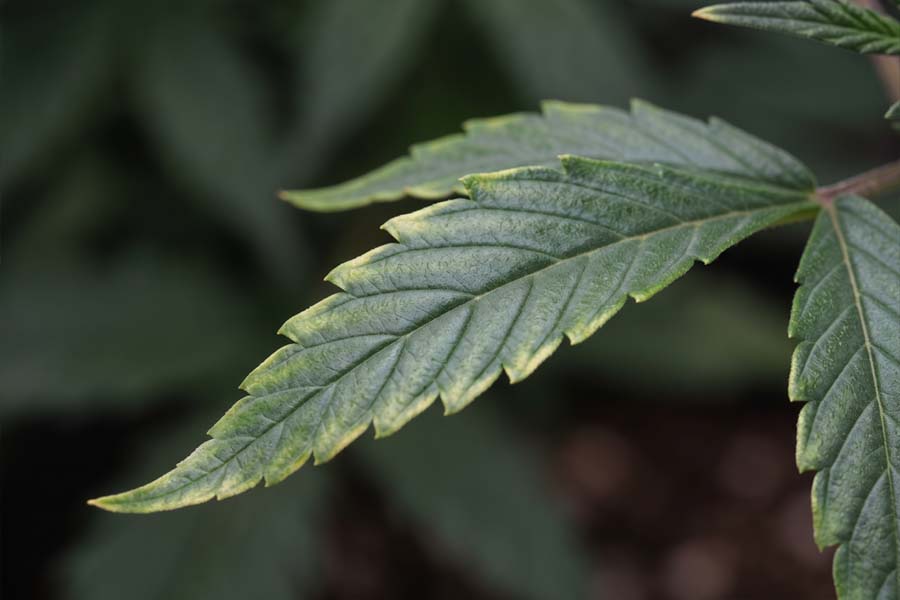
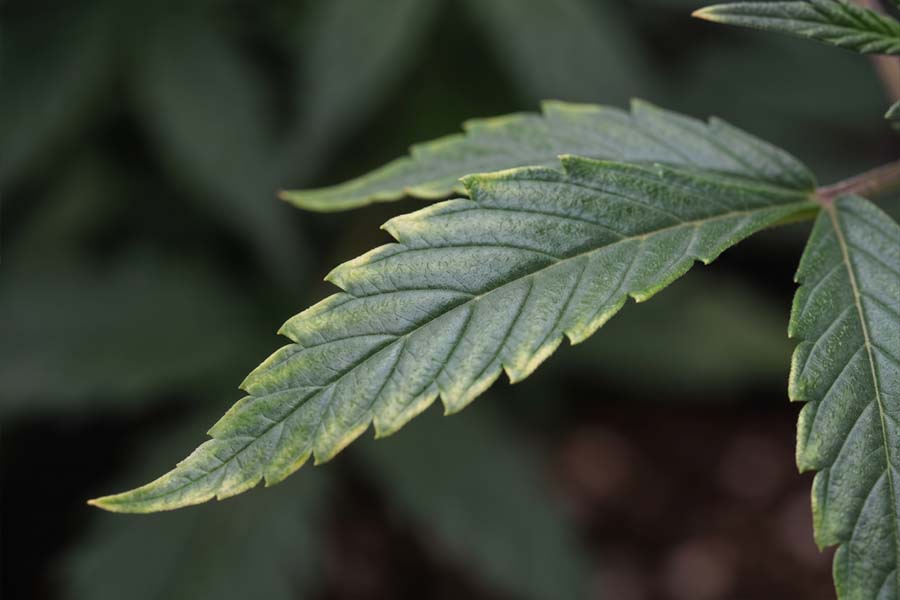
Copper deficiency up close - pale tips and a metallic sheen, not the brown crisping of nutrient burn.
A copper deficiency in weed plants shows a distinctive two-tone signature on young growth: dark bluish-purple leaf tissue set against pale white or yellowing tips and edges with a shiny metallic look. Affected leaves curl and go limp, new growth stalls, and during flowering, the buds stop ripening and building resin. Overall, the whole plant looks weak and wilted.
When these symptoms show up together, they're a much stronger signal than an isolated sign or two. Copper deficiency shares symptoms with a few other cannabis deficiencies, so matching the exact signs to the right one prevents the wrong fix.
Copper Deficiency vs Other Cannabis Problems
Copper's closest look-alike deficiencies each have their own tell: An iron shortage shows interveinal yellowing, a zinc deficiency twists and shrinks leaves, and a lack of molybdenum brings reddish tips. Another common mix-up is nutrient burn, which also starts at the tips, turning them brown and crispy.
Although most of these problems commonly trace back to the same pH lockout cause, that’s not always the case. It’s best to err on the side of caution - the wrong treatment only wastes time and exacerbates an existing issue.
| Symptom Pattern | Copper Deficiency | Iron Deficiency | Zinc Deficiency | Molybdenum Deficiency |
| Location on plant | New upper leaves | New upper leaves | New upper leaves | New upper/middle leaves |
| Leaf tissue color | Dark purplish center | Bright yellowing & green veins | Pale yellowing & green veins | Yellowing |
| Leaf tip appearance | Pale yellow or white | Yellowing spreading up from the base | Yellowing spreading up from the base | Scorched reddish tips & rolled margins |
| Leaf texture/look | Shiny metallic sheen | Bleached look | Small, twisted new leaves | Small, twisted new leaves |
| Buds | Stunted | Normal | Hard and contorted | Normal |
| Usual root causes | Too-high pH | Too-high pH | Too-high pH | Too-low pH |
Copper Deficiency vs Nutrient Burn
Nutrient burn can also cause brown, scorched leaf tips, but the pattern is different from copper deficiency. Nutrient burn usually starts at the tips and progresses inward, while copper deficiency primarily affects new growth and can cause yellow or white leaf tips alongside dark, bluish-green foliage.
Copper Spots on Cannabis Leaves vs Other Leaf Symptoms
Despite the name, copper deficiency doesn't actually cause spotting. "Copper spots" is a colloquial term for necrotic brown or bronze patches. Those kinds of spots point to a different deficiency.
Check these three before assuming copper:
-
Boron deficiency: small brown necrotic spots paired with hollow, brittle stems.
-
Manganese deficiency: tan or brown necrotic spots in the middle of the leaf, with veins staying green
-
Calcium deficiency: larger, more irregular brown blotches, paired with weak, brittle stems.
What Causes Copper Deficiency in Cannabis Plants?
Copper deficiency in cannabis usually stems from pH lockout at the roots, not from a true lack of copper. That said, secondary causes include RO/filtered water, mineral-poor media, and mixes rich in organic matter. Overwatering, root problems, and nutrient competition can also play a role in copper deficiency. Here’s how each cause can trigger a shortage:
-
pH imbalances: Copper absorbs best in a slightly acidic root environment, so it gets chemically locked out at certain pH levels - even when it's present in the medium. Correcting pH usually restores uptake without adding copper at all.
-
RO and filtered water: Reverse osmosis and heavily filtered water remove the trace copper that tap water normally supplies. Growers who feed with RO water start from zero on copper, so if their nutrients don't replace it, a real shortage can develop.
-
Mineral-poor media: Coco, rockwool, perlite, and pure hydro setups have no geological source of copper, unlike mineral soils that carry trace amounts from parent rock. With no natural reserve to fall back on, growers using these media rely entirely on their nutrient line to supply enough copper.
-
Mixes with peat and high organic matter: Peat and high organic-matter mixes bind copper tightly to charged sites in the decomposed material, which reduces the amount of copper available for uptake. This applies to living soil and synthetic-fed peat mixes alike.
-
Competing nutrients and minerals: Feeds too high in phosphorus, nitrogen, zinc, or iron can suppress copper uptake. Elevated aluminum, while not a plant nutrient itself, has the same competing effect. This runs both ways too, since excess copper can trigger a secondary iron or zinc deficiency in return.
-
Overwatering: Waterlogged, oxygen-starved roots can't move nutrients efficiently, so copper stalls at the root wall even when pH and feed levels are correct. Copper's strong binding quality means it's less prone to leaching, but the same waterlogging that starves roots of oxygen can flush out weakly-bound reserves over time.
How Do You Fix Copper Deficiency in Cannabis?
To fix copper deficiency in cannabis, correct your root-zone pH first, since that accounts for most cases. If symptoms persist, the next step depends on the secondary cause: your water source, growing medium, competing nutrients, or root health. Flushing only comes into play if salt buildup is confirmed. It's a separate step, not the default fix.
The popular advice to ‘pH your water and flush’ gets the direction right but the method wrong. It collapses three different growing mediums into one instruction, and it treats flushing as a cure rather than the salt-clearing step it actually is.
The correction itself is a clean sequence:
-
Confirm it's a copper deficiency.
-
Test pH and EC/TDS to check your medium’s pH range and whether there’s salt buildup.
-
Flush only if salt buildup is confirmed with a high EC/TDS reading.
-
Correct pH the right way for that medium.
-
If symptoms still show up, address any secondary cause that applies.
-
Watch new growth for signs of recovery.
Match Your pH Target to Your Growing Medium
Your correct pH target depends on whether you grow in soil, coco, or true hydro. Each medium holds and releases pH differently, so a single "correct range" doesn't fit all three. Use the right pH target for your setup:
|
Growing medium |
Ideal pH |
Acceptable range |
|
Soil |
6.0–6.3 |
5.5–6.5 |
|
Coco |
5.8–6.2 |
5.6–6.4 |
|
Hydro (DWC, NFT, rockwool, LECA) |
5.8–6.2 |
5.6–6.4 |
Hitting the ideal band gives copper the best shot at uptake, while the acceptable range is your working margin before problems start. If your readings sit outside the acceptable range, pH is the most likely reason copper isn't reaching the cannabis plant.
How to Correct pH the Right Way for Your Setup
Correcting pH works differently in living soil, coco, and hydro, because each medium handles pH on its own terms. Getting this right is what separates a real fix from the water-pH shortcut that doesn't hold up.
In organic or living soil, the root-zone microbes regulate pH toward what the plant needs, so you generally don't pH your water at all and you don't reach for pH Up/Down. Genuine out-of-range soil is corrected with amendments — calcium carbonate or lime to raise pH, elemental sulfur plus acidic materials to lower it — and these act slowly over days to weeks.
Input water pH has only a small, temporary effect on soil; what actually moves soil pH over time is water alkalinity (carbonates and bicarbonates), not the pH number you feed.
But there’s one exception: if you're feeding synthetic salt-based nutrients in soil, the microbial buffering is inhibited, so you'd pH the input like a coco or hydro grower.
In coco, mix your nutrients into the water first, then pH the finished solution to the target range, and check it frequently, usually weekly. In true hydro, adjust the nutrient solution daily to the target range, since the nutrients themselves shift the pH and the final solution is the number reaching the roots.
In short, pH Up/Down belongs in coco, hydro, and synthetic-fed soil only.
Fix the Other Copper Deficiency Causes
pH lockout explains most cases, but if your pH levels check out and symptoms persist, the fix depends on which of the other causes applies:
-
RO or filtered water: Feed your weed plants with a complete micronutrient mix or compost tea that includes copper.
-
Mineral-poor media (coco, rockwool, perlite, hydro): Confirm your base nutrient line includes copper at label strength. If not, you’ll also need to supplement with a full micronutrient mix.
-
Organic-matter-rich mixes (peat, living soil): A chelated copper source, such as copper sulfate or a chelated copper foliar feed, gets past that binding more reliably than increasing the dose of an unchelated source.
-
Competing nutrients: If phosphorus, nitrogen, zinc, or iron are running above label strength in your feed, dial them back. Wait a couple of days to see if any copper shortage signs still show up before adding more copper.
When to Flush Out Salt Buildup (and When Not To)
Only flush when a salt buildup is confirmed by an EC or TDS reading above your input reading. But treat it as a warning signal for drift, not a specific target to start from. When both salt buildup and pH drift apply, the order is flush first, then correct pH, then feed only if a true copper shortage remains after secondary causes are ruled out and uptake is restored.
When you do flush, use plain, pH'd water with no nutrients mixed in, and run it until roughly 30% drains out.
Flushing doesn’t correct pH or cure a deficiency, so keep it separate from pH correction, which solves a different problem. Flushing clears excess salts; pH correction is an ongoing feed adjustment you manage over time.
Protect the Roots and Watch for Recovery
Regardless of pH, damaged or overwatered roots can't move copper efficiently, so protecting the root zone is part of the fix. Water only once the top inch of the medium has dried, so roots stay oxygenated instead of soaked.
After you correct pH and address any salt buildup or secondary cause, watch the new growth rather than the damaged leaves. The old copper-starved leaves may not fully return to green, and that's expected from a low-mobility nutrient. You know you're in the clear when fresh leaves come in healthy and symptoms stop appearing on new growth.
Can You Give Cannabis Too Much Copper? (Copper Toxicity)
Yes, copper toxicity is possible in cannabis, though it's rare, and a severe overdose can kill the plant quickly. This is exactly why the fix leads with pH rather than with copper supplements.
Most deficiencies are lockouts, and dumping copper onto a plant that already has enough risks pushing it from one problem into a worse one. Correct the pH, restore uptake, and only consider adding copper if a genuine shortage remains after the root zone is dialed in.
Frequently Asked Questions
Does Copper Deficiency Stop Cannabis Buds From Maturing?
Yes, an uncorrected copper deficiency can stall bud development, because copper is essential to flowering itself. It drives maturation and reproductive development, so when it's short, bud growth stalls significantly. Flowers ripen slowly or stop maturing altogether. That’s why early and mid-flower deficiencies deserve a fast response.
How Do I Fix Copper Deficiency in Plants Other Than Cannabis?
In most plants, a copper deficiency is usually a pH-uptake problem, not a true shortage, so correct pH according to your grow medium's ideal range first. Living soil buffers itself and is adjusted with amendments, while coco and hydro setups need the nutrient solution pH'd. Add copper only if a genuine shortage remains after uptake is restored and any other secondary causes are ruled out.
What are the Best Sources of Copper for Plants?
Copper sulfate and chelated copper (for foliar feeding) are the best and most reliable sources of copper for plants. Chelated copper resists getting bound up by organic matter. Complete micronutrient formulas with copper work well too. Compost, greensand, and kelp concentrates are slower, natural options. Remember to confirm pH is in range first before adding copper.
How Can I Increase the Copper Content in My Soil?
You can increase the copper content in your soil by working in compost, greensand, or kelp meal for a slow, steady supply. For a faster fix, use a foliar spray with copper sulfate or chelated copper. If you're feeding synthetically, a micronutrient mix containing copper covers it too. Most low-copper signs point to pH lockout, not a true shortage. Soil pH should be in 6.0–6.3 range (with 5.5–6.5 being the hard limit) for your plant’s roots to absorb iron.