



Cannabis Iron Deficiency: Fixing Yellow New Growth and pH Lockout
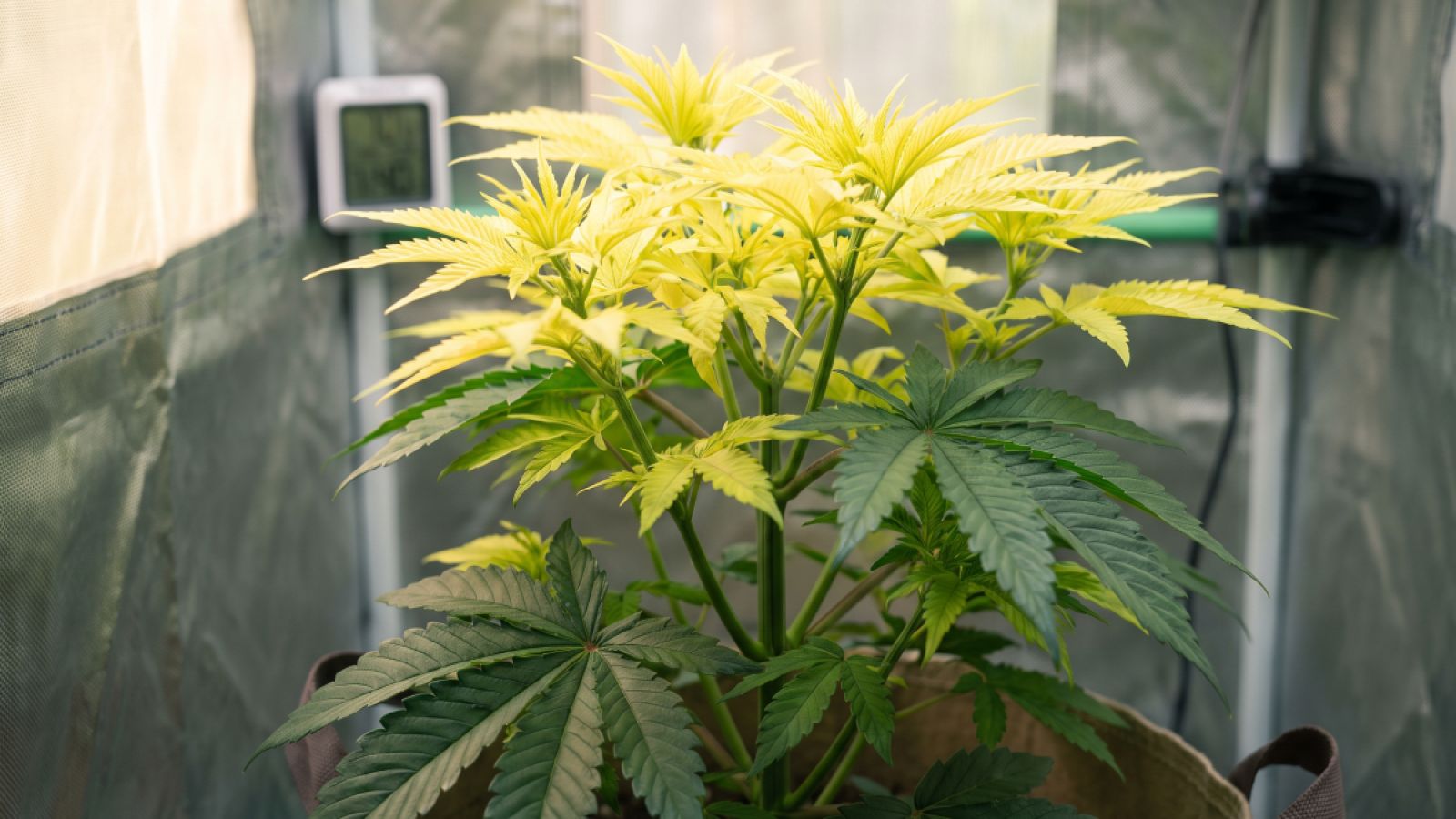
Iron deficiency in plants shows up first on the newest growth, and cannabis follows the same rule. When the top leaves turn bright yellow while the lower leaves stay green, iron is almost always the cause.
The twist most growers miss is that the plant usually has plenty of iron already, locked out by the wrong root-zone pH so the roots can't pull it in. Fixing the pH matters far more than adding more iron, and the right way to fix it depends on whether you grow in soil, coco or hydro.
The quick version: before you add anything, check your root-zone pH for your medium. Soil sits best at 6.0–6.3 (5.5–6.5 is workable), while coco and hydro sit best at 5.8–6.2 (5.6–6.4 is workable). Correct the pH the right way for your substrate first, and only add iron if the new growth stays yellow once the pH is dialed in.
What Is Iron Deficiency in Cannabis Plants?
Iron deficiency in cannabis is a shortage of usable iron at the growing tips, and it announces itself on the newest top growth first.
Iron drives chlorophyll production, so when the plant can't get enough of it, the youngest leaves lose their green and fade toward yellow or near-white. The pattern is distinctive because iron behaves as an immobile nutrient, meaning the plant can't shuffle it around once it's inside.
That single trait explains why the damage always lands on new growth instead of old leaves.
Why Iron Deficiency Hits New Growth First
Because iron stays put wherever the plant first deposits it, a shortage lands squarely on the leaves forming at the top.
Mobile nutrients like nitrogen get pulled out of aging leaves and sent up to feed fresh growth when supplies run short. Iron doesn't work that way, so a shortage starves the newest leaves while the older ones keep the green they already built. That's why the yellowing climbs the plant from the top down rather than the bottom up.
What Does Cannabis Iron Deficiency Look Like?
The signature that marks cannabis iron deficiency apart is the vein contrast: the blade fades to bright yellow or near-white while the fine veins stay green. This pattern is called interveinal chlorosis, which simply means the tissue between the veins loses color while the veins hold their green.
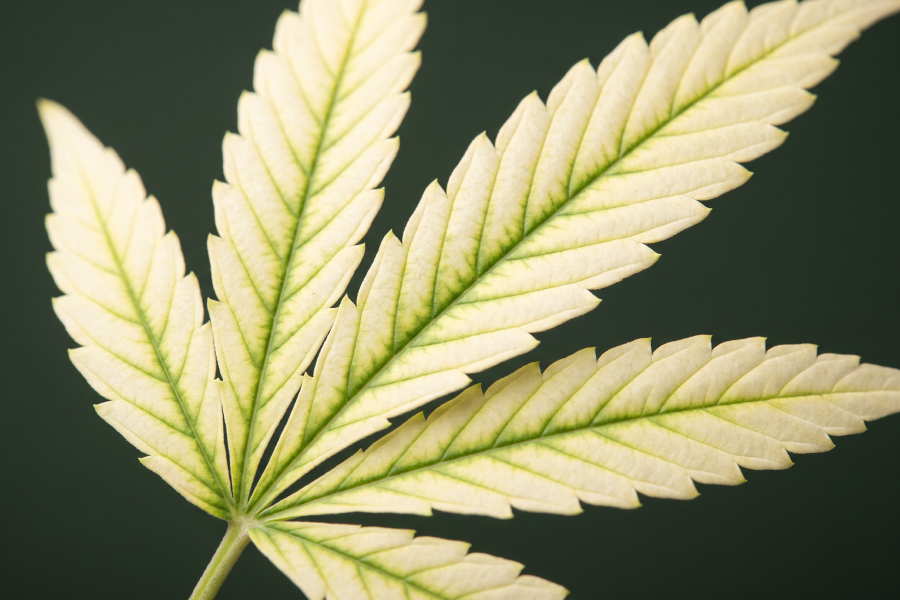
Interveinal chlorosis: the blade yellows while the veins stay green - the signature sign of iron deficiency.
What sets iron apart from a passing pale patch is how clean and consistent that contrast stays across every new leaf. It shows on the top colas and freshest fan leaves first, so if the yellowing is sitting on the lower, older leaves instead, iron is probably not your problem.
Early Signs vs Advanced Iron Deficiency in Cannabis
Early iron deficiency yellows the base of new leaves while the veins stay sharply green.
At this stage the color shift is subtle and easy to mistake for normal new-leaf paleness. As it advances, the whole new leaf turns pale yellow and can bleach toward white, and the sharp green veining fades as the shortage deepens.
Catching it at the early stage means a pH correction alone usually turns things around.
Is It Iron Deficiency or a Different Nutrient Problem?
Iron deficiency is distinguished from other deficiencies mainly by where the yellowing appears and whether spots or distortion come with it. Several nutrient problems look similar at a glance, and treating the wrong one wastes time while the plant keeps declining.
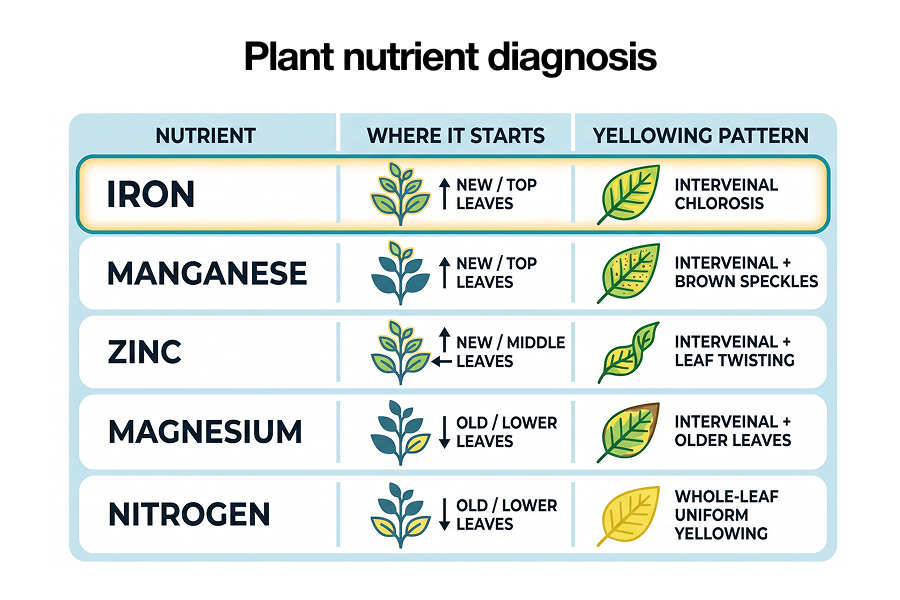
Read leaf position first: iron hits new/top growth, while magnesium and nitrogen start on old/lower leaves.
Read position on the plant first, then check for spots or leaf distortion to confirm.
| Trait | Iron | Manganese | Zinc | Magnesium | Nitrogen |
| Where it starts | New / top growth | New / top growth | New / top growth | Old / lower leaves | Old / lower leaves |
| Yellowing pattern | Interveinal, veins green | Interveinal plus brown speckles | Interveinal plus twisting | Interveinal, veins green | Whole-leaf uniform |
| Leaf size or shape change | None | None | Small, distorted new leaves | None | None |
| Most common real cause | pH lockout | pH lockout | pH lockout | Low Mg or cal-mag need | True shortage |
Iron vs Manganese Deficiency in Cannabis
Manganese starts on new growth just like iron, but it scatters brown necrotic speckles across the yellowing tissue. Those spots are the tell: their presence points to manganese deficiency, while a clean, spot-free yellow points back to iron.
Iron vs Zinc Deficiency in Cannabis
Zinc yellows the top of the plant too, but it also stunts and twists the new leaves as they emerge. That distortion is the giveaway: warped, undersized leaves point to zinc deficiency, whereas iron leaves their shape untouched.
Iron vs Magnesium Deficiency in Cannabis
Magnesium shows the same interveinal yellowing, so growers reach for iron when the real culprit is lower down. Check which leaves went first: magnesium climbs from the older bottom leaves upward, so yellowing there points to magnesium deficiency, while iron keeps its damage on new growth.
Iron vs Nitrogen Deficiency in Cannabis
Nitrogen is the clearest opposite of iron on the plant: it fades the whole older leaf from the bottom upward, veins included. Those two traits together rule iron out, since iron holds its veins green and keeps its damage on new growth at the top.
Nitrogen is also the most common genuine shortage of the group, because plants burn through it fast, so a real feed adjustment often fixes it. Iron, by contrast, is usually present and only locked out, which points you toward pH rather than more nutrients.
Iron vs Copper Deficiency in Cannabis
Copper breaks the pattern by concentrating at the leaf tips and margins rather than spreading across the whole new blade, and it often brings wilting with it. So when the trouble is edge-first and the leaves look limp, suspect copper deficiency; iron, by contrast, colors the entire young leaf and leaves it firm.
What Causes Iron Deficiency in Cannabis?
Iron deficiency in cannabis is caused far more often by pH lockout than by a real iron shortage in the feed. In most gardens the iron is already there, dissolved in the substrate or the reservoir, but the root-zone pH has drifted to a point where the roots can't absorb it. Chasing the symptom with more iron rarely helps when the real problem is a number on your pH meter.
The cause almost always falls into one of three buckets:
- pH lockout blocks iron uptake even when iron is present. This is the common case.
- Competing micronutrients crowd iron out at the root even when pH is correct. This is uncommon but often missed.
- A true shortage happens only when the feed itself lacks available iron. This is rare.
- Salt buildup raises root-zone EC and drifts pH until iron stops moving. This overlaps with lockout.
How pH Lockout Blocks Iron Uptake
Root-zone pH controls whether the iron in your substrate can enter the plant at all. Iron stays available to the roots inside a fairly narrow pH band, and once the root zone drifts out of that band the iron shifts into forms the plant can't absorb. In practice the drift is almost always upward, since a root zone creeping too alkaline is the usual trigger for iron lockout.
The iron hasn't gone anywhere, it's simply locked in a chemical state the roots can't use, which is why a pH correction alone often greens up new growth without a single drop of added iron.
How Competing Micronutrients Trigger Iron Deficiency
Even when pH is correct, an oversupply of manganese, zinc, copper, calcium or phosphorus can crowd iron out at the root by competing for the same uptake pathways. Manganese has the most directly documented effect: too much manganese in the medium can trigger a genuine iron deficiency on its own, not just make one more likely.
This is a distinct cause from pH lockout, correcting pH won't fix it if the real issue is a nutrient imbalance elsewhere in the feed.
When Iron Deficiency Is a True Shortage
A true iron shortage occurs only when the feed itself doesn't supply enough available iron in the first place.
This is uncommon in cannabis because most nutrient lines already include iron in a chelated form, meaning it's bonded to a carrier that keeps it plant-available across a wider pH range.
If your pH is correct and the new growth still yellows after several days, then a genuine shortage becomes worth considering. Only at that point does supplementing iron make sense.
How Salt Buildup Triggers Iron Lockout
Salt buildup raises root-zone EC and drifts pH until iron stops moving into the roots. EC, or electrical conductivity, measures the concentration of dissolved salts, and it climbs when unused nutrients accumulate faster than the plant takes them up.
As that concentration rises it can push the effective pH out of range and squeeze out iron uptake. Salt buildup is worth checking whenever pH looks correct on paper but the plant still shows lockout symptoms.
How Do You Fix Iron Deficiency in Cannabis?
You fix iron deficiency by matching the correction method to your substrate, because soil, coco and hydro behave differently. Getting this right matters more than any product you could add, so identify your medium before you touch the pH.
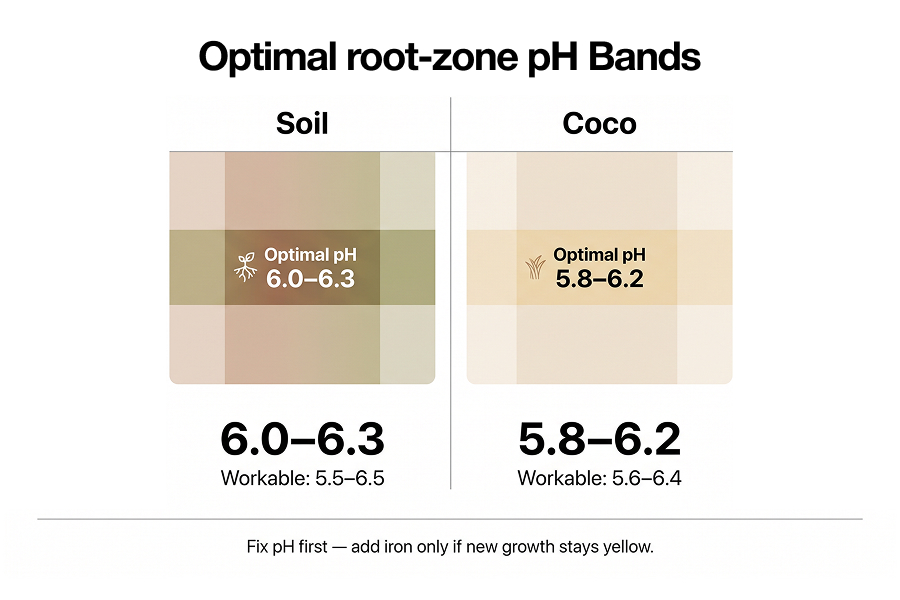
Fix root-zone pH first - soil 6.0–6.3, coco and hydro 5.8–6.2 - and only add iron if new growth stays yellow.
Match your fix to your medium:
- Soil (organic or living): let the soil regulate its own pH; correct genuine drift with slow amendments.
- Coco: pH the full nutrient solution to 5.8–6.2 at every feed, checked weekly
- Hydro: pH the final nutrient solution to 5.8–6.2 and check it daily.
Fixing Iron Deficiency in Soil
Organic living soil regulates its own pH through root-zone microbes, so you generally don't pH your water at all. Adjusting it mostly just disrupts that balance. What actually moves soil pH over time is water alkalinity, the carbonates and bicarbonates in your water, not the pH number you feed.
When soil pH is genuinely out of range, you correct it with amendments rather than liquid pH adjusters: calcium carbonate or garden lime raises pH, elemental sulfur with acidic materials lowers it, and both act slowly over weeks.
The one exception is synthetic salt-based feed, which inhibits the microbial buffering. If you feed synthetics in soil, pH your input like a coco or hydro grower would, into the 6.0–6.3 range that suits soil (5.5–6.5 is workable).
Fixing Iron Deficiency in Coco Coir
Coco growers mix nutrients into the water first, then pH the full solution into the 5.8–6.2 range at every feed (5.6–6.4 is acceptable).
Coco is an organic soilless medium that doesn't buffer pH the way living soil does, so the number you feed is close to the number reaching the roots. Always mix your nutrients in before you check pH, because the nutrients themselves shift the reading.
Check the solution frequently, usually about once a week, and adjust before each feed to hold the target range.
Fixing Iron Deficiency in Hydroponics
Hydroponic growers adjust the nutrient solution daily to a 5.8–6.2 target (anywhere in 5.6–6.4 still works), because the nutrients themselves shift pH in the reservoir. In systems like DWC and NFT, or with rockwool and LECA, the roots sit directly in that solution, so its pH is the number that governs iron uptake.
pH the final mixed solution, never the plain water, since adding nutrients changes the reading every time. Daily checks catch the natural drift a live reservoir develops before it locks out iron.
Salt Buildup and Flushing vs pH Correction
Flushing and pH correction solve two different problems and should never be treated as one step. A flush clears accumulated salt out of the root zone, while pH correction is an ongoing feed adjustment that keeps nutrients available.
Rolling them into a single "flush and re-pH" move is one of the most common mistakes in deficiency advice, and it muddies what you actually fixed.
How to Confirm Salt Buildup Before Flushing
Salt buildup is confirmed by a runoff EC or TDS reading well above what you fed in, not by guessing. TDS, total dissolved solids, is another way to express the same salt concentration EC measures. If your runoff reads far higher than your input solution, salts are accumulating and a flush is justified.
If the reading is close to your input, there's no buildup to flush, and reaching for a flush anyway just stresses the plant.
The Correct Order: Flush, Correct pH, Then Feed
The correct sequence runs flush first, then pH correction, then a feed if a real shortage remains. When salt buildup and pH drift both apply, clear the salts first with plain, pH-adjusted water and no nutrients mixed in. Run it through until roughly 30% of what you poured drains out.
Once the root zone is clear, bring your feed pH into range and resume normal feeding. Treat runoff readings as a warning light that tells you pH or salts have drifted, not as a dial to chase by adjusting and retesting until the number lands.
Can You Give Cannabis Too Much Iron?
Yes, cannabis can take up too much iron, usually when a grower over-corrects a deficiency that was really a pH problem. This is the mirror image of lockout: where high pH makes iron unavailable, a pH pushed too low makes far more of it available than the plant needs, and the excess gets taken up.
Iron toxicity shows as dark bronze or brown spotting on the leaves, roughly the opposite of the pale yellowing a shortage causes. That is the case for fixing pH first and adding iron only if new growth stays yellow afterward.
How Long Does Cannabis Take to Recover From Iron Deficiency?
Cannabis stops producing new yellow growth within days of a corrected pH, but the leaves that already yellowed stay yellow.
Iron's immobility works against recovery here, the plant can't re-green damaged leaves by moving iron back into them. Judge your fix by the newest growth coming in, not by the older damaged leaves, which won't reverse.
If fresh leaves emerge green and stay green, the correction worked, and the old yellow leaves are simply a record of the problem you already solved.
Choosing Resilient Cannabis Seeds to Reduce Deficiency Risk
Healthy, well-bred cannabis genetics give you a stronger starting point than weak or unstable stock.
Beginning with quality cannabis seeds means a plant with good vigor and a solid root system. That makes the whole grow easier to manage while you learn to read your medium and hold a steady root-zone pH. Genetics won't override a badly locked-out root zone, but a healthy plant is more forgiving of the small mistakes every new grower makes.
Since lockout comes down to root-zone pH, no seed type resists it any better than another, so choose based on how you want to grow instead.
Autoflower seeds flower with age rather than waiting on a change in light schedule, which suits shorter grows and simpler setups. Feminized marijuana seeds are bred to grow almost exclusively into female, bud-bearing plants, sparing you the job of spotting and removing males.
Browse both ranges to find genetics that fit your space and experience level, and grow only where it is lawful under your federal, state and local rules.
Cannabis Iron Deficiency FAQ
Does Weed Have Iron in It?
Cannabis flower is not a meaningful dietary source of iron. The trace minerals in dried cannabis are far too small a quantity to affect your iron intake, and it isn't consumed in the amounts a food source would be. If you're looking to raise dietary iron, food and supplements are the relevant sources, and a doctor or dietitian can advise on those.
Can Weed Cause Anemia?
There is no established causal link showing that cannabis use causes anemia. Anemia has many recognized medical causes, and cannabis is not among the standard ones clinicians look for. If you're concerned about anemia or low iron, that's a question for a medical professional who can run bloodwork and give you a real answer.
Can THC Affect Iron Levels?
There is no reliable evidence that THC meaningfully changes the body's iron levels. Claims connecting THC to iron status don't rest on solid clinical grounding, so it's not something to plan health decisions around. Anyone worried about iron levels or a possible deficiency should raise it with a healthcare provider rather than adjusting cannabis use.
Could Yellow Leaf Tips Be Copper, Not Iron?
Yes, yellow or wilting leaf tips can point to a trace-nutrient problem other than iron. Iron concentrates its yellowing across the whole new leaf with green veins, whereas copper tends to show at the tips with some wilting. If the symptom sits at the tips rather than across the blade, copper is worth ruling out.
What pH Range Stops Iron Lockout in Cannabis?
Iron stays available inside a fairly narrow root-zone pH band that shifts by medium. Soil holds iron best at 6.0–6.3, with 5.5–6.5 still workable, while coco and hydro hold it best at 5.8–6.2, with 5.6–6.4 acceptable. Drifting above these ranges is the usual trigger for iron lockout, so they're the first thing to check.
Can I Use Chelated Iron on Cannabis?
Yes, chelated iron is the form to use if a genuine shortage remains after you've corrected pH. Reach for it only after ruling out pH lockout, since adding iron to a plant that already has plenty just risks toxicity.
Will the Yellow Leaves Turn Green Again After I Fix It?
No, the leaves that already yellowed will not turn green again. Iron can't move back into damaged leaves once they've faded, so those leaves stay yellow as a record of the problem. Watch the new growth instead, as fresh green leaves emerging is the real sign your correction worked.
Is Iron Deficiency the Same in Autoflowers and Photoperiods?
Yes, iron deficiency looks and behaves the same in autoflower and photoperiod cannabis. The symptom pattern, the pH-lockout cause and the substrate-based fix all apply identically regardless of seed type. The one practical difference is timing, since autoflowers move through their life cycle faster, so catching and correcting a lockout early matters even more.
This article is for general growing education. Grow cannabis only where it is lawful under federal, state and local rules. For health questions about iron, anemia or diet, consult a qualified medical professional.