



Cannabis Magnesium Deficiency: Fixing Yellow Veins with Cal-Mag & Epsom Salt

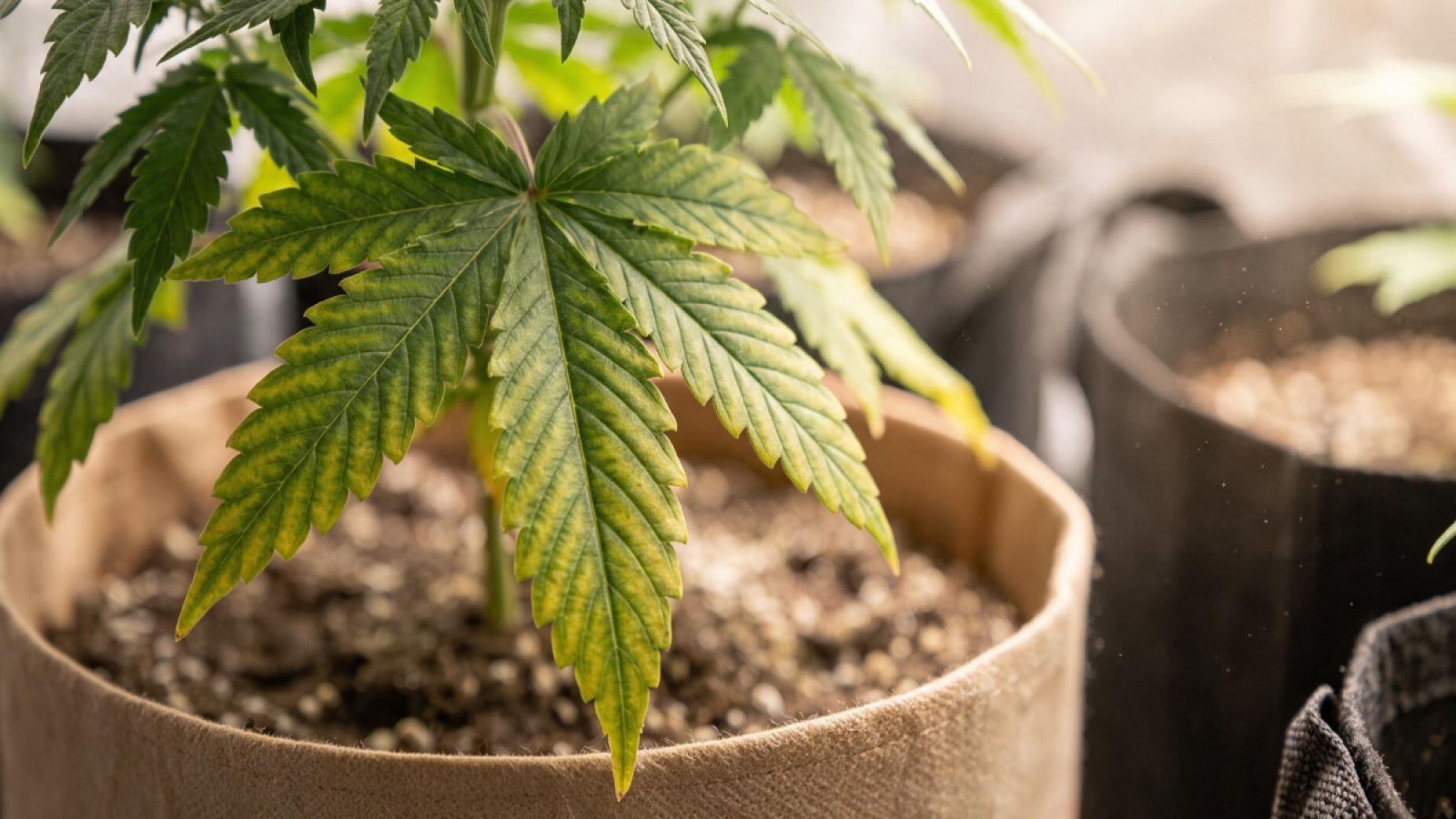
Magnesium deficiency in cannabis shows up first as yellowing between the veins of older, lower leaves while the veins stay green. It's one of the most common problems growers hit, since fast growth and heavy flowering both pull hard on the plant's magnesium reserves, and it's easily mistaken for other shortages.
Left alone, the yellowing spreads upward and flowering plants lose the leaf area they need to finish strong. Spotting the pattern early - and knowing whether it's a real shortage or a pH problem in disguise - is what separates a quick fix from a stalled grow.
In short: most cases aren't a missing nutrient at all, the magnesium is already in your feed, but drifted root-zone pH is locking it out. So the fix usually starts with correcting pH for your growing medium, then supplementing with a cal-mag product or Epsom salt only if a true shortage remains.
What Is Magnesium Deficiency in Cannabis?
Magnesium deficiency in cannabis develops when the plant can't take up enough magnesium to build chlorophyll, the pigment that keeps leaves green and drives photosynthesis. Because a magnesium atom sits at the center of every chlorophyll molecule, the leaf tissue loses its green first while the veins hold their color longest.
The deficiency is common in cannabis because fast vegetative growth and heavy flowering both pull hard on magnesium reserves.
What Does Magnesium Do for Cannabis Plants?
Magnesium powers chlorophyll production and activates the enzymes behind energy transfer and sugar metabolism in the cannabis plant. Every green leaf depends on it, because chlorophyll can't form without a magnesium atom at its core.
When magnesium runs short, photosynthesis slows, growth stalls, and the oldest leaves surrender their magnesium to feed newer growth. That relocation is exactly why the symptoms show up where they do.
What Are the Symptoms of Magnesium Deficiency in Cannabis?
Magnesium deficiency in cannabis produces interveinal chlorosis - the term for that yellowing between the veins - on the older, lower leaves first. The classic tell is a green vein network sitting inside yellowing leaf tissue, sometimes with rust-colored or brown spots as the deficiency advances.
Because magnesium is a mobile nutrient, the plant pulls it from mature leaves and sends it upward, so the bottom of the plant always shows the earliest signs.
Left uncorrected, affected leaf edges curl upward and crisp, and the yellowing climbs toward the canopy.
This pattern is what separates magnesium from other shortages. A potassium deficiency burns the leaf margins and tips brown rather than yellowing the space between the veins, which is a useful contrast when you're diagnosing an old-growth problem.
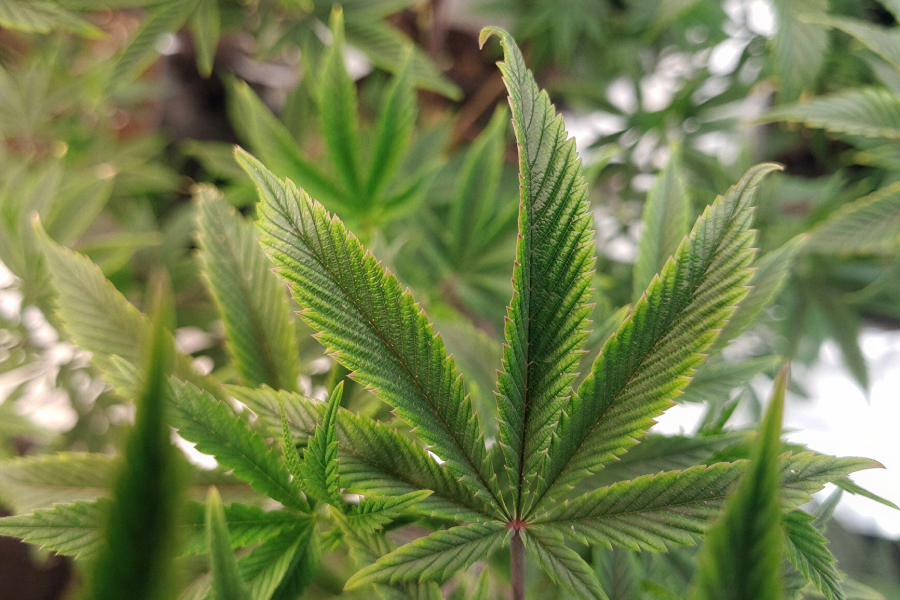
Interveinal chlorosis: green veins stand out against yellowing tissue on an older fan leaf.
Yellowing Between the Veins (Interveinal Chlorosis)
Up close, interveinal chlorosis reads as a green skeleton of veins inside a fading yellow blade, most visible when you hold the leaf up to the light. The pattern reflects how chlorophyll breaks down first in the tissue farthest from the vein's magnesium supply.
As the shortage deepens, the yellow zones develop brown or bronze flecks and the leaf feels dry to the touch.
Where Symptoms Appear First on the Plant
Symptoms start at the bottom of the plant and climb, because magnesium relocates from old leaves to feed new growth. The plant treats its lower, mature fan leaves as a magnesium reserve and drains them to keep the growing tips supplied.
This is why a yellowing base points to a mobile nutrient like magnesium, but it's the interveinal pattern that separates magnesium from a nitrogen or potassium shortage.
Catching it at this early stage makes correction faster and protects your yield.
Magnesium Deficiency During Flowering
Magnesium deficiency intensifies during flowering because bud development raises the plant's demand for the nutrient sharply.
The extra draw can expose a shortage that stayed hidden through veg, and the yellowing spreads faster once flowering begins. Correcting it promptly matters more here, since leaf loss during bloom cuts directly into the energy the plant sends to its flowers.
Keep the fix targeted: fix the pH, then supplement magnesium only if the reading confirms a real gap.
What Causes Magnesium Deficiency in Cannabis?
Magnesium deficiency in cannabis usually traces back to pH lockout rather than a true absence of magnesium in the feed. When the root-zone pH sits outside the range the roots can work in, magnesium stays chemically locked and unavailable even when it's present in abundance.
Salt buildup in the medium is the second common cause, and an actual shortage in the nutrient mix is a distant third. Diagnosing which one you're facing decides the entire correction path.
- pH lockout - the most common cause; magnesium is present but chemically unavailable.
- Salt buildup - accumulated nutrient salts in the root zone block uptake.
- True shortage - the feed genuinely lacks enough magnesium for the plant's demand.
pH Lockout — the Most Common Cause
pH lockout happens when the root-zone pH drifts out of range and strands magnesium in the medium, present but unreachable. Cannabis takes up magnesium best when soil holds a pH of 6.0–6.3 (5.5–6.5 is acceptable), and when coco or hydro solutions sit at 5.8–6.2 (5.6–6.4 acceptable).
Drift in either direction locks magnesium out, which is why interveinal yellowing so often points to a pH problem rather than an empty feed.
Iron behaves as the mirror image here: an iron deficiency yellows the newest top growth under lockout, while magnesium yellows the oldest bottom growth.
How you correct pH depends entirely on your growing medium, and the method differs enough that it earns its own section below.
Salt Buildup in the Root Zone
Salt buildup blocks magnesium uptake when excess nutrient salts accumulate in the root zone and interfere with absorption. You confirm it with a reading, not a guess: an EC or TDS measurement well above your input value means salts have concentrated in the medium.
This matters because the fix for salt buildup is a plain-water flush, which is a different action from correcting pH or adding magnesium. Treating the wrong cause wastes time and can push the plant further off balance.
Cal-Mag vs. Magnesium Deficiency: What's the Difference?
Cannabis growers often discuss calcium and magnesium together because both are secondary nutrients that plants take up in similar conditions, and a single supplement usually delivers both. A pure magnesium deficiency yellows the space between veins on old leaves, while a calcium deficiency shows as brown spots and distorted new growth up top.
The "cal-mag" framing exists because the two shortages frequently appear together, especially in coco and under heavy LED light, so growers correct them as a pair.
Sulfur can complicate the picture too, since a sulfur deficiency pales the newest leaves in a way that's easy to confuse with a mobile-nutrient shortage.
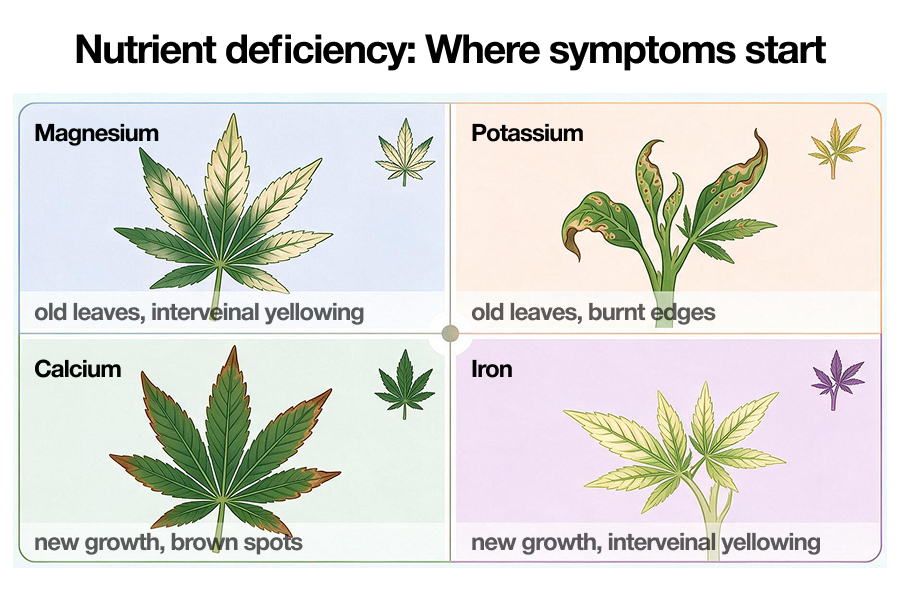
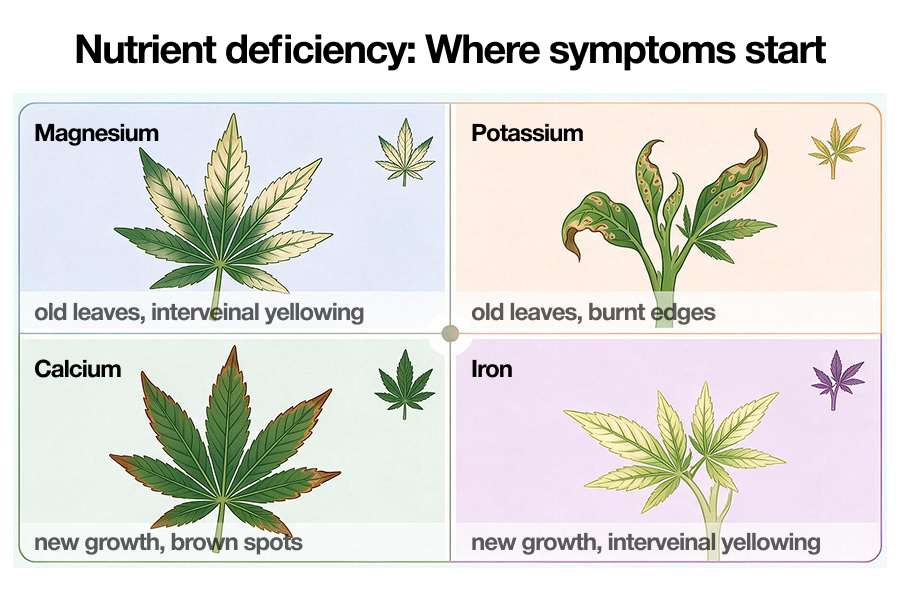
How magnesium, calcium, potassium and iron deficiencies differ by leaf location and pattern.
The table below sorts the four nutrients growers most often confuse, by where the symptom appears and what it looks like.
|
Nutrient |
Where it shows first |
Signature pattern |
|
Magnesium |
Old, lower leaves |
Yellowing between green veins (interveinal) |
|
Calcium |
New, upper growth |
Brown spots and distorted new leaves |
|
Potassium |
Old, lower leaves |
Brown, burnt leaf edges and tips |
|
Iron |
New, upper growth |
Interveinal yellowing on the newest leaves |
Reading the table top to bottom shows the pattern: mobile nutrients like magnesium and potassium hit old growth, while calcium and iron problems surface up top.
The practical takeaway: if only your old leaves are yellowing between the veins, you're dealing with magnesium. If new growth is also affected, calcium is likely in play, and a combined cal-mag product addresses both at once.
How Do You Fix Magnesium Deficiency in Cannabis?
You fix magnesium deficiency in cannabis by correcting the root-zone pH first, then supplementing magnesium only if a genuine shortage remains after the pH is back in range. Because lockout causes most cases, adding magnesium to a plant with drifted pH just concentrates unused nutrients in the medium.
The correction sequence stays consistent: confirm the cause, fix pH by your medium's method, then feed magnesium if the plant still shows need; Epsom salt when magnesium is the only shortage, a cal-mag product when calcium is short too.
Each step below covers one part of that sequence.
- Correct pH by medium - the first move, because most deficiencies are lockout.
- Epsom salt - a fast magnesium-only correction for confirmed shortages.
- Cal-mag supplement - the choice when calcium and magnesium are both short.
- Flushing - reserved for confirmed salt buildup, never a pH or deficiency fix.
Correcting pH by Growing Medium (Soil, Coco, Hydro)
pH correction works differently in soil, coco, and hydro, so match the method to your medium rather than applying one rule everywhere. The table below sets the target range for each medium before we walk through the method.
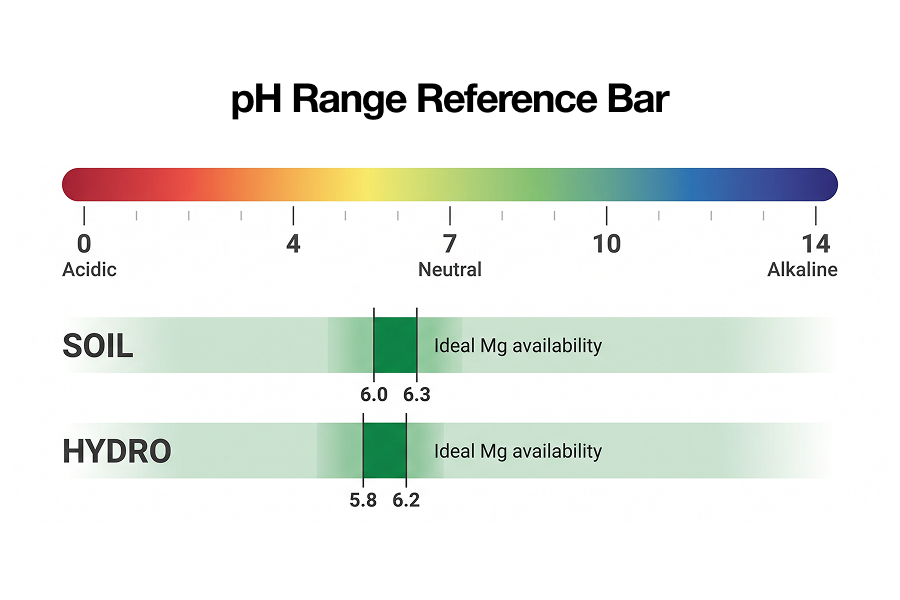
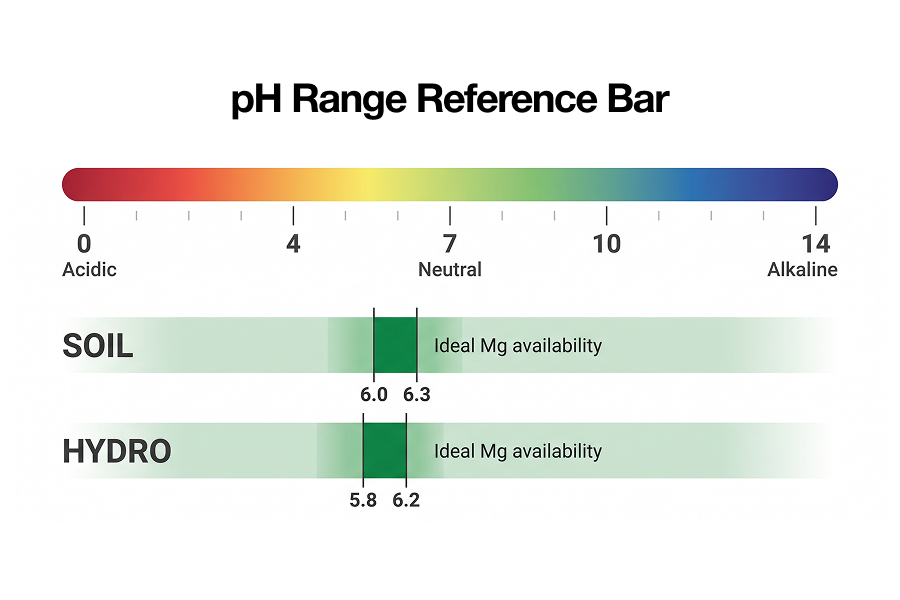
Target root-zone pH ranges for magnesium uptake in soil, coco and hydro.
|
Growing medium |
Ideal pH |
Acceptable range |
How you adjust it |
|
Soil (organic/living) |
6.0–6.3 |
5.5–6.5 |
Amendments only (lime to raise, sulfur to lower) |
|
Soil (synthetic-fed) |
6.0–6.3 |
5.5–6.5 |
pH the nutrient solution before feeding |
|
Coco |
5.8–6.2 |
5.6–6.4 |
pH the mixed solution, check weekly |
|
Hydro (DWC/NFT/rockwool/LECA) |
5.8–6.2 |
5.6–6.4 |
pH the mixed solution, adjust daily |
Those ranges are the windows where magnesium stays available to the roots. The method for holding each one differs by medium, so here's how each works in practice.
In an organic or living soil, the root-zone microbes regulate pH to what the plant needs, so you don't pH your water and you don't reach for pH Up or Down. Genuine out-of-range organic soil is corrected slowly with amendments: calcium carbonate (lime) raises pH, and elemental sulfur with acidic materials lowers it.
If you run synthetic salt-based nutrients in soil, those salts inhibit the microbial buffering, so you mix your nutrients into the water first, then adjust the solution into the 6.0–6.3 range before you feed.
Coco follows the same method with a different range. Adjust the solution into the 5.8–6.2 window and check it regularly, usually about once a week. Coco behaves as an organic soilless medium, so the solution reaching the roots is the number that counts.
In true hydro — DWC, NFT, rockwool, or LECA — adjust the nutrient solution daily to the 5.8–6.2 target. The nutrients themselves shift the pH, so you always pH the final mixed solution rather than the plain water, because that mixed solution is what the roots actually drink.
Treat runoff pH as a warning light only. It flags that drift has happened, but you fix it by adjusting your ongoing feed, not by chasing the runoff number back into range.
Using Epsom Salt for a Fast Magnesium Fix
Epsom salt (magnesium sulfate) delivers a fast magnesium correction once you've confirmed the pH is in range and the shortage is real. In hydro, mix roughly one teaspoon of Epsom salt per gallon of reservoir water. In soil, use the stronger rate of one teaspoon per quart when watering, since soil needs about four times the concentration per volume that a hydro reservoir does.
For a faster response on badly affected leaves, a foliar spray at the same one-teaspoon-per-gallon rate lets the plant absorb magnesium straight through the leaf surface.
Epsom salt supplies magnesium and sulfur but no calcium, so reach for it when magnesium is the only nutrient short.
Using a Cal-Mag Supplement
A cal-mag supplement is the right correction when calcium and magnesium are both short, which is common in coco and under intense LED lighting. These products deliver calcium, magnesium, and often iron in one bottle, dosed per the label into your nutrient solution.
Cal-mag suits coco and hydro growers especially, since those media hold little of either nutrient in reserve.
Mix it into your water alongside your base nutrients, then set the solution pH before it reaches the roots.
When to Flush the Root Zone
Flush the root zone only when an EC or TDS reading confirms salt buildup well above your input value - never as a routine fix for yellow leaves.
A flush is plain, pH-adjusted water with no nutrients mixed in, run through the medium until roughly 30% drains out the bottom. Flushing clears accumulated salts; it does not correct pH and it does not cure a deficiency, so keep it separate from those steps.
When salt buildup and pH drift both apply, flush first, then correct the pH, then feed magnesium only if a true shortage still shows.
How Do You Prevent Magnesium Deficiency in Cannabis?
You prevent magnesium deficiency in cannabis by holding a stable, medium-appropriate pH and supplying calcium and magnesium steadily through the grow. Check your pH at every feed in hydro, weekly in coco, and rely on amendments to keep organic soil in range.
Growers using soft or reverse-osmosis water benefit from a light cal-mag addition, since that water carries almost no magnesium to begin with.
Watching the lower leaves as flowering ramps up catches any early cal-mag shortfall before it spreads.
Can You Give Cannabis Too Much Magnesium?
Yes, cannabis can take up too much magnesium, though it happens far less often than a shortage. Excess magnesium competes with calcium and potassium at the root, which can trigger a secondary deficiency of those nutrients even while magnesium sits high.
Over-supplementing with Epsom salt or cal-mag is the usual route to magnesium toxicity, so dose to the label and confirm a real shortage before adding more.
If leaves darken and growth tightens after heavy magnesium feeding, back off the supplement and let a plain-water feed reset the balance.
Strong Genetics Give Your Plants a Head Start
A healthy grow starts before the first feed, with quality seed stock from a source you trust. Vigorous, stable genetics give a plant the strong start that makes the whole grow more forgiving when conditions wobble, and a well-stocked catalog of cannabis seeds is the place to begin.
Feminized seeds give you an all-female crop, while autoflowering seeds suit a shorter, simpler grow, and either way reliable seeds set the foundation. Good genetics won't replace sound pH management, but they give you a healthier plant to manage in the first place.
Frequently Asked Questions
How Do You Fix Magnesium Deficiency in Weed Plants Fast?
Correct the root-zone pH first, then feed Epsom salt at about a teaspoon per gallon to restore magnesium at the roots. For a quicker visible response, add a diluted foliar spray at about a teaspoon per quart, which the leaves absorb directly while the root feed does the lasting work. New growth greens up within days, though already-yellowed leaves won't fully recover.
Can Magnesium Deficiency Happen During Flowering?
Yes, magnesium deficiency often intensifies during flowering because bud development raises the plant's magnesium demand sharply. The added draw can expose a shortage that stayed hidden through the vegetative stage. Correcting it quickly protects the energy the plant sends to its flowers.
Is Cal-Mag the Same as Magnesium Deficiency?
No, cal-mag refers to a combined calcium and magnesium supplement, not a single deficiency. Growers pair the two because calcium and magnesium shortages frequently appear together, especially in coco and under LED lighting. A pure magnesium shortage yellows old leaves between the veins, while calcium shortage damages new growth.
Can Too Much Magnesium Hurt Cannabis?
Yes, excess magnesium can block calcium and potassium uptake and create a secondary deficiency. Magnesium toxicity usually comes from over-dosing Epsom salt or cal-mag products. Dosing to the label and confirming a real shortage first keeps magnesium in balance.
Does LED Lighting Cause Magnesium Deficiency?
Intense LED lighting doesn't raise a well-fed plant's magnesium requirement, but it does make an existing shortage surface faster and hit harder. Many LED growers run a light cal-mag supplement as insurance, keeping levels topped up so a shortage doesn't get the chance to develop under a bright canopy.
Will Flushing Fix a Magnesium Deficiency?
No, flushing does not fix a magnesium deficiency. It only clears accumulated nutrient salts from the root zone. Flushing with plain, pH-adjusted water addresses confirmed salt buildup, not lockout or a true shortage. Correct the pH and supplement magnesium separately once any needed flush is done.
Are Taco Leaves a Sign of Magnesium Deficiency?
Not usually. Taco leaves, where the edges curl upward like a taco shell, are most often a heat or light stress response and show up first on the upper leaves closest to the light. Magnesium is only the culprit when the curl comes with interveinal yellowing on the lower, older leaves. Check your canopy temperature and light distance before reaching for a supplement.