



How to Fix Cannabis Zinc Deficiency: Yellow New Growth & pH
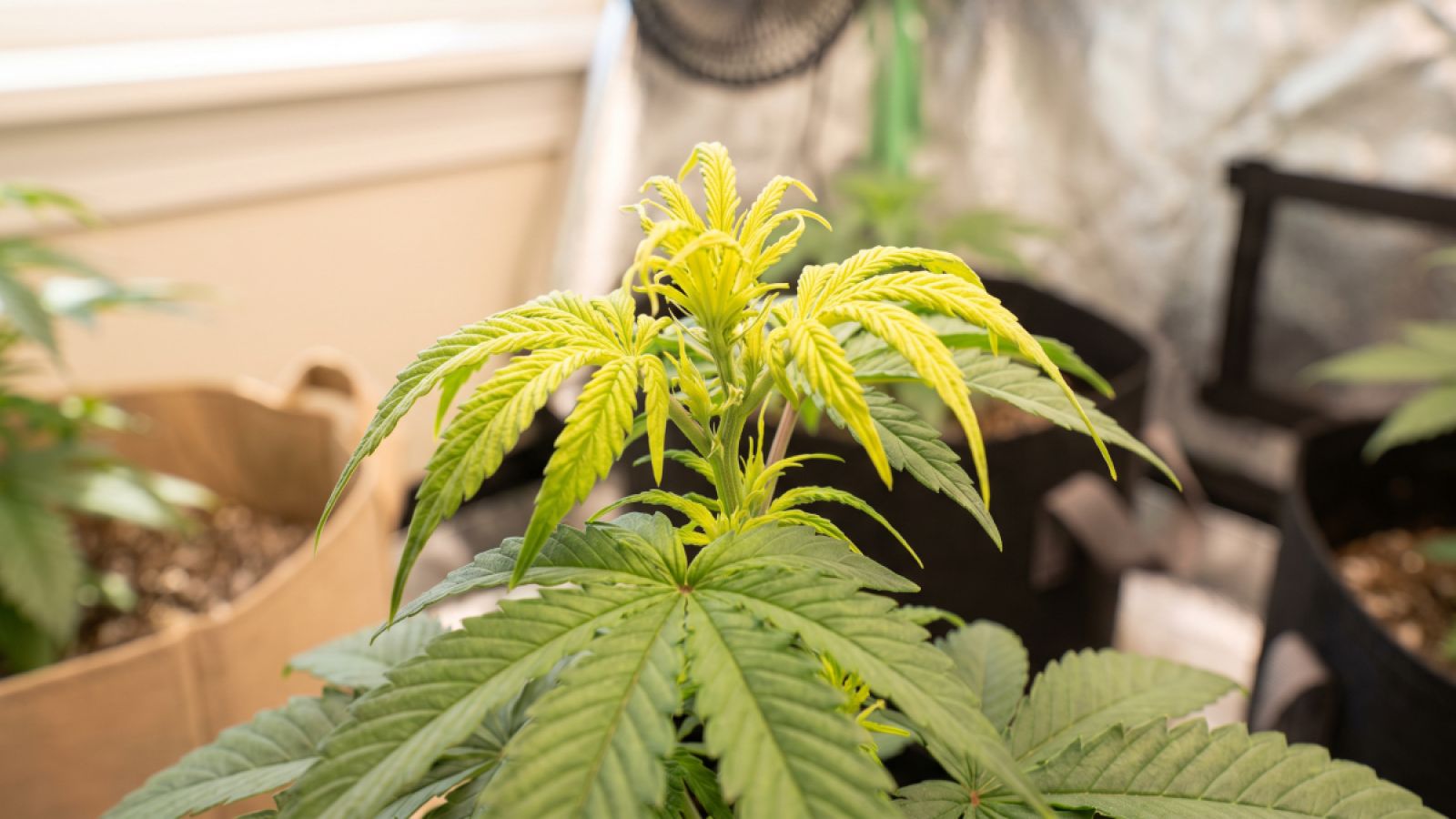
A cannabis zinc deficiency shows up as yellowing on the newest top leaves, paired with shrinking, twisted blades and tightly bunched nodes. In most grows, zinc is already in the medium but pH has drifted out of range - effectively locking it away from the roots.
The fix starts with correcting your grow medium’s pH, not with adding more zinc to the feed. This guide covers the symptoms, lookalikes, and steps to address the real cause in soil, coco or hydro.
In short: New leaves yellowing, shrinking, and twisting with bunched-up nodes all point to a zinc deficiency - most commonly caused by pH lockout. Salt buildup, other excesses, and a real shortage are the less likely culprits. Bring pH back into range first and only add zinc if symptoms persist.
What is a Zinc Deficiency in Cannabis Plants?
A zinc deficiency is a rare shortage of zinc - the micronutrient cannabis plants use in tiny amounts to support healthy vegetative growth. The deficiency sits at the root zone, but shows up first in the newest growth. Almost every case comes down to zinc the plant can't reach, not zinc missing from the feed or grow medium.
What Does Zinc Do for a Marijuana Plant?
Zinc drives enzyme activity, hormone production, and new-leaf formation in a cannabis plant. The micronutrient helps produce auxins, the growth hormones that control stem elongation and leaf expansion. Zinc also supports chlorophyll production, so a shortage quickly turns new growth pale. When zinc levels drop, both the size and the color of fresh leaves suffer.
Is Zinc a Mobile or Immobile Nutrient?
Zinc is an immobile nutrient, so it stays locked in older tissue instead of moving up to new growth. When supply runs low, it can’t be pulled from old leaves and sent to younger ones. That’s why zinc deficiency symptoms strike the top of the plant first while the lower, older leaves stay green.
Reading symptoms from the top down is one of the fastest ways to separate a zinc problem from a mobile-nutrient problem like nitrogen.
What Are the Zinc Deficiency Symptoms in Weed Plants?
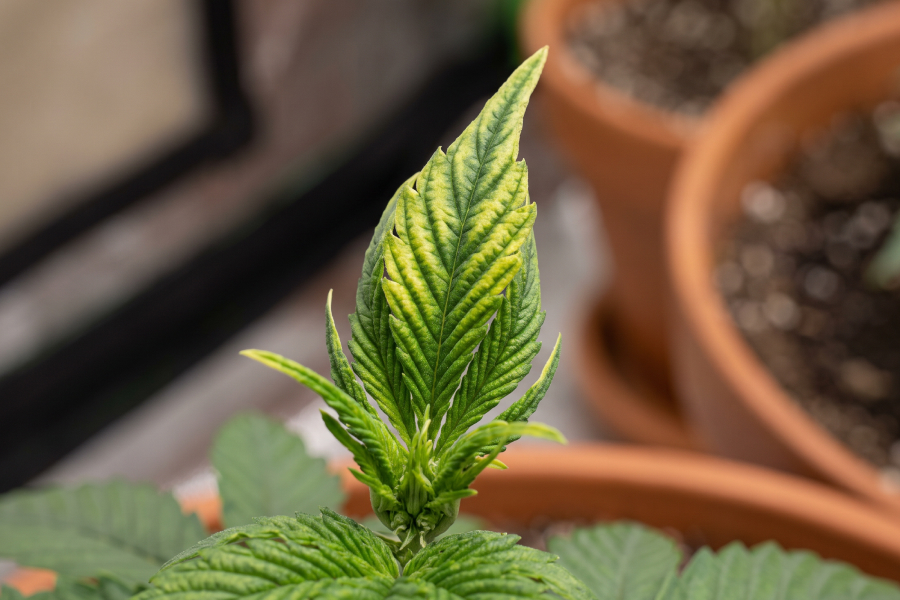
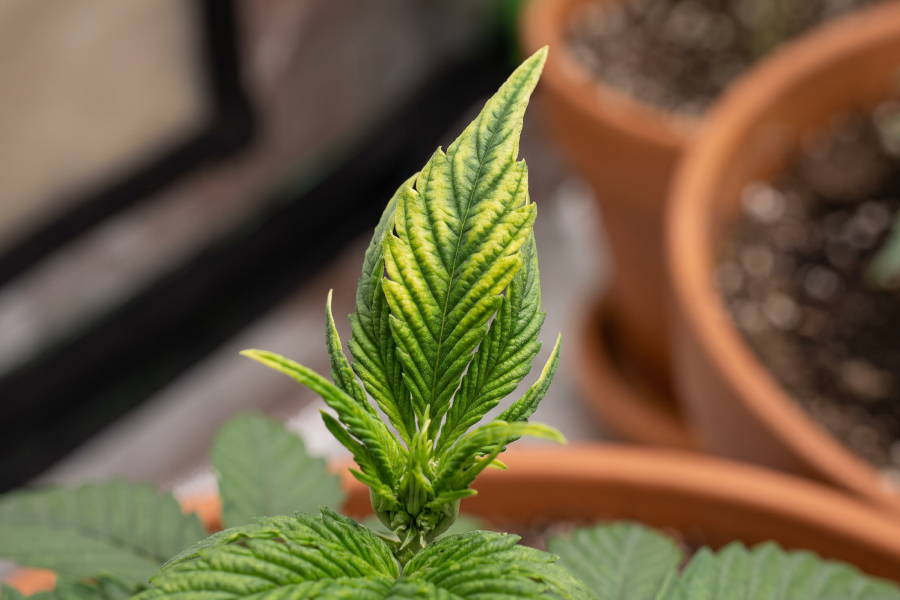
The zinc ID at a glance: interveinal yellowing (green veins), shrunken 'little-leaf' growth, and tightly bunched nodes.
In weed plants, a zinc deficiency produces three symptoms that cluster on the newest top growth: pale yellowing, stunted and twisting leaves, and compressed spacing between nodes. In flower, developing buds can also twist or contort.
That stunted, distorted leaf growth is the signal that sets zinc apart from other immobile deficiencies, so it deserves the most weight.
Here is what the three main symptoms look like on the plant:
-
Interveinal yellowing - pale tissue between green veins on the newest top leaves.
-
Distorted new leaves - narrow, stunted, and twisting growth with nodes close together.
-
Bud contortion - developing flowers twist and fail to harden as the deficiency advances.
Yellow New Growth and Interveinal Chlorosis
Interveinal yellowing appears as pale tissue between the veins, while the veins themselves stay green. This pattern, called interveinal chlorosis, means the tissue between the veins loses color first. The contrast of green veins against pale leaf tissue is the entry symptom that tells you to look closer.
Small Leaves, Twisting, and Tight Node Spacing
New leaves emerge narrow, stunted and twisted. Growers often call this "little leaf" because fresh growth comes in far smaller than the healthy leaves lower down.
The spaces between nodes also compress, so the top of the plant looks crowded and short. This shrinking-and-twisting combination is the strongest visual clue that zinc, and not iron or manganese, is the problem.
Bud Contortion in Flower
If a zinc deficiency shows up during the flowering stage, developing buds twist and contort the same way new leaves do, and they can fail to harden properly. Check for this alongside the leaf symptoms above for confirmation.
Iron vs. Manganese vs. Zinc Deficiency in Cannabis
Zinc, iron, and manganese deficiencies all strike new upper growth with interveinal yellowing, so it’s easy to get confused. Zinc is the likely culprit when the yellowing pairs with shrunken, twisted leaves and short internodes. Iron deficiency tends to bleach new leaves brightly, and manganese deficiency adds speckled necrotic spots to the yellowing.
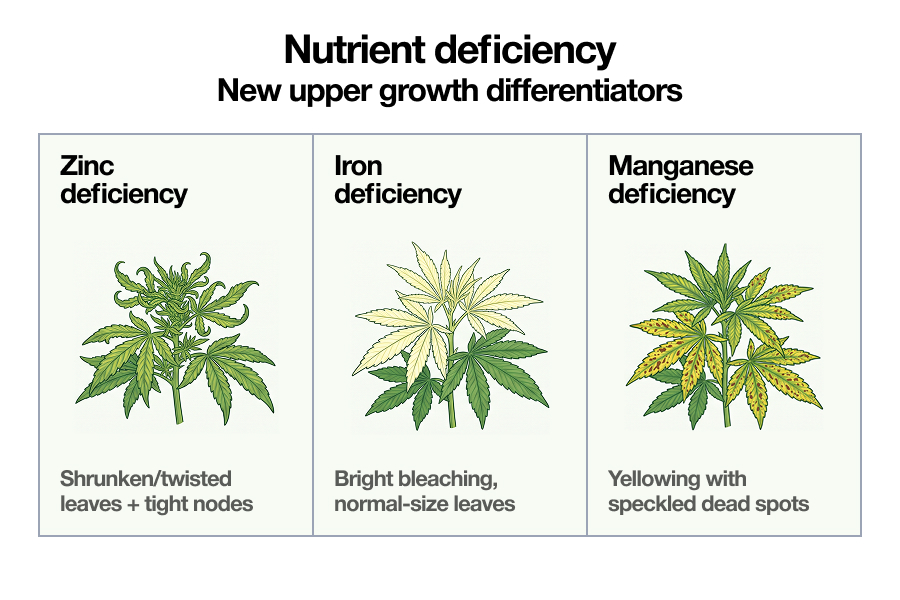
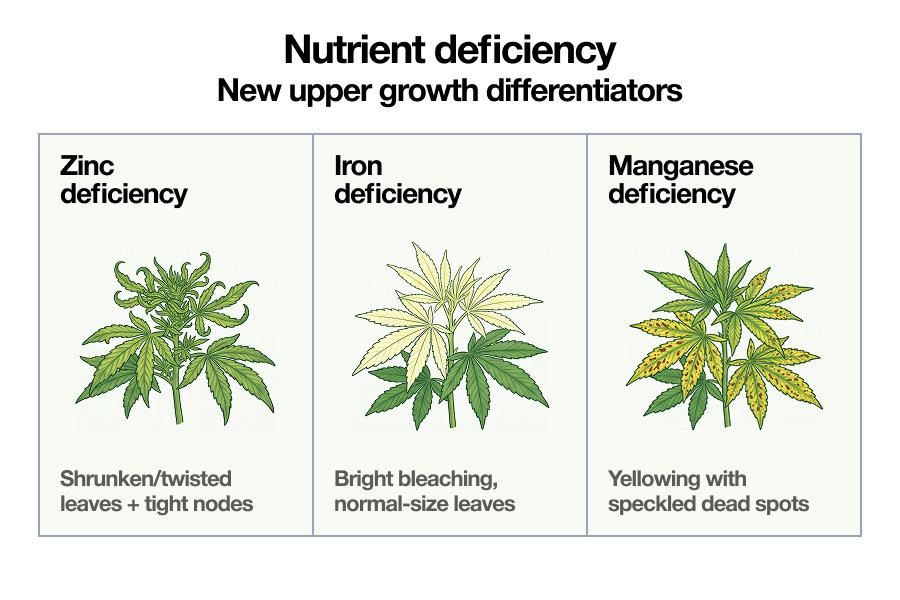
Zinc vs iron vs manganese: zinc is the one that shrinks and twists new leaves; iron bleaches full-size leaves; manganese adds speckled dead spots.
The table below compares the three deficiencies so you can confirm what you're seeing before taking any steps. Each trait carries a reliability rating too:
|
Trait |
Zinc Deficiency |
Reliability |
||
|
Location |
New/upper growth |
New/upper growth |
New/upper and mid growth |
High |
|
Leaf size |
Small or shrunken |
Normal size |
Normal size |
High |
|
Leaf shape |
Twisted, curling, contorted |
Normal shape |
Normal shape |
High |
|
Leaf color |
Yellowing tissue, green veins |
Pale yellowing, green veins |
Yellowing, green veins, brown spots |
Medium |
|
Node spacing |
Tight, compressed |
Normal |
Normal |
High |
What Causes Zinc Deficiency in Weed Plants? (Usually pH)
A true zinc shortage is rare in cannabis. Most cases come from zinc being present in the medium but blocked from reaching the roots - either by pH, salt buildup, or another nutrient crowding it out. Most zinc deficiency cases boil down to these four causes.
-
pH lockout - pH outside the uptake band blocks available zinc.
-
Overdoing other nutrients - excess phosphorus (and to a lesser extent, calcium, iron, copper, and nitrogen) interferes with zinc uptake.
-
Salt buildup - excess mineral salts around the roots skew both pH and uptake together.
-
A genuine zinc shortage - the least common cause, showing up most often in reused or heavily leached soil, or from an incomplete DIY mix or base nutrient line.
pH Lockout — the Most Common Cause
pH outside the root's uptake band blocks zinc absorption even when plenty of zinc sits in the medium. Nutrient availability rises and falls with pH, and zinc drops out of reach when the number climbs too high or falls too low. This is why the standard first move is a pH check rather than a feed change.
Salt Buildup in the Root Zone
Cannabis roots take up water quickly but absorb dissolved nutrients more selectively, so leftover mineral salts stay behind and concentrate in the root zone as water evaporates or transpires. Feed again before that residue drains or leaches out, and it stacks on top of what's already there, compounding until it starts interfering with pH and nutrient uptake.
Excess Phosphorus and Other Antagonists
Even with pH in range, zinc can still get crowded out by another nutrient competing for the same uptake pathway. Excess phosphorus is the biggest offender, binding with zinc into forms the roots can't use, so a shortage shows up despite sufficient zinc levels. Excess calcium, iron, copper, or heavy nitrogen feeding can do the same, though these are less common.
A Genuine Zinc Shortage
A real zinc shortfall happens only when zinc is actually missing, either because the medium has run low or because the feed never had enough to begin with. Reused or heavily leached soil depletes over time, while an incomplete DIY mix or base nutrients without dedicated micronutrients can leave the feed short.
This cause is the least common of the four, so rule out pH, other nutrient excesses, and salt buildup before assuming the medium or feed is actually short on zinc.
How to Fix Zinc Deficiency in Cannabis Plants
To fix a zinc deficiency in cannabis, test pH and EC/TDS to see where pH lands and whether there’s any salt buildup. If there is, flush your grow medium before correcting pH so the plant can absorb available zinc. Only look at antagonists and extra zinc if symptoms persist after that. Here’s a breakdown of the steps:
-
Check pH and test for salt buildup - a high EC/TDS reading and out-of-range pH mean you need to flush first.
-
Correct pH - soil, coco and hydro each need a different approach:
-
Soil and living soil - correct genuine drift with slow amendments.
-
Coco coir - pH the finished nutrient solution at every feed.
-
Hydroponics - pH the final solution and adjust it daily.
-
-
Rule out other excess nutrients - if pH is in range and symptoms persist.
-
Add zinc - only after buildup, pH, and excesses have all been ruled out.
Checking pH and Testing for Salt Buildup
Check pH and EC/TDS in the same reading, since one can throw off the other. A high EC/TDS well above what you fed in typically confirms buildup. In this case, your first step is to flush the grow medium with plain, pH'd water until roughly 30% of the volume drains out.
Salt buildup can mimic zinc lockout or deficiency, but flushing and pH correction solve two different problems and should never be treated as one step. A flush clears concentrated salts out of the medium and resets root zone pH, while pH correction is an ongoing feed adjustment that keeps nutrients available.
So if you have a high EC/TDS reading, flush first, then correct pH. If your reading comes back close to what you fed, buildup isn't the issue, and you can move straight to correcting pH.
Pro tip: Treat runoff readings as a warning light that pH or EC has drifted, not as a specific target to chase by adjusting and retesting until the runoff lands in range.
Fixing pH in Soil and Living/Organic Soil
- Living soil regulates its own pH through root-zone microbes, so you correct genuine drift with slow amendments rather than pH'ing the water. Skip liquid pH Up and pH Down here, since those only shift a solution's reading on contact and do nothing to reset the soil itself.
- Out-of-range soil is moved slowly with amendments instead: calcium carbonate or lime to raise pH, and elemental sulfur with acidic materials to lower it. Keep in mind that input water pH has only a small, temporary effect on the soil.
- If you use synthetic salt-based nutrients in soil: pH your mixed nutrient solution instead, exactly like a coco or hydro grower would. Synthetic salts suppress microbial activity over time and weaken buffering so the soil stops moderating its own pH. Whatever pH you feed becomes much closer to the pH the roots actually sit in - the same way soilless mediums work.
Fixing pH in Coco Coir
If you’re growing in coco coir, mix your nutrients into the water first, then pH that finished solution to the target pH every time you feed. Only the pH of the mixed solution reflects what the roots actually receive. On top of that per-feed check, test overall drift about once a week so buildup or slow pH creep doesn't sneak past you between feeds.
Fixing pH in Hydroponics (DWC, NFT, Rockwool)
Hydro follows the same mix-then-pH-the-feed routine as coco, but the solution needs daily pH’ing rather than weekly. In deep water culture, NFT, rockwool, or LECA setups the roots sit directly in or against the solution, with none of the buffering a medium provides.
That exposed root zone means pH can drift within hours, so a daily adjustment back to the target range keeps zinc and other nutrients available.
Ruling Out Antagonists Before You Add Zinc
If pH is already in range and buildup isn't present, check your feeding program before assuming zinc itself is short. Heavy phosphorus is the most common culprit, followed by excess calcium, iron, copper, or nitrogen. Cutting back an antagonist that's running high often resolves a zinc deficiency without adding anything at all.
When to Actually Add Zinc
Only move on to supplementing zinc once pH, buildup, and competing excess nutrients have all been ruled out. Give the weed plant three to five days after correcting pH or any other cause - it needs time to resume zinc uptake and green up again.
If new growth still comes in pale and stunted after that window, feed a complete micronutrient product at the label rate rather than a standalone zinc supplement. Zinc, iron, and manganese lose solubility at similar pH thresholds, so whatever locked zinc out likely affected the other two as well, and a balanced product restores all of them together.
What Are the Correct pH Ranges for Cannabis?
Cannabis absorbs zinc and other micronutrients best inside a narrow pH band that shifts with the grow medium. Soil roots and soilless roots pull nutrients from different environments, so the pH target changes depending on what you grow in.
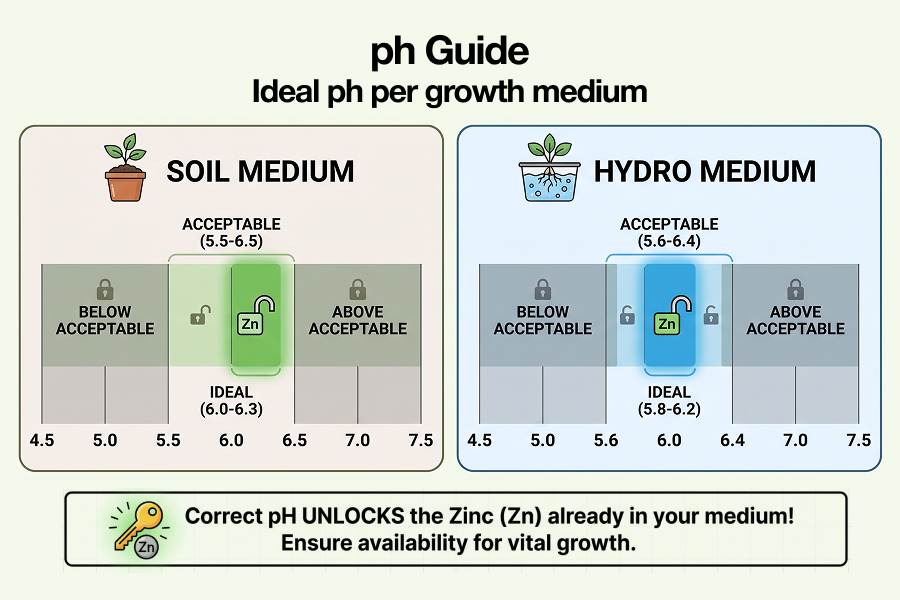
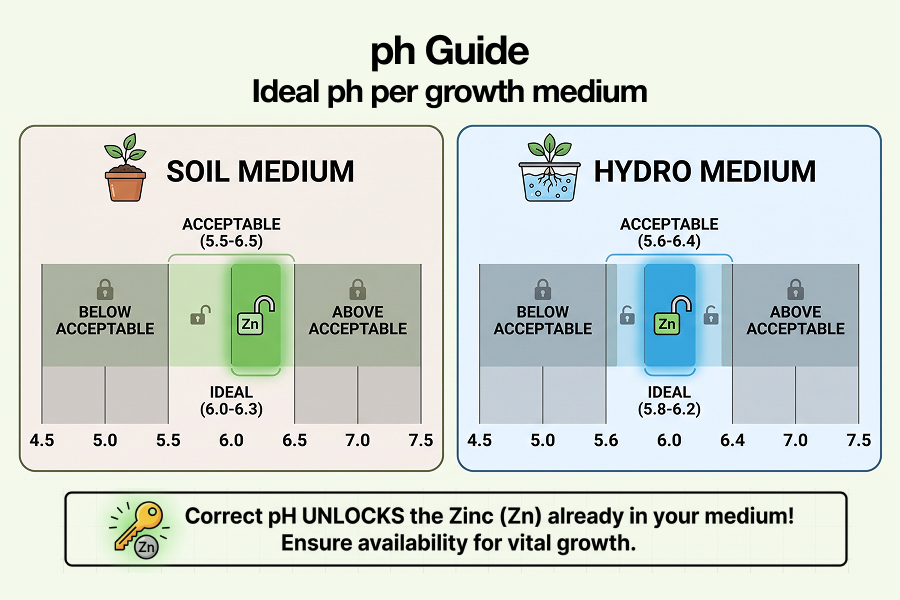
The table below sets the ideal and acceptable ranges for each medium:
|
Grow medium |
Ideal pH |
Acceptable pH |
|
Soil |
6.0–6.3 |
5.5–6.5 |
|
Coco coir |
5.8–6.2 |
5.6–6.4 |
|
Hydroponics |
5.8–6.2 |
5.6–6.4 |
Keep your grow medium’s pH in the ideal band. The acceptable range is how far pH can drift before zinc and other nutrients start locking out - not a target to aim for.
How to Prevent Zinc Deficiency in Weed Plants
To prevent a cannabis zinc deficiency, keep pH in range, feed a complete micronutrient product, and watch for antagonists like heavy phosphorus. Stable pH is the single biggest factor but it also helps to monitor runoff or reservoir EC regularly to catch salt buildup and pH drift while your marijuana plant still looks healthy - well before the top leaves start to pale.
Frequently Asked Questions
Can a Zinc Deficiency Kill a Marijuana Plant?
No, a zinc deficiency doesn't kill a cannabis plant outright, but a prolonged shortage stunts growth and shrinks the eventual yield. New growth stalls because the plant cannot build healthy tissue at the top, and severe cases can distort the flowers that form later. Correcting pH early almost always reverses the damage before it reaches that point.
Is a Zinc Deficiency More Common in Soil or Hydro?
A zinc deficiency appears across all media, but the trigger differs between soil and hydro. Soil grows tend toward gradual pH drift and salt buildup over weeks, while hydro setups can swing out of range within a day because the solution feeds bare roots directly. Matching your pH-check frequency to the medium — weekly for coco, daily for hydro — keeps the risk low either way.
Does pH'ing My Water Fix Zinc Lockout in Organic Soil?
No, pH'ing your water does not fix zinc lockout in a living organic soil. The root-zone microbes buffer pH to what the plant needs, and input water pH has only a small, temporary effect on the substrate. Genuine out-of-range organic soil is corrected slowly with amendments — lime to raise pH, elemental sulfur to lower it.
Can Too Much Zinc Harm Cannabis Plants?
Yes, zinc toxicity can harm cannabis plants, though it's rare compared to a shortage. Excess zinc shows up as wilting and stunted growth without interveinal yellowing. In severe cases, it can kill the plant. Zinc toxicity appears in very acidic conditions - when pH is too low (<5.0), while a deficiency shows up when pH is too high. As always, correct root zone pH first.