



How Long Does Weed Take to Grow?
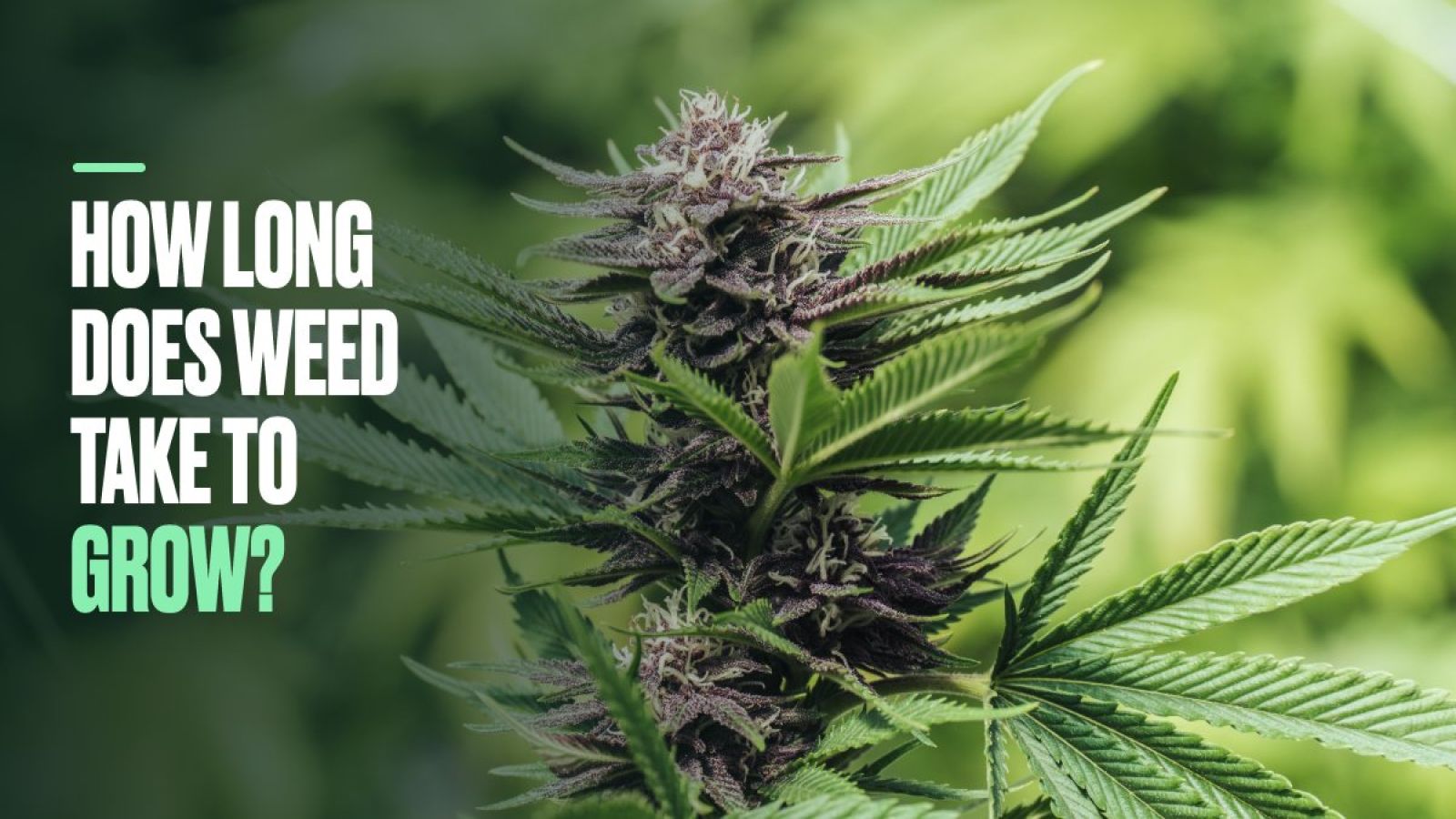
It takes an indoor weed plant roughly 3–5 months to grow from seed to the day you harvest, and 4–6 months before the jar is genuinely ready to open. Outdoors, you’re on the season's schedule, going from seed to cut in about 5–7 months. Autoflowers are faster, taking around 2–3 months in any setup. Drying and curing adds another 3–6 weeks on average.
The seed-to-harvest period is largely defined by genetics. While most photoperiods take 8–10 weeks to flower, some have a shorter bloom period of 6–8 weeks. Long-flowering genetics sit on the far end, at around 10–12 weeks, sometimes up to 14. But before bloom comes the vegetative stage, and indoor growers can control how long it lasts.
Find out where all of that time goes by growth stage, the different photoperiod, autoflowering, and outdoor timelines, and what you can actually do to speed up your harvests.
How Long Does Weed Take to Grow From Seed to Jar?
Weed typically takes about 4–6 months from seed to cured jar. An indoor photoperiod grow commonly runs about 3–5 months from seed to the cut. Stretch veg out or run a long-flowering variety and the total can reach around 7 months. An outdoor photoperiod plant is a seasonal crop of roughly 5–7 months, taking 6–8 months from seed to jar.
As for autoflowers, most go from seed to harvest in roughly 8–10 weeks, though some longer-flowering autos finish in 10–12 weeks or even up to 14. This works out to about 2–3 months seed-to-cut and 3–4 months seed-to-jar, with the slowest closer to 4.5 months.
The total timeline comes down to variables like genetics, seed type, and your setup. But regardless of what you’re growing and how, the post-harvest block of trimming, drying, and curing adds roughly 3–6 weeks. Here’s how it breaks down:
| Seed Type | Indoors or Outdoors? | Seed to Harvest | Seed to Jar | What Sets the Length? |
| Feminized photoperiod seeds | Indoors | ~3–5 months | ~4–6 months | Veg length and the strain’s flowering time |
| Feminized autoflower seeds | Both | ~2–3 months | ~3–4.5 months | Genetics alone, since flowering starts on age |
| Feminized photoperiod seeds | Outdoors | ~5–7 months | ~6–8 months | The season, your region, and the variety |
The Cannabis Grow Timeline, Stage by Stage
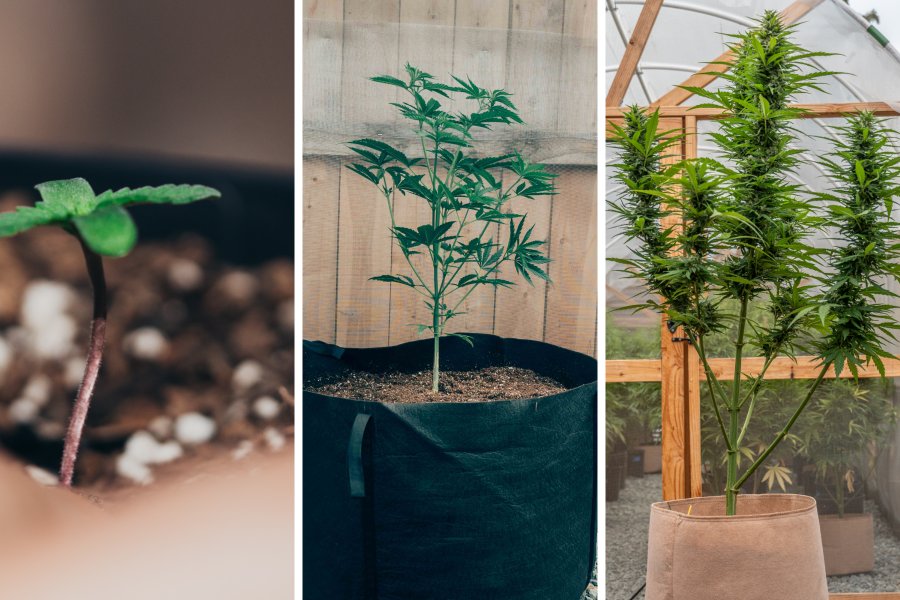
Every cannabis plant runs the same sequence, whether it’s an autoflower on a balcony or a photoperiod plant under lights. Only the length of each stage changes. The table below is the quick index.
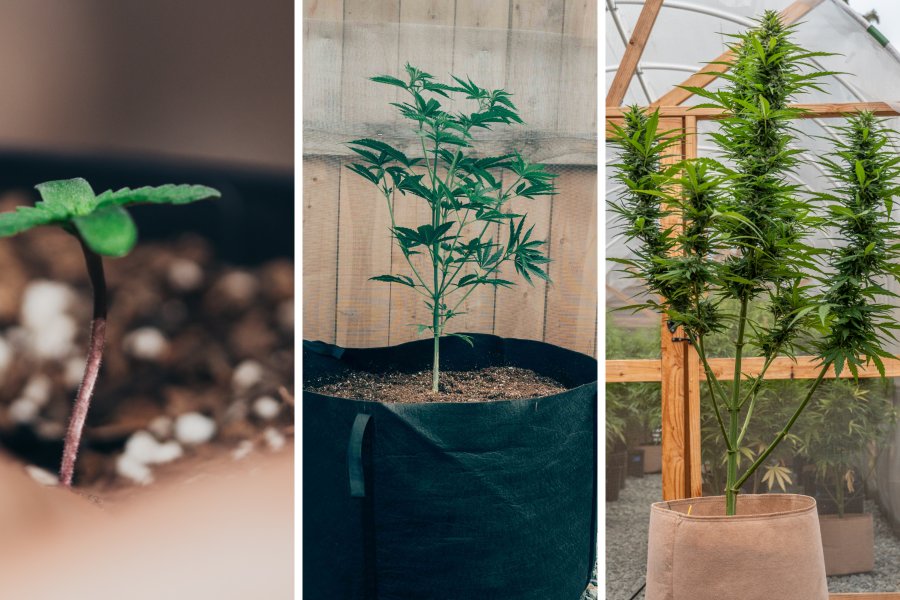
| Stage | Typical length | What Ends It |
| Germination | 1–10 days | The taproot emerges and the seed is planted |
| Seedling | 1–3 weeks | Three to four sets of true leaves and faster growth |
| Vegetative | 3–8+ weeks for photoperiods 1–2 weeks for autoflowers | The flip to 12/12, or an autoflower's own clock |
| Flowering | 8–10 weeks, or 10–12+ weeks for longer-flowering varieties 4–6 weeks for autoflowers | Ripe trichomes, which decide the cut |
| Harvest, drying and curing | 3–6 weeks | A jar that’s stable and ready |
Germination: Around 1 to 10 Days
Most viable marijuana seeds crack and push out a taproot within 1–7 days, and the stage is generally finished inside about 10 days. Warmth is the lever that matters most here.
Seeds germinate fastest and most reliably at around 72–77°F, and they get slow and unpredictable when the room is cold, which explains most of the “nothing has happened yet” panic in week one.
Germination is complete when the taproot is roughly 0.2–0.5 inches long, and that’s the moment to plant it. Leave it much longer and you’re handling a fragile root that damages easily. A slow start costs you days, not months, so don’t worry if a seed takes 9 days, it hasn’t ruined your grow.
Seedling Stage: 1 to 3 Weeks
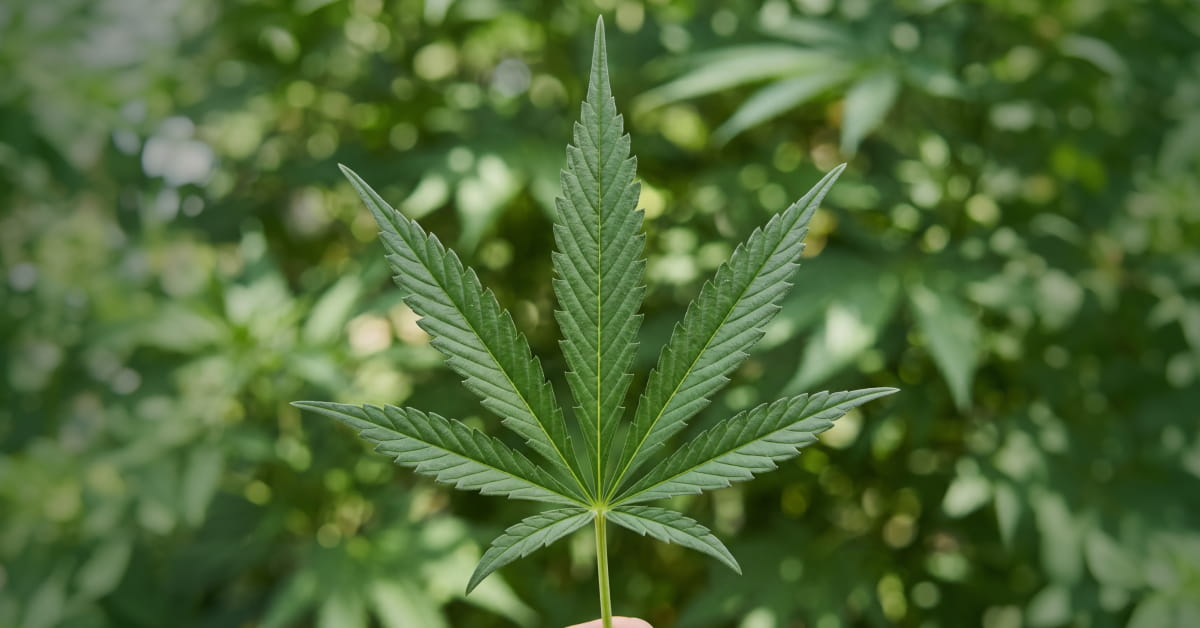
From the moment the sprout breaks the surface, count on the seedling stage lasting for 1–3 weeks. The first two rounded leaves are seed leaves, not true cannabis leaves. True leaves follow in a climbing finger count, first a single blade, then three, then five, then seven. That progression is the clearest sign the plant is moving at a healthy pace.
Growth looks painfully slow at this point because the root system is still tiny, not because something has gone wrong. The same small root system is why a waterlogged pot does more damage here than anywhere else in the grow.
This stage ends and vegging starts once the weed plant carries around 3–4 sets of true leaves and visibly picks up speed, though growers draw that line slightly differently.
Vegetative Stage: 3 to 8+ Weeks, the Part You Control Indoors
For an indoor photoperiod plant, veg can run anything from 3–8 weeks or more, with 4–6 weeks being the usual window. Growers who train their weed plants often give them the full eight weeks so there’s plenty of time to recover before flowering. Just be sure to keep them vegging under a light schedule of 18 hours on and 6 off (18/6).
This is the only stage with a length you can genuinely set, which makes it the main dial on your whole timeline. Each extra week in veg is an extra week on the total, one for one. A longer veg gives you a bigger plant to flower, and a shorter veg gets you to the finish sooner with a smaller one.
The veg stage ends on a photoperiod plant when you flip the lights to 12/12. A common rule of thumb is to flip once the plant fills about half of the height you have available, which leaves room for what comes next. Sex pre-flowers usually show at the nodes somewhere around weeks 4–6 of veg, so a plant that reveals itself early is simply on schedule.
Autoflowers don’t wait for that decision. They only veg for about 1–2 weeks and usually start flowering on their own around 2–4 weeks from seed, which is why plant type is a timing choice in its own right.
Flowering Stage: 8 to 10+ Weeks
Most photoperiod strains flower for about 8–10 weeks, though faster genetics only take 6–8 weeks, and slower varieties can take 10–12 weeks, up to 14 weeks. Indica-leaning plants often finish toward the shorter end of the 8-to-10-week range, while some sativa-leaning plants land in the longer 10-to-12-week range.
Flowering length is set by genetics, so this block is the part of your calendar you can’t negotiate. A photoperiod plant starts flowering when the dark period lengthens, which indoors means the 12/12 flip and outdoors means the days shortening after midsummer.
Here’s the correction that saves beginners a lot of confusion: the flowering clock starts at the flip, not when you first see white hairs. Pre-flower pistils can appear late in veg, but they don’t mark the start of anything. Autoflowers are the exception here, since they begin flowering by age with no light change needed.
The flowering weeks have their own internal arc, too:
- The flowering stretch, weeks 1 to 3. Cannabis plants commonly add 50–100% of their height, which is exactly why the half-height flip rule exists.
- Bud sites start appearing, weeks 3 to 4. The stretch slows down and pistils start clustering at the nodes along each branch, with the densest clusters forming at the tops that will become colas.
- Buds bulk and ripen, week 4 onward. Buds gain density and weight through the middle and late weeks before the marijuana plant is ready to cut.
Treat an advertised flowering time as a target for when to start checking your plant rather than a fixed harvest date. The trichomes decide the real one.
Harvest, Drying and Curing: 3 to 6 Weeks
Budget roughly 3–6 weeks between cutting and a jar that’s genuinely ready to consume. This block is the whole difference between seed to harvest and seed to jar timelines, and leaving it out is the most common planning error on a first grow.
Here’s how those weeks break down:
- Chopping and trimming is often a single session for a few small plants, while a larger harvest takes several sessions or an extra pair of hands.
- Drying usually takes 7–14 days hung in the dark at around 59–68°F. It can run to roughly 3–4 weeks where buds are large and dense or the room is cool and humid, which is why a lot of published figures differ. The conditions differ, not the advice.
- Curing in sealed jars at about 58–62% humidity takes a minimum of around 14 days, with 2–4 weeks the point where quality clearly improves, and up to about 30 days.
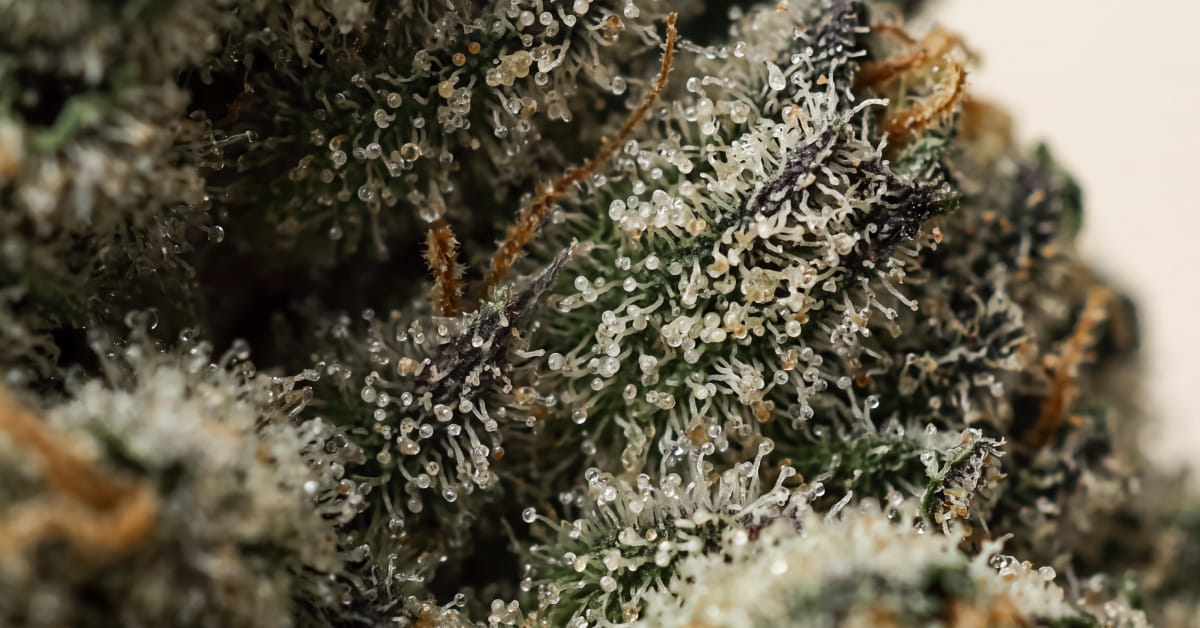
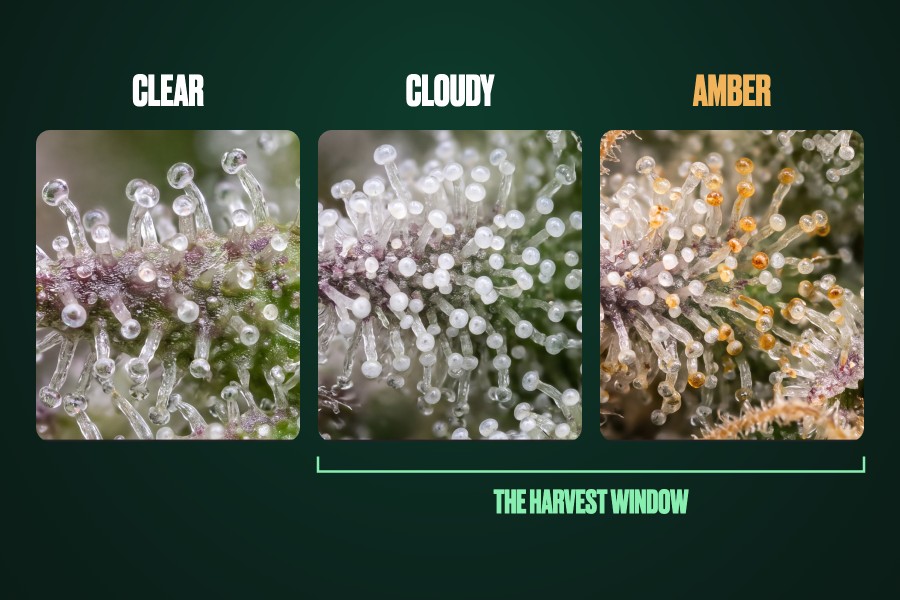
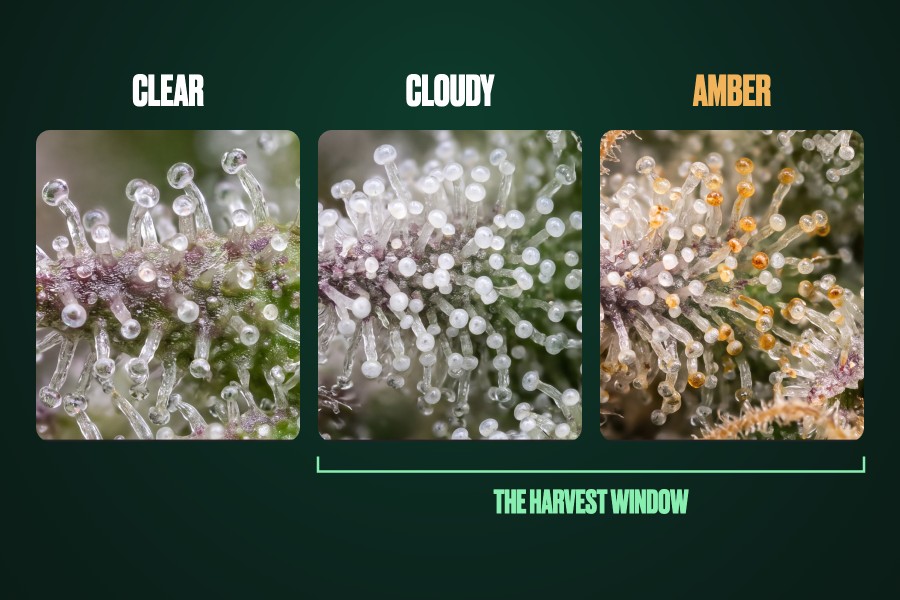
The date of the harvest itself is decided by trichome appearance. Most growers cut when most trichome heads have turned from clear to milky with about 15% amber. The timing here can make or break your harvest, so inspect the trichomes carefully with a magnifying loupe.
Photoperiod or Autoflower: Which Clock Suits Your Time Frame?
Almost every timing question has two answers because photoperiods and autoflowers run on two different clocks. A photoperiod plant flowers in response to longer nights, which indoor growers trigger by switching the lights to 12/12. An autoflower starts flowering according to age instead, a trait that comes from its ruderalis genetics.
Choose an autoflower if speed, simplicity, or a short outdoor season matters most. Autos have a short veg phase set by their genetics, so they finish sooner than photoperiods. Light doesn’t trigger their flowering, so they can stay on 18–20 hours of light from seed to harvest, and a light leak won’t delay their bloom.
The downside is that the clock can’t be paused. Low-stress training works well on autos, but heavy training can stunt an autoflowering plant that has no spare veg time to recover.
Choose a photoperiod plant if you want control over size and timing. If you’re growing indoors, you decide how big the plant gets before you flip it, so you can hold off or flip early to fit your schedule and use the extra weeks to train a wide canopy.
Seed sex is a separate choice. Compared to regular seeds, feminized seeds greatly reduce the likelihood of ordinary male plants popping up in your grow. This means you’ll save some time by not having to worry about identifying and removing males for the most part.
Growing Outdoors: How the Season Sets Your Timeline
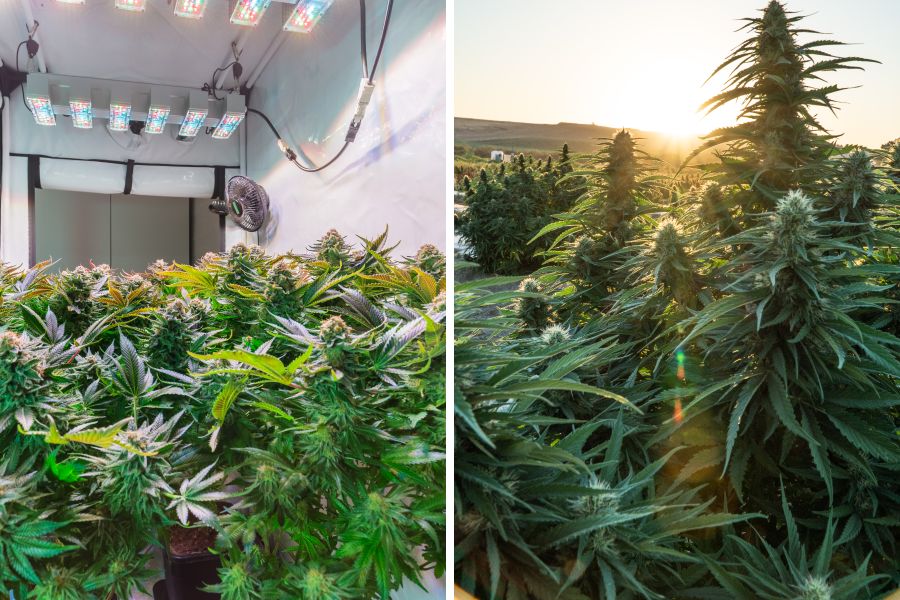
Outdoors the clock isn’t yours. You sow in spring, the weed plant vegetates through the long summer days, and flowering begins as daylength declines after midsummer. Nothing you do brings that trigger forward, which is the fundamental difference between an outdoor season and an indoor run.
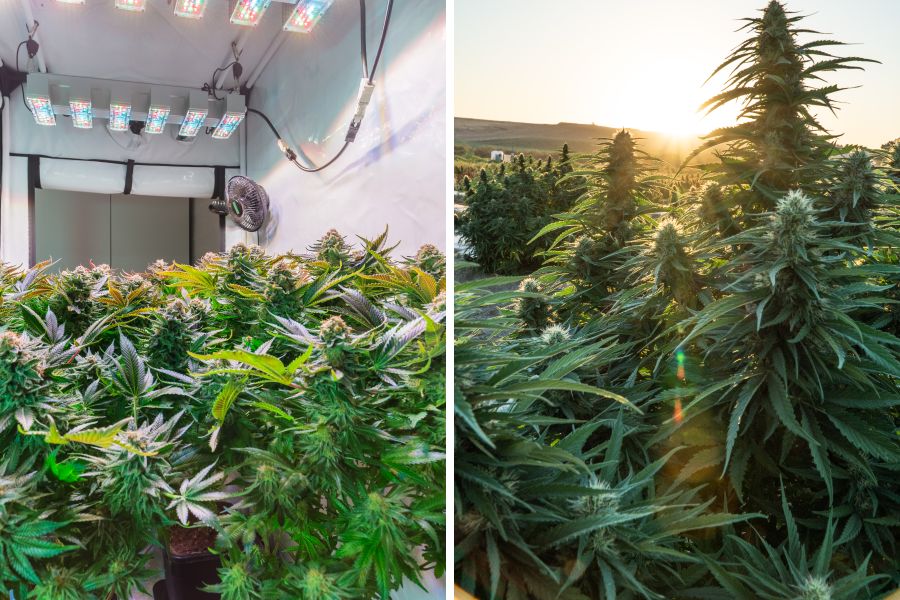
| Hemisphere | When Seeds Are Usually Started | When Harvest Usually Lands |
| Northern | March to May | Late September to early November |
| Southern | Around September | Around April |
Exact dates shift with region and variety. Seedlings are usually started under cover and acclimated to outdoor conditions gradually before going out, which is where the first few weeks of that calendar go.
The outdoor grow is longer because veg stretches to fill the summer, not because extra stages exist. Daylength falls gradually instead of switching in a single step, and cooler, wetter autumn weather slows the final ripening.
A short season narrows your options though, and an autoflower is the usual answer. Because its cycle is brief and age-driven, a long warm summer can fit more than one run.
Why Grows Run Long and What Safely Speeds Them Up
Most grows run long because of genetics, environment, or plant stress, and the only safe way to speed one up is to shorten veg or remove whatever is slowing the plant down.
What costs you time:
- Genetics. The variety sets flowering length, and a long-flowering plant can’t be talked into finishing early.
- Environment. Temperatures too high or too low, humidity extremes, weak light, and strong wind all slow vegetative growth and hold back bud development.
- Stress. Pests and pathogens, over or underwatering, over or underfeeding, physical damage, and training all cost development time.
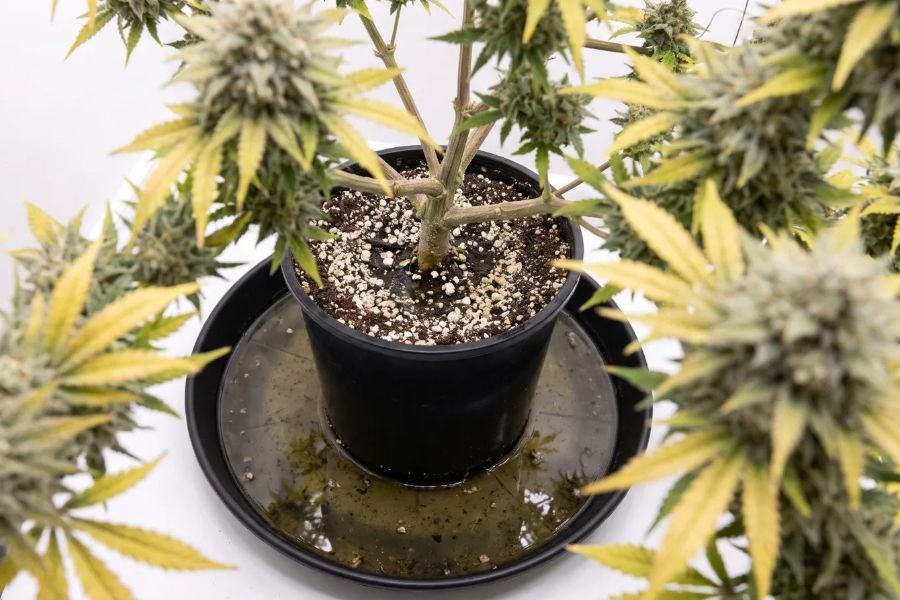
- Overwatering in the early weeks. A waterlogged medium starves roots of oxygen and stalls a seedling that simply looks like it’s not growing.
- Training late in veg. Plants stressed close to the flip usually need recovery time first, which adds weeks to the calendar.
- A trigger that never arrived. A photoperiod plant won’t flower indoors until it gets about 12 hours of uninterrupted darkness each night. If you never flip to 12/12, it stays in veg.
- Light leaking into the dark period. This can delay flowering or even push a flowering plant back toward veg. Leaks also stress the plant and can cause hermaphroditic expression, where it grows pollen sacs alongside its buds. Those herms can pollinate your flowers and leave you with a seeded harvest.
What you can actually do:
- Pick genetics with a flowering length that matches the time you have. This decision is made before the grow starts and it moves the total more than anything you do later.
- Shorten veg deliberately, or run an autoflower. Veg is the stage that bends, so that is where the saving lives.
- Train early in veg so recovery happens inside the veg window rather than after it.
- Keep the environment stable. Stability is what protects the schedule.
The honest framing is that you can’t make a healthy plant grow faster than its natural pace. You can only remove the things making it slower. Flowering length, drying, and curing stay where they are, and compressing them costs you quality more than anything else.
What to Expect at One, Two, Three and Four Months
Before checking your cannabis plant against any chart, settle one question: four weeks from what? Four weeks from seed and week four of flower describe completely different plants, and mixing the two counts is behind most of the worry about progress.
| Age From Seed | Indoor Photoperiod | Autoflower |
| Month 1 | Germination, seedling, and early veg. A small plant with its first few sets of fan leaves and no buds. | Late veg or the first days of flower. A compact plant, possibly showing its first pistils. |
| Month 2 | Mid to late veg, or the first weeks after the flip. A bushy plant stacking nodes, stretching hard if already flipped. | Well into flowering. Stretch slowing, buds forming at the tops. |
| Month 3 | Mid to late flower. Stretch finished, buds defined and filling out. | At or near harvest. Dense buds with trichomes turning milky. |
| Month 4 | Harvest and the start of drying, or late flower with slower genetics. Ripening buds or a plant hanging to dry. | Dried and curing. Buds in jars. |
The size of your weed plant is governed by more than genetics, with veg length, container size, training, and whether you’re growing indoors or out all playing a role.
Age alone governs very little, which is why two plants of the same age can look nothing alike. Marijuana plants also commonly add 50–100% of their height in the first weeks of flower, so a weed plant that looks too small at the flip is often exactly the right size.
"Fully grown" is really two things. The plant stops gaining height shortly after the stretch, then keeps maturing for weeks afterward until the trichomes say it’s ready.
Frequently Asked Questions
How Long Can a Marijuana Plant Live?
A cannabis plant grown for harvest usually lives for about 3–5 months, from germination to the chop. A photoperiod plant kept under long days never gets the signal to flower, so it can stay in vegetative growth for months or even years. That’s how growers keep mother plants for cuttings. Autoflowers can’t be kept that way. They flower according to age, so their lifespan ends with a single harvest.
Does a Strain’s Stated Flowering Time Mean the Whole Grow?
No, a photoperiod’s published flowering time normally counts from the switch to 12/12. Germination, the seedling stage, and veg all come on top of it. For autoflowers, the quoted figure is more often a seed-to-harvest total. Drying and curing are rarely included for either type, so check which clock a number refers to before you plan around it.
Is Growing From a Clone Faster Than Growing From Seed?
Yes, growing from a clone is faster than growing from seed by a few weeks. A rooted clone starts in the vegetative stage, so it skips germination and the seedling weeks. It doesn’t shorten flowering, drying, or curing. If you start from an unrooted cutting, rooting takes time of its own and cancels out part of the saving.