



Photoperiod vs Autoflower: Which Cannabis Seeds Should You Grow? [Full Guide]

Picking photoperiod vs autoflower cannabis seeds is one of the first real decisions you'll make as a grower. The right choice depends on your setup, your goals and how much control you want over the grow. This guide breaks down every key difference between autoflower and photoperiod seeds so you can walk away confident about which type fits you best.
What's the Difference Between Photoperiod and Autoflower Seeds?
Photoperiod cannabis seeds produce plants that flower in response to a change in the light cycle. Autoflower cannabis seeds produce plants that flower automatically, triggered by age rather than light.
That single difference drives nearly everything else you'll compare between these two types:
- Grow time
- Setup requirements
- Yield potential
- And how much hands-on control you have over the plant's development.
If you're browsing cannabis seeds for the first time, understanding this distinction is the clearest starting point.
How Do Photoperiod Cannabis Plants Flower?
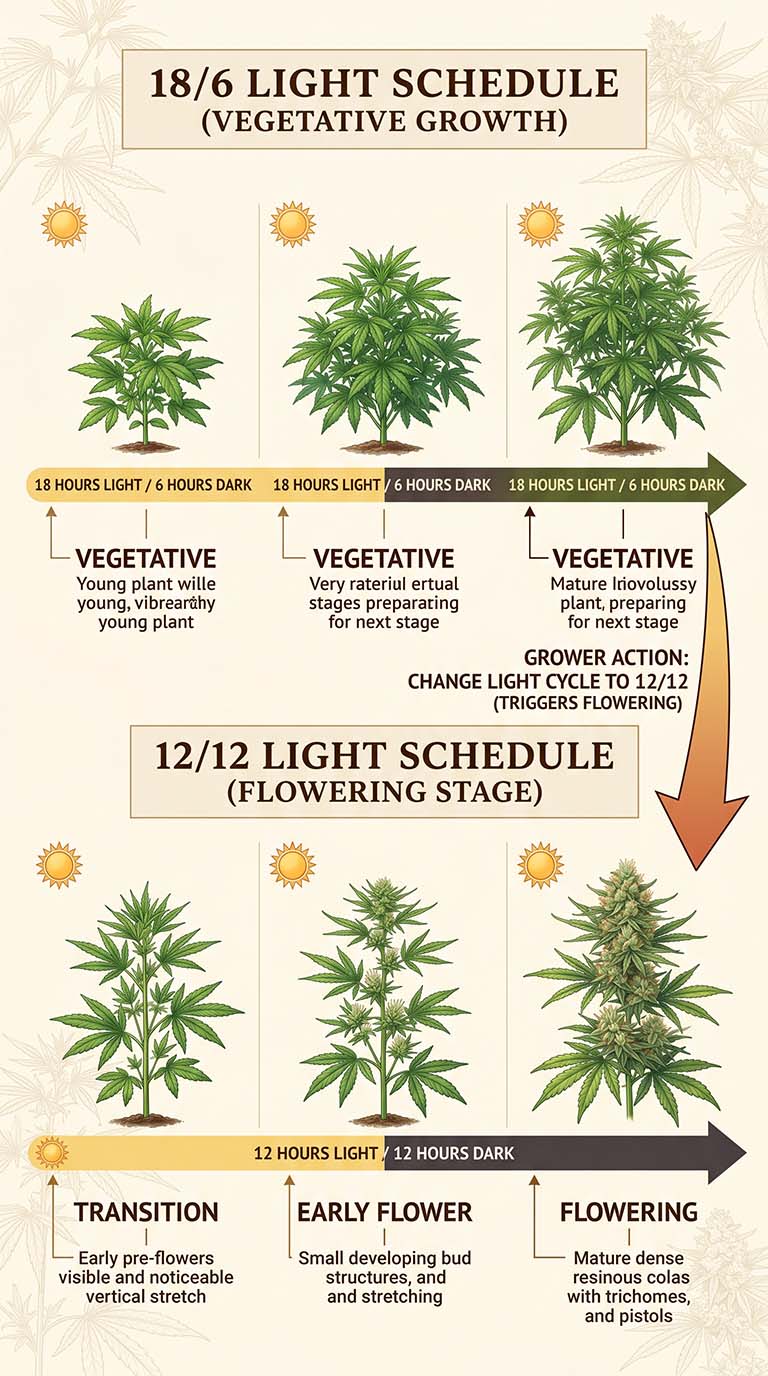
Photoperiod cannabis plants flower when their dark period extends to 12 hours per day. Indoors, you trigger this manually by switching your grow light timer from an 18/6 schedule (18 hours light, 6 hours dark) to a 12/12 schedule (12 hours each). Outdoors, declining daylight hours in late summer do the work for you.
Until that switch happens, photoperiod weed plants stay in the vegetative stage and keep growing. That gives you a lot of flexibility. You can grow a plant as large as your space allows before flipping it to flower.
One practical note: your grow space needs to be light-proof during those 12 dark hours. Even a small light leak can disrupt flowering and push the plant back into veg.
How Do Autoflower Cannabis Plants Flower?
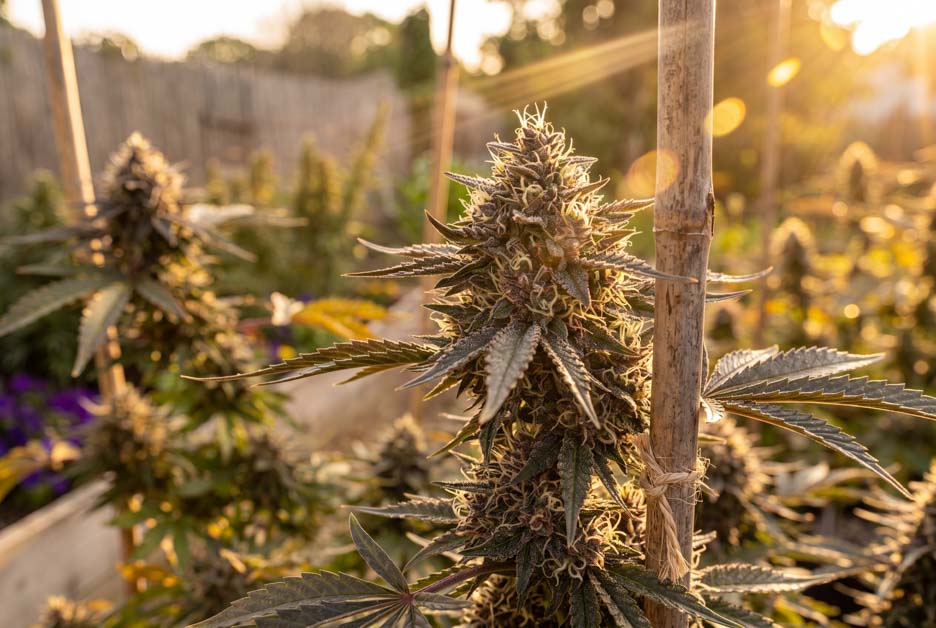
Autoflower cannabis plants flower automatically after roughly 3 to 4 weeks from germination, regardless of how much light they receive. The trait comes from Cannabis Ruderalis genetics, a subspecies native to the Volga River region of the Russian Ural Mountains, where growing seasons are short and light is unreliable.
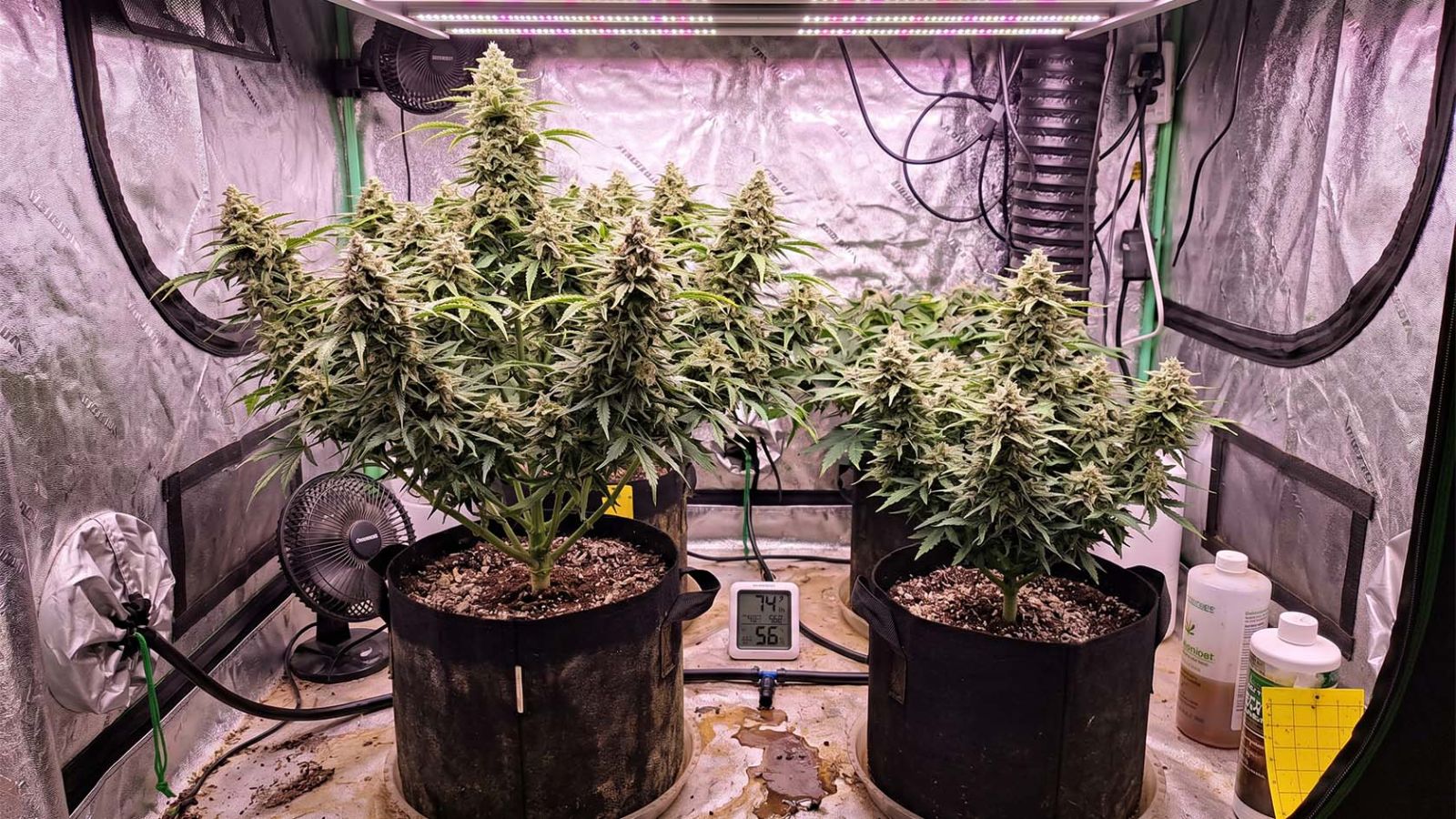
Because autos don't need a light schedule change, you can run them on 18 to 24 hours of light from seed to harvest. More light means more energy for growth, which is one reason autos can finish quickly without sacrificing too much bud production.
The trade-off is that you can't pause the clock. Once an auto starts flowering, it's going to finish on its own timeline.
Photoperiod vs Autoflower: Grow Time and Harvest Speed
Autoflower weed seeds consistently finish faster. Most autos go from seed to harvest in 8 to 12 weeks (with some varieties taking up to 13 to 14 weeks). Photoperiod cannabis seeds require a vegetative period on top of a flowering stage, which typically puts seed-to-harvest time at 16 to 24 weeks indoors.
The table below shows the comparison across key time benchmarks.
| Attribute | Photoperiod | Autoflower |
| Vegetative stage | Grower-controlled (4+ weeks typical) | ~3 to 4 weeks (automatic) |
| Flowering stage | 8 to 12 weeks | 5 to 7 weeks |
| Seed to harvest | 16 to 24 weeks | 8 to 14 weeks |
| Harvests per year (indoor) | 2 to 3 | 4 or more |
Faster turnaround makes autoflower weed seeds appealing to growers who want frequent harvests or who are working with a short outdoor season. Photoperiod cannabis seeds suit growers who want to maximize plant size and don't mind investing more time.
Photoperiod vs Autoflower: Yield Comparison
Photoperiod cannabis plants generally produce higher yields per plant. Their longer vegetative stage allows them to develop a larger root system and canopy before they start putting energy into bud production.
A well-grown photoperiod plant can yield 500 g or more per plant outdoors. Autoflower plants typically produce 60 to 200 g per plant outdoors, with indoor yields of 300 to 450 g/m² under good conditions.
If total volume is your primary goal, high yield weed seeds from photoperiod genetics are typically the path there. That said, autoflowers compensate with speed. Running multiple auto cycles per year can rival a photoperiod grow in cumulative output.
Photoperiod vs Autoflower: Potency and Bud Quality
Modern autoflower cannabis seeds produce buds that are comparable in potency to photoperiod strains. The gap that existed a decade ago has largely closed through selective breeding.
Top autoflower strains now regularly reach 20% to 25% THC. Photoperiod strains still hold the edge at the highest end of the potency spectrum, with some genetics reaching 30% THC or above, but the practical difference for most growers is smaller than it used to be.
Bud quality, aroma and terpene production are determined more by genetics and grow conditions than by whether the plant is a photo or an auto.
Photoperiod vs Autoflower: Training and Cloning
Photoperiod cannabis plants support both low-stress training (LST) and high-stress training (HST) techniques like topping, FIMing and ScrOG. Because they stay in veg until you trigger the flip to 12/12, they have time to recover from high-stress techniques before flowering begins.
Autoflower weed plants respond best to LST only. Techniques like topping are possible but risky because autos have a fixed timeline. A stressed auto that needs 2 weeks to recover is losing 2 weeks it can't get back.
There’s also a major difference when it comes to cloning cannabis. Photoperiod plants can be cloned, which means you can take a cut from a plant you love and grow an identical copy. You can also keep a mother plant in veg indefinitely. Autoflowers can't be cloned effectively because the clone inherits the parent plant's age (meaning a small crop with minimal yield).
Pros and Cons of Photoperiod Cannabis Seeds
Photoperiod cannabis seeds give you more control over every stage of the grow. They also carry more risk for beginners who aren't comfortable managing light schedules and training.
| Pros | Cons |
| Larger yields per plant and per grow cycle | Longer seed-to-harvest timeline (16 to 24 weeks) |
| Full control over when flowering begins | Requires a light-proof grow space with a managed 12/12 schedule |
| Compatible with LST and HST techniques (topping, ScrOG, FIMing) | Larger plants need more space and more maintenance |
| Clonable, so you can preserve genetics you like | Fewer harvests per year compared to autos |
| Wider strain selection across breeders | |
| More time to recover from stress, disease or environmental issues |
Which Seed Type Should You Choose?
Your choice between photoperiod and autoflower cannabis seeds comes down to four things: grow space, experience level, how fast you want to harvest and how much yield you need.
Choose autoflower weed seeds if:
- You have limited space indoors or outdoors.
- You want to harvest multiple times per year.
- You're growing outdoors in a short-season climate.
- You're new to growing and want a forgiving, low-maintenance plant.
Explore our range of high-quality autoflower weed seeds to find options suited to your setup.
Choose photoperiod seeds if:
- You want maximum yield per plant.
- You want to clone plants or maintain mother plants.
- You're growing indoors with a dedicated light-proof tent or room.
- You're growing outdoors in a warm climate with a longer season.
- You're comfortable managing light schedules and training techniques.
Feminized weed seeds cover most photoperiod options. They guarantee female plants without the guesswork of removing male plants (like you get with regular seeds).
If you're just getting started, our range of marijuana seeds for beginners include curated options across both seed types, chosen specifically for ease and reliability (where cultivation is permitted by federal, state and local laws, of course).
FAQs
Can You Tell an Autoflower from a Photoperiod by Looking at It?
Not always, especially in the early seedling stage. Autoflower plants tend to stay shorter and more compact. Standard varieties typically reach 24 to 35 inches (60 to 90 cm); larger varieties can reach 47 to 59 inches (120 to 150 cm). Photoperiod cannabis plants usually grow taller, often 39 to 79 inches (100 to 200 cm) or more outdoors.
Do Autoflower Seeds Produce Male Plants?
Yes, regular (non-feminized) autoflower seeds produce both male and female plants, while feminized autoflower seeds are bred to produce all-female plants. If you're buying feminized auto seeds, male plants are rare but not impossible. A plant that develops pollen sacs instead of pistils is a male and should be removed from the grow space.
Can You Clone Autoflower Plants?
No. Autoflower plants can't be cloned effectively. The clone is set to flower at the same developmental stage as the mother plant it was cut from, so it enters flowering regardless of how small it is. The result is a tiny, underdeveloped clone with minimal yield. Cloning is a technique that works with photoperiod cannabis plants only.
Are Autoflower Seeds Good for Beginners?
Yes. Autoflower seeds are well suited to beginner growers because they don't require light schedule management, they stay compact and they're generally forgiving of minor growing errors. The fixed timeline does mean problems need to be caught and corrected quickly, but overall they have a lower barrier to entry than photoperiod strains.
Do Autoflowering or Photoperiod Seeds Produce Higher Yields?
Photoperiod cannabis plants produce higher yields per plant. The extended vegetative stage allows them to build a larger structure before flowering, which directly supports heavier harvests. Autoflower weed plants produce lower yields per plant but can be cycled multiple times per year, which partially closes the gap in annual cumulative output.