



How to Fix Cannabis Phosphorus Deficiency: Purple Stems, Dark Leaves & Slow Growth
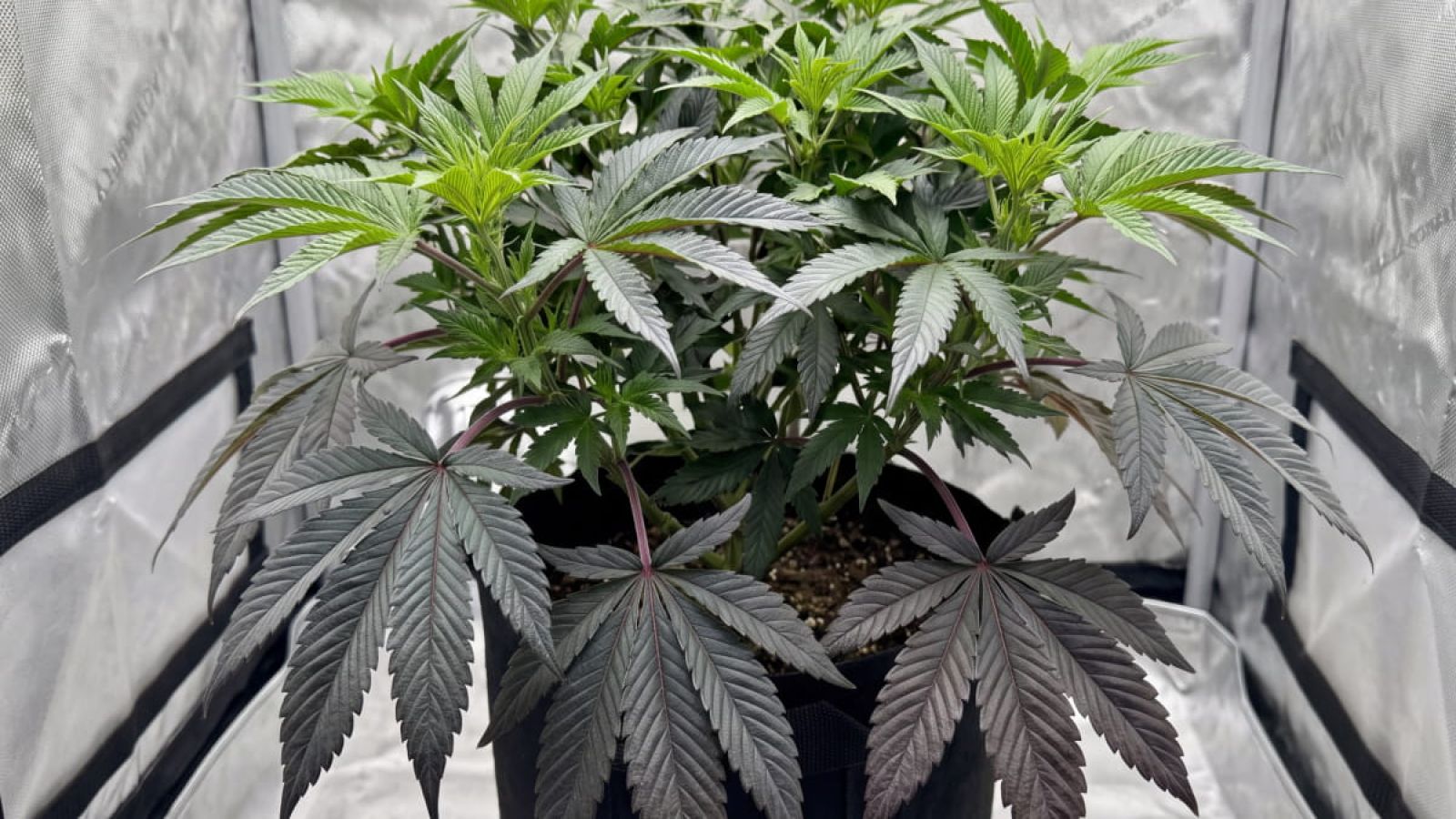
If your cannabis plant's lower leaves are darkening to a blue-green or purple shade, showing bronze spots, or growing slower than they should, a phosphorus deficiency is a likely cause. Phosphorus sits among the three macronutrients weed plants need most, and a shortage shows up in ways that are easy to spot once you know the pattern.
The good news is that most cases trace back to root pH rather than a true lack of phosphorus, which makes the problem straightforward to reverse.
This guide walks you through what the deficiency looks like, why stems turn red or purple, what causes it, and how to fix it before it costs you yield.
What Is a Phosphorus Deficiency in Cannabis?
A phosphorus deficiency happens when a cannabis plant can't draw enough phosphorus to run its core functions, so growth stalls and older leaves start to discolor.
Phosphorus is the "P" in the N-P-K ratio printed on every nutrient label, sitting alongside nitrogen and potassium. The plant leans on it for energy transfer, photosynthesis, root development, and flower formation, so a shortfall touches nearly every stage of the grow.
Phosphorus is also a mobile nutrient, which shapes where the damage shows up. A plant running short can move phosphorus around inside itself, so a deficiency reads from the bottom of the plant upward rather than striking everywhere at once.
The same mechanism holds across most crops, but cannabis draws especially hard on phosphorus once buds start forming.
What Does a Cannabis Phosphorus Deficiency Look Like?
A phosphorus deficiency announces itself through three visual changes: darkening color, spreading spots, and a stiffening, thickened texture.
If you're scanning your own plant right now, work from the bottom up and look for the following signs in roughly the order they appear.
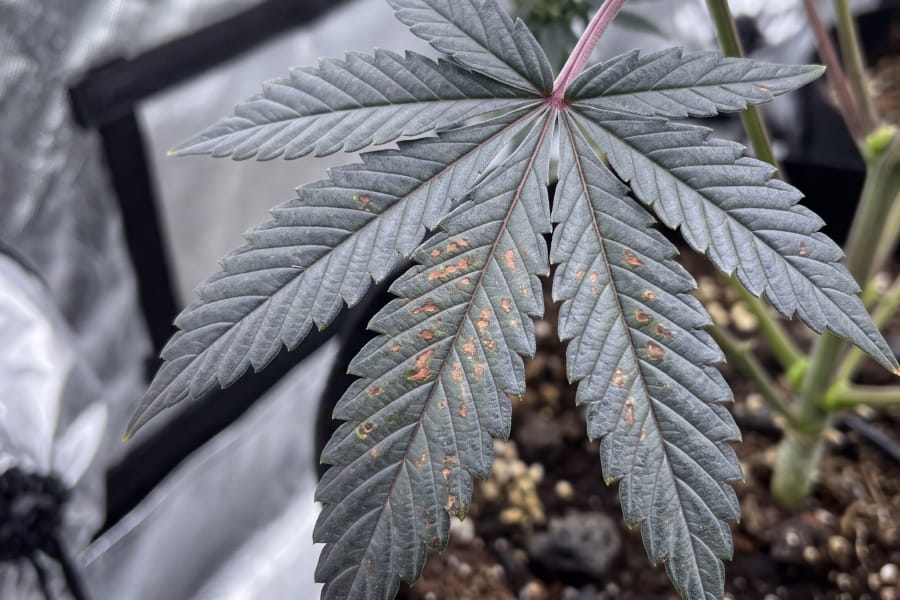
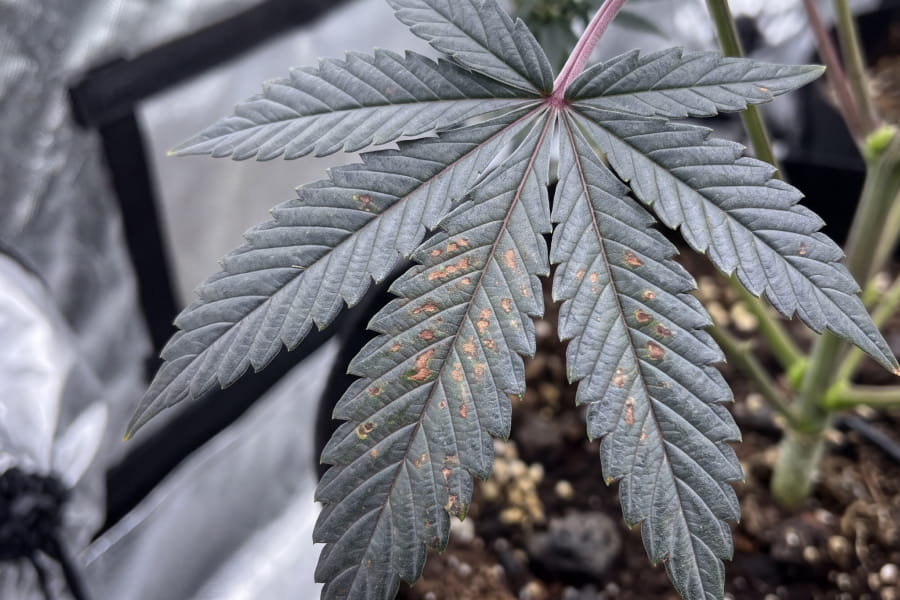
Bronze spots and dark, shiny colouring on a lower leaf - a classic phosphorus-deficiency signature. Damaged leaves won't green back up.
Dark, Blue-Green or Purple Leaves
The earliest visual clue is a shift in leaf color. Affected leaves deepen to a dark green, then take on a blue, gray, or purple tinge and may look slightly shiny. Spotting the change at this stage, before spots set in, gives you the best chance of a clean recovery.
Bronze or Brown Spots and Splotches
As the deficiency progresses, leaves develop bronze, purple, or brown spots and larger splotches. These often show up first where light hits the leaf hardest, and the marked areas can eventually turn yellow and die off.
Leaves damaged this far rarely green back up, so judge recovery by new growth rather than the spotted leaves.
Slow Growth and Weak Stems
Because phosphorus drives energy transfer, a shortage slows the plant down. Vegetating plants stall their vertical stretch, flowering plants produce meager buds, and stems and branches can turn brittle enough to snap under the weight of developing flowers.
Left untreated, the deficiency drags down both final yield and resin production.
Where Symptoms Appear First
Phosphorus deficiency shows up on the lower, oldest leaves first because phosphorus is mobile, so a struggling plant strips it from established foliage to feed new growth. Symptoms then climb the plant if the cause isn't addressed.
Damage concentrated in fresh top growth points to a different nutrient, so the bottom-up pattern is a useful confirmation.
Why Are My Cannabis Stems Turning Red or Purple?
Red or purple stems are a classic phosphorus-deficiency symptom, but on their own they usually mean nothing is wrong.
Many cannabis strains naturally grow red or purple stems even when every nutrient need is being met, and direct light exposure can redden stems the way sun tans skin. This is the single most misdiagnosed sign in the whole picture, so it's worth slowing down on.
The rule of thumb is simple: red or purple stems matter only when they show up alongside other symptoms. If your plant has darkening lower leaves, bronze spots, and reddening stems together, phosphorus is a reasonable suspect.
If the stems are the only oddity and the leaves look healthy, the color almost certainly comes from your plant's genetics and needs no treatment at all. Some strains are simply purple-leaning by design and turn colorful as they mature. Before reaching for extra nutrients, confirm there's a real problem to solve.
What Causes Phosphorus Deficiency in Cannabis?
Most phosphorus deficiencies aren't caused by too little phosphorus in the feed, they're caused by something blocking the plant from absorbing what's already there. Understanding the common causes helps you fix the right problem instead of overfeeding into a worse one.
pH Out of Range
An incorrect root-zone pH is the leading cause. When the pH drifts too high or too low, roots simply can't take up phosphorus even when it's present in the medium.
Phosphorus absorbs best at a root pH of 6.0 to 6.3 ideal (5.5 to 6.5 acceptable) in soil and 5.8 to 6.2 ideal (5.6 to 6.4 acceptable) in coco or hydroponics, so a reading outside those figures is the first thing to check.
Note that soil sitting between 6.3 and 6.7 is prone to micronutrient lockout, so drifting high does its own damage.
Cold Temperatures
Cool conditions slow phosphorus uptake. Once the root zone drops below 50°F (10°C), phosphorus uptake gets genuinely difficult, and a cold spell alone can trigger deficiency symptoms even when everything else is dialed in.
Large temperature swings make it harder still, since the plant struggles to move phosphorus into its tissues when conditions won't hold steady.
Overwatering and Root Problems
Wet, compacted, or waterlogged soil suffocates roots and blocks phosphorus uptake even when pH and nutrient levels are correct.
Overwatering and general root stress are common hidden triggers, which is why watering habits matter as much as what's in the feed.
Nutrient Excess and Lockout
Too much of certain nutrients can crowd phosphorus out. An excess of iron or calcium interferes with phosphorus absorption and produces deficiency symptoms despite adequate phosphorus in the medium. A buildup of nutrient salts from overfeeding has the same effect, creating a lockout the plant can't push through.
Is It Phosphorus Lockout or a Real Deficiency?
Phosphorus lockout and a true deficiency look identical on the leaf, but they call for different fixes, so telling them apart saves you from making things worse.
A true deficiency means there isn't enough phosphorus reaching the plant. Lockout means the phosphorus is right there in the soil or reservoir, but a pH imbalance or nutrient salt buildup is stopping the roots from absorbing it.
The distinction matters because the instinctive response to a deficiency - add more phosphorus - actively worsens a lockout by adding to the salt buildup.
This is why pH is always the first check. If you're feeding a standard cannabis nutrient formulated for flowering and still seeing symptoms, lockout is far more likely than a genuine shortage, because bloom nutrients already carry phosphorus in abundance. Correct the pH first, and flush only if salts have built up, before you reach for more feed.
How to Fix Phosphorus Deficiency in Cannabis
Fixing a phosphorus deficiency is mostly about restoring uptake rather than dumping in more phosphorus. Work through the following steps in order, since the early ones resolve the majority of cases on their own.
First, Know How Your Setup Handles pH
How you correct pH depends on what you grow in. In coco, hydro, or soil fed with synthetic nutrients, you pH the input directly: mix your nutrients into the water, then adjust the finished solution, since that is what reaches the roots.
A living or fully organic soil is different. The root-zone microbes regulate pH to what the plant needs, so you generally leave your water alone, and pH Up or Down can disrupt that biology.
If an organic soil truly drifts, correct it slowly with amendments, lime to raise it, elemental sulfur to lower it, rather than a quick chemical fix.
Step 1: Check and Correct Root pH
Start by measuring the pH of your root zone or runoff. Bring soil to 6.0 to 6.3 ideal (5.5 to 6.5 acceptable) and hydro or coco to 5.8 to 6.2 ideal (5.6 to 6.4 acceptable), keeping soil clear of the 6.3 to 6.7 band that locks out micronutrients.
Use the method that suits your setup: adjust the nutrient solution in coco, hydro, or soil fed with synthetic nutrients, and amend slowly in living soil.
Because pH problems cause most phosphorus deficiencies, this single step clears up a large share of cases without anything further.
Step 2: Flush if Salts Have Built Up
If symptoms persist after correcting pH, suspect salt buildup: a high runoff EC (electrical conductivity) or TDS (total dissolved solids) confirms it.
Flush the medium with clean, pH-corrected water only, running it through until roughly a third leaches out the bottom (in hydro, change the reservoir entirely). This clears the excess salts blocking uptake and resets the root zone.
Because the flush resets pH too, re-check and correct it on the clean baseline before you feed, which is the next step. In living soil, flush only on genuine buildup, since heavy flushing strips the microbes doing your pH work.
Step 3: Feed Phosphorus and Organic Sources
Once pH and salts are handled, make sure the plant is actually getting phosphorus. Most bloom or flowering nutrients supply it generously, and liquid phosphorus is among the most readily available forms.
For organic grows, bat guano, bone meal, fish meal, worm castings, and soft rock phosphate all deliver phosphorus, though several work best brewed into a tea first. A phosphorus-rich foliar spray can act as a fast interim fix, often halting the spread within a couple of days.
Step 4: Fix Temperature and Watering
Bring the grow space into a comfortable room-temperature range and keep it steady, with the root zone well clear of 50°F (10°C), where phosphorus uptake stalls.
Water properly so roots stay healthy rather than waterlogged. These two corrections remove the environmental triggers that quietly cause phosphorus deficiency even when the feed is fine.
Step 5: Watch New Growth for Recovery
After making your changes, watch the plant for about a week. Recovery shows up as healthy new growth without fresh spots or discoloration, not as the old damaged leaves turning green again — those won't recover. If new leaves come in clean, the problem is solved.
How to Prevent Phosphorus Deficiency in Cannabis
Preventing a phosphorus deficiency is far easier than treating one, and it comes down to a handful of consistent habits.
Check your root pH regularly, since a stable pH keeps phosphorus available and heads off most lockouts before they start. Feed a balanced, quality nutrient line and follow the dosing instructions rather than overfeeding, which triggers the salt buildup that causes lockout in the first place.
Healthy soil biology also does a lot of quiet work. Beneficial microbes like mycorrhizal fungi form a partnership with the roots and convert phosphorus into forms the plant absorbs easily, so amending with them or using quality compost pays off across the whole grow.
Larger containers of well-formulated soil give roots a bigger nutrient reserve to draw from, which lowers deficiency risk further.
Can Cannabis Get Too Much Phosphorus? (Phosphorus Toxicity)
Cannabis rarely suffers from too much phosphorus, but overdoing it still causes problems worth avoiding. Because weed plants love phosphorus and use it heavily in flowering, it's difficult to genuinely overdose them. The catch is that piling on excess phosphorus when there's no deficiency won't grow bigger buds, it tends to block the uptake of other nutrients instead.
That blocking effect is the real risk of phosphorus toxicity. An oversupply of phosphorus can crowd out zinc in particular, triggering a secondary deficiency that sends you chasing symptoms a simpler feed would have prevented.
If your plant isn't showing a phosphorus deficiency, adding more phosphorus offers no benefit and can quietly create a nutrient burn situation. Feed to need, not to excess.
How Phosphorus Deficiency Compares to Other Cannabis Deficiencies
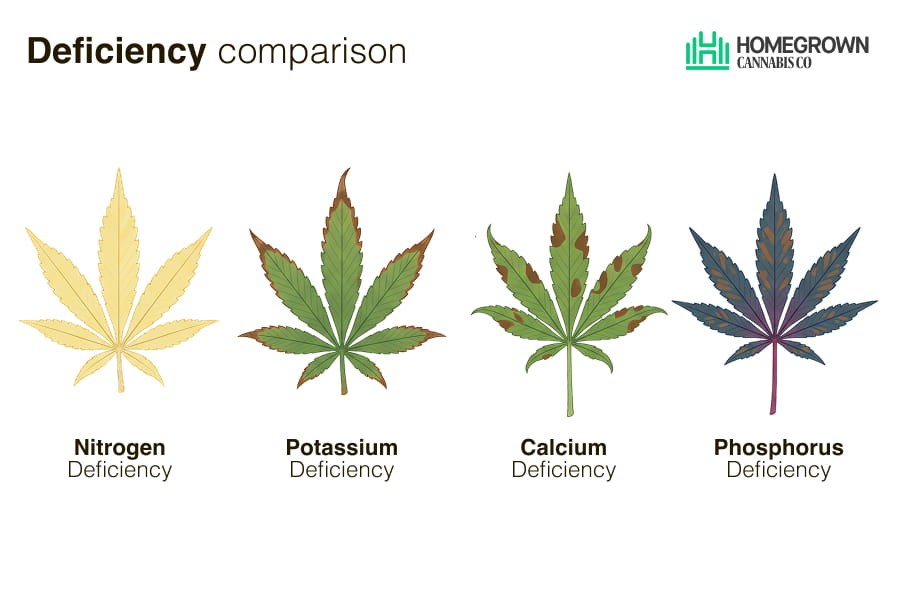
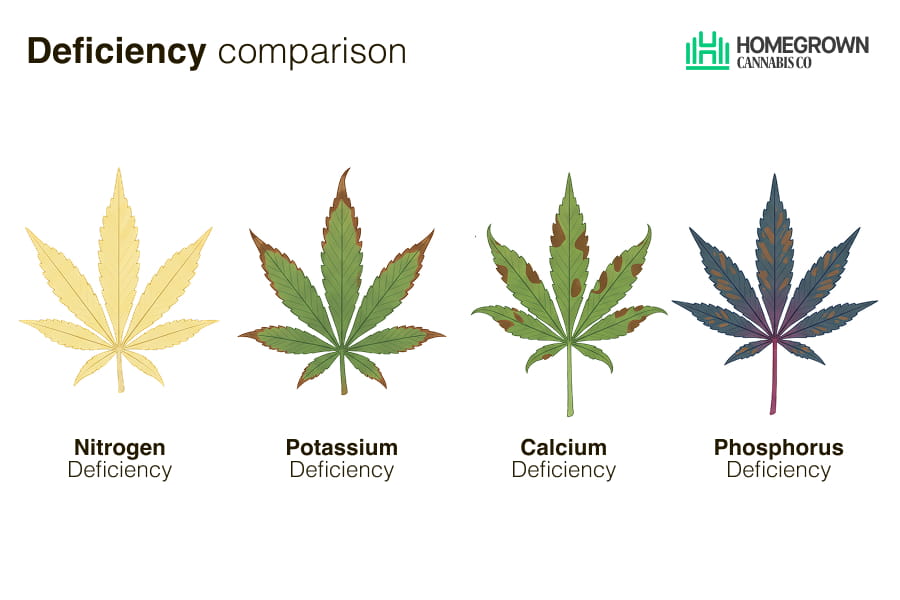
How phosphorus compares to nitrogen, potassium and calcium deficiencies - colour and location are the quickest way to tell them apart.
Many cannabis deficiencies involve discolored leaves, which makes them easy to confuse, and misdiagnosis usually makes the problem worse. Phosphorus has a distinctive signature that separates it from the other common culprits once you know what to compare against.
The quickest way to place phosphorus against its neighbors is color and location. Where phosphorus darkens the lower leaves, a nitrogen deficiency does the opposite to color: it fades lower leaves to pale yellow, since nitrogen is also mobile but shows as draining color rather than deepening it.
A potassium deficiency concentrates its damage on leaf edges and tips, browning and burning the margins rather than spotting the leaf body.
Calcium is the trickiest neighbor, because phosphorus and calcium interact inside the plant and their deficiencies often appear together. A calcium deficiency tends to damage new growth and cause warped, spotted young leaves, whereas phosphorus hits the old growth first. When you see symptoms of both, treating the pH and root health usually addresses the shared root cause.
Start Your Next Grow From Stronger Genetics
A lot of deficiency trouble is decided before a seed ever goes into soil. Plants grown from stable, vigorous genetics shrug off nutrient swings that would stall a weaker plant, so the strain you choose is a real part of your prevention plan.
Starting from quality marijuana seeds - kept and germinated in line with your local laws - gives you a plant that's easier to keep healthy from day one.
Most growers reach for feminized cannabis seeds to keep an all-female crop and skip the guesswork of sexing plants. Others choose autoflower seeds which flower on their own schedule regardless of light cycle, a beginner-friendly pick for a quick turnaround.
Either way, a strong start is the cheapest deficiency insurance you can buy.
Frequently Asked Questions
What Does Phosphorus Deficiency Look Like on Cannabis Leaves?
It shows first on lower, older leaves as a dark green, blue, or purple coloring, followed by bronze, purple, or brown spots and splotches. Affected leaves may thicken, curl, and feel stiff before the marked areas yellow and die. The symptoms climb up the plant if the cause goes unaddressed.
Are Red or Purple Stems Always a Phosphorus Deficiency?
No. Red or purple stems on their own are usually genetic and harmless, and direct light can also redden them. Treat stem color as a phosphorus warning only when it appears alongside other symptoms like darkening lower leaves and bronze spots.
What pH Is Best for Phosphorus Uptake in Cannabis?
Aim for a root pH of 6.0 to 6.3 ideally (5.5 to 6.5 acceptable) in soil and 5.8 to 6.2 ideally (5.6 to 6.4 acceptable) in coco or hydroponics. Since pH problems cause most phosphorus deficiencies, checking and correcting your root-zone pH is always the first step. In soil, avoid the 6.3 to 6.7 window, that range starts blocking micronutrients.
Can You Fix Phosphorus Deficiency During Flowering?
Yes. Correct the root pH, flush any salt buildup, and ensure a bloom nutrient supplying phosphorus. Flowering plants demand phosphorus heavily for bud production, so acting quickly protects both yield and potency.
What's the Difference Between Phosphorus Deficiency and Phosphorus Lockout?
A deficiency means not enough phosphorus is reaching the plant, while lockout means phosphorus is present but a pH imbalance or salt buildup blocks absorption. They look identical on the leaf, but lockout is fixed by correcting pH and, if salts have built up, flushing.
Can Too Much Phosphorus Hurt Cannabis Plants?
It can. While cannabis is hard to overdose on phosphorus, an excess blocks the uptake of other nutrients and can trigger unexpected deficiencies elsewhere. Adding phosphorus when there's no deficiency provides no benefit, so feed to the plant's actual need.