



Moldy Weed: How to Spot It and Keep Your Buds Fresh
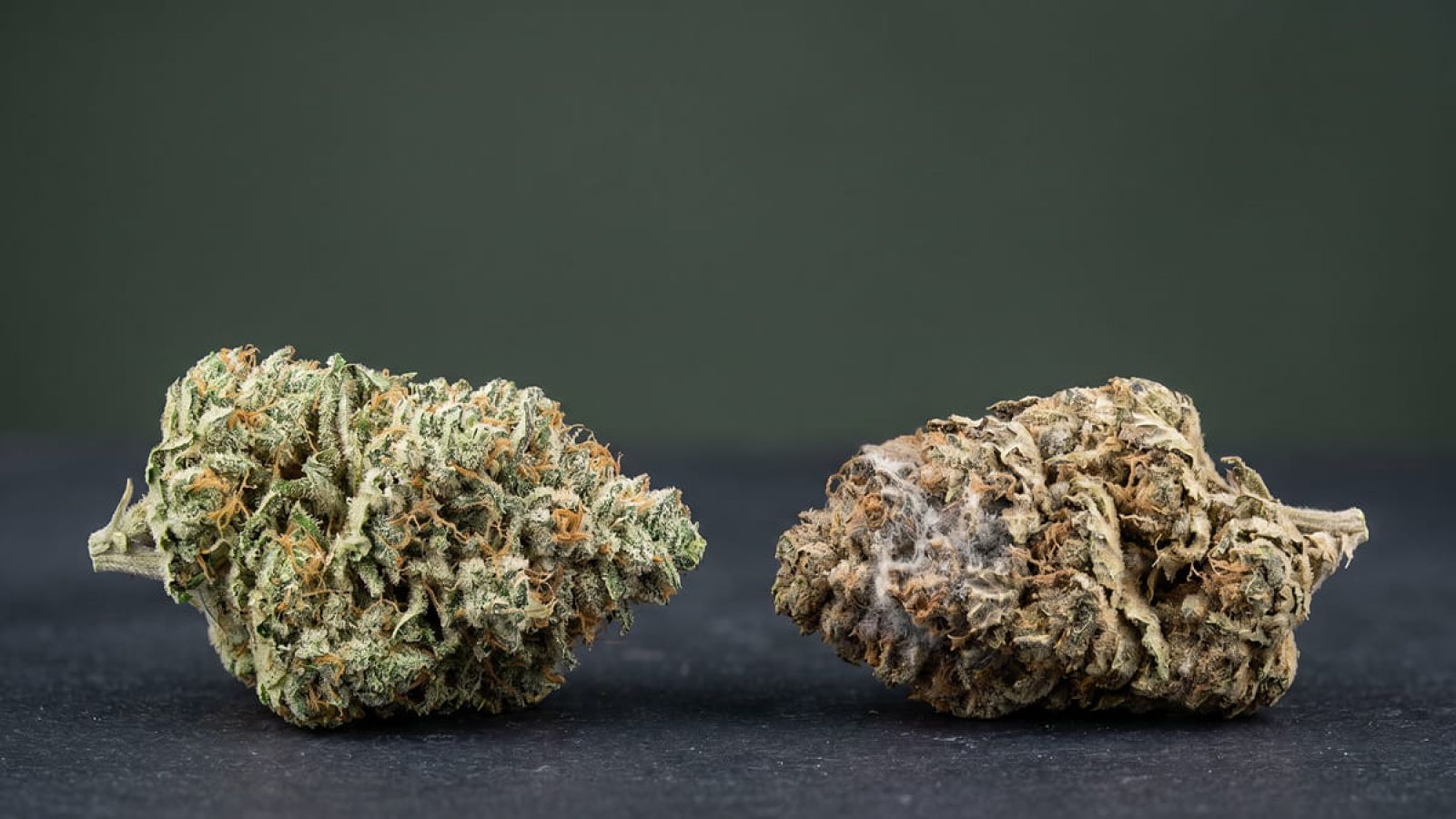
Moldy weed shows up as dull gray or white fuzz, powder, or patches that sit unevenly on the bud instead of the frosty sparkle of a healthy flower. Mold is a common problem because cannabis is an agricultural product, and dense, resin-heavy buds trap moisture that fungi feed on.
Spotting it comes down to three checks: how the bud looks under light, how it smells, and how it feels. This guide walks through each signal, sorts real mold from harmless trichomes, explains the health risks of smoking it, and shows how to store cannabis so mold never takes hold.
At a glance: moldy weed looks dull with gray or white fuzz or powder in uneven patches, smells musty or sour, and feels damp or spongy. Healthy trichomes sparkle under light; mold stays flat and matte. When a signal is off, throw the batch out.
What Does Moldy Weed Look Like?
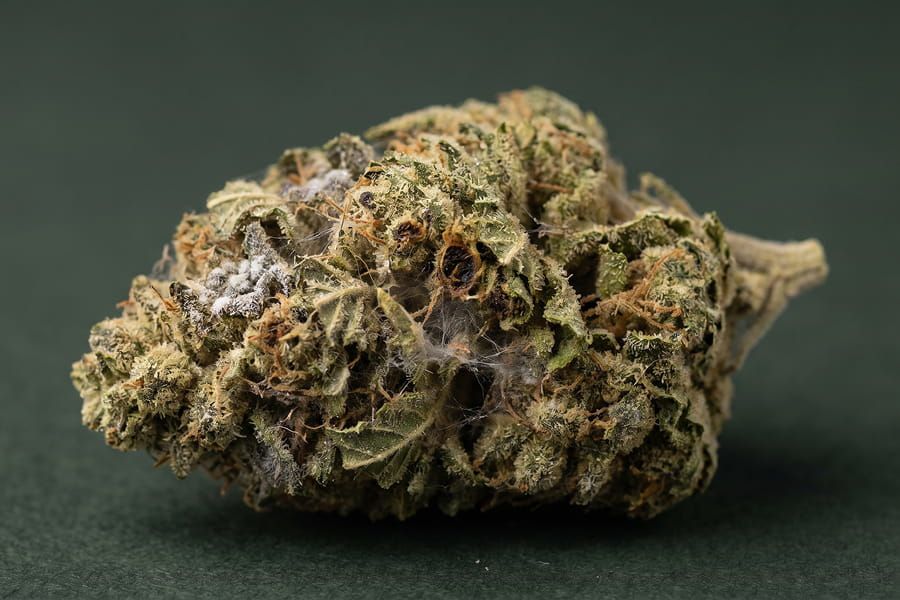
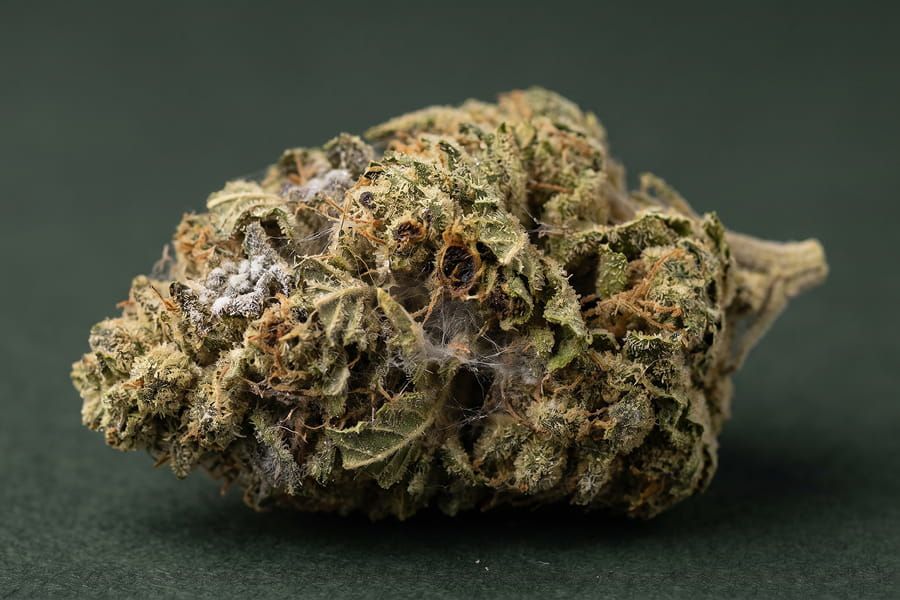
Moldy weed appears as dull gray or white patches, fuzz, or powder that sits unevenly on the bud surface. Healthy flower carries an even, frosty coating and a consistent color, so anything that looks "added on" or concentrated in one spot deserves a closer look.
The clearest way to inspect a bud is under bright light or a magnifying glass, where mold reads as flat and lifeless against the plant's natural texture. Three visual signs point to mold on cannabis:
-
- White or gray powdery coating — a chalky, dusty film that dulls the bud instead of sparkling.
- Fuzzy or cotton-like patches — lint, cotton, or thin webbing lodged in the flower's creases.
- Dark spots and discoloration — random brown or black blotches that don't match the strain's color.
White or Gray Powdery Coating on Weed
White or gray powder on weed settles in patches within the tight folds, along the stem, and where buds press together in a jar. This kind of mold often appears before any obvious fuzz, so it's easy to miss on a quick glance. The powder dulls the surface rather than reflecting light, which separates it from the shine of a resinous bud.
If the coating looks chalky and sits only in certain spots, treat the flower as suspect.
Fuzzy or Cotton-Like Patches on Buds
Fuzzy patches on buds resemble lint, cotton, or thin webbing caught in the flower's creases. This texture signals active mold growth, and it usually shows up where airflow is worst, deep in the folds or near the stem. Anything that looks stringy or web-like doesn't belong on healthy cannabis. Set the bud aside the moment you see fuzz that seems out of place.
Dark Spots and Discoloration on Cannabis
Dark spots on cannabis appear as random brown or black blotches that don't match the strain's natural color. Not every brown speck means mold, since some cultivars carry purple or amber tones naturally.
A blotchy look paired with a damp smell or a spongy feel, though, is a strong warning sign. Dense sections and the base near the stem are worth the closest inspection.
Mold vs. Trichomes: How to Tell the Difference
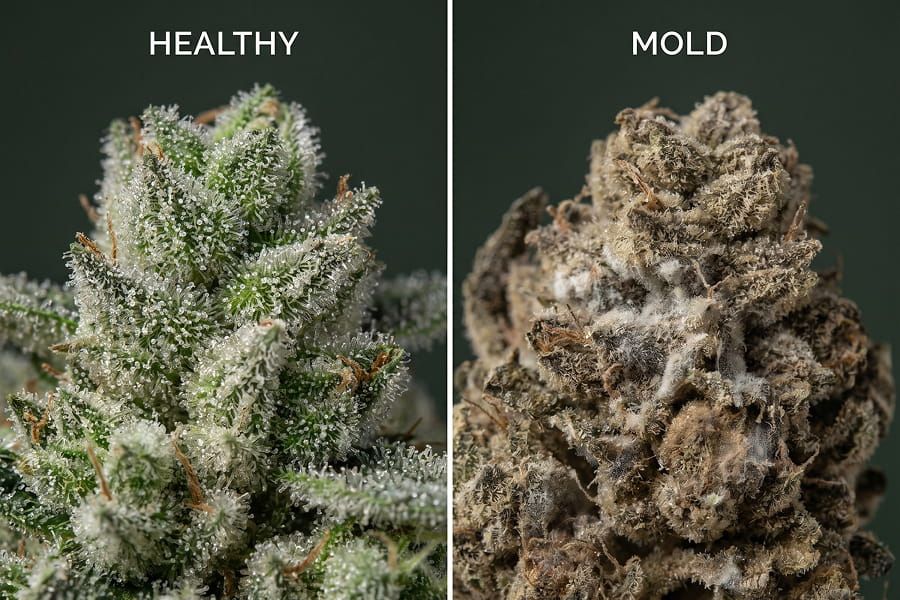
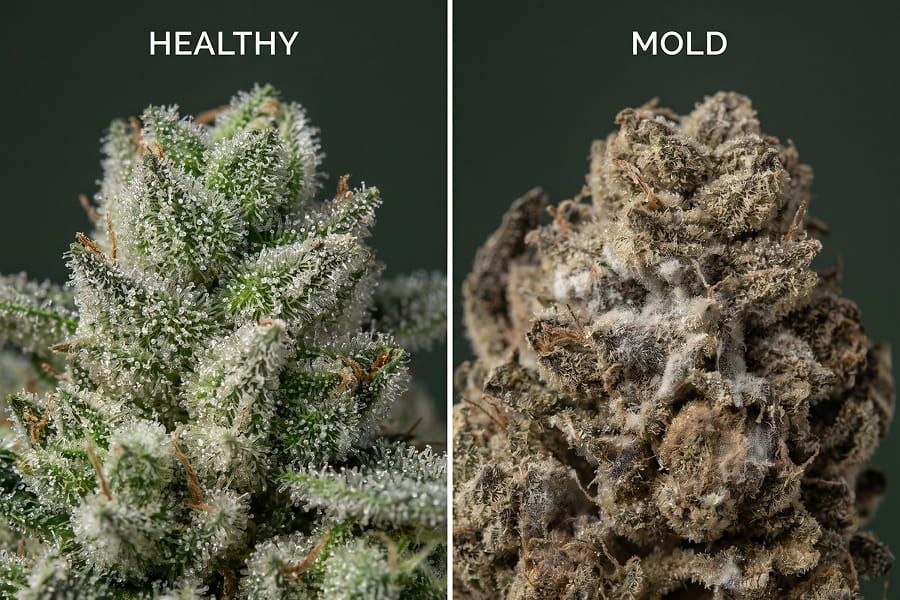
Trichomes and mold both look whitish at a glance, but trichomes sparkle under light while mold stays flat, dull, and patchy. Trichomes are the tiny resin glands that produce the plant's cannabinoids and terpenes, and they coat a healthy bud in an even, crystal-like frost. Mold, by contrast, clusters in specific spots and never catches the light.
This distinction matters because mistaking one for the other means either tossing good flower or smoking contaminated bud.
| Trait | Healthy Trichomes | Mold on Weed | Reliability |
| Look under light | Even, crystal-like, sparkles | Flat, dull, dusty, patchy | High |
| Distribution | Consistent across the bud | Clustered in creases and folds | High |
| Texture | Sticky, springy | Slimy, damp, or crumbly | High |
| Strands | No cotton-like fibers | Lint, cotton, or webbing | Medium |
| Smell | Piney, citrus, gassy, sweet | Musty, sour, ammonia-like | High |
Why the White Powder on Weed Is Usually Trichomes
The white powder on weed usually indicates trichomes, the resin glands that give cannabis its aroma, flavor, and potency. Frosty, glittering coverage across the whole bud is the mark of a healthy, well-grown flower, not a problem. So a bud that looks crystallized, sparkly, or almost white with frost is typically loaded with trichomes rather than spoiled.
The concern only begins when that coating turns chalky, dull, and patchy instead of bright and even.
The Flashlight Test for Mold on Weed
The flashlight test is the fastest way to separate mold from trichomes. Hold the bud under a phone light and tilt it slowly, watching the surface. Trichomes throw tiny flashes like glitter, while moldy areas stay flat and dusty no matter the angle. That single difference settles most mold-versus-trichome questions in seconds.
What Does Moldy Weed Smell and Feel Like?
Moldy weed smells musty, sour, or like a damp basement, and it feels spongy, wet, or slimy instead of springy. Your nose often catches mold before your eyes do, because contaminated buds give off a heavy, mildewy odor that overrides the strain's natural terpenes. Healthy nugs smell earthy, gassy, sweet, or skunky, and they break apart cleanly with a dry snap.
A bud that feels damp inside or smells like an old wet towel has trapped moisture and likely mold, so it belongs in the trash.
Is Moldy Weed the Same as Bud Rot?
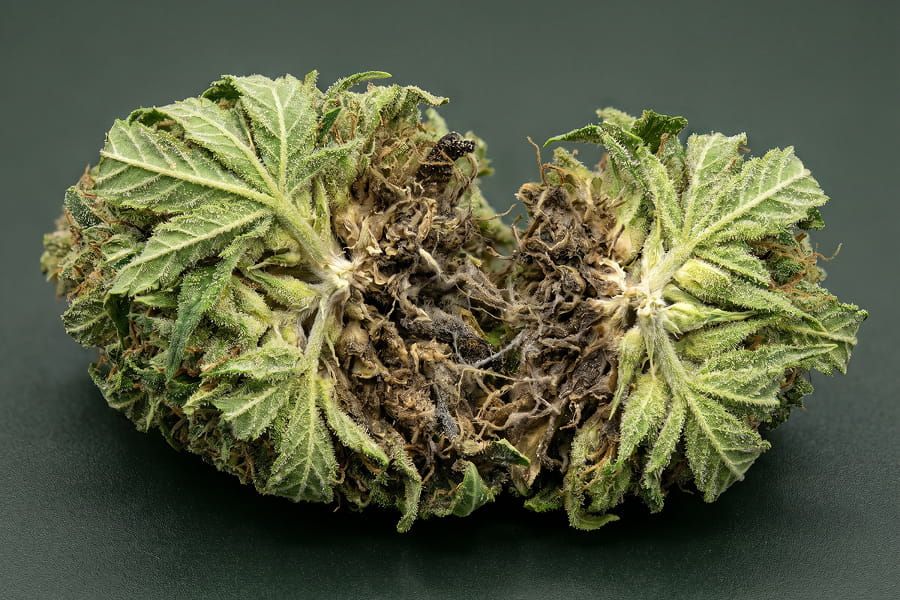
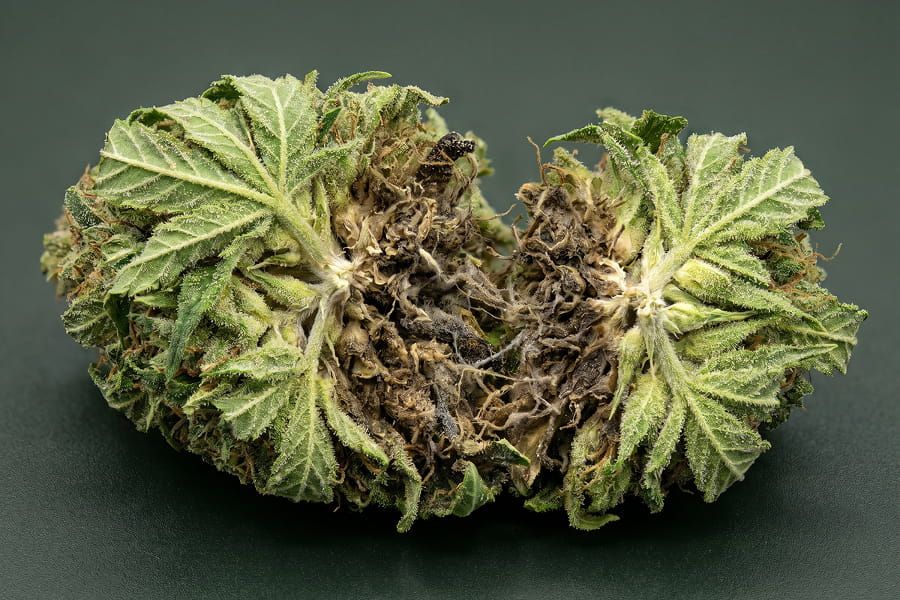
No, bud rot is one specific type of mold, caused by the fungus Botrytis cinerea, that attacks the dense inside of the flower rather than the surface. General mold, such as powdery mildew, tends to coat the outside of leaves and buds, while bud rot decays the flower from the core outward.
Because it starts in the thickest, most tightly packed part of the nug, the outside can still look fine while the center turns brown, gray, and crumbly. Splitting a dense bud open reveals bud rot when the inside looks dark, mushy, or lifeless compared to the outer layer.
What Happens If You Smoke Moldy Weed?
Smoking moldy weed can trigger coughing, nausea, and respiratory irritation, and it poses a serious risk to people with allergies or weakened immune systems. For most healthy people the symptoms are more unpleasant than dangerous, but inhaling mold spores is never a safe bet.
People with asthma or mold allergies may react with sinus pain, congestion, or wheezing.
The bigger danger falls on those with compromised immune systems. Certain fungi found on cannabis, including Aspergillus, can cause severe lung infections such as aspergillosis in vulnerable individuals. Researchers have documented these and other potentially harmful fungi on dispensary and grower cannabis samples.
If you notice coughing, headaches, or nausea after a session, mold may be the cause, so stop and inspect what you're smoking.
Can You Save or Fix Moldy Weed?
No, moldy weed cannot be reliably salvaged because mold spreads deeper than the visible surface, so cutting off the bad part does not remove the contamination. The spores you can't see travel through the flower, which means a "clean-looking" section may still carry mold.
Smoking around a moldy patch isn't a safe test, and the flavor and smell will be off anyway. The safe choice is to discard the whole batch rather than risk your lungs over a few grams.
How to Store Weed and Prevent Mold
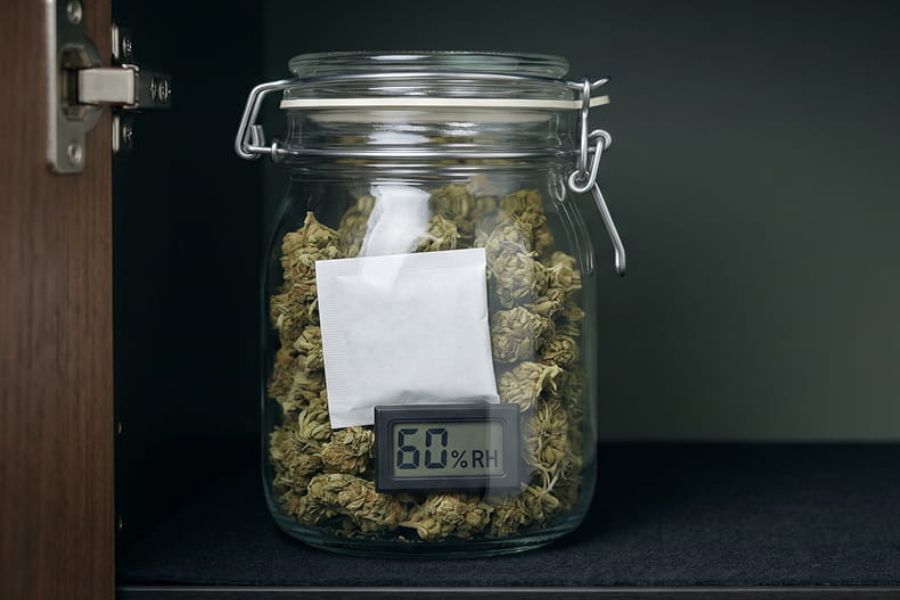
Proper storage prevents mold on weed by controlling the three conditions mold needs: moisture, warmth, and poor airflow. Get those three right and cured flower stays fresh for months. Storage does most of the work in keeping a stash clean.
Three habits keep cannabis mold-free:
-
- Control humidity between 55% and 62% — the range that keeps flower fresh without trapping moisture.
- Use airtight glass jars, not plastic bags — glass limits oxygen and won't hold condensation.
- Keep weed in a cool, dark place — heat and light speed up mold and degrade the flower.
Control Humidity Between 55% and 62%
Cannabis stays mold-free at a relative humidity of 55% to 62%, which humidity-control packs maintain inside the jar. Above that range, moisture builds up and dormant spores activate; below it, the flower dries out and loses potency.
Two-way humidity packs release or absorb moisture to hold the target level automatically. They cost little, last a couple of months, and take the guesswork out of storage. Drop one in the jar and it does the balancing for you.
Use Airtight Glass Jars, Not Plastic Bags
Airtight glass jars protect cured weed better than plastic bags because glass limits oxygen exposure and doesn't trap condensation. A sealed mason jar keeps air and moisture out while preserving the terpenes that carry aroma and flavor. Plastic bags cling to the flower, build static, and hold in dampness that feeds mold.
If you want an upgrade, UV-resistant or opaque jars add light protection on top of the airtight seal.
Keep Weed in a Cool, Dark Place
A cool, dark cabinet preserves cannabis because heat, light, and humidity together accelerate mold growth and cannabinoid loss. The ideal storage temperature sits just below 77°F (25°C), which rules out sunny windowsills and warm shelves.
Skip the fridge and freezer too, since the cold and the moisture swings do more harm than good. A drawer or closet away from heat sources works best, and using flower within about six months keeps it at its peak.
Preventing Mold Starts With Healthy Genetics and Good Storage
Mold resistance begins at the genetic level, because some cannabis seed varieties tolerate humidity and dense-bud moisture better than others.
Growers who start with quality marijuana seeds for sale and choose cultivars suited to their climate give themselves a head start against mold long before harvest. Strong genetics won't replace good drying, curing, and storage, but they set the baseline for a clean, resilient crop.
For home growers who want predictable, healthy plants, feminized weed seeds remove the male-plant guesswork and let attention stay on airflow, humidity, and canopy management. Shorter grow cycles also shrink the window when moisture can cause trouble, which is one reason autoflowering seeds appeal to growers in humid regions.
Wherever cultivation is permitted under federal, state, and local law, pairing mold-resistant genetics with disciplined storage is the most reliable way to keep buds fresh from seed to jar.
Frequently Asked Questions
Can Weed Get Moldy?
Yes, weed can get moldy. Cannabis is a plant product, and mold takes hold whenever moisture, warmth, and poor airflow combine. Even properly cured flower molds if it's stored in a humid or warm spot.
Can You Smoke Moldy Weed If You Remove the Mold?
No, removing the visible mold doesn't make weed safe to smoke. Mold spreads through the flower beyond what you can see, so picking off a patch leaves contamination behind. Discard the whole batch instead.
Can Weed Get Moldy in a Sealed Jar?
Yes, weed can mold in a sealed jar if moisture is trapped inside or the jar sits somewhere warm. A jar is better than a plastic bag, but it still needs a humidity pack and a cool, dark storage spot to stay mold-free.
How Long Does It Take for Weed to Mold?
Weed can begin to mold within days if it's stored damp or in high humidity. Well-cured flower kept at 55% to 62% humidity resists mold for months. Moisture, not time, is the main driver.
Does Moldy Weed Always Smell?
Moldy weed usually gives off a musty, sour, or damp odor, and often the smell arrives before any visible signs. Some mold gives off little to no odor (powdery mildew is a good example), and hidden bud rot inside a dense nug can be tough to catch by smell alone, so inspect appearance and texture too.
Is Black Mold on Weed More Dangerous?
Black mold on weed is a clear reason to discard the flower. Any visible mold, regardless of color, signals contamination you shouldn't inhale. Rather than judging by color, treat all mold as unsafe and throw the batch out.
Can Moldy Weed Make You Sick?
Moldy weed can make you sick, with symptoms ranging from coughing and nausea to allergic reactions. People with asthma, allergies, or weakened immune systems face the highest risk, including serious fungal infections. Healthy people usually experience milder but still unpleasant effects.
What's the Best Way to Store Weed to Prevent Mold?
The best way to store weed is in an airtight glass jar with a humidity-control pack set to 55% to 62%, kept in a cool, dark place. Avoid plastic bags, direct sunlight, and the fridge or freezer, and use flower within about six months.
Mold and its health effects are a sensitive topic. If you experience persistent respiratory symptoms or think you've inhaled mold, talk to a doctor or licensed medical professional.