



Bud Rot in Cannabis: How to Identify, Treat & Prevent Gray Mold
Bud rot ruins cannabis harvests quietly, hollowing out the biggest buds from the inside while the plant still looks healthy on the surface. Most growers only notice once a cola starts dying, and by then the fungus has usually spread further than the visible damage suggests.
This guide covers how to recognize bud rot at every stage, how to tell it apart from other cannabis mold, what causes it, whether affected weed is usable, and how to stop and prevent it — including the seed choices that lower your risk before the season even starts.
The quick version: Bud rot works from the inside of dense buds outward, so the fastest tell is a cola whose leaves yellow or wilt suddenly over a day or two. Pull that spot apart and check for gray-brown, dusty, or mushy tissue inside. If it's there, that bud and its neighbors are done: remove them, don't smoke them, and fix the humidity before it spreads.
What Is Bud Rot in Cannabis?
Bud rot is a fungal disease that rots cannabis buds from the inside out, caused by the fungus Botrytis cinerea. Growers also call it gray mold or botrytis blight, and it attacks the biggest, densest colas right as they approach harvest.
The fungus settles deep in the bud where moisture gets trapped, then eats through the flower before most growers notice anything on the surface.
Gray mold earns its nickname "the curse of the successful grower" because it targets your fattest buds first. A thick cola holds humidity in its core and shields that damp pocket from airflow, which is exactly the environment botrytis needs to take hold.
What Does Bud Rot Look Like on Cannabis?
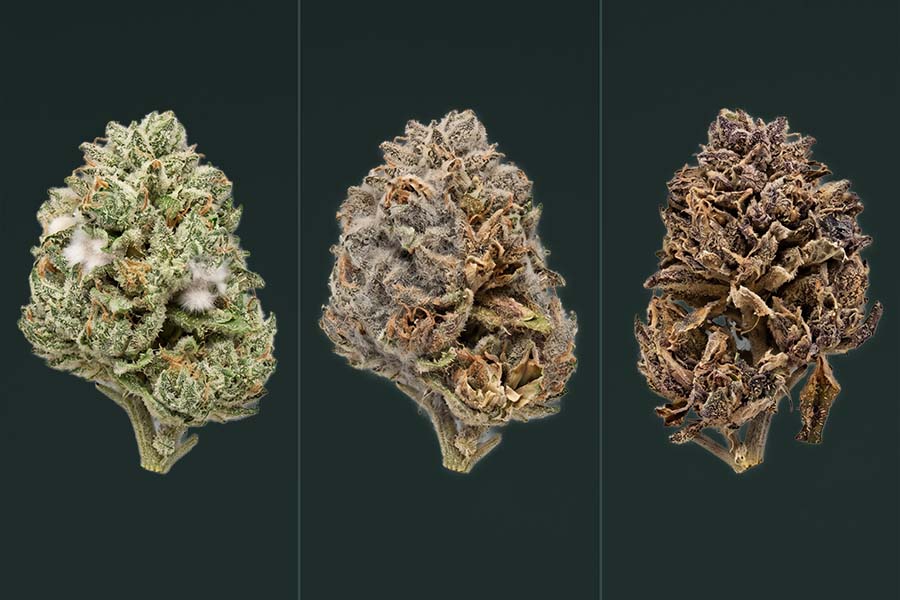
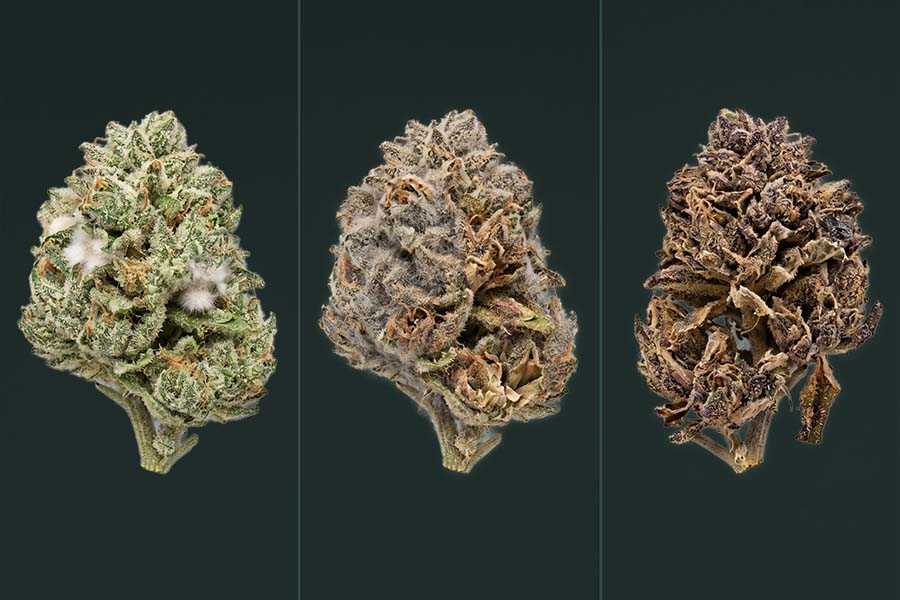
Three stages of cannabis bud rot: white fuzzy mold, gray mold, and brown dried decay.
Bud rot shows up as brown, gray, or mushy patches inside dense buds, often hiding under leaves that yellow suddenly. The changes happen fast - usually within a day or two - and they stand out sharply against the healthy parts of the plant. Because the rot works from the inside, the surface can look almost normal while the core is already destroyed.
Here's how to read the three things worth checking:
- Early signs - sudden yellow or wilting leaves on your biggest colas, often the first visible cue.
- Colors - the range of shades bud rot turns your flowers, from white fuzz to dark purple.
- Inside the bud - the dusty gray-brown core that confirms an active infection.
Early Signs of Bud Rot
Early bud rot appears as sudden yellow or wilting leaves on your biggest colas, often seeming to happen overnight. The base of those discolored leaves is usually where the rot has started, so a leaf that pulls out with almost no resistance is a warning sign. Any cola with leaves dying in patches deserves a close inspection right away.
Catching gray mold at this stage gives you the best chance of saving the rest of the plant.
Sometimes you'll spot the very first phase as fluffy white growth on the sides of a bud, which is your window to act before it darkens and burrows deeper.
Bud Rot Colors - Brown, Gray, White, and Dark Buds
Bud rot changes bud color to brown, gray, white-fuzzy, or dark purple depending on the stage of infection. It typically begins as fluffy white mold, darkens to gray, then turns brown or even deep purple as the tissue dies and dries out. Affected leaves often shift color too, curling and turning yellow or purple around the rotting spot.
These color changes are behind a lot of the "why is my bud turning brown" and "dark bud" worries growers run into. A brown, crispy patch on an otherwise green cola doesn't mean the plant is ready to harvest - it means something is wrong.
And while a uniform, frosty coat of trichomes that makes a bud look pale is perfectly normal, a fuzzy white patch that wasn't there yesterday is not.
What Bud Rot Looks Like Inside the Bud
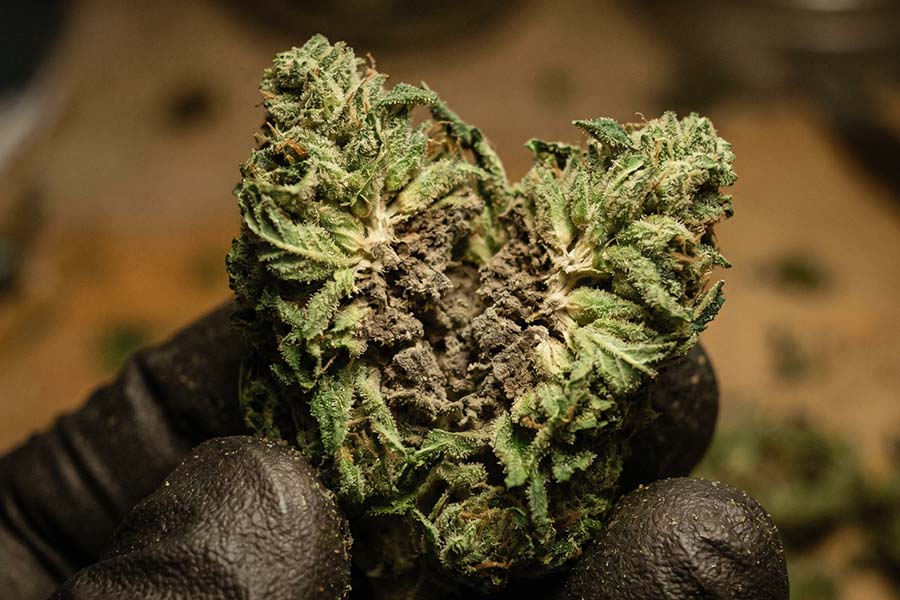
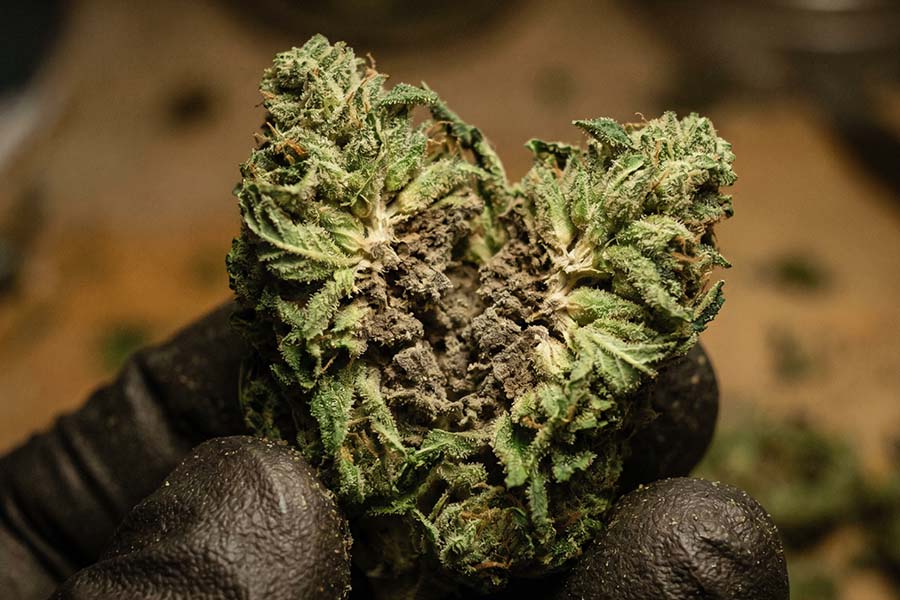
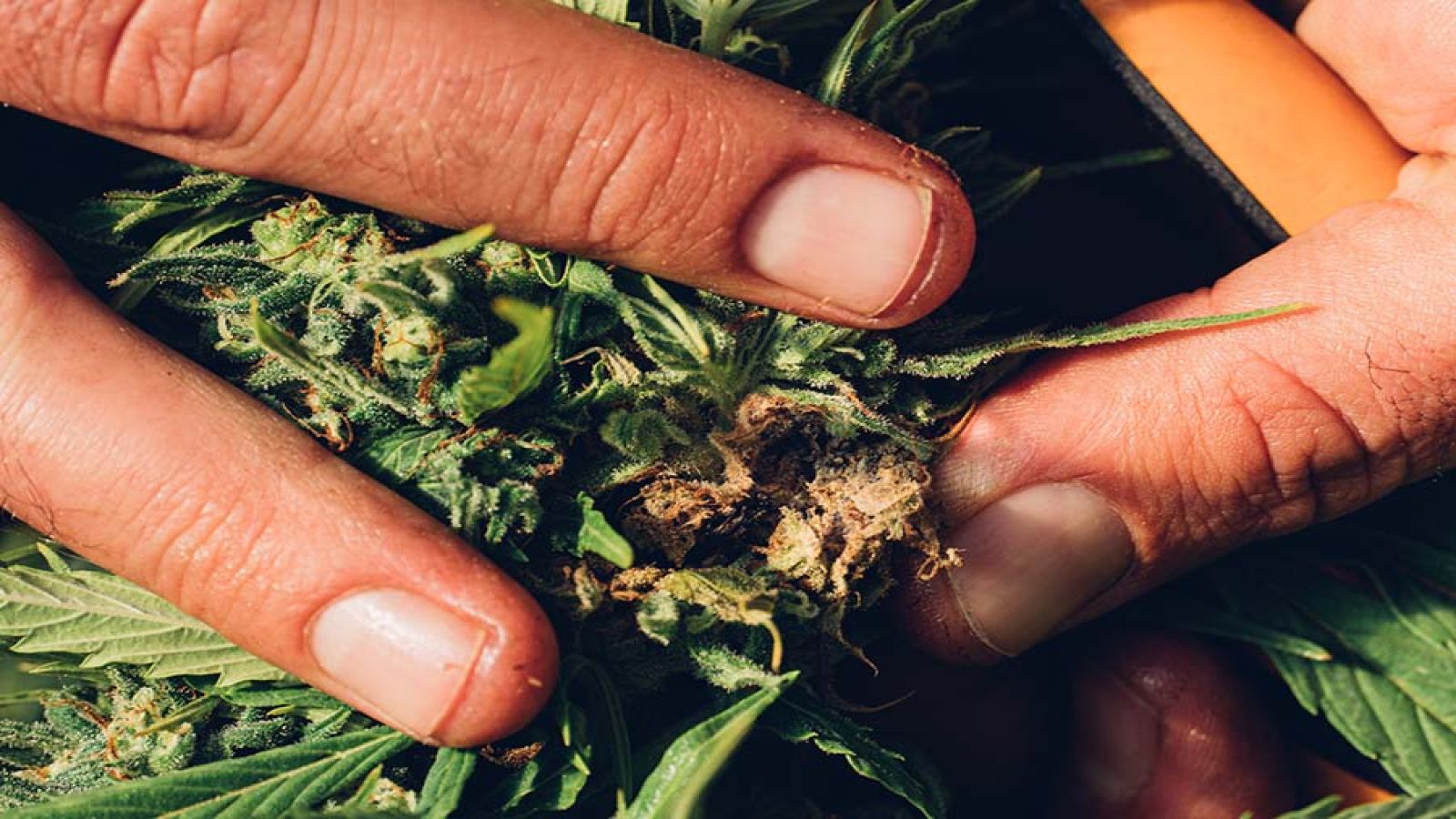
Cannabis bud split open showing gray-brown dusty botrytis.
Bud rot hides inside dense colas, where the core turns gray-brown and dusty with spores. When you split an infected bud open, the inside looks moldy and dark, and the tissue crumbles or pulls apart with almost no effort. That dusty material is millions of fungal spores waiting to spread, which is why you handle a rotted bud carefully and never shake it near healthy flowers.
On the nugs themselves, advanced rot leaves the bud looking dried, discolored, and structurally weak. A healthy bud holds together; a rotted one separates at the sick spots and reveals the brown or gray decay running through the middle.
What Is the Difference Between Bud Rot and Other Cannabis Mold?
Bud rot rots buds from the inside while powdery mildew coats surfaces from the outside. That single distinction - interior decay versus a topical coating - is the fastest way to tell the two apart. Bud rot also moves much faster and destroys the flower itself, whereas surface molds spread more slowly across leaves.
|
Trait |
Bud Rot (Botrytis) |
Powdery Mildew / Surface Mold |
Reliability |
|
Where it appears |
Inside dense buds, from the core out |
On leaf and bud surfaces, topical |
High |
|
Color |
Gray → brown → dark, dusty |
White or gray powder coating |
High |
|
Texture |
Mushy, crumbles and splits easily |
Powdery, wipes partially away |
High |
|
First visible cue |
Sudden yellow or wilting leaves on a cola |
White dusting on fan leaves |
Medium |
|
Speed |
Very fast (1–2 days) |
Slower spread |
Medium |
If you split a bud and the inside is gray-brown and dusty, that's bud rot, and it's the most reliable signal you can get. Surface powder that sits on top of otherwise firm tissue points to a different mold problem with a different response.
What Causes Bud Rot in Cannabis?
Bud rot is caused by the fungus Botrytis cinerea, which germinates in wet, humid, still air. The spores are everywhere - they travel on wind, rain, animals, and even clones - so the fungus isn't something you can fully keep off your plants. What you control is whether the conditions let those spores grow, and several factors stack the odds against you:
- High humidity above 60% RH, which gives spores the moisture they need to germinate.
- Poor airflow and stagnant air that trap moisture inside the canopy.
- Cool, damp conditions from morning dew, fog, or rain settling on the buds.
- Plant stress or wounds from pests, pruning, or damage that give spores an entry point.
- Overcrowded, dense canopies that block light and hold humidity around the buds.
- Contaminated tools that carry spores from an infected plant to a healthy one.
Botrytis only germinates on wet tissue when temperatures sit between 55°F and 70°F (13 to 21°C), which is why a stretch of cool, rainy days is such a reliable trigger. Dense buds and sticky trichomes trap moisture during late flowering, making plants most vulnerable right before harvest.
How Botrytis Spreads Through a Cannabis Plant
Botrytis spreads through airborne spores that settle in dense, damp buds and enter through wounds or natural openings. Once a spore lands somewhere moist, it germinates, feeds on the plant tissue, and pushes outward from the core. The infected tissue darkens, dries, and crumbles, releasing a fresh cloud of spores that infect nearby buds and plants.
That chain reaction is why a single rotted spot can ruin a whole plant in days if the conditions don't change. Cutting out the visible rot slows things down, but the fungus keeps returning until you fix the humidity and airflow that let it grow.
Can Bud Rot Spread After Harvest?
Yes, bud rot can spread after harvest when buds are dried or stored in humid conditions. Moisture left in thick buds during drying gives lingering spores everything they need to keep growing, so a cure that runs too wet can turn a clean harvest moldy.
Drying with steady airflow and inspecting buds as they cure keeps post-harvest rot from taking hold.
Is Weed With Bud Rot Safe to Smoke?
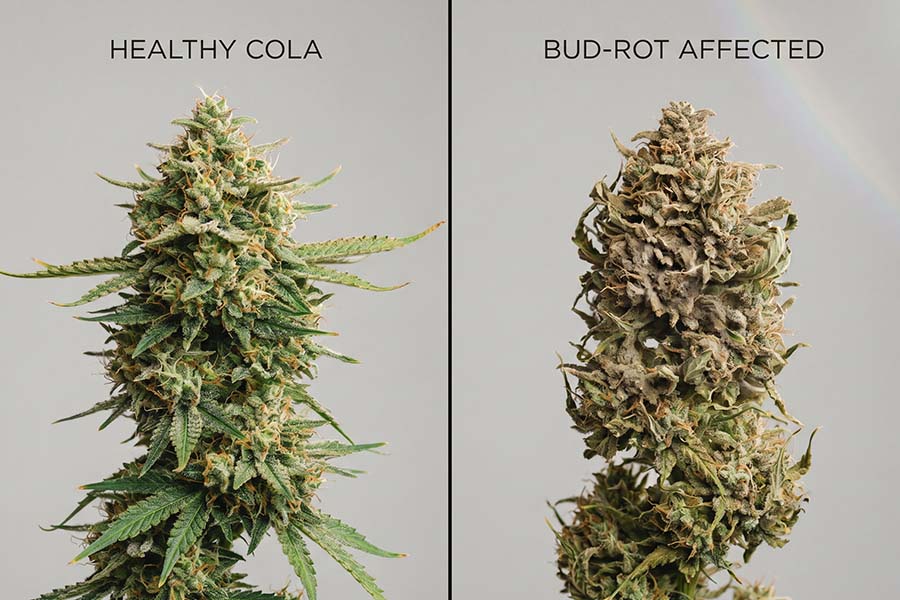
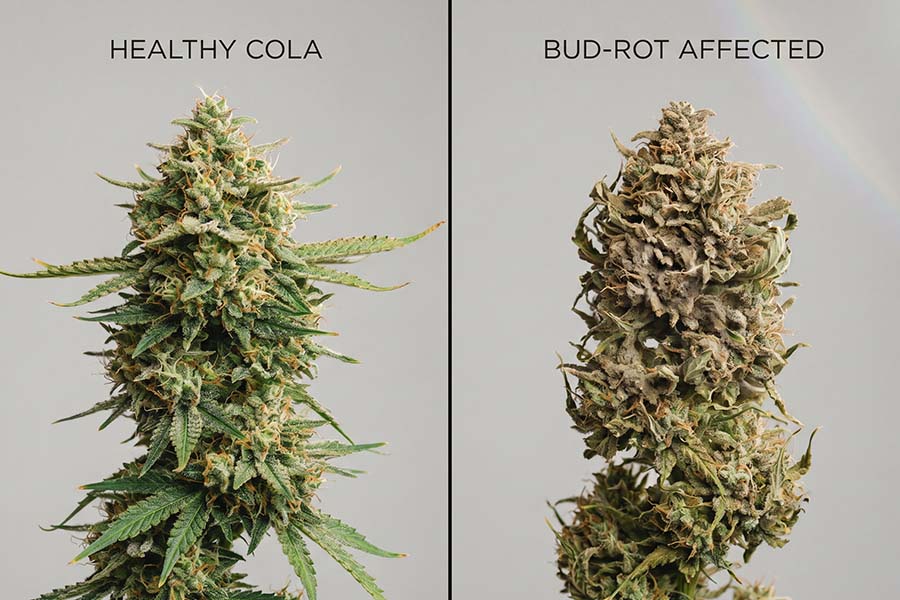
Healthy cannabis cola beside a bud-rot-affected cola.
No, weed with bud rot is not safe to smoke, and affected buds should be discarded. Bud rot is a fungal infection that fills the flower with spores, and smoking or consuming that material means inhaling mold, not something worth risking for a salvaged bud. Any nug showing brown, gray, or dusty decay goes in the trash, along with the buds touching it.
Trying to trim the rot out and keep the rest of a cola isn't safe either, because the spores spread further into the tissue than the visible damage suggests. When in doubt, throw it out; the loss of one bud is far cheaper than a lungful of fungus.
How Do You Treat and Stop Bud Rot From Spreading?
You stop bud rot by removing every affected bud immediately and fixing the humid, still-air conditions that caused it. Cut out the rotted flowers and the buds next to them, and be careful not to let any of the dusty spores touch the rest of the plant. Get the removed material away from your grow space entirely, then get the plant somewhere warmer, drier, and breezier.
Botrytis stalls once temperatures climb, so raise the space to at least 75°F (24°C) day and night, drop the humidity, and keep air moving.
Removal alone won't hold if the environment stays damp. Lower the humidity to below 50%, add air circulation over and through the canopy, and defoliate leaves that are trapping moisture against bud sites. If you can genuinely fix those conditions, the plant can keep ripening; if you can't, harvesting a little early beats losing more buds to rot.
One important caution: never spray flowering buds with fungicide, neem oil, or sulfur to fight active bud rot. Nothing sprayed on the surface reaches the fungus once it's burrowed inside a dense flower, and these materials leave buds smelling and tasting foul.
Sulfur and neem are preventative tools for the vegetative stage, before flowers form (sulfur in particular has to come off well before bud sites appear, since the residue wrecks aroma and flavor).
How Do You Prevent Bud Rot in Cannabis?
You prevent bud rot by keeping humidity low, air moving, and buds dry through late flowering. Because the spores are always present, prevention is about denying them the conditions they need rather than trying to keep them off the plant. Three levers matter most:
- Environment control - the humidity, airflow, and sanitation habits that keep spores from germinating.
- Outdoor protection - the extra steps rain, dew, and frost demand from outdoor growers.
- Seed genetics - the mold-resistant and fast-flowering varieties that lower your risk from the start.
Environment Control — Humidity, Airflow, and Sanitation
Low humidity, steady airflow, and clean tools prevent bud rot because botrytis needs moisture, stagnant air, and entry points to spread. Keep relative humidity below 50% during flowering, run fans so air moves over and through the canopy, and give big buds room to breathe instead of crowding them together.
Defoliating overly bushy plants lowers the moisture trapped around bud sites and lets light reach the lower flowers.
Sanitation matters more than most growers expect. Botrytis spores travel on pruning tools and hands, so sterilizing tools between plants stops you from carrying an infection from a sick cola to a healthy one.
A hygrometer helps you catch humidity spikes early, and some growers add biocontrol agents like Trichoderma or Bacillus subtilis that compete with the fungus before flowers form.
Preventing Bud Rot in Outdoor Cannabis Grows
Outdoor plants face bud rot from rain, dew, and frost, so covering and shaking plants protects late-flower colas. A tarp suspended above the plants - not resting on them - keeps drizzle off the buds, and shaking plants after rain or a dewy morning knocks off the water that spores would otherwise use to germinate.
A breezy planting spot helps the buds dry between weather events. Follow the federal, state, and local rules that apply where you grow.
Frost is a particular threat late in the season, because the melt creates exactly the wet, cool conditions botrytis loves. If a cold, wet stretch is settling in, warming a small garden with a heater keeps conditions outside the range botrytis needs. When you can't warm or dry the plants out, harvesting early beats gambling the whole crop against the weather.
Choosing Mold-Resistant and Fast-Flowering Seeds
Mold-resistant and fast-flowering genetics lower bud rot risk in two ways: some cultivars simply hold up better against botrytis, and faster-finishing plants reach harvest before autumn rain and frost create the damp conditions the fungus needs.
Choosing the right marijuana seeds is the earliest and easiest prevention decision an eligible adult grower can make where cultivation is permitted by law.
Autoflower weed seeds suit growers in short-summer or rainy climates because their age-based flowering races to harvest in a compact window, often well before the wet season sets in. For growers who want predictable female plants and a simpler path to dense, healthy colas, feminized seeds keep the focus on airflow and canopy management rather than culling males.
Preventing Bud Rot Before It Spreads
Bud rot is easiest to manage when you catch it early. Watch for sudden yellowing or wilting leaves around otherwise healthy-looking colas, then inspect the inside of dense buds for gray, brown, or mushy tissue. If you find rot, remove the affected buds immediately and avoid using or smoking contaminated flower.
Prevention comes down to keeping moisture under control, maintaining good airflow, and checking dense colas regularly as harvest approaches. Choosing plants suited to your growing environment and avoiding overly humid conditions can also reduce the chances of Botrytis cinerea taking hold in the first place.
Frequently Asked Questions
Why Is My Weed White—Is That Bud Rot or Trichomes?
White on your buds can be either harmless trichomes or early bud rot, and the texture tells them apart. Trichomes look like a fine, even, crystal-like frost across the whole bud and are a sign of ripening. Early botrytis looks like a fuzzy white cottony patch in one spot, and it wasn't there the day before - that's the one to worry about.
Does Bud Rot Have a Smell?
Bud rot often carries a damp, musty, or hay-like odor that stands out from the plant's normal aroma. A cola that smells wet or moldy, especially near a discolored patch, is worth splitting open to check the core. Trust your nose alongside your eyes when you inspect late-flower buds.
Can Bud Rot Spread to My Other Plants?
Yes, bud rot spreads readily between plants because a single infected bud releases millions of airborne spores. Remove and isolate any affected plant material immediately, and avoid moving through the grow space in a way that stirs spores toward healthy plants. Fixing the shared humidity and airflow problem protects the plants that aren't infected yet.
What Does Mold on Dried or Stored Buds Look Like?
Mold on dried buds shows up as white, gray, or fuzzy patches, sometimes with a musty smell, and it means the buds cured or stored too wet. Any dried nug with fuzzy growth or a moldy odor should be discarded rather than smoked. Storing cured buds at moderate humidity with good airflow prevents this after-harvest rot.
Is a Little Bud Rot Okay if I Cut It Out?
No, a bud with any rot should be discarded entirely, even if you cut away the visible damage. The spores reach further into the tissue than the brown or gray part suggests, so a trimmed bud still carries fungus. Removing the whole affected bud and its neighbors is the only safe call.
What Outdoor Strains Resist Bud Rot Best?
The best outdoor choices are mold-resistant cultivars and fast-flowering or autoflower varieties that finish before the damp season. Fast-finishing plants dodge the autumn rain and frost that trigger most outdoor bud rot, while naturally resistant genetics hold up better under humid pressure. Matching the variety to your local climate is the single most useful pre-season decision.