



When to Top Autoflowers (& How to Do It Right)
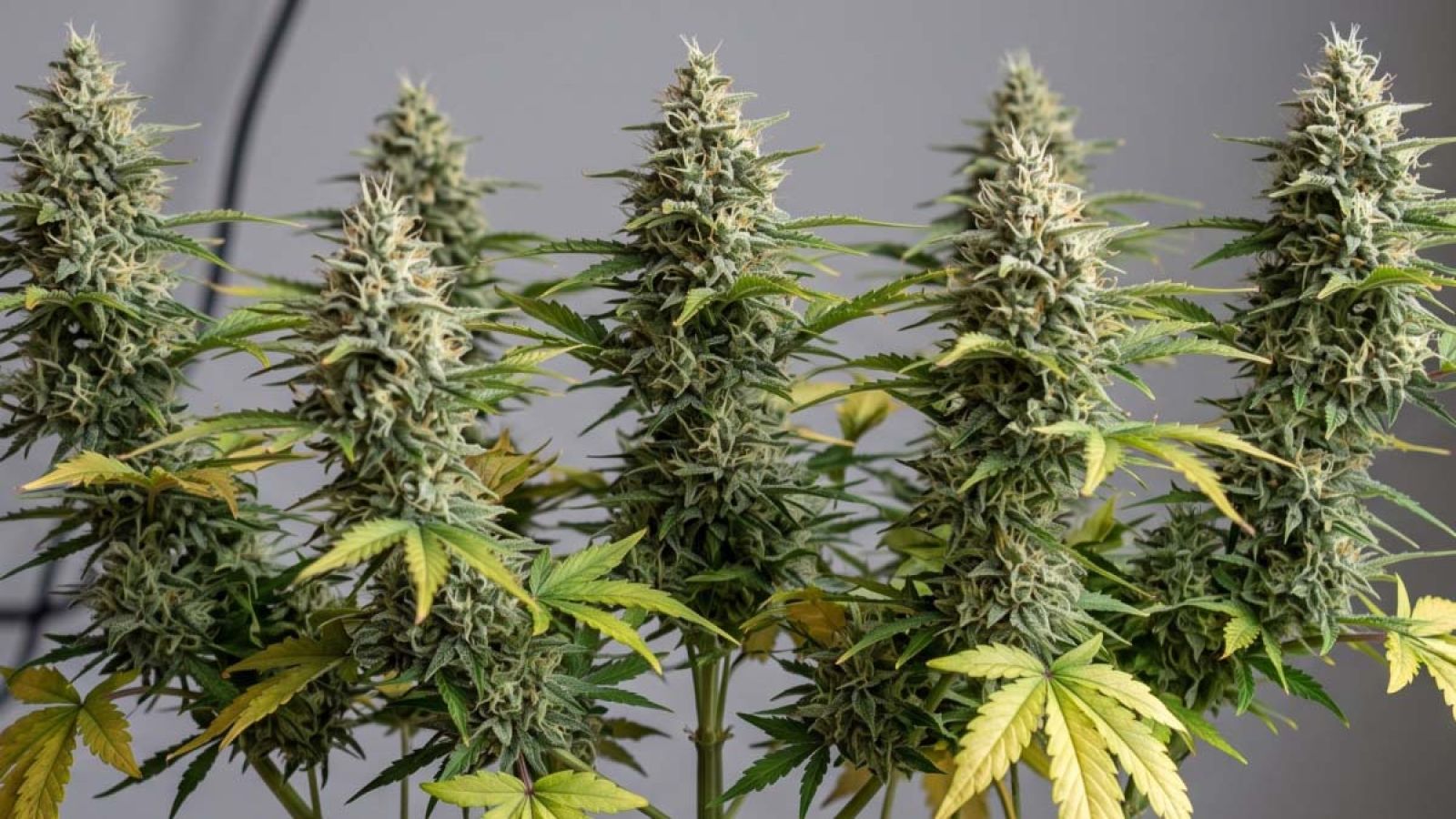
Topping autoflowers is one of the most debated techniques in cannabis cultivation, and for good reason. Done right, it gives you more colas, a flatter canopy and better light penetration across your whole grow. Get it wrong though, and your harvests will suffer. The trick is knowing when to top autoflowers before the vegetative window closes.
This guide walks you through the exact timing, step-by-step method and when low-stress training (LST) is the smarter call.
Can You Top Autoflowers?
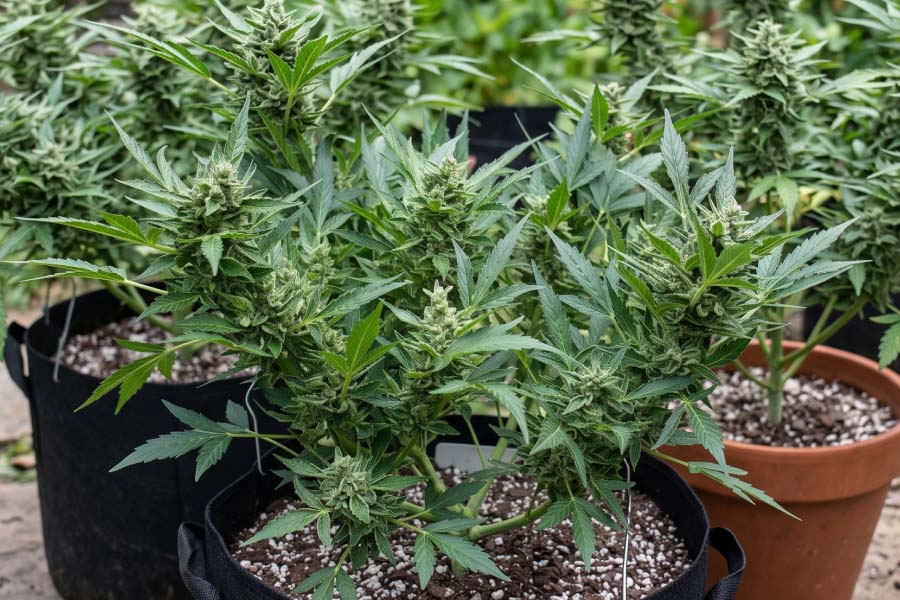
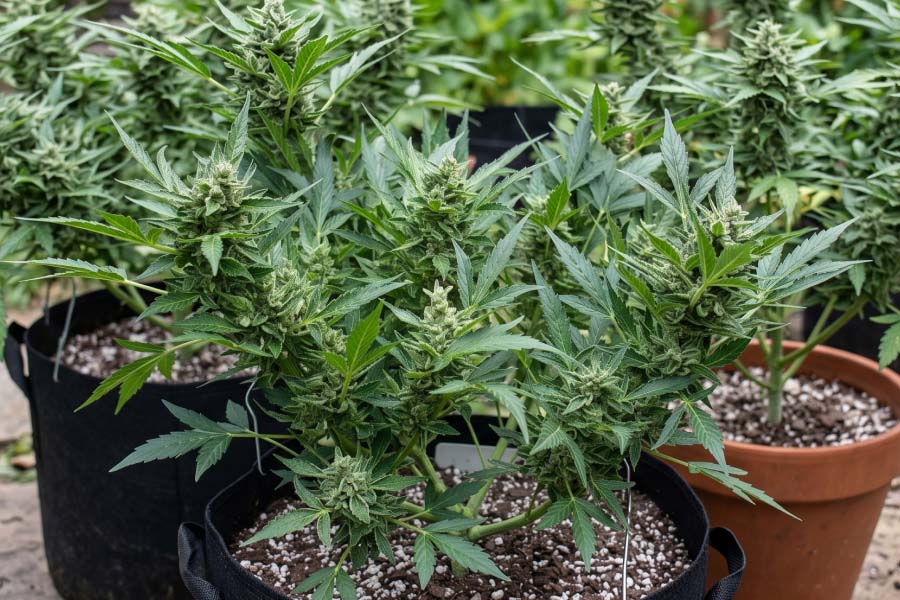
Healthy autoflower cannabis plants bouncing back after topping, with lush green leaves and strong growth.
Yes, you can top autoflowers when the plant is healthy, growing fast and hasn't entered pre-flower. Topping removes the main growing tip, which breaks apical dominance and forces the plant to grow two main colas instead of one. The result is a wider canopy with more bud sites exposed to your light.
The catch is that autoflowering cannabis plants run on a fixed lifecycle. They don't care what you do with the lights. Once the internal clock says it's time to flower, they flower. That means any stress from topping has to resolve while the vegetative window is still open.
If your plant is healthy and you hit the window, topping autoflowers is a legitimate strategy. If you miss the window, you're trading yield for nothing.
Why Timing Autoflower Topping is Everything
Autoflower topping depends on a vegetative window that closes fast, usually between weeks 3 and 5 from germination. Most autoflowering weed plants spend only 3–4 weeks in veg before pre-flower signs appear.
After that, the lifecycle continues whether the plant has recovered from a cut or not.
Photoperiod plants don't have this problem. You can top a photoperiod plant, wait two weeks for recovery and then flip to flower on your schedule. With autoflowering cannabis plants, you can't pause the clock. A plant that loses a week to stress from topping is a plant that enters flower smaller than it should be.
That's why experienced growers treat the timing of autoflower topping as the most critical variable in the decision.
When to Top Autoflowers: The Right Window
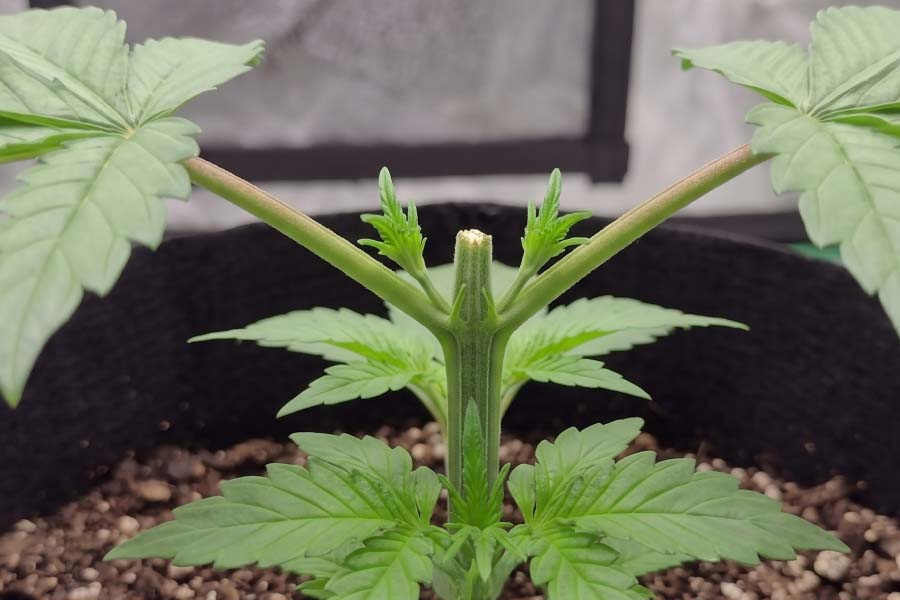
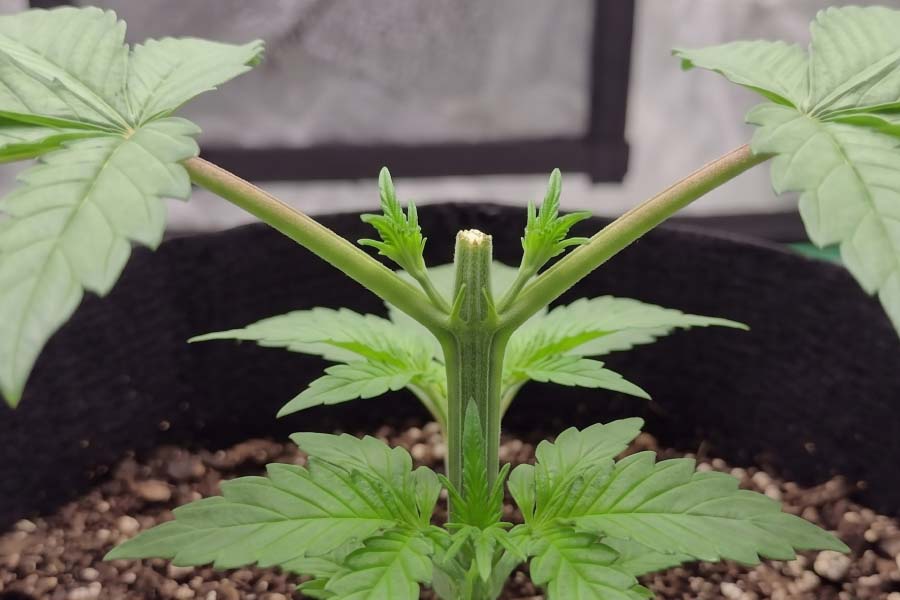
Healthy autoflower plant after topping to encourage stronger side growth.
Autoflowers reach the topping window around week 3 to 4 at 3–5 nodes. The table below shows the three signals to check before you make the cut:
|
Criteria |
Signal to Look For |
Why It Matters |
|---|---|---|
|
Node count |
3–5 nodes developed |
Fewer nodes means the plant lacks the energy reserves to recover |
|
Week |
Week 3 to week 4 |
Pre-flower begins as early as week 4 in fast-cycling strains |
|
Pre-flower check |
No white pistils at internodes |
Topping after pre-flower starts risks disrupting bud development |
Use node count as your primary guide, not the calendar. Some autoflowering cannabis plants hit 5 nodes by day 18; others take 28 days. Genetics drive the pace. If your plant has fewer than 3 nodes at the end of week 3, it's growing too slowly to handle topping.
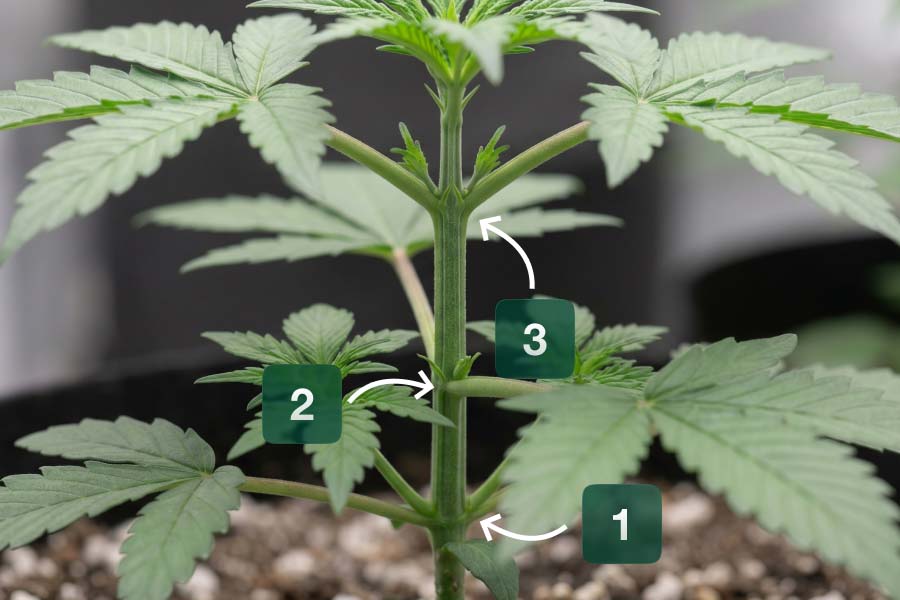
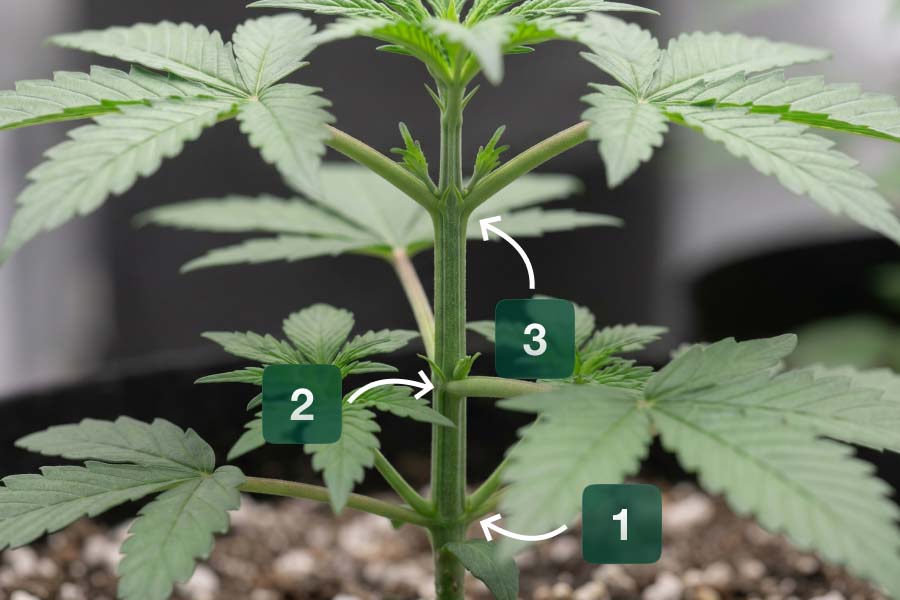
Count the nodes, not the days-this plant’s first three nodes show a better way to judge when it’s ready for training.
When NOT to Top Autoflowers
Topping causes lasting stunted growth when done too late or on stressed plants, and an autoflower doesn't recover from stunting the way a photoperiod plant can.
Don’t top your autoflower plants if any of the following conditions apply:
- The plant has fewer than 3 nodes. It doesn't have the root system or leaf mass to redirect energy after a cut.
- You can see white pistils at the internodes. Pre-flower has started and topping now disrupts bud site development instead of creating it.
- The plant is drooping, pale or showing nutrient stress. A stressed autoflower can't recover from a high-stress cut.
- The plant is growing slowly. If you're not seeing new growth every day, the plant is already behind schedule.
- It's your first grow. Autoflower topping is a margin call. Build a baseline first so you can read what healthy looks like before you start cutting.
If one or more of the above aspects apply, low-stress training is usually the better alternative to topping your autoflowers.
How to Top Autoflowers Step by Step
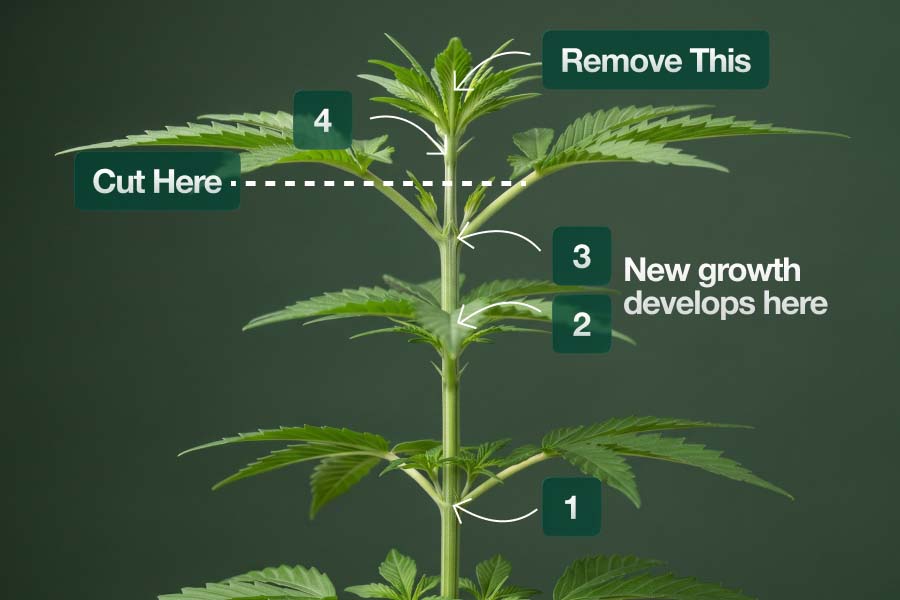
Cut just above node 3 or 4 and remove only the growing tip. The two nodes below the cut become the new main colas.
Topping autoflowers requires clean tools, the correct node count and a confirmed healthy plant. Don't start this process if your plant hasn't cleared all three.
- Confirm the plant has 3–5 nodes and shows no pre-flower signs at the internodes.
- Sterilize your scissors or razor. Wipe the blade with isopropyl alcohol for general sanitation or use a diluted bleach solution to minimize viroid transmission. A contaminated cut on an autoflower can cost you a week of growth during recovery.
- Locate the growing tip above the third or fourth node. This is the small set of leaves at the very top of the main stem.
- Make one clean cut directly above node 3 or 4. Remove only the growing tip. The less you take off, the faster the recovery.
- Monitor your plant for 3–5 days. New growth shoots should begin to emerge at the two nodes below the cut within 48–72 hours of the top. Leaves will reorient toward the light as the plant stabilizes.
Keep the environment stable during recovery. Don't adjust nutrients, repot or run any other training techniques in the week following the top. Autoflowering cannabis plants recover fastest when conditions stay consistent.
How Topping Autoflowers Connects to Seed Choice
Autoflowering seeds determine how much recovery time the plant has after topping, because the lifecycle length is baked into the genetics. Strains that run 10 weeks or more from seed to harvest give you a wider vegetative window and a better chance of clean recovery.
Standard autoflowering varieties typically finish in 7–9 weeks. Slower genetics can take 12–14 weeks, giving you the most runway. Fast-finishing autos in the 7–8 week range leave the least margin, so a top needs to land early and clean.
A top on a fast-finishing auto can cut right into the period when the plant needs to be building flower structure. If you plan to top regularly, look for autoflower weed seeds with longer growth cycles.
Strains bred for structure and yield also tend to tolerate training better than compact, fast-finishing varieties. The highest yielding cannabis seeds in our catalog include options with longer veg windows suited to techniques like topping.
If you're not set on autos, feminized cannabis seeds give you a photoperiod plant with an open-ended veg stage, so you control the recovery window completely before flipping to flower.
Your seed choice is also your first training decision. Pick genetics that give you enough runway to work with.
Is LST a Better Option Than Topping for Autoflowers?
Yes, LST delivers canopy benefits without the recovery cost of topping autoflowers, which makes it the better starting point for most growers. With low-stress training, you bend the main stem and tie it down to expose lower bud sites to direct light. This redirects auxins from the growing tip the same way topping does, but without removing anything.
Autoflowering cannabis plants handle LST at almost any stage and bounce back from it within a day or two.
Topping gives you a faster structural result on the right plant. LST gives you a safer result on any plant. If you're growing autoflowers for the first time, start with LST and get a feel for how your plants respond before you introduce a cutting technique.
FIM, short for "f*** I missed," is a partial topping technique that sits between LST and a full top on the stress scale. It involves removing around 80% of the growing tip while leaving approximately 20% intact.
Rather than two new tops like a standard top produces, a successful FIM can prompt the plant to develop multiple tops simultaneously. Results vary more than with a full top, which is worth factoring in on a compressed autoflower timeline.
If you're just getting started, pot seeds for beginners offer forgiving genetics that respond well to low-stress training without the risk of stunting. There's a wide range of marijuana seeds for sale at Homegrown Cannabis Co., including options suited to growers at every experience level.
FAQs
Does Topping Slow Down an Autoflower's Flowering?
Yes, topping autoflowers can add a few days to the vegetative period. The delay is usually 3–5 days on a healthy plant. A stressed plant or late top extends the recovery period which can lead to stunted growth and reduced yields.
Can You Top an Autoflower More Than Once?
Yes — technically, you can top autoflowers twice if the first top heals completely and the plant still hasn't entered pre-flower, but most autoflowering cannabis plants don't have enough vegetative time to support two topping events without yield loss. One clean top at the right window is more reliable than two.
What Happens If You Top an Autoflower Too Late?
Topping an autoflower after pre-flower begins typically causes the plant to stay smaller and produce lighter yields. The plant is already allocating energy toward bud development, so it can't redirect resources to structural recovery the way it could during veg. Late-topped autoflowering weed plants often end up with multiple small tops instead of two strong colas.