



The Why, When, and How of Transplanting Cannabis Plants
To grow cannabis successfully, you’ll need to know how to transplant it. From a teeny, germinated seed to a magnificent, close-to-harvest female languishing in her final pot, transplanting is necessary to help your plant be the best that it can be.
However, get it wrong, and you might have a stressed-out plant that doesn’t quite yield what she’s supposed to, or worse, falls extremely sick and doesn’t make it.
We’ve transplanted hundreds of plants, and many of them by trial and error, as well as theoretical knowledge, close observation, and gut feel. It isn’t a cookie-cutter solution, either. Cannabis plants are living creatures, and what works for one strain, or even individual plants from the same strain, doesn’t necessarily work for others.
In this blog post, we’ll share why you need to transplant and when and how to do so. With a little effort, you’ll be rewarded with a happy, vibrant plant that gives you a bountiful harvest and loads of gloriously scented, potent buds!
Key Takeaways
-
If you don’t transplant your cannabis plant, it might become root-bound and be unable to absorb nutrients, water, and oxygen.
-
Transplant your plant if the roots start looking tangled and discolored. Other symptoms of a root-bound plant include stunted growth and flower production, stem discoloration, and nutrient deficiencies.
-
Don’t transplant during the flowering stage. Aim to transplant in the early vegetative stage.
-
Transplant a seedling to an intermediate pot before the final pot.
-
The new pot should be 2 to 3 times the size of the old pot.
Why Do You Need To Transplant Cannabis Plants?
When we think of a cannabis plant, we think of the main stem, branches, leaves, and buds, but underground, there’s a whole lot of growing taking place. The roots grow rapidly, forming a root ball, which is key to a happy plant.
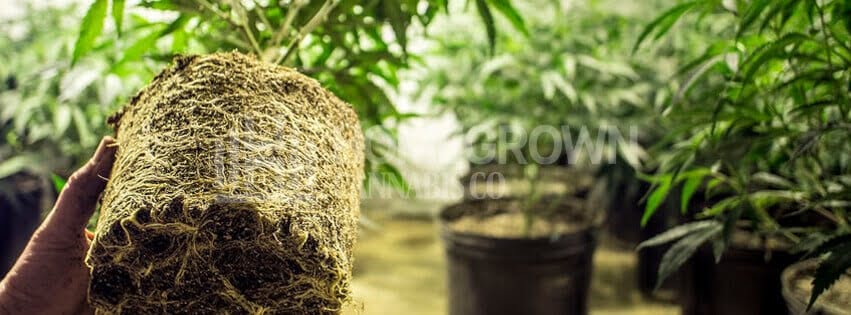
Transplanting a cannabis plant into progressively larger containers lets us control the size of the root ball and how much water it gets. If you don’t transplant, the root ball might outgrow the pot, and the plant can become root-bound, struggling to absorb nutrients, oxygen, and water, which can lead to sickness or even death.
Just think of any animal or living creature living in a home that is way too small for it. We all need space to thrive and grow to our full potential, and cannabis plants are no different!
However, if you plant a small plant directly into a large, final pot, the roots will grow downwards seeking water and the root ball will not develop as much mass.
When Is It Time To Transplant Your Cannabis Plants?
Each strain is different, and even plants from the same strain can have distinct phenotypes, but experienced growers usually transplant most cannabis plants two or three times. If you watch closely and take the time to get to know each plant, it will tell you when it is time to transplant.
Broadly speaking, here are the three transplants you might need to do.
-
First, from a germinated seed into their first pot.
-
Then, the seedlings from their first pot to an intermediate pot.
-
Lastly, the plant goes from the intermediate pot to the final pot, where it will stay until it is harvested.
You can transplant your plant as much as you want, but keep in mind that each time you do, you risk transplant shock that can get your plant sick. In addition, you’ll only want to transplant during the seedling and vegetative stages. Once a plant has flowered, DON’T transplant it!
If you wait too long to transplant, you might end up with a root-bound plant that has trouble absorbing nutrients, water, and oxygen. It can then fall sick or, worse, die.
Symptoms include:
-
Weak new growth
-
Slow flowering
-
Reddening stem
-
Wilting, droopy leaves
-
Stretching
-
Dry soil
-
Spots, splotches, or discoloration on the leaves
-
Slow water absorption
Transplant seedlings when you see the first, 4th, or 5th set of leaves. In older plants, regularly lift the plant gently to check the roots. If you see tangled, discolored roots clawing to escape, it's definitely time to transplant.
Step-by-Step Guide: How To Transplant Marijuana Plants
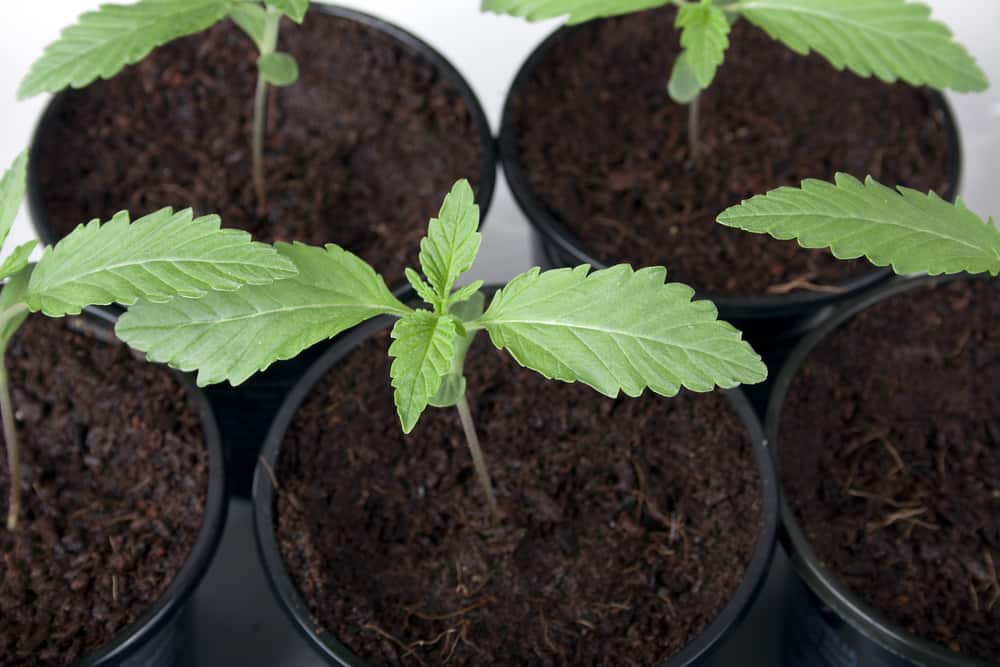
First Transplant
Technically, the first transplant is moving the germinated seed into a nursery pot or new container. However, the transplant we’ll talk about is when you take a seedling from its first pot to its intermediate pot.
Step 1
If you are using pots from a previous season, sterilize the pot. Also, wear gloves to prevent contamination.
Step 2
Make sure the soil in the new pot is relatively dry.
Step 3
Check the soil pH and the ambient temperature and humidity to maintain the conditions in which the seedling was growing. Generally speaking, cannabis plants like 68 to 77°F temps and pH levels of 6 to 7.
Step 4
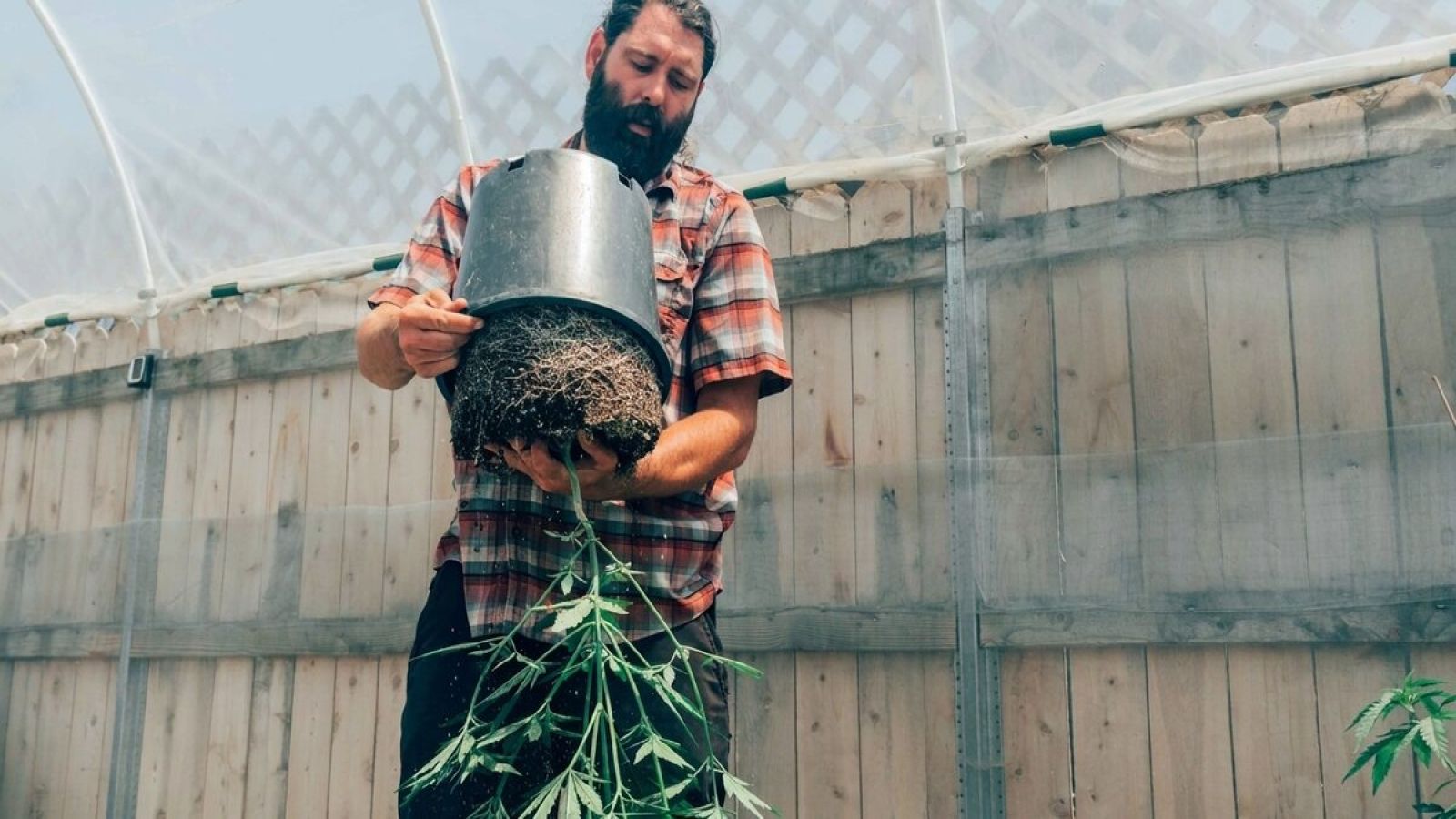
Remove the seedling by gently squeezing the nursery pot and flipping it. Put it straight into the new pot with its old soil to minimize the risk of transplant shock. Work quickly but carefully, and try to avoid exposing the roots to intense or bright light for extended periods or you’ll risk transplant shock.
Step 5
Now that your seedling is in its new home, water the plant thoroughly to fully saturate the soil.
Second Transplant
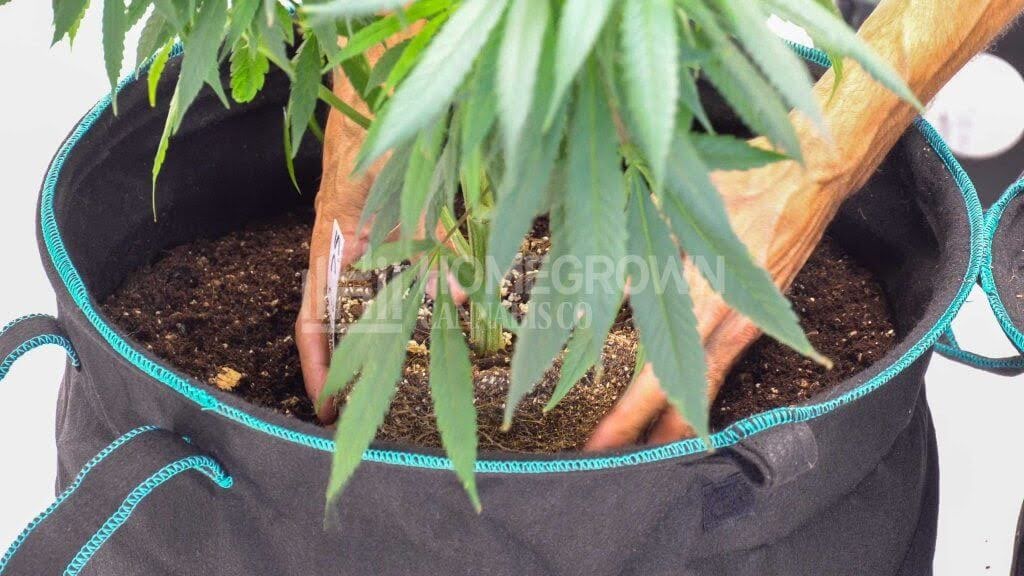
Hopefully, your seedling is now flourishing into the plant equivalent of a teen, and after a few weeks, it might be time to move it into its final home.
Step 1
Choose an appropriately sized pot. This varies by strain, but the new pot should be at least 2 to 3 times the size of the previous pot.
Step 2
Before transplanting, cut your plant's nutrients in half and make sure the soil is drier than usual, as too much moisture can cause damage when lifting due to the extra weight.
Step 3
Prepare the soil and nutrient mix for the new pot. Keep the soil fluffy and light, and use the smaller pot as a form, building your soil around it. This way, you’ll have a perfectly sized space when you transplant the plant.
Step 4
Gently remove the plant and place it in its new home. Try to avoid prolonged exposure to air and light. Cover the root ball with loose soil and water thoroughly.
Step 5
Closely monitor the light, humidity, and temperature until your plant seems happy in its new home. Don’t train for a few days until your plant shows signs of new, healthy growth.
| First Transplant (Seedling to Intermediate) | Second Transplant (Intermediate to Final) | |
| Step 1 | Sterilize the pot and wear sterile gloves. | Choose a new pot 2 to 3 times the size of the old. |
| Step 2 | Make sure the soil is dry. | Cut nutrients in half and keep the soil dry. |
| Step 3 | Flush and fertilize new soil. Maintain temps, humidity, and pH of old soil. | Prepare new soil and maintain pH, EC, and nutrient levels. |
| Step 4 | Remove the seedling and place it in the new pot. | Remove the plant and root ball and place it in a new pot, avoiding light and air exposure. Cover with loose soil. |
| Step 5 | Water your plant in its new home. | Monitor your plant, and don’t conduct any training until you see new growth. |
Do’s and Don’ts of Cannabis Transplanting
Do’s
-
Transplant into the final pot during the early vegetative stage.
-
Keep nutrient mix, humidity, temperature, and pH levels constant to avoid transplant shock.
-
Transplant together with existing soil to minimize shock.
-
Flush your soil and test its EC and pH before transplanting.
Don’ts
-
Don’t transplant when your plant is flowering.
-
Don’t expose them excessively to air and light.
-
Don’t conduct any training for a few days until your plant shows signs of new, healthy growth.
-
Don’t manipulate the plant into flowering right after transplanting.
-
Don’t transplant a seedling into the final pot unless you’re an experienced grower.
Final Thoughts on Transplanting Cannabis Plants
One of the most important factors in how well your cannabis plant does is the quality of the seeds you plant. You can buy high-quality, fast-growing cannabis seeds from homegrown cannabis.
Transplanting cannabis plants can be a tricky process, and you risk sending the plant into shock. However, with these tips in mind and some TLC, your plant will be even happier in its new home, and thank you with a bushy, bountiful harvest!