



Thrips on Cannabis: Leaf Damage, Signs, and Control

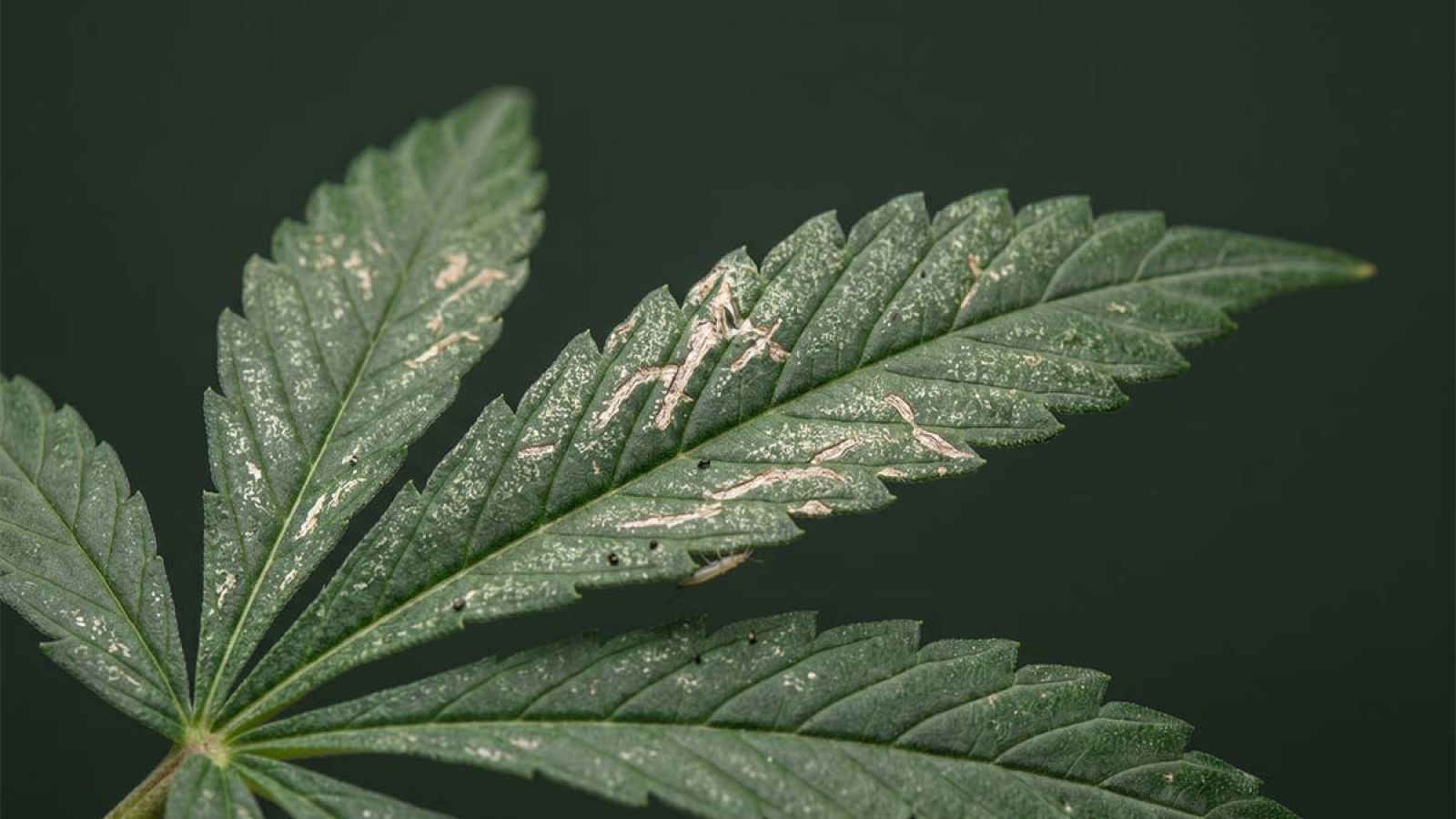
Fresh silver marks on healthy leaves usually mean one thing to a worried grower: something is feeding on the plant. Thrips are one of the most common culprits, and they leave a scratched, silvery trail across cannabis leaves before most people ever see the bug itself.
This guide shows you what thrips are, what their damage looks like, how to tell them apart from spider mites, and how to get rid of them. By the end, you will know how to catch an infestation early and knock it back before it reaches your buds.
Thrips on cannabis, in short: these tiny sap-suckers scrape leaves and leave silvery streaks, pale stippling and black droppings on new growth. They rarely kill a plant when you stay on top of them, but they multiply fast and a neglected infestation can turn fatal, so spot them early, check leaf undersides with a hand lens, and treat on a repeat cycle.
What Are Thrips?
Thrips are small, slender insects that feed by rasping open plant cells and drinking the sap inside. They belong to the order Thysanoptera and usually measure about 1 to 1.5 millimeters long, which puts them right at the edge of what the naked eye can pick up.
On cannabis, they often show up as western flower thrips, a pale yellowish species that thrives in warm, dry grow rooms.
These pests hide on the undersides of leaves, along the veins and inside tight nodes where fresh growth is softest. Warm temperatures, low humidity and a dense canopy make a grow space comfortable for them, so even a clean, well-run tent can see an outbreak when conditions line up.
They also hitch rides indoors on new clones, soil, tools and clothing, which is why they seem to appear from nowhere.
What Do Thrips Look Like?
Thrips look like tiny slivers of straw or dark thread that dart across a leaf when disturbed. Adults are narrow-bodied and often straw-colored, tan or brown, with fringed wings that only show under a loupe. The larvae are even smaller, pale and wingless, and they tend to stay put and keep feeding while adults scatter.
A worm-like pale nymph on the underside of a leaf is one of the clearest tells. Aphid nymphs look like fat little white bugs, but a thrips nymph is tubular and worm-like, longer than it is wide. A hand lens turns a vague speck into an obvious insect.
Do Thrips Bite Humans?
Yes, thrips can bite people, but the bite is harmless and rare. When populations are high or their host plant dries out, thrips sometimes land on skin and give a small prick that can feel itchy for a moment. They do not feed on blood, spread disease to humans or live on the body, so a bite is a nuisance rather than a health concern.
The real damage happens to the plant, not to you.
What Does Thrips Damage Look Like on Leaves?
Thrips damage appears as silvery streaks and pale stippling across the leaf surface, often with a scratched or sandblasted look. As feeding continues, small black specks of frass, the insects' droppings, dot the damaged areas.
The streaks are irregular and blotchy rather than uniform, which is a useful clue when you are trying to name the pest.
Heavy feeding pushes leaves past cosmetic damage. Edges start to curl, the surface loses its glossy sheen, and growth slows as the plant redirects energy into repair. On cannabis, the marks concentrate on new growth and the upper canopy, though a thorough check covers the whole plant.
Early Signs of Thrips on Cannabis
Early thrips signs include faint bronzing on new growth, leaves that look dull instead of glossy, and the first scattered black frass specks. These clues appear before the obvious silver scarring, so a grower who scouts often catches the problem while the population is still small.
A simple tap test confirms it: hold a sheet of white paper under a suspect leaf, tap the leaf, and watch for tiny slivers that move.
Consistent scouting beats reactive scouting every time. Checking new growth and leaf undersides every few days, rather than only when damage is obvious, is what keeps a few thrips from becoming an infestation.
Will Thrips Ruin Your Buds?
No, thrips rarely ruin buds outright, but they can drag down quality if you ignore them. Most grows finish fine with minor thrips presence, especially when the damage stays on lower fan leaves.
The risk climbs when feeding reaches growth tips and developing flowers, because scarring there is harder to hide and stressed plants put less energy into the buds you actually want.
Catching thrips before they reach the canopy top is what protects the harvest. Left completely unchecked, a heavy infestation can strip enough chlorophyll to kill a plant, so "rarely fatal" only holds if you actually stay on top of them.
Thrips vs Spider Mites: How to Tell the Difference
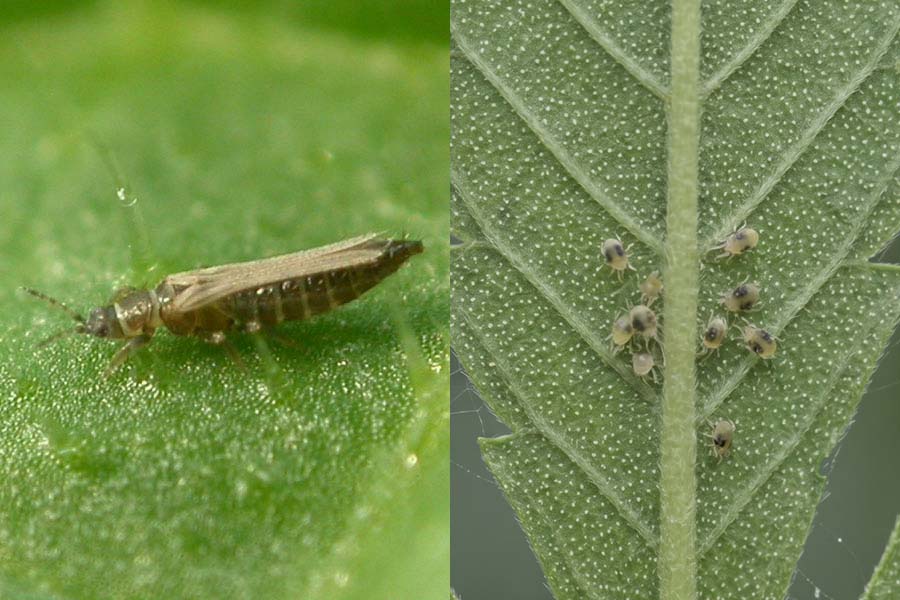
Comparison Between Thrips Damage and Spider Mite Damage.
Thrips leave irregular silvery streaks with no webbing, while spider mites leave fine, even stippling and, in larger numbers, telltale webbing between leaves and stems. Both pests are tiny sap-suckers that favor leaf undersides, so growers mix them up constantly.
The pattern of the damage is the fastest way to tell them apart in the field.
The table below breaks down the traits that separate the two, with a reliability rating for each. High-reliability traits can confirm the pest on their own; medium traits support a diagnosis but need backup; low traits are only a hint.
| Trait | Thrips | Spider Mites | Reliability |
| Leaf marking pattern | Irregular silvery streaks, scratched look | Fine, even pinprick stippling | High |
| Webbing | None | Fine webbing in larger infestations | High |
| The insect itself | Slender, straw or dark, darts when disturbed | Round specks, red, brown or clear, very slow | High |
| Black specks (frass) | Common on damaged areas | Rare | Medium |
| Where damage starts | New growth and upper canopy | Often hot, dry lower spots first | Medium |
| Leaf color shift | Dull, faint bronzing | Yellow speckling, then bronzing | Low |
When the marks are irregular and silvery with no webbing, thrips are the likely answer. When you see fine, even speckling plus any webbing, shift your plan toward spider mites instead.
How Do You Get Rid of Thrips?
You get rid of thrips by combining monitoring, targeted treatments and repeat applications timed to the pest's life cycle. No single spray clears them, because eggs and pupae survive the first pass and hatch into a fresh wave. A steady, repeatable plan beats one aggressive treatment every time.
This section covers the three parts of a working plan:
- Sticky traps and monitoring to track the population and confirm progress
- Sprays and biological controls to reduce the numbers
- Repeat timing so new hatches do not restart the cycle
Sticky Traps and Monitoring for Thrips
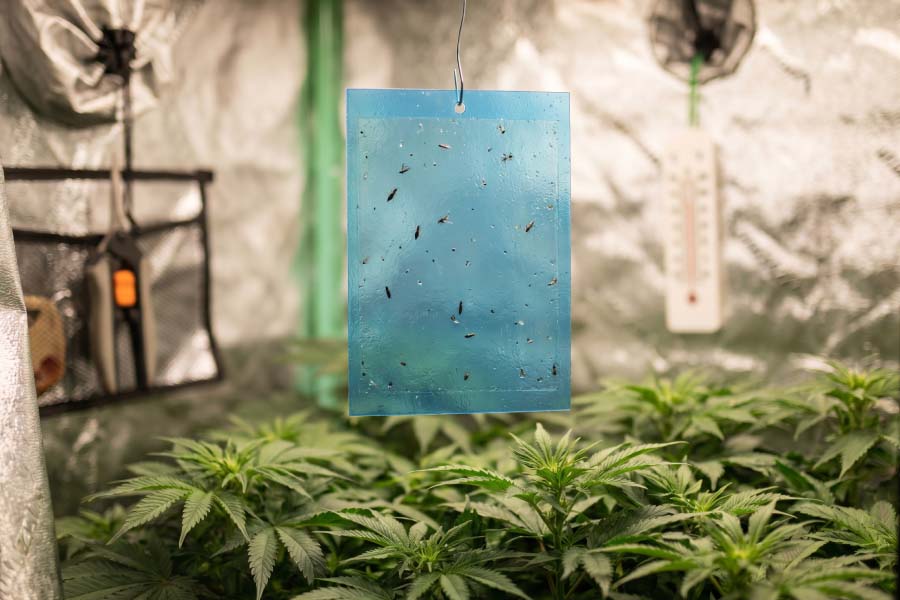
A blue sticky trap hung just above the canopy in a tent.
Sticky traps catch adult thrips and reveal population trends over time. Place blue or yellow traps just above canopy height, since thrips are particularly drawn to blue, and check them every few days.
Falling counts after your first week of treatment tell you the plan is working, while rising counts tell you to step it up. Traps are a measuring tool, not a standalone cure.
Sprays and Biological Controls for Thrips
Thrips sprays and predators reduce populations with repeated applications, and the right choice depends on your grow stage and local regulations. Common options include insecticidal soaps and fatty-acid sprays, spinosad, neem oil and pyrethrin-based products, along with biological controls such as predatory mites and lacewings that feed on thrips.
Predators are especially useful during flowering, when spray options narrow and residue matters most.
Always follow the product label and use only treatments cleared for your crop and growth stage, where cultivation is permitted under federal, state and local rules.
Test any spray on a small area first, particularly under strong LED lighting, and avoid spraying near harvest where residue or leaf burn can spoil finished flower.
Why Thrips Treatments Have to Be Repeated
Thrips run through their egg-to-adult cycle in anywhere from one to four weeks, often around two weeks in a warm grow room, so a single treatment always misses the eggs and pupae that hatch afterward.
The "resistant" thrips growers complain about are usually just newly hatched insects from an earlier spray. A repeat schedule, often every three days across a two-week window, catches each new wave before it can breed.
Many of these pests also drop to the soil to pupate, so treating the top layer of the growing medium closes off a hidden reservoir.
How to Prevent Thrips on Cannabis Plants
You prevent thrips by blocking the entry points they use and the conditions they love. Quarantine new clones before they join the tent, clear away dead leaves and plant debris that shelter eggs, and keep tools and hands clean between plants. Stable airflow and humidity make the canopy less inviting, since thrips thrive in warm, dry, still air.
Prevention also means routine. Hanging a few sticky traps before you ever see damage turns scouting into an early-warning system, so the first arrivals get caught while numbers are low. A quiet grow room is easier to keep thrips-free than a busy one is to clear.
Dealing With Thrips at Different Grow Stages
Thrips threaten seedlings most and demand extra caution during flowering. Young seedlings and cuttings have little tissue to spare, so even a small population can stall their growth, which makes early scouting critical in the first weeks.
Vegetative plants respond better to feeding and offer the widest range of treatment options, making veg the best window for aggressive control.
Flowering plants change the math. Sprays risk residue and bud burn, so many growers lean on predatory mites, defoliation of the worst leaves and close monitoring instead. Thrips also spend part of their cycle in the growing medium.
Larvae drop off the leaves and pupate in the top layer of the medium before returning as adults, which is why treating the top inch and keeping the surface drier between waterings helps break the cycle. The realistic goal in late flower is no new damage, not zero bugs.
Where Thrips-Resistant Genetics Fit Your Grow
Vigorous genetics resist pest pressure better than stressed or weak plants, because a healthy plant recovers from feeding faster and shrugs off minor damage. Strong starting genetics will not make a grow thrips-proof, but they give you a plant that holds its own while your control plan does its work.
Choosing quality seed is the first decision in that chain, and eligible adult buyers can browse feminized cannabis seeds for stable, female-only plants that put their energy into buds rather than guesswork.
Growers who want a shorter exposure window sometimes reach for autoflowering seeds, since a faster finish means fewer weeks for pests to build up before harvest.
Whichever route fits your space and season, the starting point is the same, and you can buy marijuana seeds suited to your grow and pair them with the scouting habits above.
Thrips FAQ
Can You See Thrips With the Naked Eye?
Yes, you can just barely see adult thrips without magnification, since they measure about 1 to 1.5 millimeters and look like tiny moving slivers. Spotting the pale nymphs is harder, so a cheap hand lens or loupe is the tool most growers rely on to confirm what they are looking at.
Do Thrips Bite Humans and Does It Hurt?
Thrips can bite when their numbers are high or their plant dries out, and the bite feels like a brief, mild prick that may itch for a moment. They do not feed on blood or carry disease to people, so the bite is harmless and needs no treatment beyond ignoring it.
What Are Root Thrips?
"Root thrips" is really just the soil stage of the same pest. When thrips larvae finish feeding, they drop off the leaves and burrow into the top of the growing medium to pupate before emerging as adults. That hidden soil stage is why a leaf-only spray keeps failing, so treating the top layer of medium and keeping the surface drier between waterings closes the gap.
Are Thrips a Sign My Grow Room Is Dirty?
No, thrips are not a sign of a dirty grow room, since they routinely arrive on clones, soil, tools and even clothing, and they can blow in from outside. A clean space lowers the odds and makes an outbreak easier to clear, but even careful growers see thrips when warm, dry conditions invite them in.
Will Thrips Spread to My Other Plants?
Yes, thrips spread readily from plant to plant. They are weak fliers that mostly jump and crawl between neighbors, but they drift on air currents and hitch rides on hands and tools, which carries them across a whole tent. Isolating an affected plant early, before the population climbs, is one of the simplest ways to limit the damage across a whole tent.
How Long Does It Take to Get Rid of Thrips?
Clearing thrips usually takes about two to three weeks of consistent treatment, because you have to outlast the roughly two-week egg-to-adult cycle. Expect sticky-trap counts to fall by most of their peak within the first week of a working plan, with no new silver damage on fresh growth as the sign you have broken the cycle.