



In Loving Memory of Parker Curtis: 1987 - 2026
My Friend Parker
A remembrance of my friend, my brother, and one of the most remarkable men I have ever known
The last thing I ever did for Parker Curtis was hold his hand. I held it for more than three hours. Around us were his wife Sarah, his brothers, his family and some of the closest friends he had collected during his life. There was music playing. There were stories. There were tears. There was laughter, somehow. There was bourbon.
And Parker looked like Parker. Before the life support was removed, we had dressed him properly. His hat. His sunglasses. His boots. His clothes. His style. The whole nine yards. It became our slightly inappropriate, completely affectionate Weekend at Bernie's moment, and I know Parker would have found it hilarious. Even lying in a hospital bed, he somehow looked cooler than the rest of us.
Then the machines stopped doing the work for him. And Parker kept breathing. He breathed for more than three hours. Sarah lay beside him. Heilung, a band they loved, played in the room. I sat there holding onto his hand, unable to let go. So I didn't. I stayed there until he took his final breath.
It was one of the most painful experiences of my life. It was also one of the greatest privileges I have ever been given. Because the hand I was holding belonged to a man who had spent his life using those hands for other people.
Building things. Fixing things. Growing things. Cooking for people. Helping neighbors. Holding animals. Working. Teaching. Giving. Reaching out.
Parker spent his life showing up. And in the end, people showed up for him. If you had walked into that hospital room knowing nothing about the man lying in the bed, the number of people around him would have told you almost everything. He was loved. Deeply.
But Sarah, his wife, later found the words that explain Parker better than I ever could. He wasn't simply deeply loved. He loved deeply. That was the difference.
And if I am going to tell you who Parker Curtis was, that is where I have to begin. Not with cannabis. Not with social media. Not with followers. Not with his beard, although we will absolutely get to the beard. Not with the hundreds of videos we made together. And not with the way he died.
You understand Parker by looking at the thousands of small decisions he made while he was alive. Most of them came down to the same question. Does somebody need help? If the answer was yes, Parker usually did something about it. And he almost never asked what was in it for him.
I Met Parker in a Sports Bar
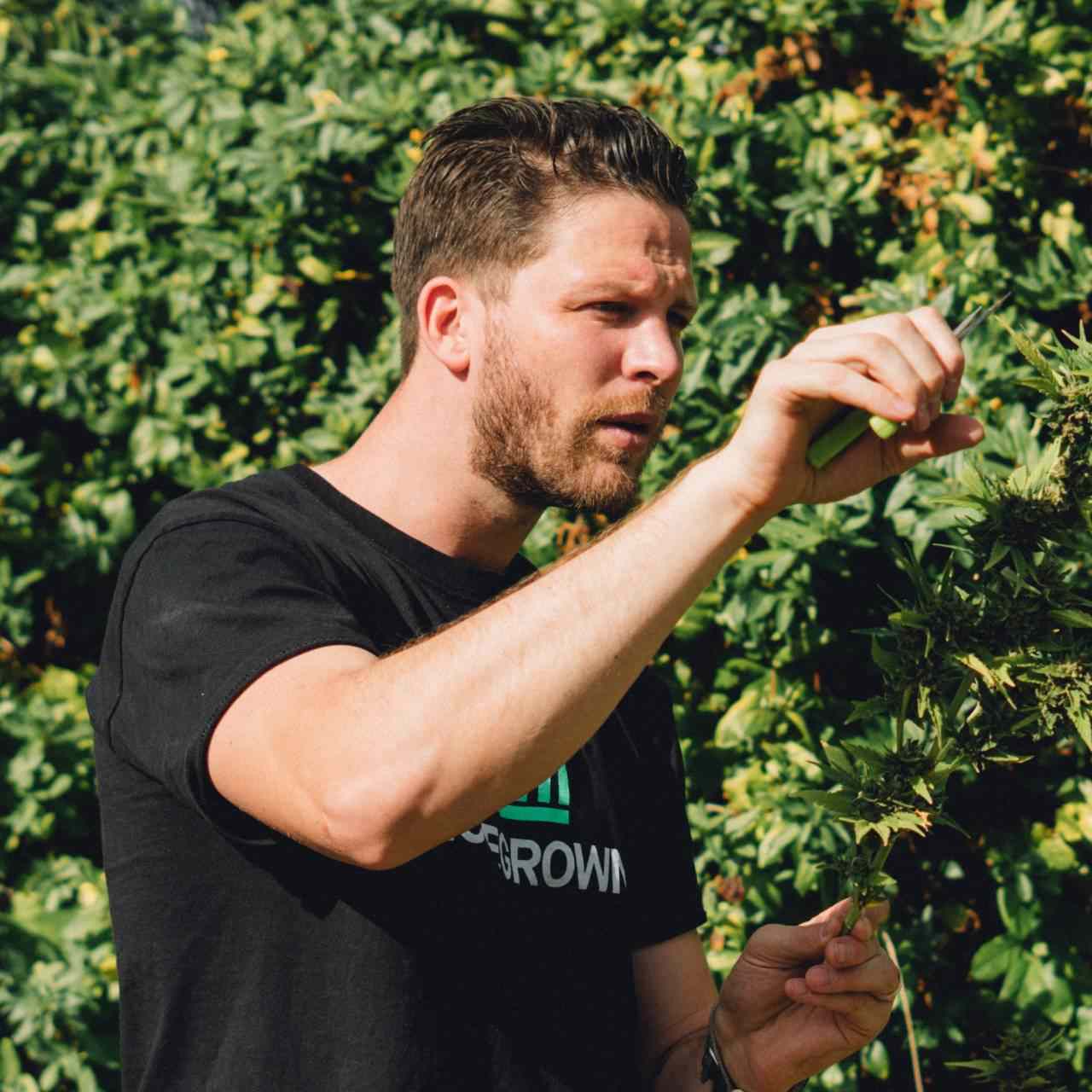
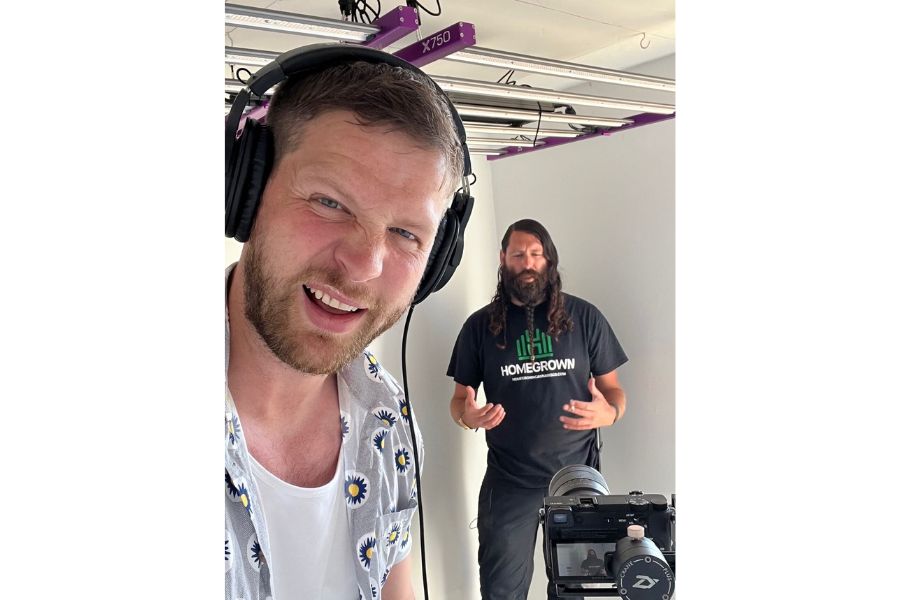
In 2018, I had already been working with Homegrown Cannabis Co. for a couple of years. We were trying to build something genuinely ambitious. The idea was to create an educational cannabis platform unlike anything that had really been attempted at that scale before. We wanted knowledgeable cultivators teaching people how to grow, sharing experience openly and creating content that actually had some substance behind it.
The problem was authenticity. Or rather, the lack of it.
I had spent enough time working inside the cannabis industry by that point to realize that the public mythology surrounding it and the reality behind the curtain were not always the same thing. For an industry that talked so much about peace, community, openness and connection, there could be an extraordinary amount of ego.
There were good people, certainly. But there were also people who had become very skilled at selling an image of themselves. Sometimes the public teacher and the private person seemed almost completely unrelated. There were personalities who cared enormously about recognition, authority and their position within the culture. There were grudges. There were egos. There was needless cruelty.
Years later I would watch Parker quietly endure behavior from certain people that would have caused almost anyone else to retaliate publicly. He was needled privately and repeatedly by someone with a very carefully cultivated public reputation.
Parker could have responded. He could have embarrassed people. He could have fought back. He never did. Not once. He simply refused to become whatever somebody else was trying to provoke him into becoming.
I think about that a lot now. There are people who spend decades cultivating a reputation. Parker cultivated character. And those are not the same thing. By 2018, I was tired of the former. I desperately wanted the latter.
Then Dickie Patterson, the CEO of Homegrown, told me about a guy working in the warehouse.
Apparently I needed to meet him. There was something about him, Dickie said. Something difficult to explain. He worked picking seeds, but he was also an experienced cultivator from National City in San Diego. More than that, he had an unusual presence. People were drawn to him.
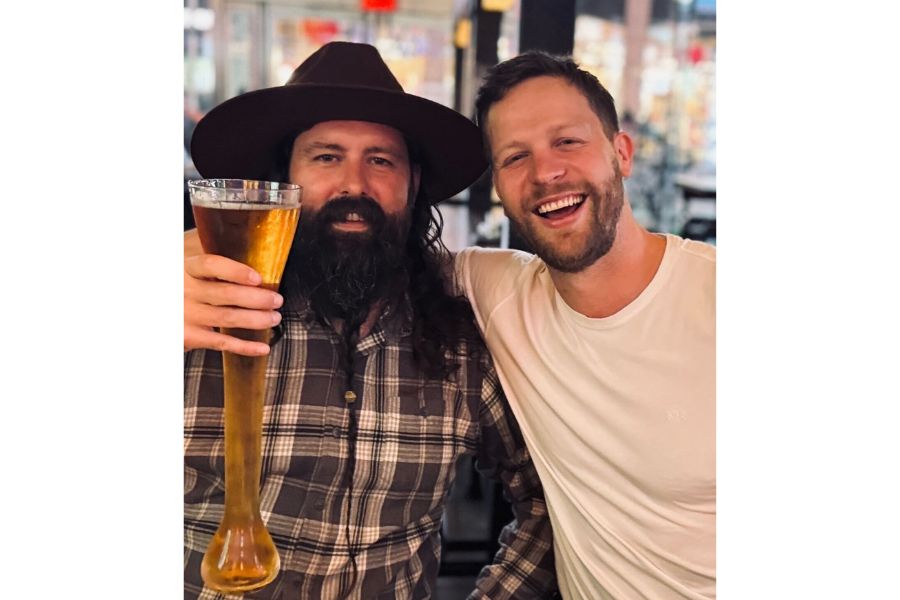
So we arranged to meet at a sports bar in National City called Slappy's. I was sitting there with Dickie and his business partner Tony when Parker walked in. And I understood immediately.
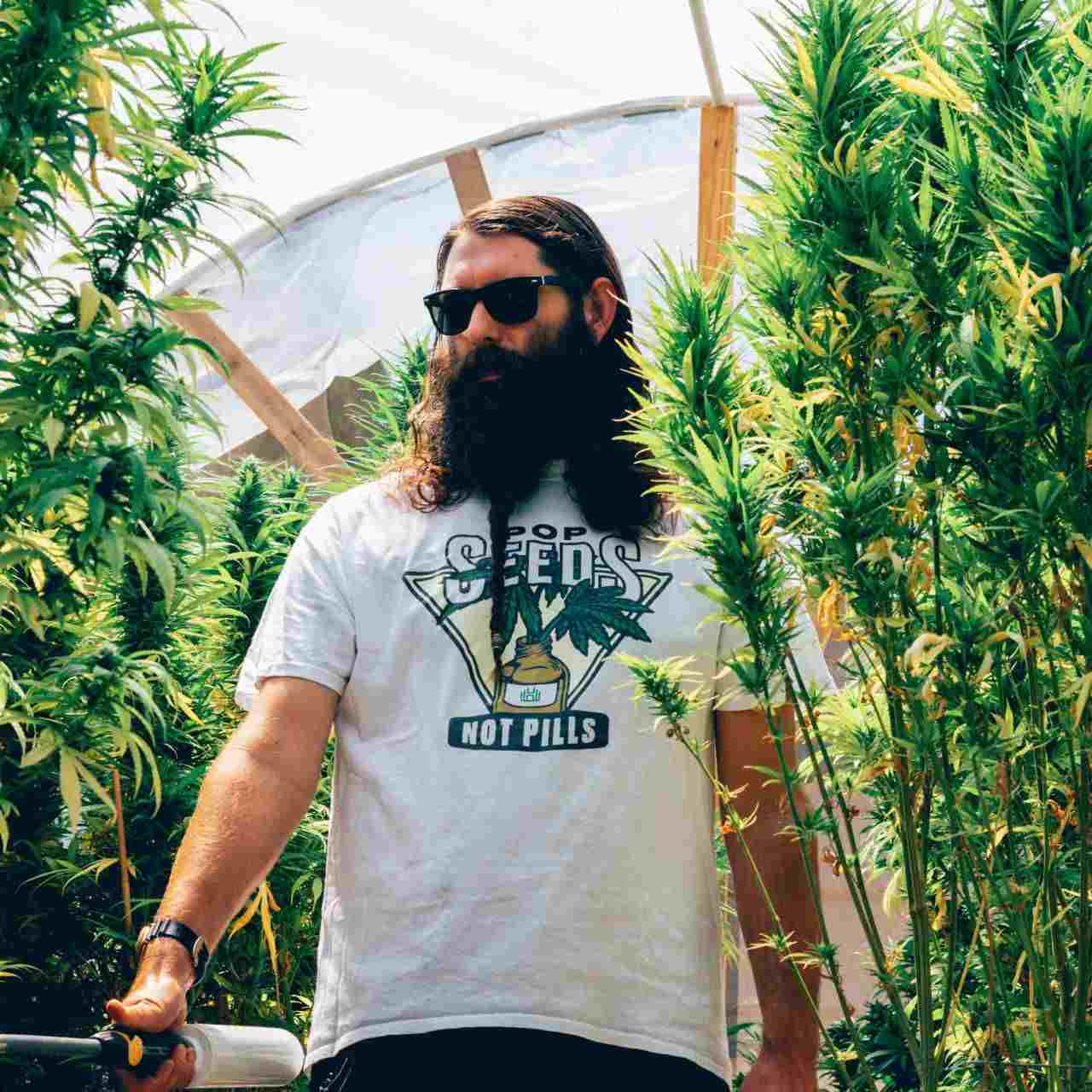
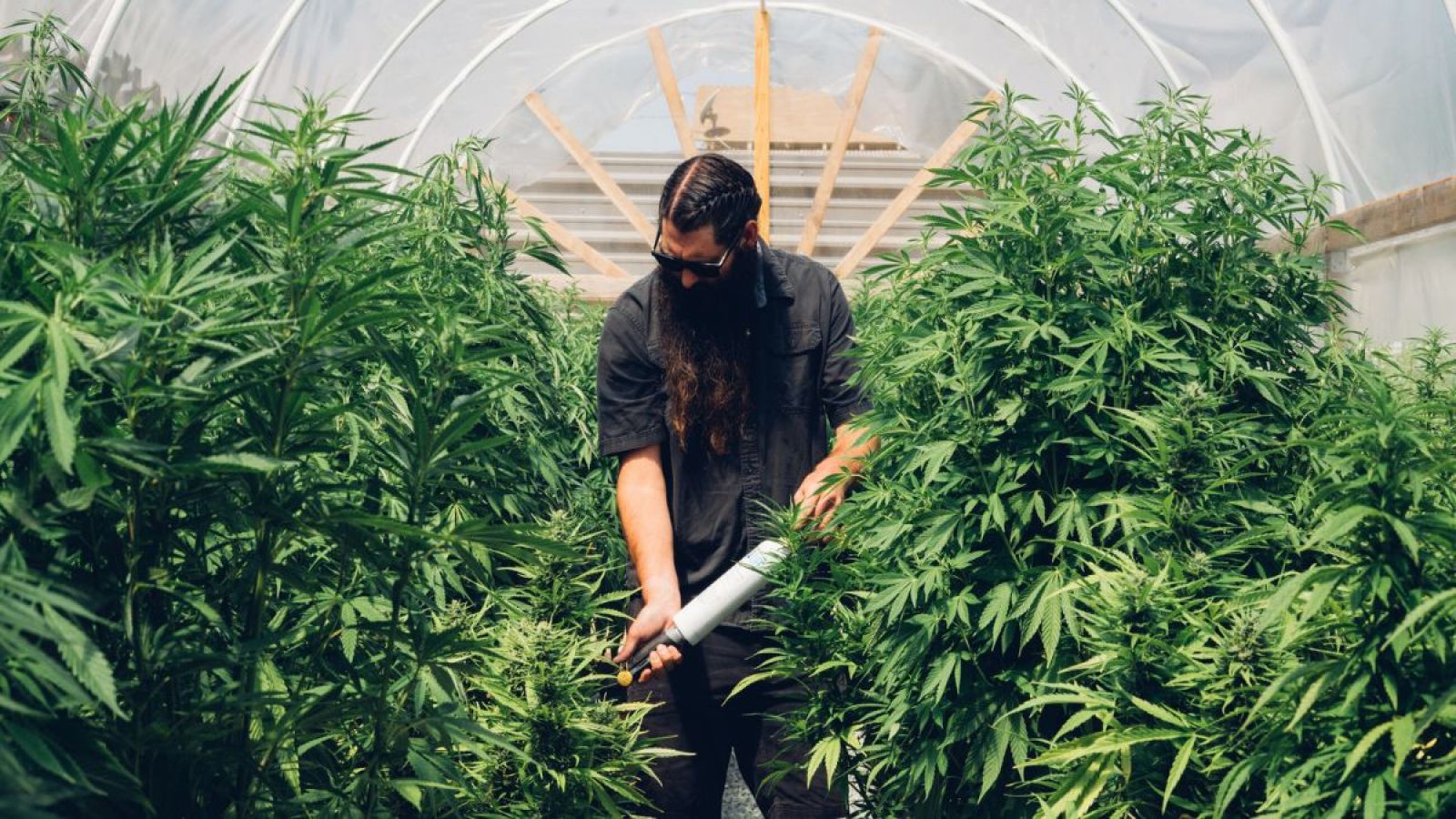
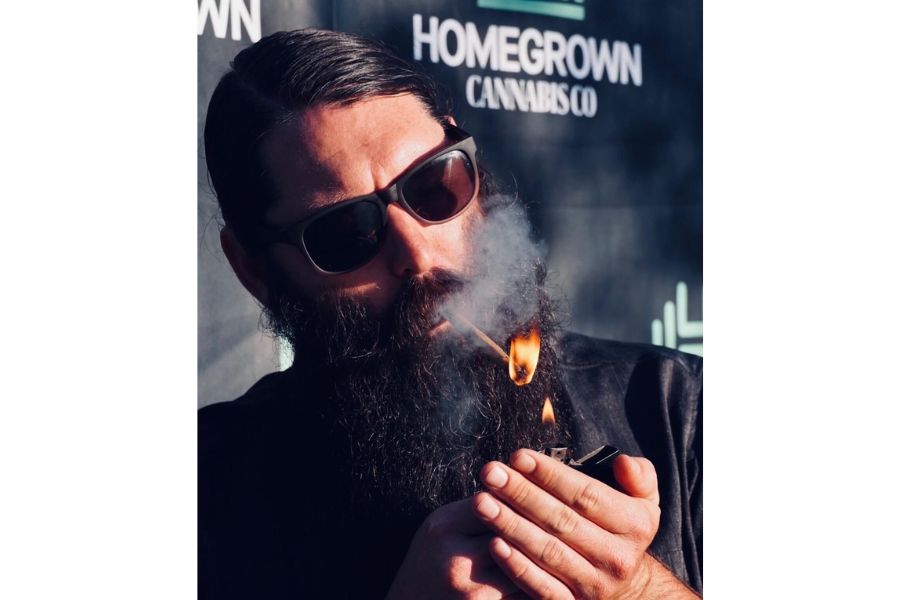
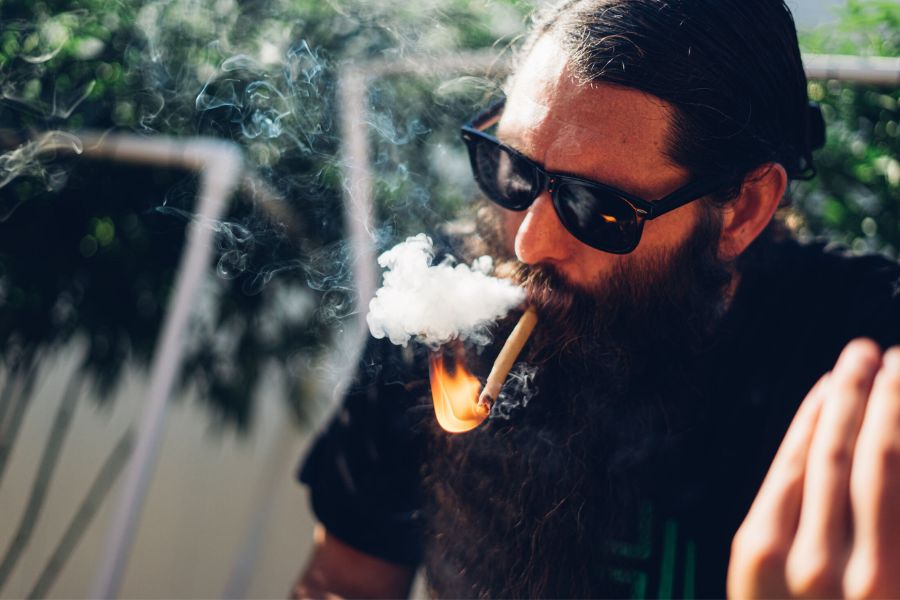
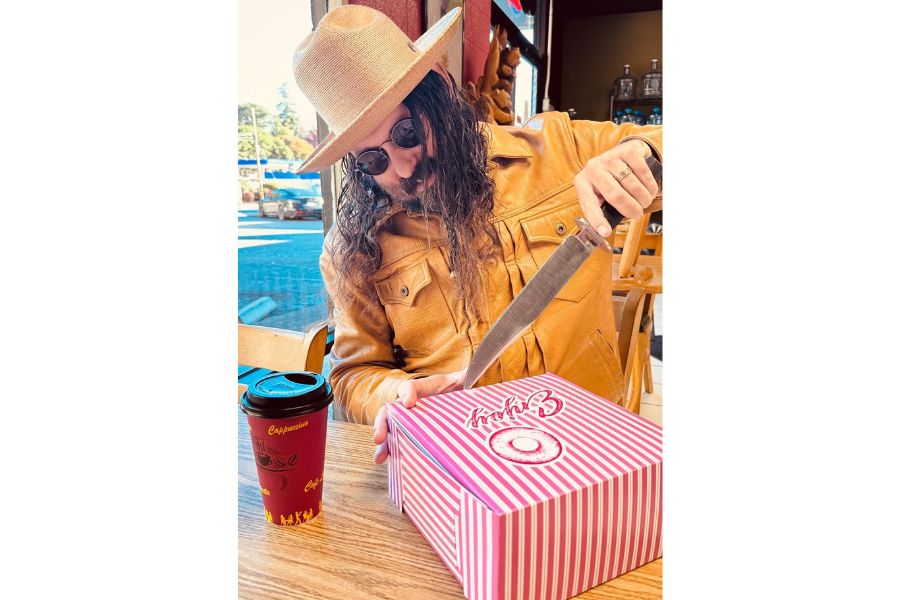
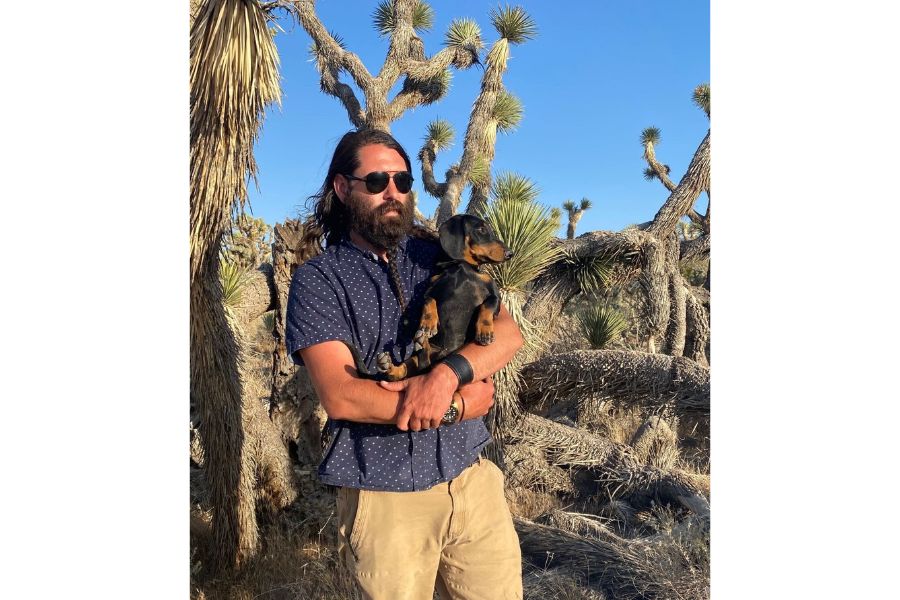
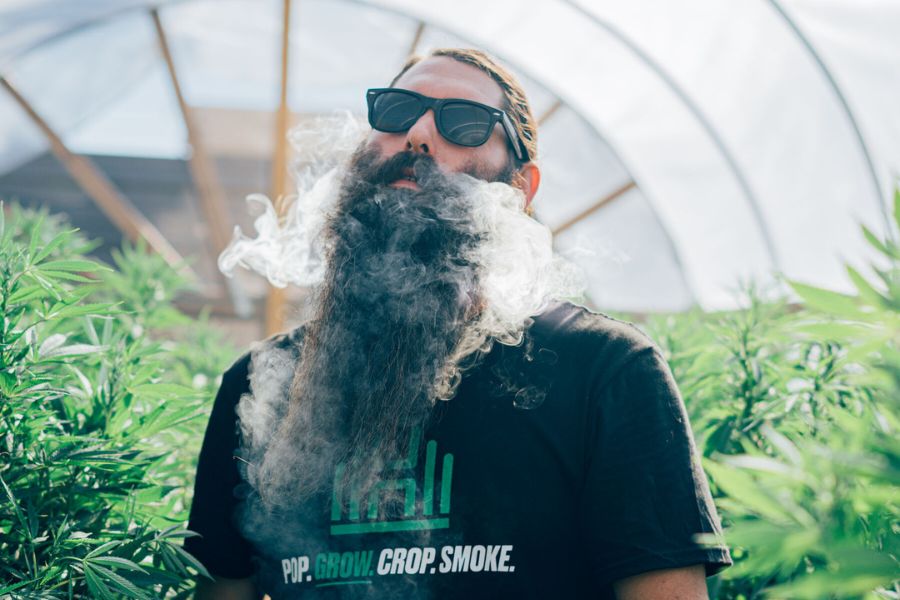
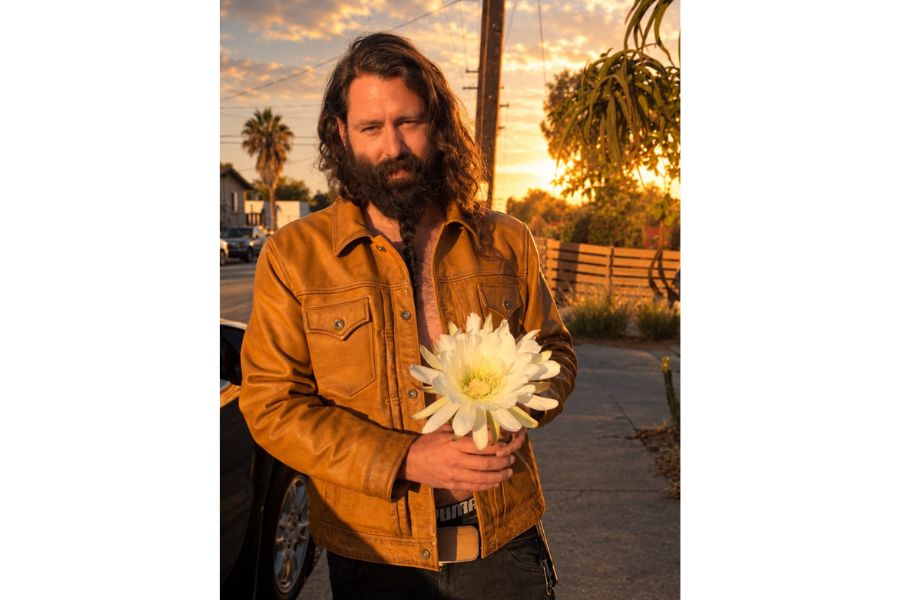
He was enormous. Long hair. Magnificent beard. Leather. Boots. His own completely unmistakable sense of style. And almost always, somewhere on his person, a seriously impressive blade attached to his hip. There was something slightly intimidating about him at first glance.
Then Parker started talking.
Within seconds, the intimidation disappeared. That was a phenomenon I would witness hundreds of times over the following seven years. People would meet Parker and initially seem slightly unsure of him. Then he smiled. He talked to them. He listened. And somehow, almost instantly, the wall came down.
Parker had an extraordinarily rare ability to make people feel comfortable around him. He didn't perform warmth. He was warm.
That first meeting at Slappy's told me everything I needed to know. I had found the person I wanted in front of our cameras. More importantly, although I couldn't possibly have known it yet, I had just met somebody who would become one of my closest friends.
Finally, Someone Real
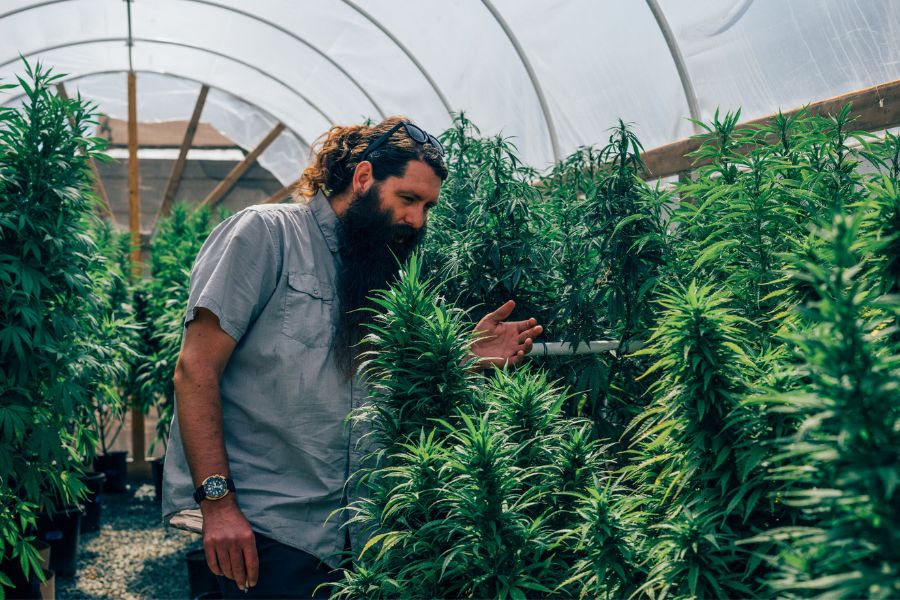
Parker wasn't interested in becoming famous. That may sound strange considering that we were about to put him in front of an enormous audience, but it is precisely what made him so compelling on camera.
He wasn't chasing the camera. He wasn't calculating what appearing in a video could do for his personal brand. He wasn't trying to convince anybody that he was important. He just knew how to grow cannabis. More importantly, he loved it.
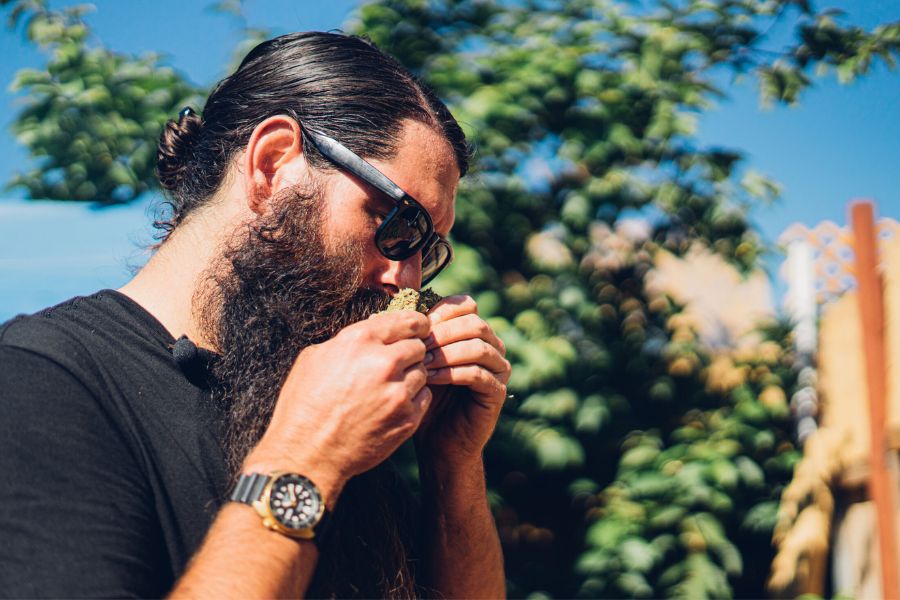
He loved the plant itself. He loved understanding it. He loved experimenting. He loved solving problems. And he loved passing what he knew to somebody else. So we put a camera in front of him. And the audience immediately recognized what I had seen in that sports bar. Parker was the real thing.
There was no presenter voice. No manufactured persona. No desperate need to sound clever. If Parker knew something, he explained it. If there was another way of doing it, he acknowledged it. He approached cultivation with curiosity rather than commandments. And people trusted him.
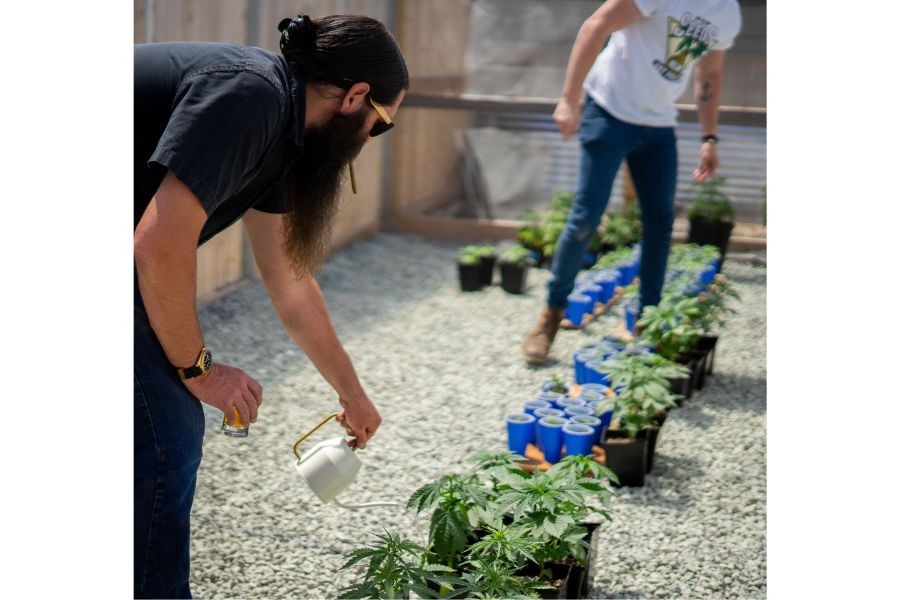
Our audience grew enormously. At one point our social following reached roughly 236,000 people, and Parker became a huge part of the identity we had created. For years, Parker and I made virtually every cultivation video imaginable.
Germination. Watering. Feeding. Soil amendments. pH. Nutrients. Trellising. Topping. Pest management. Greenhouses. Training techniques. Experiments. Problems. Solutions.
We traveled around the country filming together. We spent time with Swami Chaitanya and Nikki Lastretto in Northern California. We filmed with Ed Rosenthal and his wife Jayne. And I repeatedly watched something fascinating happen when Parker met people with legendary status inside the cannabis world. Parker would make them feel as though he were genuinely honored to be standing in their garden. And somehow, at exactly the same time, they would begin acting as though they were honored to have Parker standing there.
There was no hierarchy. No groveling. No posturing. Just respect. He treated famous cultivators like people. He treated beginners like people. He treated strangers like people. That sounds incredibly simple. It isn't.
Somewhere Along the Way, We Became Brothers
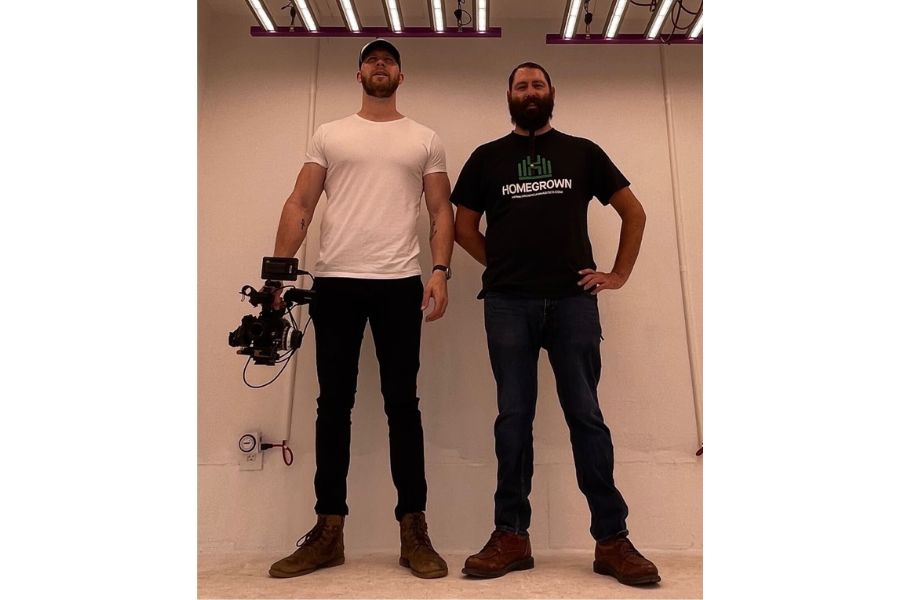
Seven years is a long time to work beside somebody. Especially in production. Our working life together wasn't eight hours at neighboring desks. It was road trips. Flights. Rental cars. Gardens. Hotel rooms. Early mornings. Long shoots. Camera problems. Equipment runs. Hours waiting for light. Hours waiting for plants. Hours talking absolute nonsense.
We traveled all over together. We laughed constantly. We ate together. We drank together. We argued about music. We eventually established one of the most important laws governing our friendship: Whoever drives controls the music. There would be no appeals. This prevented war.
Somewhere among all those drives and gardens and shoots, Parker stopped being somebody I worked with. He became one of my people. And anyone who knew Parker knows exactly what I mean by that. He collected people. Not strategically. Not because they could do something for him. He simply had an enormous capacity for friendship.
The Beard
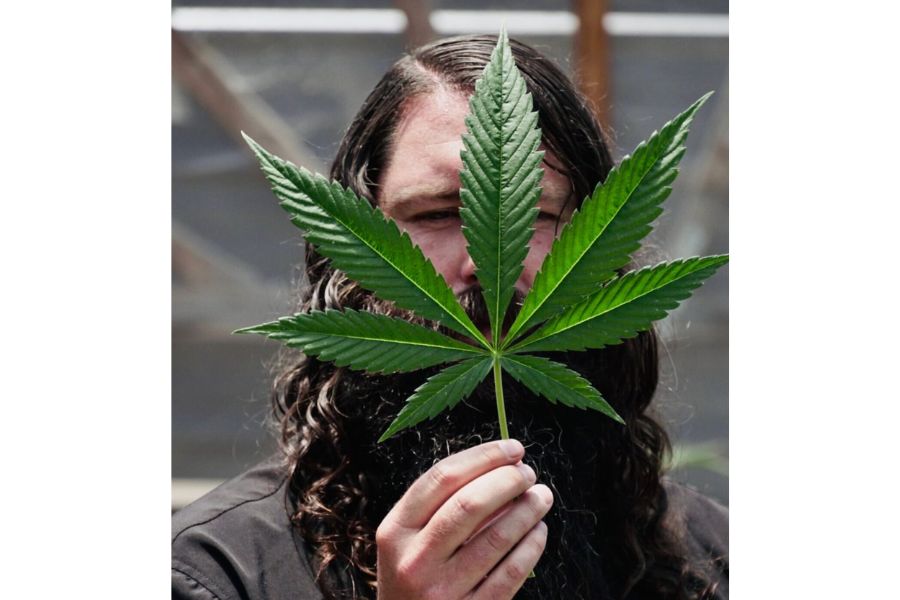
I promised we would get to the beard.
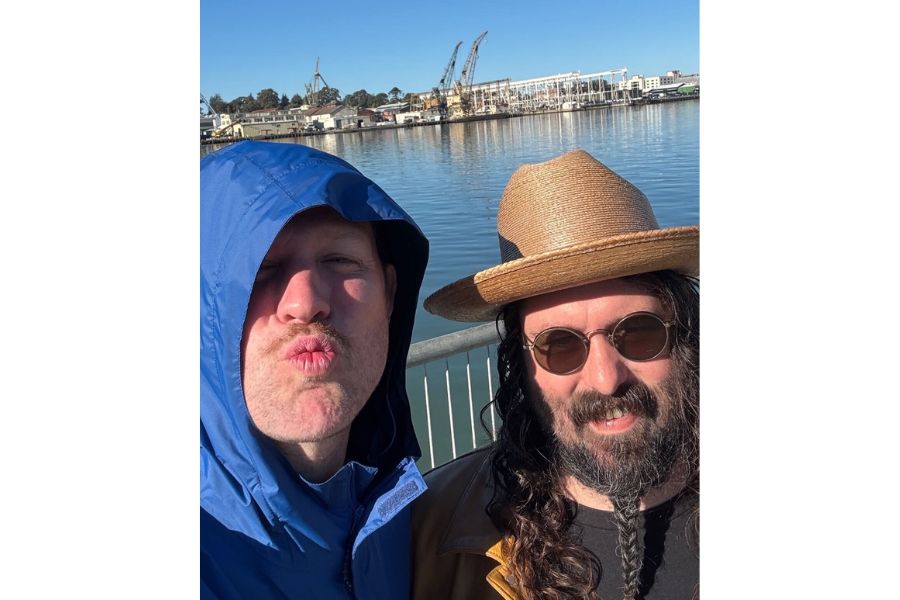
Slappy's became somewhere Parker and I returned to regularly, largely because the wings were incredible. Unfortunately, Parker had one physical characteristic that made eating chicken wings particularly challenging. About half of every plate became incorporated into his facial hair. Sauce. Chicken. Possibly celery.
By the end of a plate, I could usually tell exactly what he'd eaten just by looking at his beard. I became responsible for informing him. One day Parker told me something that stuck with me. You know who your friends are because they're the people who tell you when you've got something stuck in your teeth.
In Parker's case, the inspection area was approximately fourteen times larger. But I understood what he meant. Real friendship includes telling somebody the truth, even when the truth is that half a buffalo wing is currently living in their beard.
Those completely insignificant moments are strange after somebody dies. You assume the memories that will haunt you will be the dramatic ones. Sometimes they aren't. Sometimes it's chicken wings.
The Pigeon
If somebody asked me to choose one story that explains Parker Curtis, however, it wouldn't involve cannabis at all. It would involve a pigeon.
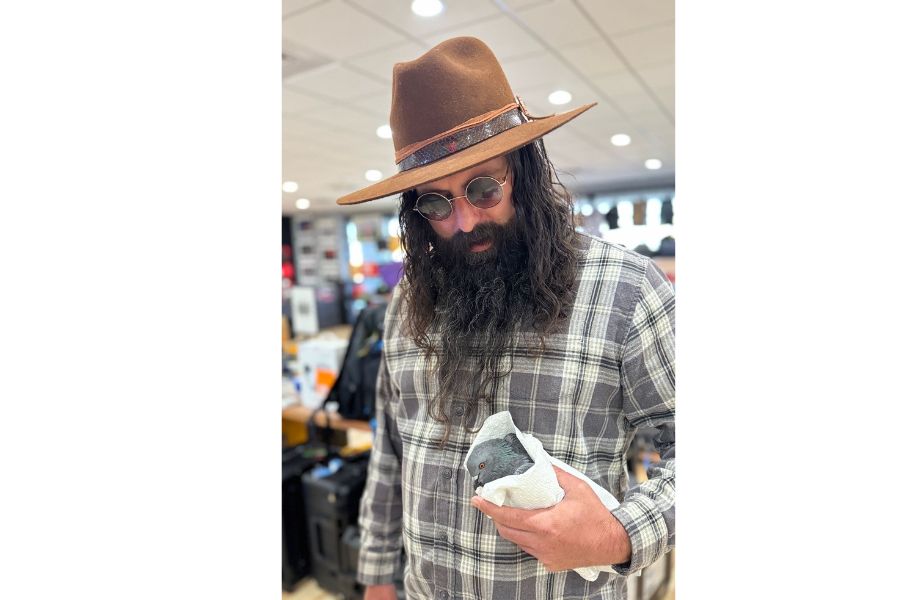
We were in Las Vegas. I was inside a camera store picking up some lenses. Parker had gone outside. Then Parker came walking back into the store carrying a pigeon. Not figuratively. An actual pigeon.
I looked at him. I looked at the bird. And I remember saying something along the lines of: “What the heck are you doing in here with a pigeon?”
Its wing was injured. Parker had found it outside. And apparently, in Parker's mind, continuing with our day while an injured bird sat on the pavement was simply not an available option. So now the pigeon was part of the production.
That was Parker. A schedule didn't matter. Convenience didn't matter. And there was absolutely nothing the pigeon could ever do for Parker in return. Nobody was filming him. Nobody was applauding. There was no post coming later about what a compassionate person he was. There was just a hurt animal. So Parker helped it.
I have photographs of Parker standing beside famous people. I have photographs from huge grows. Road trips. Productions. Events. Years of extraordinary experiences. And still, one of my favorite photographs of him will always be the one connected to that ridiculous injured pigeon.
Because anybody can tell you that they're kind. Parker's kindness frequently inconvenienced him. That is a much harder thing to fake.
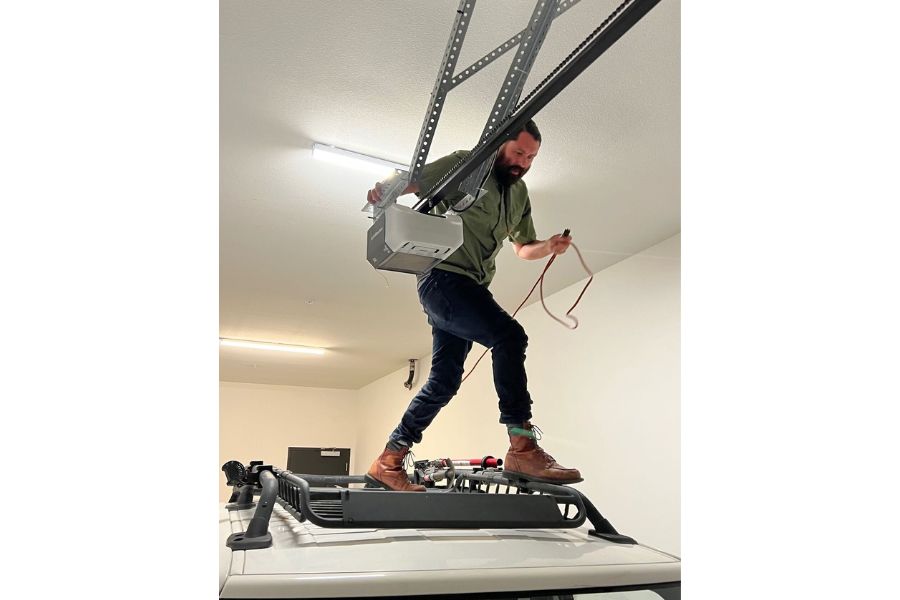
Parker Never Kept Score
The pigeon wasn't an exception. It was a pattern. If your fence or gate broke, Parker would arrive with tools. If Sarah needed help with her students or a garden project, Parker would make himself available. If somebody contacted him online with a cultivation question, he often wouldn't bother typing out a response. He'd call them. Sarah would watch him spend an hour in the garden talking on the phone to some complete stranger who had asked for advice. And if that stranger eventually came to town, Parker might take them out for a burger or a beer.
Someone needed something built? Parker would build it. Something needed fixing? He would fix it. Somebody was ill? He immediately started thinking about how he might help. An animal was injured? Whatever else was happening suddenly became less important.
I saw Parker cry very few times. Usually it involved one of his dogs being sick or injured. That enormous man with the beard, knives, leather and death metal shirts possessed an almost comically soft heart. And I benefited from that generosity constantly. That's one of the things that hurts now. Because grief makes you perform calculations the dead person never asked you to make.
Who called whom more? Who showed up more? Who helped whom? Who gave more? Parker would have hated that accounting system. He never kept score. But if I am forced to look at the scorecard of our friendship, I know who won. Parker did. By a mile.
He helped me so many times. He gave me his time. His knowledge. His loyalty. His labor. His friendship. And I don't think I ever properly sat him down and explained what that meant to me.
I thanked him. Of course I did. But did I tell him? Really tell him? Did I explain that having him in my life had genuinely changed my life for the better? I don't think I did. And that is one of grief's cruelest lessons. You discover all the things you intended to say when there is suddenly nobody there to hear them. So I'll say it here.
Parker, you made my life better. You made my work better. You made the difficult years easier. You taught me what loyalty looked like. You showed me what integrity looked like when nobody was watching. And I noticed. Even when I failed to tell you.
The Plant Was Always About People
Parker had grown up as a Jehovah's Witness and had a complicated relationship with his father. Later, his father developed throat cancer. Cannabis unexpectedly became a bridge between them. Parker was growing at the time and began making RSO in an attempt to help alleviate some of what his father was experiencing.
Something much bigger than cannabis came out of it. A father and son who had struggled to understand one another found common ground. There was connection. Respect. A relationship began to heal. I think that experience shaped Parker deeply.
Because for Parker, cultivation was never really about showing the world how much he knew. Knowledge was useful because it could help somebody. That instinct continued until the end of his life.
Shortly before Parker died, he was trying to help an end-of-life cancer patient back in my homeland of North Wales. I am deliberately not going to make medical claims about what cannabis can or cannot do. That isn't the point.
The point is that somebody Parker had never met was suffering thousands of miles away. And Parker tried to help. There was no money in it. No publicity. No benefit to him. Just another human being who needed something. And, once again, Parker's response was essentially: What can I do?
The Last Ordinary Conversation
My final conversation with Parker was completely ordinary. That is something I wish more people understood about sudden death. Your final conversation usually doesn't feel like a final conversation. There is no warning. No cinematic pause. No mysterious feeling that makes you choose your words differently. You just talk.
Parker had been experiencing serious pain around his ribs. He had undergone an adjustment and told me that he felt somewhat better. That reassured me. He had experienced rib problems before and believed that was what was happening again. We talked about work.
He told me he planned to film some Instagram content for us before heading up to Orange County with Sarah to visit her family. I told him to take it easy. The content could wait. But Parker was a worker. Then we said goodbye. I assumed I would speak to him after the weekend. That was it. The last conversation I would ever have with Parker Curtis.
Later, Parker suffered a pulmonary embolism. His heart stopped. The emergency responders brought him back. Then again. Then again. Three times Parker's heart stopped. Three times they resuscitated him. Even then he fought. Of course he did.
The Message
The next morning I was at church with my wife and daughter when Parker's brother Hunter sent me a message. I didn't properly open it until later. We were rushing to Del Mar for a child's first birthday party. I remember standing at a crosswalk waiting for the light to change when I finally looked at my phone. Parker was on life support.
Even now I can picture that crosswalk. That's another thing grief does. It preserves completely irrelevant details in perfect resolution. A road. A traffic light. Where you were standing. What direction you were facing.
There is your life before you read a message. Then you read it. And there is your life afterward.
One Last Time Together
I visited Parker in the hospital. Sarah was beside him. His family was there. Eventually the neurologist gave us the news none of us wanted. Parker's neurological function was declining. His responses were extremely weak. His family ultimately made the impossible decision to remove life support and allow him to pass peacefully.
I was asked to come back. There were only around nine of us. Sarah. Hunter. Tucker. Poof, Parker's close friend and neighbor of more than twenty years. His in-laws. Family. Friends. Parker's people. And somehow, inside the worst day imaginable, there was still laughter.
That's the part I don't ever want to forget. We told Parker stories. And Parker had stories. We cried. We laughed. We drank his favorite bourbon. We dressed him exactly as he would have wanted. His hat. His sunglasses. His boots. His style. Sarah made sure something meaningful to him was tucked into his pocket.
Then eventually it was time. The support was removed. Sarah stayed against him. The music played. And I held his hand. Parker continued breathing for more than three hours. It wasn't easy. He fought incredibly hard. There was something almost painfully appropriate about it. The man was stubborn. Strong. And apparently even death was going to have to wait until Parker was damn well ready.
Eventually, still surrounded by the people who loved him, Parker left. He left this world surrounded by love. Friendship. Stories. Laughter. Music. And his people. The only thing missing was a bonfire.
What Happens to a Life After Someone Dies?
This is the question I keep returning to. Because Parker left behind years of work. Thousands of photographs. Videos. Tutorials. Conversations. Gardens. Stories. People.
Somewhere on a hard drive exists a younger Parker explaining germination. Somewhere else he's talking about nutrients. Or soil. Or watering. Or topping. Or training. Somewhere Parker is laughing because one of us screwed something up. Somewhere I'm probably telling him he has food in his beard.
Our major social channels suffered along the way. A huge social account disappeared. Our enormously successful YouTube channel was eventually removed too. That loss bothered me when it happened. It bothers me much more now. Because I no longer see those videos simply as content. They are pieces of Parker. They captured years of a human being sharing what he knew. And I want them preserved.
We intend to bring that work back. Because somewhere, perhaps ten or twenty years from now, somebody who never had the privilege of meeting Parker may watch one of those videos. They might learn how to grow something because Parker taught them. They won't know about Slappy's. They won't know about our road trips. They won't know Sarah. They won't know Poof or Hunter or Tucker. They won't know about the hospital room. They probably won't know about the pigeon.
But they'll know something because Parker knew it first and decided it was worth sharing. There is something beautiful about that. Knowledge moving from one person into another long after the teacher is gone. Maybe that's one form of immortality.
What Parker Actually Accomplished
We tend to misunderstand legacy. We think it needs to be enormous. A fortune. A company. A title. An award. A building. Something with your name engraved into it. Parker changed my understanding of that.
A legacy can be a gate somebody remembers you fixing. A stranger who remembers that you called them when everybody else would have sent a message. A dog that trusted you. A garden you helped build. A student you encouraged. A sick person you tried to comfort. A friend whose burden you quietly carried. A wife who knew that whatever happened, the two of you would somehow figure it out. An injured pigeon in Las Vegas that everybody else walked past.
Parker accomplished plenty professionally. He became an important educator. He helped build an enormous audience. He taught thousands of people. He stood in gardens beside legends. His face and voice became synonymous with years of the work we created together. I'm immensely proud of that. But I don't think that's his greatest achievement. I think Parker's greatest achievement was the accumulation of ordinary kindness. Thousands of moments that nobody recorded. Thousands of decisions where he could have said: Not my problem. Instead, Parker usually helped.
Sarah encouraged people remembering Parker to do something. Pour a drink. Raise a glass. Tell a story. Laugh. Help your neighbor. Take the drive. Build the fire. Don't postpone the adventure. Love people generously. I would add one more. Don't keep score. Because Parker didn't. And perhaps the best way any of us can preserve something of him is to live a little more like that.
The world is quieter without Parker Curtis. It is certainly less interesting. Less adventurous. Less generous. And, as Sarah put it with painful accuracy, quite a bit more boring. But Parker was here. He existed. He mattered enormously. And for seven years I was lucky enough to spend an absurd amount of my life beside him.
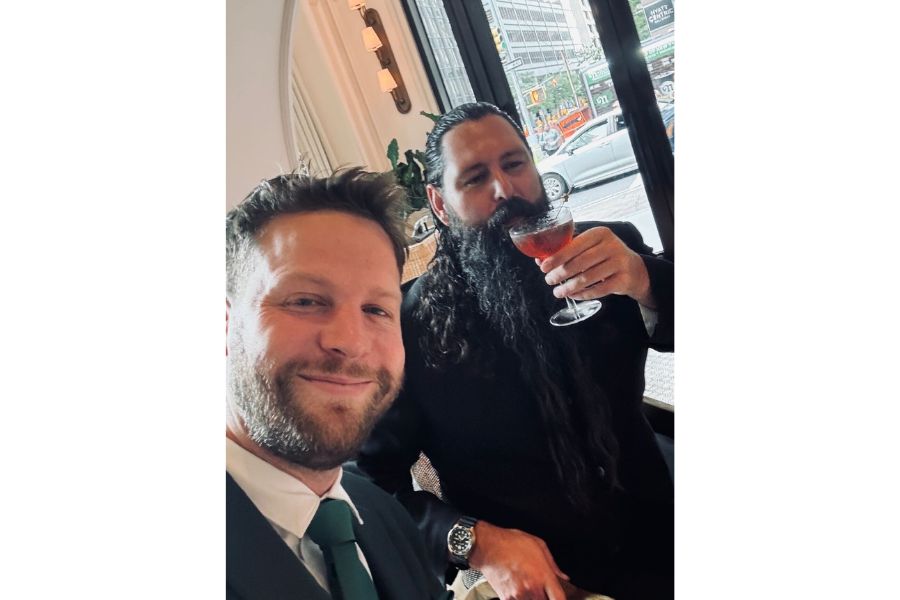
First as the filmmaker who wanted to put him in front of a camera. Then as his colleague. Then as his friend. Eventually, as his brother.
I would give almost anything for another road trip. Another shoot. Another completely unnecessary phone conversation. Another argument about music. Another plate of wings. Another chance to look across a table and tell him that he had something stuck in that magnificent beard. But I don't get another one. None of us do. So we tell the stories.
And if Parker taught you something, teach it to somebody else. If Parker helped you, help somebody else. If Parker made you laugh, tell the story again. If you loved him, say his name. And if you have somehow arrived at this page years from now having never met Parker Curtis, I want you to know something about the giant bearded man in these photographs.
Yes, he was exactly as interesting as he looked.
Yes, the knives were real.
Yes, the beard really was that magnificent.
But none of that was what made Parker extraordinary.
What made Parker extraordinary was that underneath all of it was an exceptionally good man. A man who gave without calculating what might come back. A man who could make strangers feel like old friends. A man who loved his wife fiercely. Who loved his family. Who loved his animals. Who loved his friends. Who loved growing things. Who loved helping people. A man who saw an injured pigeon lying on the ground in Las Vegas and, while hundreds of other people presumably continued walking, stopped. Because something needed him. And Parker Curtis was the kind of man who stopped.
That is the man I knew. That is the man I loved. And that is the man I hope people will still be reading about many years from now.
I love you, brother.
Matt Hamer
Nate Hammer
Parker Curtis
1987 — 2026
He loved deeply.