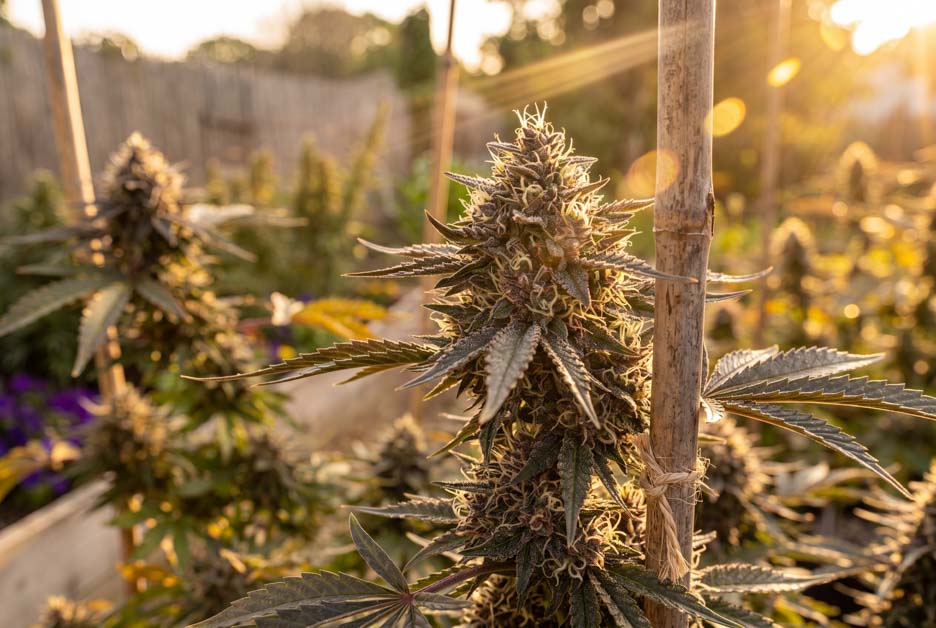




Autoflower Week By Week Pictures: Full Visual Guide

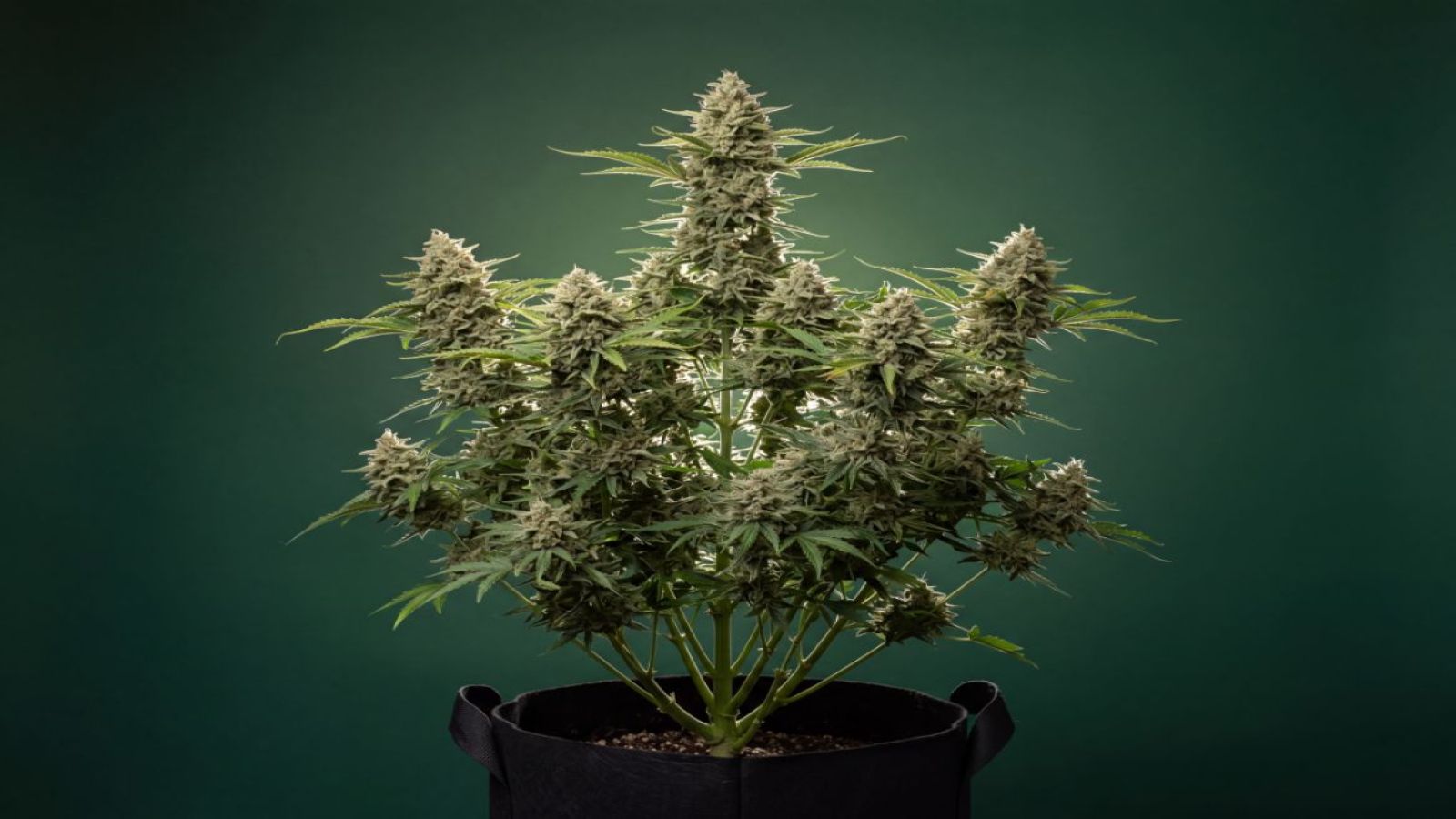
An autoflower cannabis plant moves through five visible stages across roughly 8 to 12 weeks from seed to harvest, with slower or larger strains pushing into weeks 13 or 14.
This guide shows what each week should look like, where common strains vary and how to tell if a plant is stunted. By the end you'll be able to match any week of growth to a clear visual benchmark and catch problems before they cost you a harvest.
Fast Rule
A healthy autoflower hits five visible milestones. Cotyledons appear in week 1 with the first true leaf emerging by the end of the week, three-finger true leaves develop in week 2, active vegetative growth in week 3, pistils at the nodes in week 4, and bud formation from week 5 onward.
Most autoflowers finish between weeks 8 and 12. If a plant is more than a week behind these markers, it's likely stunted.
What Does an Autoflower Look Like Week by Week?
An autoflower cannabis plant moves through five visible stages across roughly 8 to 12 weeks from seed to harvest. The seedling stage covers weeks 1 and 2, vegetative growth fills week 3, pre-flower transition starts in week 4, early flowering begins in week 5, mid-to-late flowering fills weeks 6 and 7, and ripening leads into harvest from week 8 onward.
Each stage has clear visual markers that tell a grower exactly where the plant is in its life cycle. The table below sets the baseline, and the week-by-week sections that follow show what each milestone actually looks like. Use the table as a benchmark, but expect strain variation of plus or minus one week at every stage.
| Week | Stage | What you should see |
| 1 | Seedling emergence | Two round cotyledons, no true leaves yet |
| 2 | Early seedling | First serrated true leaves, 3-finger pattern |
| 3 | Vegetative growth | 4-8 inches tall, multiple node sets, full true leaves |
| 4 | Pre-flower stretch | Vertical stretch, first pistils at the nodes |
| 5 | Early flowering | Bud sites forming, dense pistil clusters at nodes |
| 6 | Mid flowering | Bud sites filling, heavy pistil coverage, slowing stretch |
| 7 | Late flowering | Calyxes swelling, pistils starting to darken |
| 8 | Trichome ripening | Trichomes turning milky, fade starting in fan leaves |
| 9-12 | Harvest window | Amber trichomes, dense flower clusters, ready to chop |
Autoflower Week 1: Seedling Emergence
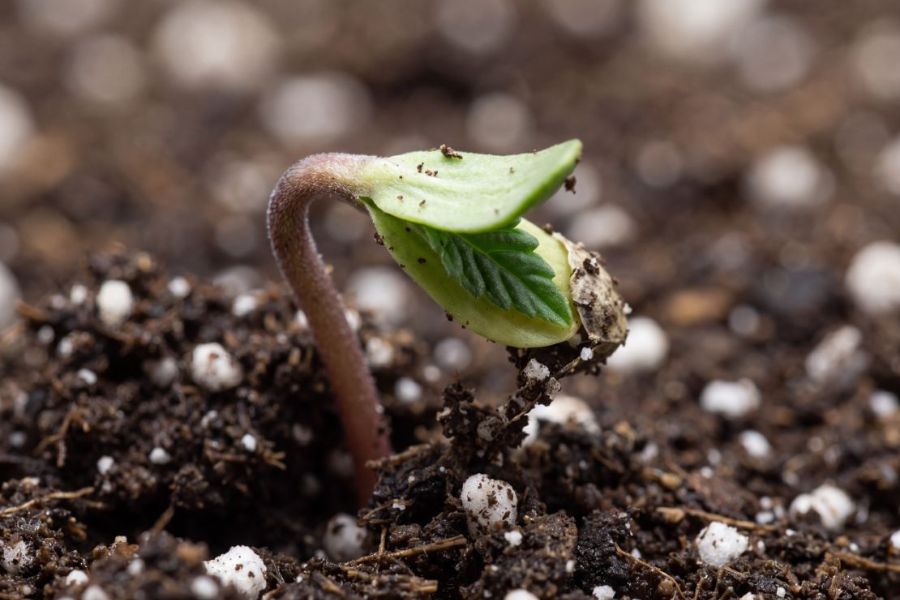
A 1-week-old autoflower shows two oval cotyledons with the first true leaf emerging between them. The plant is fragile at this stage and grows slowly.
Autoflower week 1 starts the moment the seedling breaks soil and unfolds its first round cotyledons. Cotyledons are the two smooth, oval-shaped leaves that come pre-formed inside the seed and they look nothing like cannabis leaves.
The stem at this stage is thin, pale green and usually under an inch tall. By the end of week 1, the first true leaf — a single thin blade with serrated edges — should be visible at the center of the cotyledons.
If the seedling looks stretched, thin and pale at the end of week 1, the light is probably too far away or too weak.
Autoflower Week 2: Early Seedling Growth
Autoflower week 2 produces the first true serrated leaves and the start of vertical growth. By day 10, the plant should show one or two sets of three-finger true leaves and the stem should thicken visibly.
A healthy 2-week-old autoflower stands 2 to 4 inches tall with bright green leaves and the cotyledons still attached and yellowing at the base. The root system is establishing underneath, so above-ground growth still looks slow.
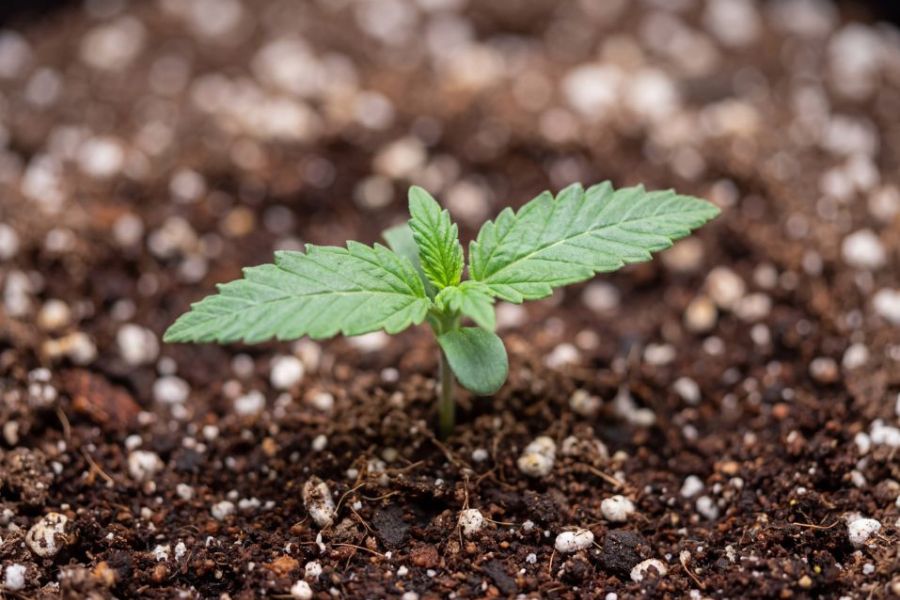
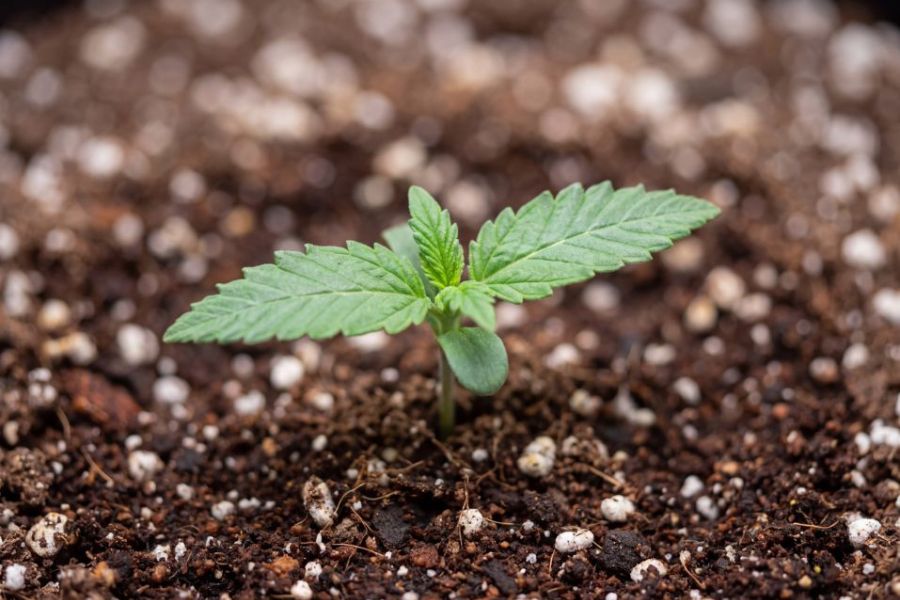
A healthy 2-week-old autoflower has one to two sets of three-finger true leaves and a stem starting to thicken.
Any 2-week-old autoflower that's still showing only cotyledons with no true leaves is behind schedule.
Autoflower Week 3: Vegetative Growth Begins
Autoflower week 3 shifts the plant from seedling to active vegetative growth. The leaves now have five fingers instead of three, the canopy starts to spread, and the plant typically stands 4 to 8 inches tall. New node sets appear every two to three days, and the side branches start pushing out from the main stem.
This is the stage where the plant really starts to look like cannabis.
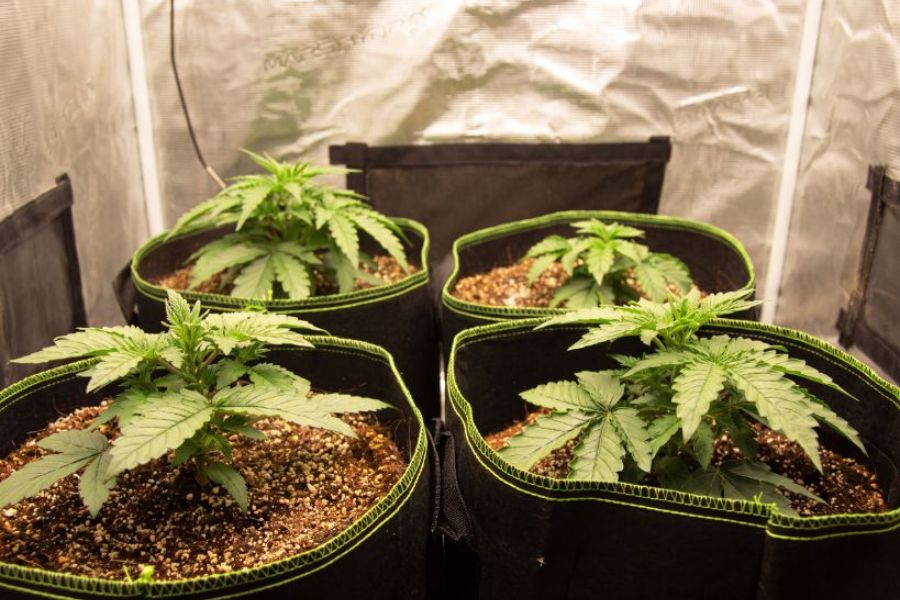
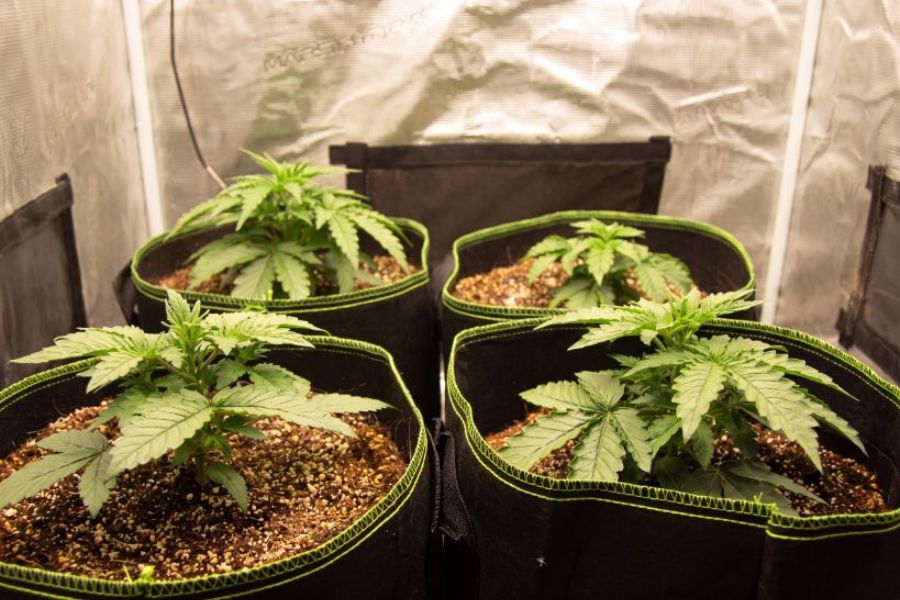
A healthy 3-week-old autoflower shows 3 to 4 node sets, five-finger leaves and the start of side branching.
Autoflowers don't get a long veg window like photoperiod cannabis plants, so what happens in week 3 sets the foundation for everything that follows.
Autoflower Week 4: Pre-Flower Stretch
Autoflower week 4 marks the transition from veg to pre-flower with visible pistils at the nodes. Pistils are the small white or translucent hairs that emerge from the calyxes, the pointed reproductive structures at each node.
The plant also stretches vertically during this week, often adding 20-30% of its final height in this single stage. This is when growers often ask "when do autoflowers start flowering", and the answer is right here, around day 25 to 35 from seed for most strains.
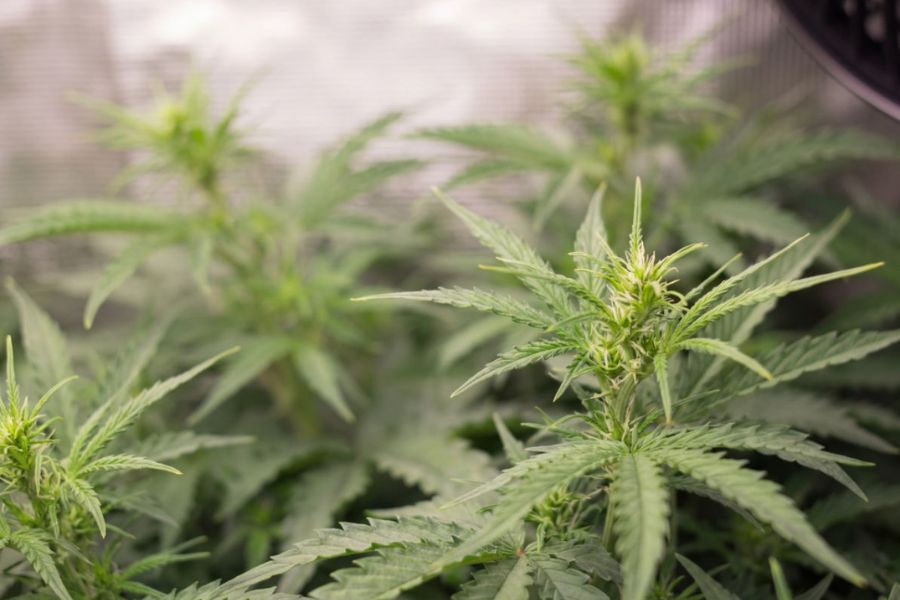
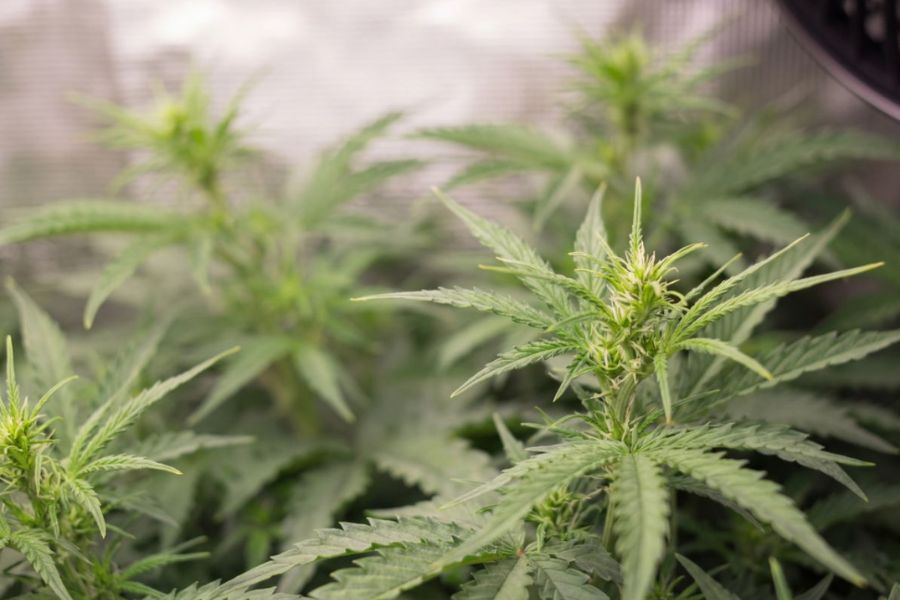
White pistils emerging from a pointed calyx at the node confirm an autoflower has started flowering.
A 1-month-old autoflower that hasn't shown a single pistil yet is running slow but isn't necessarily stunted; give it another week before worrying.
Autoflower Week 5: Early Flowering
Autoflower week 5 enters early flowering with bud sites forming at every node. The pistil clusters thicken, the calyxes start stacking on top of each other, and the small bud sites at the tops of the main stem and side branches become unmistakable.
The plant is still stretching, but vertical growth slows by the end of the week. Leaf production stays strong as the canopy fills in around the developing bud sites.
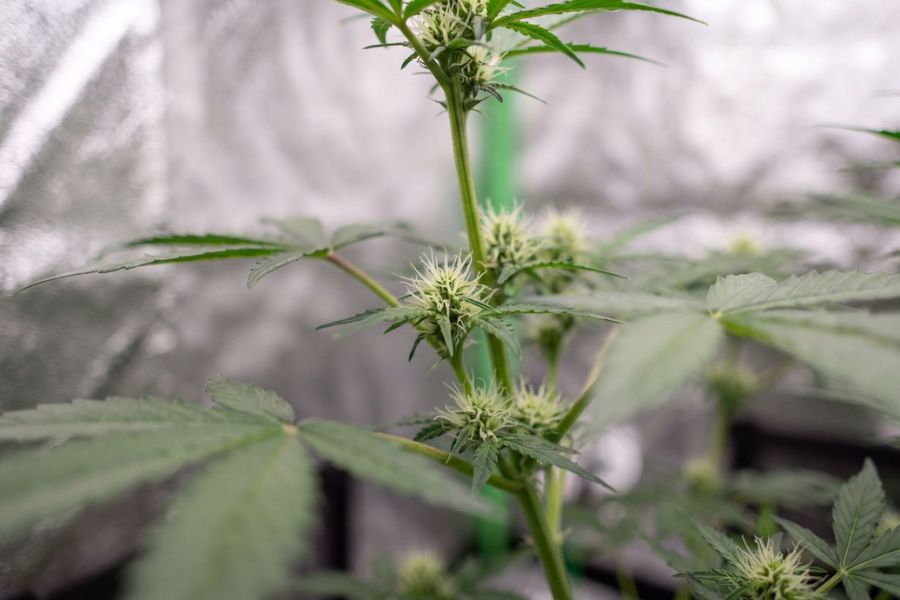
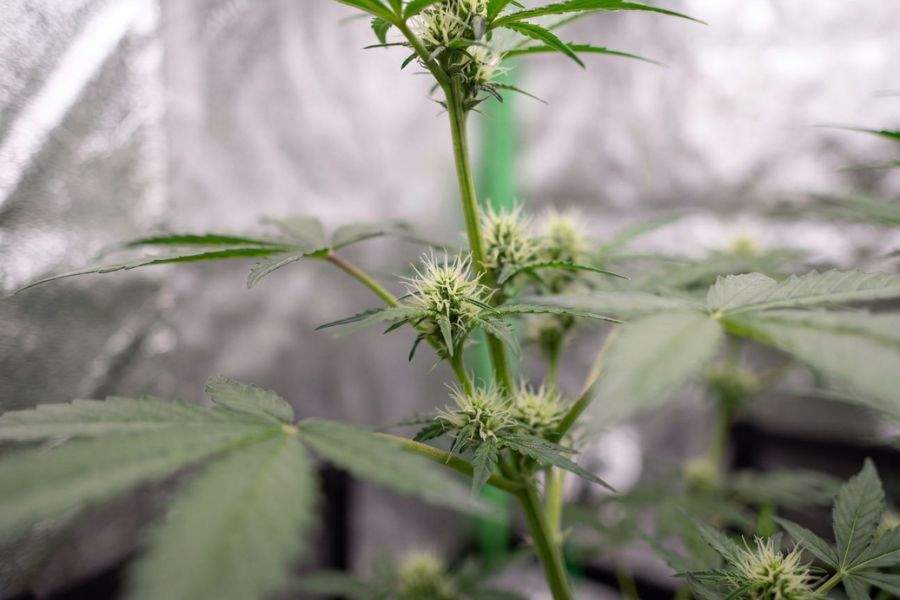
A 5-week-old autoflower shows bud sites with stacked calyxes and dense pistil clusters at every node.
If pistils haven't appeared by the end of week 5, the plant is genuinely behind schedule and the cause needs to be diagnosed.
Autoflower Week 6: Mid Flowering
Autoflower week 6 fills out the bud sites with dense flower clusters and heavy pistil coverage. The plant has stopped stretching and now puts all its energy into bud development. The buds at the top of the main cola swell visibly, and the side branches develop their own smaller flower clusters.
A healthy 6-week-old autoflower has bud sites at every node, dense white pistil coverage and the first hint of trichome glitter on the calyxes under bright light.
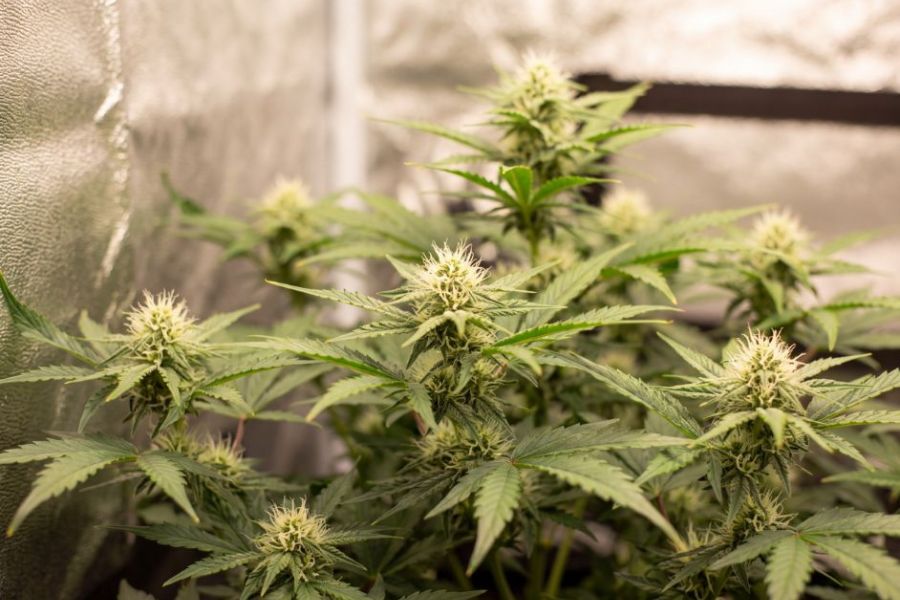
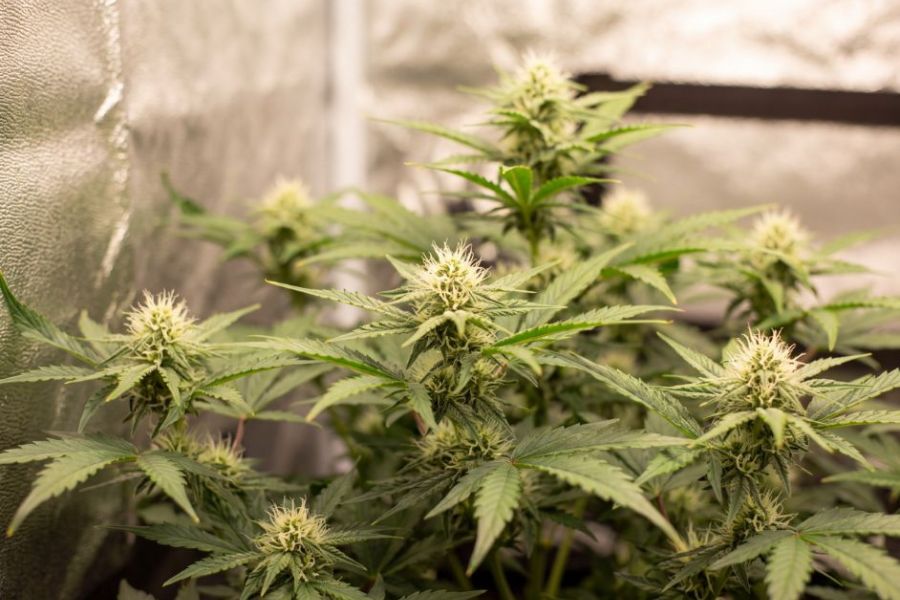
A healthy 6-week-old autoflower has stopped stretching and now shows dense bud sites with heavy pistil coverage at every node.
Growers chasing bigger weeks-6-through-8 buds often look at high yield cannabis seeds before their next grow, since cluster density at this stage is largely set by genetics.
Autoflower Week 7: Late Flowering and Bulk
Autoflower week 7 thickens the flowers and slows vertical growth almost completely. The calyxes swell noticeably, the buds gain weight, and pistils start to darken from white to orange or brown at the tips.
Trichomes coat the calyxes and surrounding sugar leaves, giving the buds the frosty look growers associate with peak flowering. A 2-month-old autoflower, which lands at the end of week 7 or early week 8 for most strains, looks dramatically different from a 6-week-old plant.
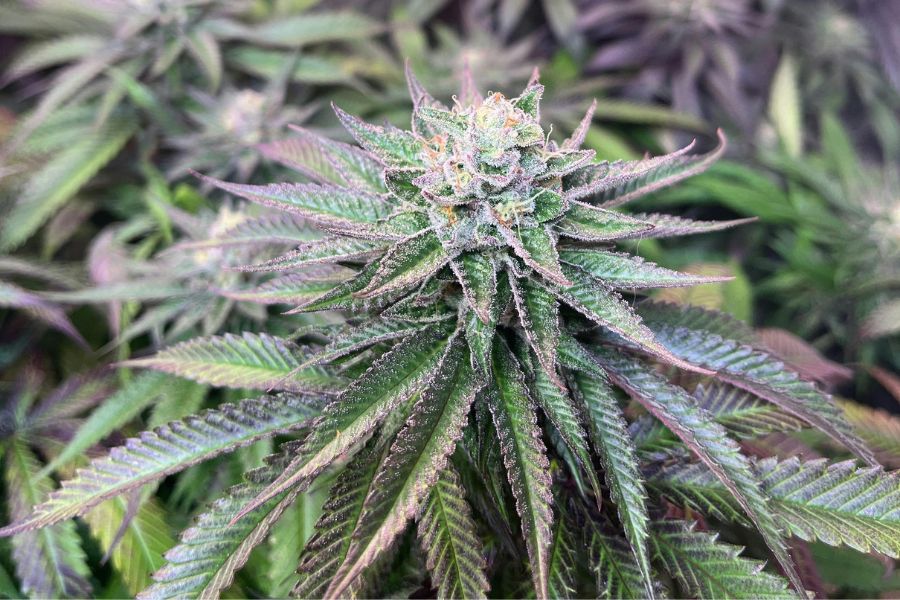
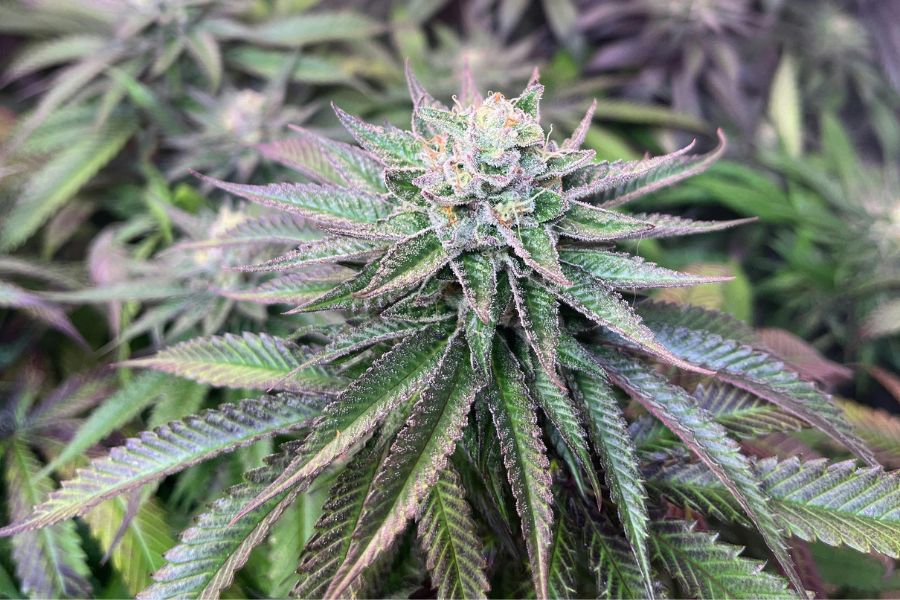
A 7-week-old autoflower shows swollen calyxes, pistils starting to darken at the tips and a frosty trichome coating across the buds.
The fan leaves may start to yellow at the bottom of the plant from week 7 onward, and this is normal. The plant is pulling nutrients from old leaves into the buds.
Autoflower Week 8: Trichome Ripening
Autoflower week 8 shifts trichomes from clear to milky and signals the harvest window opening. Trichomes are the tiny sticky glands that coat the buds and sugar leaves, and their color tells the grower how close the plant is to peak ripeness.
Clear trichomes mean the plant is still building cannabinoids. Milky trichomes mean the buds have hit peak cannabinoid content. Amber trichomes mean the buds are ripening past peak and entering a more sedating profile.
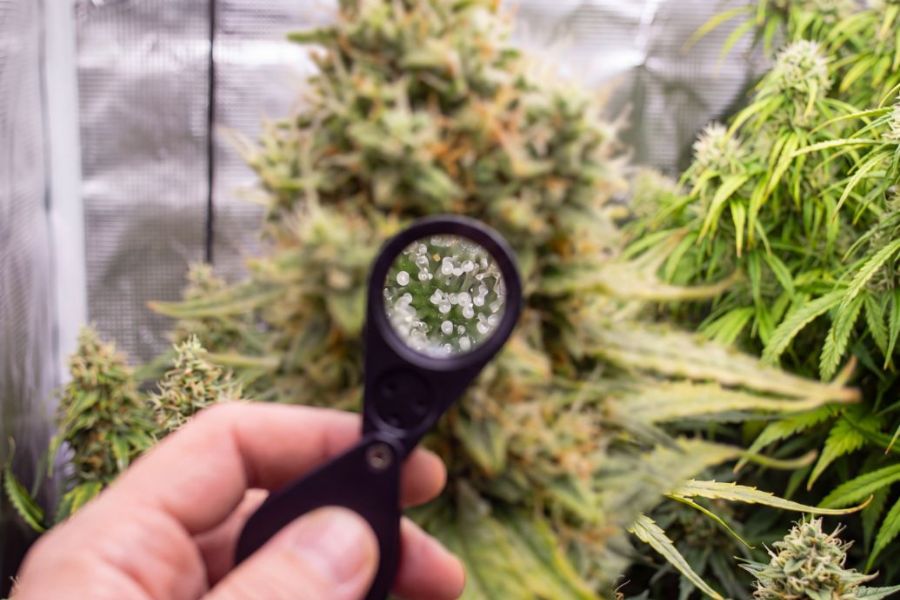
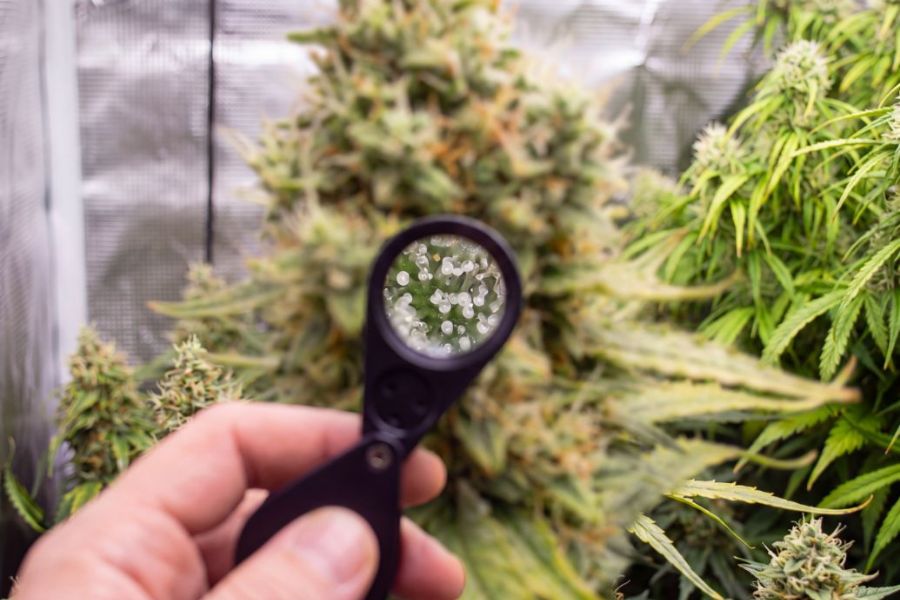
Use a 30x to 100x loupe to check trichome color in week 8.
Fan leaves continue to yellow and fade through week 8, and the plant draws back from green to autumn colors as it readies for harvest.
Autoflower Weeks 9 to 12: Harvest Window
Autoflower weeks 9 to 12 cover the harvest window for most autoflower strains. Fast-finishing strains chop around week 8 to 9, mid-pack strains finish between weeks 9 and 10, and slower or larger autoflowers can run into weeks 11 or 12.
The harvest signal is the same regardless of strain: mostly milky trichomes with 10-20% amber heads, most pistils darkened, and dense, weighty buds. Some growers flush their plants with plain water for the last 7-10 days before harvest, though this depends on grow medium and personal preference.
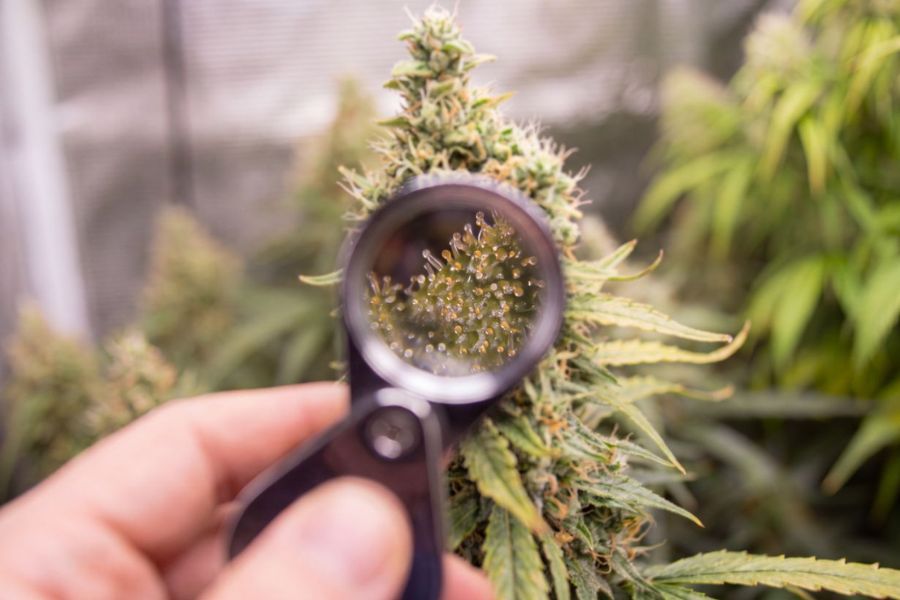
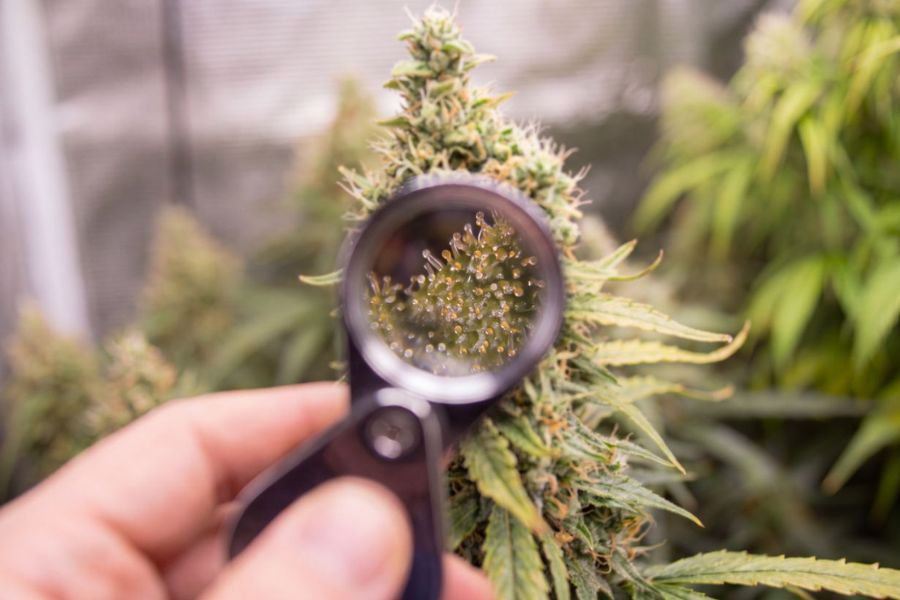
Harvest when 70-80% of trichomes are milky and 10-20% have turned amber. Most pistils should be darkened and curled back into the calyxes.
A 3-month-old weed plant that's still showing all-clear trichomes is unusual and worth investigating — most autoflowers finish well before this point.
How Do You Tell If an Autoflower Is Stunted?
A stunted autoflower shows delayed node growth, pale or yellow leaves, or visible size lag compared to the week it should be at.
Stunting usually traces back to overwatering, light burn, heat stress, root binding in a too-small pot, transplant shock, or nutrient lockout in the early seedling stage. The signal that matters most is week-over-week comparison: if the plant hasn't gained noticeable size or added a node set in 5 to 7 days, growth has stalled.
| Trait | Healthy Week 3 Autoflower | Stunted Week 3 Autoflower | Reliability |
| Height | 4 to 8 inches | Under 2 inches | High |
| Node count | 3 to 4 node sets | 1 to 2 node sets | High |
| Leaf color | Bright green | Pale, yellow or purple | Medium |
| Leaf size | Spreading, full | Small, curled or twisted | Medium |
| New growth | Visible weekly | Stalled for 5+ days | High |
Use the table to compare a suspect plant against the healthy benchmarks. Height, node count and stalled new growth are the highest-reliability signals.
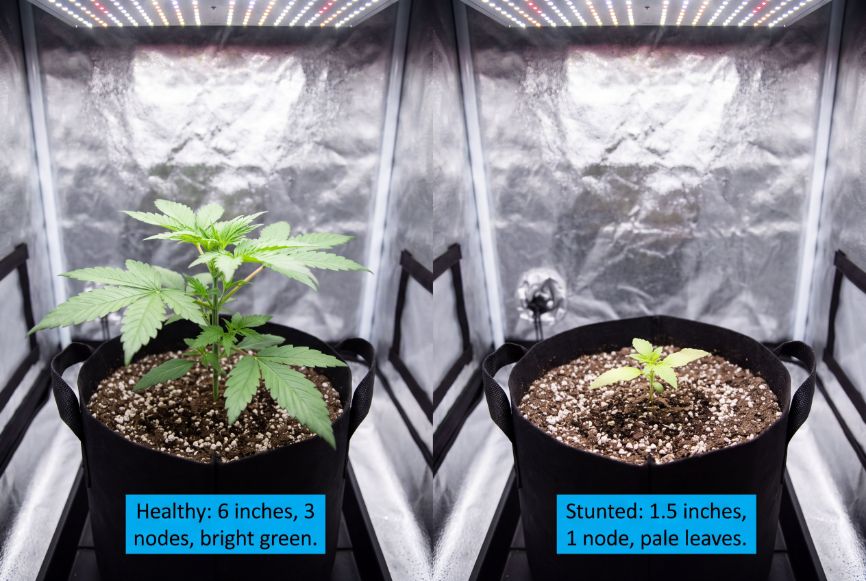
Same week, same strain — different outcomes. The stunted plant on the right is half the height with a third of the node count.
A stunted autoflower is not a guaranteed loss. A stunted autoflower is usually a plant that's lost time and now needs the underlying cause corrected before it can finish on schedule.
Can Stunted Autoflowers Recover?
Yes, stunted autoflowers can recover if the cause is corrected within the first 2 to 3 weeks, though they often finish smaller than untouched plants. Recovery means the plant resumes normal node growth, color and weekly size gain, not that it catches up to where it would have been.
The most recoverable stunting causes are overwatering, mild nutrient burn and light stress. The hardest to recover from are severe root damage, prolonged heat stress and genetic issues from poor seed quality.
Autoflowers run on a fixed clock. The plant will start flowering on its genetic schedule whether it's 4 inches or 14 inches tall, so time lost in weeks 1-3 directly shrinks the final harvest. Beginners running into stunting issues often have better outcomes starting again with best cannabis seeds for beginners the next round, since beginner-friendly genetics tolerate more grow-room mistakes.
A recovered autoflower might finish at 60-80% of its full potential, depending on when stunting started and how long it lasted.
How Does Strain Choice Affect Autoflower Week-by-Week Appearance?
Strain choice changes every visible milestone in the autoflower week-by-week timeline, from leaf shape and color to flowering speed and final size. Indica-leaning autoflowers like Northern Lights and Blueberry stay short, bushy and finish faster, often around week 8 or 9.
Sativa-leaning autoflowers like Sour Diesel and Amnesia Haze stretch taller, have longer internode spacing and can push harvest out to week 12, with the slowest strains finishing closer to week 13 or 14. Hybrid autoflowers like White Widow, Bruce Banner, Wedding Cake and OG Kush sit somewhere in between, usually finishing between weeks 9 and 10.
Color also varies by strain. Some genetics produce purple fan leaves and dark buds, especially with cooler night temperatures in late flowering. Zkittlez and Blueberry autoflowers often show purple expression that growers without the strain context might mistake for stress.
Strain-specific guides for White Widow autoflower week by week, Wedding Cake autoflower week by week and similar searches all share the same five-stage framework - only the timing, size and color vary. Anyone shopping for new genetics can browse marijuana seeds for sale sorted by strain family to plan around the visual outcome they want. The benchmarks in this guide hold for all autoflowers. Strain choice shifts where each week lands on the visual scale.
Indoor vs Outdoor Autoflower Week-by-Week: What's Different?
Indoor and outdoor autoflowers follow the same week-by-week stages but show different size, color and finish timing.
Indoor autoflowers are typically smaller because pot size, light intensity and grow space cap their height. Outdoor autoflowers in good soil and full sun can run 30-50% taller than the same strain indoors, with bigger fan leaves and longer internode spacing. Outdoor plants also tend to show more color variation because of natural temperature swings.
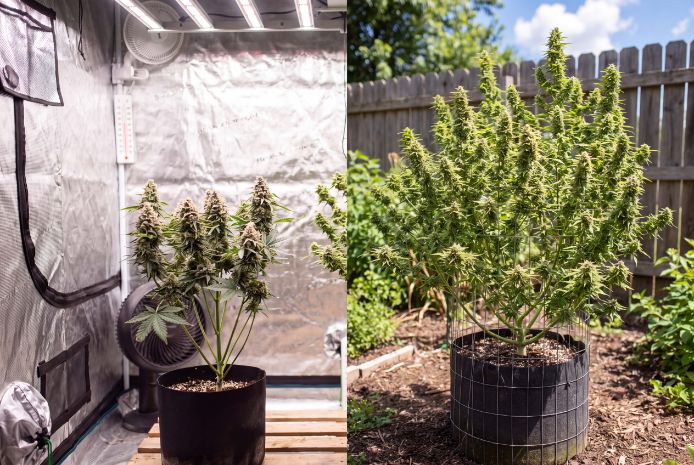
Same strain, same week - indoor autoflowers stay smaller and more compact while outdoor autoflowers stretch taller with bigger leaves and more node spacing.
Finish timing is roughly the same indoors and outdoors because autoflower genetics, not light hours, set the clock. Outdoor autoflowers can finish 3 to 5 days later if late-season temperatures drop sharply.
How Autoflower Week-by-Week Pictures Connect to Seed Choice
Autoflower week-by-week pictures tie back to the seed a grower picks before week 1 even begins. The strain, the breeder and the genetics decide how tall the plant gets, how fast it flowers and how heavy the final harvest is. Quality autoflower cannabis seeds from reputable breeders follow predictable week-by-week patterns where germination and cultivation are lawful.
Most autoflower buyers also want female plants, which is why feminized weed seeds dominate the category - almost every commercial autoflower is both autoflowering and feminized. Growers running regular autoflower seeds see the same stages but need to sex plants in week 4 or 5.
Cloning cannabis doesn't work well with autoflowers. Clones inherit the mother plant's age, so an autoflower clone flowers almost immediately on a stunted timeline. Autoflowers are a seed-only category for that reason.
Start with the right seed and the week-by-week timeline becomes predictable, where permitted by federal, state and local rules.
Frequently Asked Questions
What Does a 4-Month-Old Weed Plant Look Like?
A 4-month-old weed plant in the autoflower category should be past harvest, since most autoflowers finish between weeks 8 and 12 and even slow varieties wrap up by week 13 or 14. A 4-month-old autoflower still in the ground is either an unusually slow strain, a stalled plant or a photoperiod plant the grower thought was an autoflower. Check trichomes: if they're milky and amber, harvest now.
Why Are My Autoflowers So Small?
Small autoflowers usually trace back to one of four causes: too-small pot size restricting root growth, low light intensity, overwatering in the seedling stage or genetics from low-quality seeds. Autoflowers can't be re-vegged to recover size, so the final harvest reflects whatever happened in weeks 1 through 4.
When Do Autoflowers Stop Growing in Height?
Autoflowers stop growing in height around the end of week 5 or start of week 6, when the plant fully transitions from stretch to bud development. Most height gain happens during the pre-flower stretch in week 4. After week 6, all the plant's energy goes into bud weight rather than vertical growth.
Can You LST Autoflowers Week by Week?
LST (low-stress training) works on autoflowers but only during the short veg window in weeks 2 and 3. After week 4, the plant has committed to flowering and bending branches risks slowing bud development. Aggressive training methods like topping or super-cropping aren't recommended on autoflowers because the fixed lifecycle leaves no recovery time.