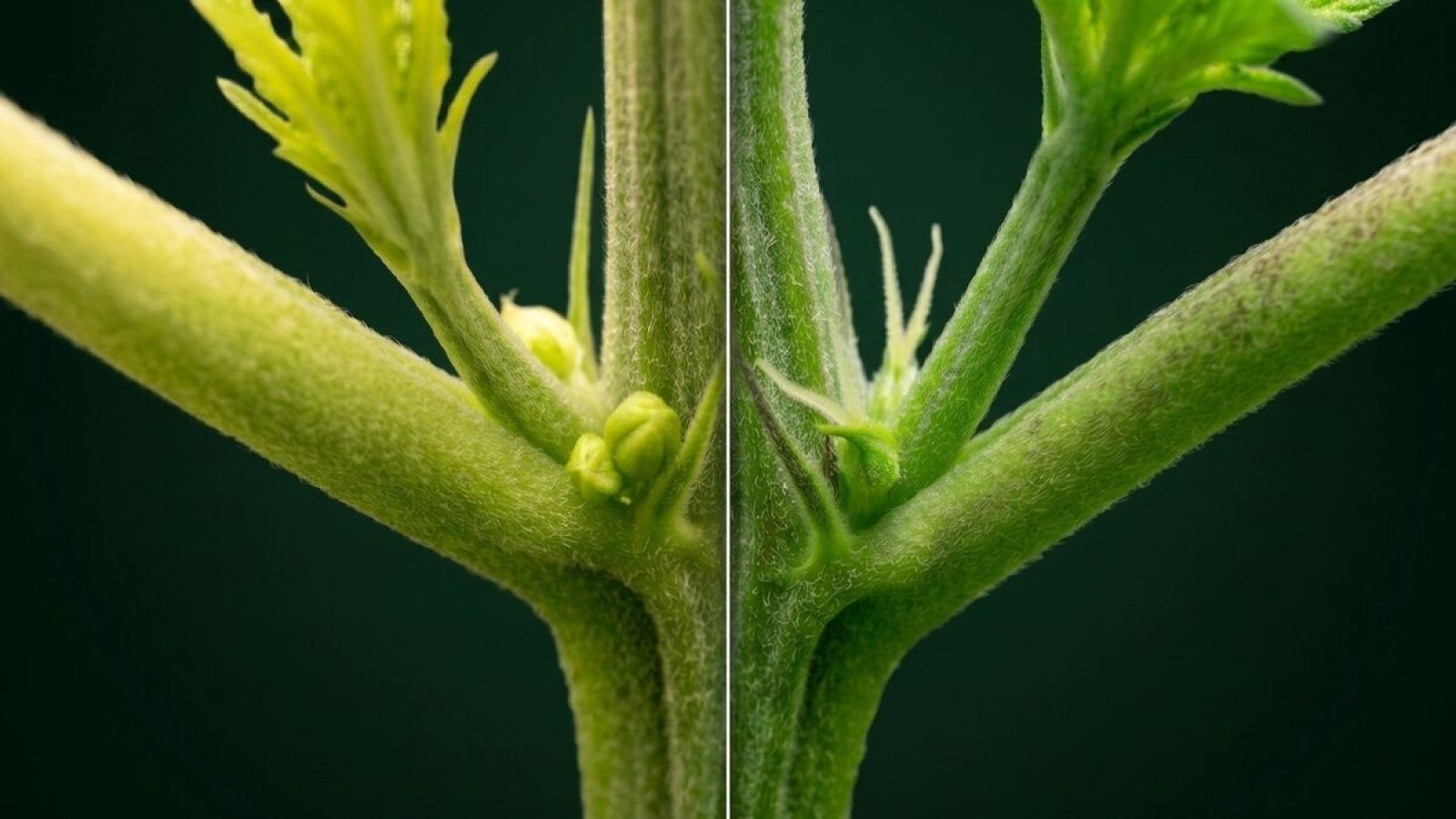
Telling a male weed plant from a female comes down to one thing: what grows at the nodes where leaves meet the stem. Female plants grow thin white hairs called pistils, and male plants grow small round pollen sacs.
This guide shows you what each sex looks like, how to sex plants early by their pre-flowers, and why catching a male in time protects your harvest. By the end you will know which plants to keep and which to pull.
Fast Rule: Check the nodes once pre-flowers appear. Thin white hairs (pistils) mean a female plant. Small round balls (pollen sacs) mean a male plant. If you see pollen sacs and you want buds, remove that plant before the sacs open.
What Is the Difference Between Male and Female Weed Plants?
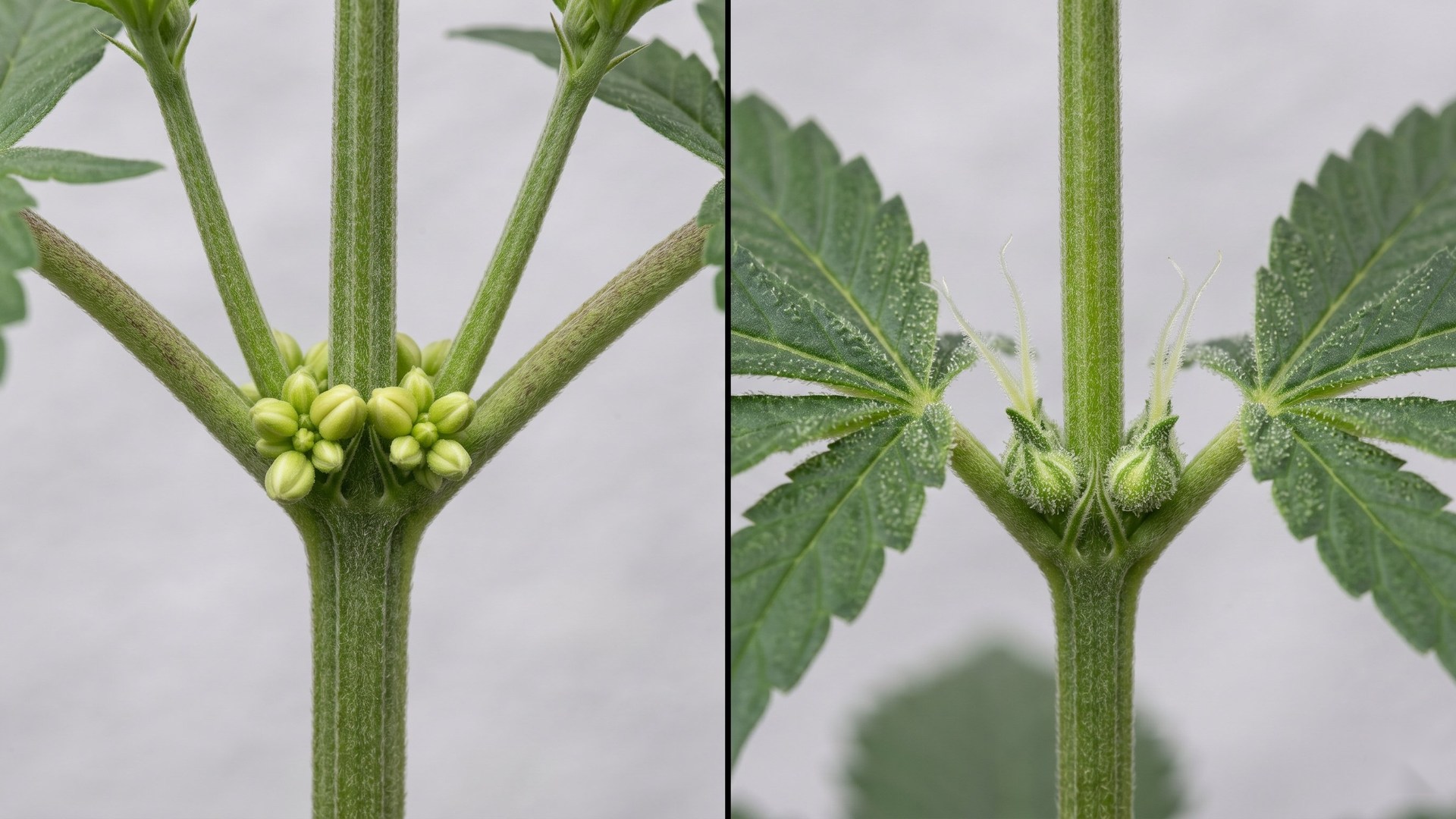
Male and female weed plants differ by the reproductive parts they grow at each node, and that difference decides what the plant produces. Female cannabis plants grow buds, the resin-rich flower clusters people harvest. Male weed plants grow pollen sacs and produce no usable flower.
The same seed can become either sex unless the seed type is bred to control the outcome.
What Does a Female Weed Plant Look Like?
Female weed plants show thin white or translucent hairs called pistils at the nodes. Each pistil grows from a small tear-shaped pod called a bract, the tiny modified leaf that wraps and protects the seed site.
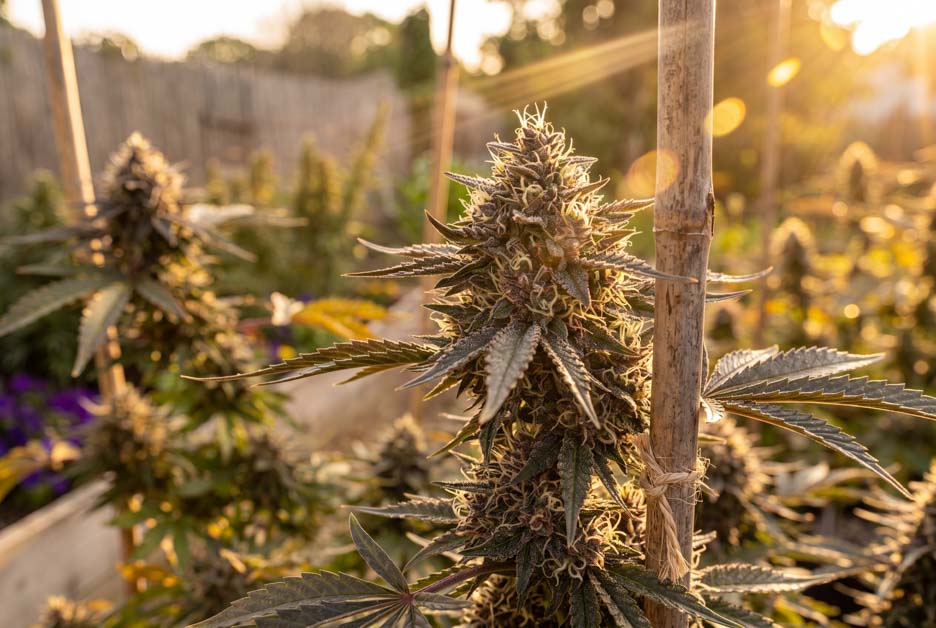
As the female plant matures, these bracts stack into the dense buds that carry resin and aroma (they hold the heaviest coating of resin glands of any part of the plant). Female pot plants are the only plants that produce the flower most growers want.
What Does a Male Weed Plant Look Like?
Male weed plants grow small round pollen sacs at the nodes instead of hairs. These sacs, often called balls, hang in clusters and have no pistils. When a male cannabis plant matures, the sacs swell and split open to release pollen. Male pot plants produce no buds, so most growers chasing flower remove them.
How to Sex Cannabis Plants by Their Pre-Flowers
Sexing cannabis plants means checking the nodes for pre-flowers, the tiny sex organs that appear before full flowering starts. Pre-flowers show up at the joints where branches meet the main stem, usually from the fourth or fifth node down from the top.
You confirm sex by what grows there: hairs for female, sacs for male. This section covers where to look, when signs appear, and one look-alike that trips growers up.
- Where to look - the exact spot on the plant to inspect.
- When pre-flowers appear - how seed type shifts the timing.
- Stipules vs pistils - the growth that fools beginners.
Where to Look for Pre-Flowers on the Plant
Pre-flowers appear at the nodes, the points where branches and leaves join the main stem. Start checking the upper nodes from the fourth or fifth node down, because pre-flowers show there first. A magnifying glass or jeweler's loupe helps because early pre-flowers are small. Look for a thin hair or a round sac tucked against the stem behind the small leaf-like growths.
When Pre-Flowers Appear by Seed Type
Pre-flower timing depends on seed type, so the calendar shifts with what you planted. Photoperiod plants usually show pre-flowers around six weeks from seed, near the late vegetative stage. Autoflower plants reveal sex by age rather than a light change, so signs can appear earlier on a fixed clock.
In the context of sexing, the important point is that autoflower plants commit to flowering on their own schedule, which gives you a tighter window to spot males.
Stipules vs Pistils: Avoid the Common Mix-Up
Stipules are not pistils, and confusing the two leads growers to misread a plant's sex. Stipules are small thin leaf-like growths that sit at the node on both male and female plants, so they never signal sex.
Pistils are the white hairs that grow from a calyx and appear only on female plants. When you check a node, look past the stipules for the bract-and-hair structure underneath.
How Do Male vs Female Weed Plants Compare Side by Side?
Male and female weed plants compare across a few signs, and the table below ranks each one by how much you can trust it. The pre-flower structure is the only sign that confirms sex on its own. Traits like height and branching are screening clues that point a direction but never settle the question. Use the high-reliability signs to decide and treat the rest as background.
The pattern is simple: trust the pre-flowers, glance at the rest. A tall plant is not automatically male and a short plant is not automatically female. When a high-reliability sign and a low-reliability clue disagree, the pre-flower wins.
Why Plant Sex Matters Before You Grow
Plant sex determines whether a cannabis plant gives you buds or seeds, so catching it early protects the harvest. A male weed plant releases pollen that fertilizes nearby female plants, and a fertilized female spends its energy making seeds instead of resin.
Growers who want smokable flower keep only female plants and remove males before the pollen sacs open. (Grow only where cultivation is legal for you.) One missed male can seed an entire crop.
Seedy flower is the result, not the goal, for most growers chasing potency and aroma. Removing males early keeps the females producing the dense seedless buds known as sinsemilla.
How Seed Type Decides Whether You Sex Plants at All
Seed type determines how much sexing work you face, because the genetics set the odds before the plant ever sprouts. Regular cannabis seeds keep the natural split of roughly half male and half female, so every plant needs sexing. Choosing the right seed type up front changes how much male-plant risk you carry into the grow.
Feminized cannabis seeds are bred to grow into female plants almost every time, which removes most of the sexing and culling work. Buyers comparing the full range of options can start from the broader marijuana seeds catalog before narrowing by type.
Because autoflower cannabis seeds flower on an age-based clock, they shift when pre-flowers appear and tighten the window for spotting any males.
Frequently Asked Questions
How Early Can You Tell If a Weed Plant Is Male or Female?
Most photoperiod plants reveal pre-flowers around six weeks from seed, near the end of the vegetative stage. Males often show their round sacs a little before females show hairs. A loupe helps you confirm the structure while the pre-flowers are still small.
Can a Weed Plant Be Both Male and Female?
Yes, some plants turn hermaphrodite and grow both pistils and pollen sacs on the same plant. Stress, light leaks and unstable genetics raise the odds. A hermaphrodite can pollinate itself and nearby females, so growers usually remove it like a male.
Do Male Weed Plants Produce Buds?
No, male weed plants produce pollen sacs and no usable flower. The buds people harvest come only from female plants. Male plants still matter for breeding, because their pollen creates the next generation of seeds.
How Do You Sex a Marijuana Plant Without a Microscope?
Check the upper nodes with the naked eye or a cheap jeweler's loupe once pre-flowers form. Look for thin white hairs for a female or small round sacs for a male. Growers who want to skip sexing entirely can start from feminized seeds or buy cannabis clones taken from a known female.