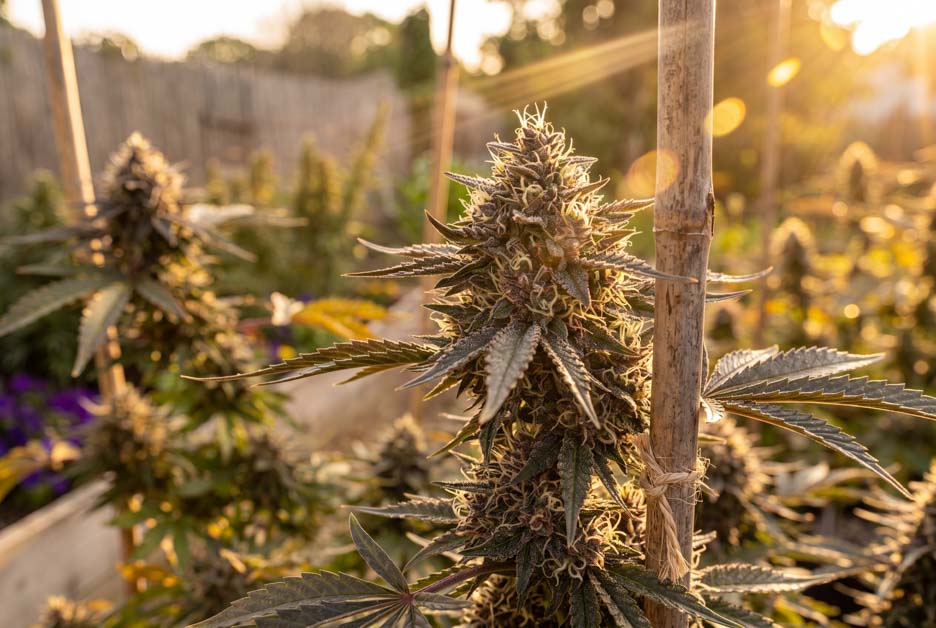




How to LST Autoflowers: Low Stress Training Guide

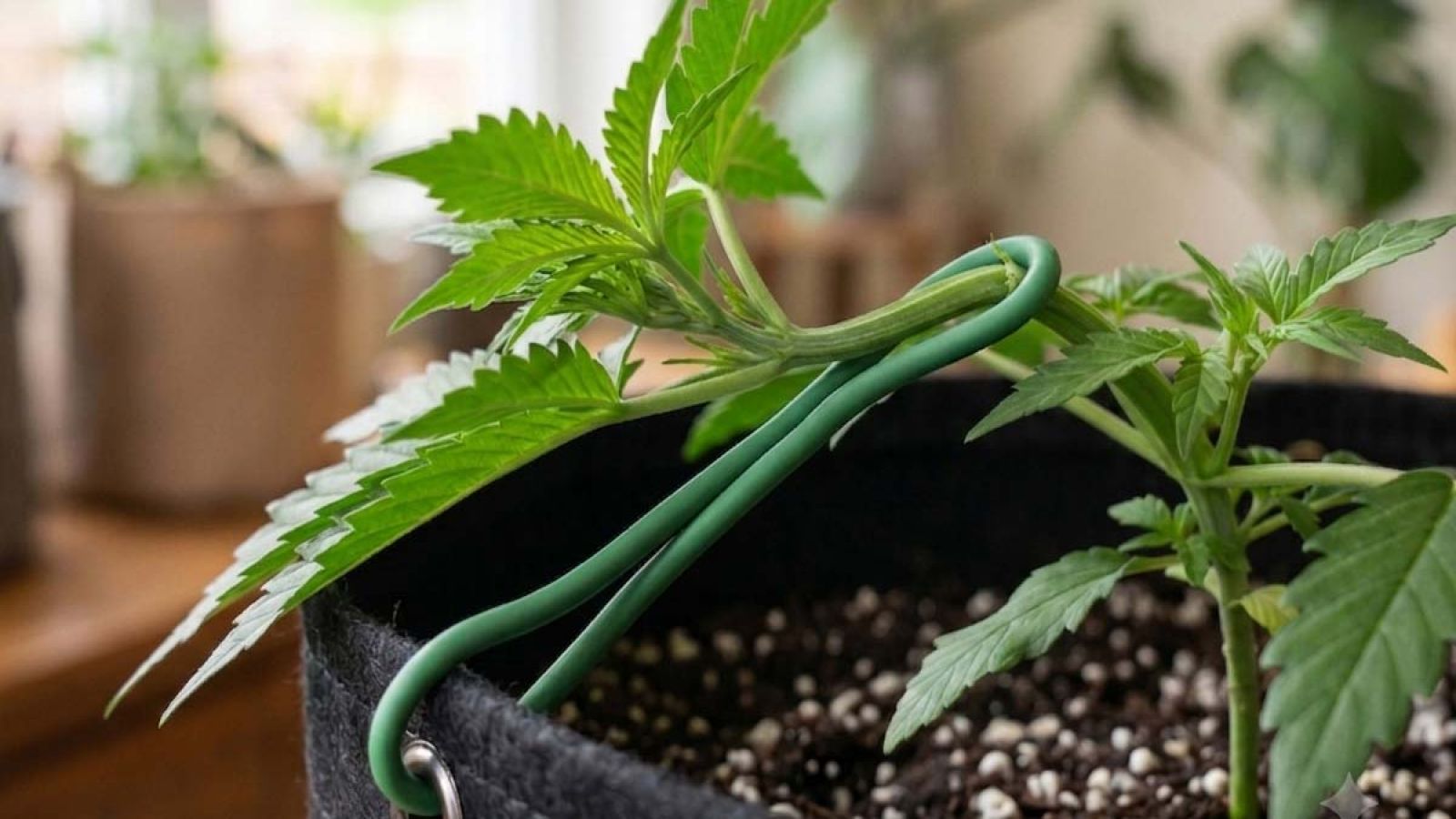
Low stress training autoflowers means gently bending and tying down branches to spread the canopy without cutting the plant. This guide explains what LST is, when to start it on autoflowers, how to do it week by week and how it compares to leaving plants untrained. By the end you will know how to train autos for an even canopy and better light exposure, where lawful.
What Is LST for Autoflowers?
LST for autoflowers is a low stress training method that bends and secures branches to open the canopy and expose more bud sites to light. Low stress training uses soft ties, plant wire or clips to pull stems outward instead of cutting them.
The technique suits autoflower cannabis plants because autos run on a fixed age-based timeline that leaves little time to recover from heavy damage. Gentle bending keeps the plant productive while it spreads horizontally.
Why LST Works Well on Autoflowers
LST works well on autoflowers because bending the top below the side branches interrupts auxin flow and releases the lower buds to grow, all without cutting tissue or forcing a recovery stall. Autoflower cannabis plants flower by age, not by a light-cycle change, so they have a short window to build structure.
Low stress training flattens the tall central stem, which releases the lower branches from apical dominance so they grow up toward the light. This even canopy helps light reach more bud sites at once.
LST vs Topping and Other High Stress Methods
LST differs from topping because it never removes plant tissue, while topping cuts the main stem and forces recovery. Topping, fimming and super cropping all damage the plant on purpose to change its shape.
Autoflower weed plants often stall after that damage because their age-based clock keeps running during recovery. Low stress training avoids the stall by shaping the plant through bending alone, which makes it the lower-risk choice for autos.
When to Start LST on Autoflowers
Start LST on autoflowers around the third or fourth node, usually in week two to three of growth. Autoflower cannabis plants reach this stage when the plant has three to four sets of true leaves and the stem is still flexible. Early flexibility matters because young stems bend without snapping. Waiting too long leaves a stiff stem that resists training and risks breakage.
This section covers three timing questions the cluster raises:
- Node and week timing - the growth markers that signal a plant is ready
- Stopping point in flower - when training should taper off
- Reading the plant over light - why plant signals beat a fixed calendar
What Node and Week to Start LST
LST starts best at the third to fourth node, which most autos reach in week two or three from sprout. The node count matters more than the calendar because autoflower weed plants grow at different speeds by genetics and environment.
A plant with four nodes and a bendable stem is ready, even if it is a few days early or late. Begin by bending the main stem to one side and tying it down low.
When to Stop LST During Flower
Stop most LST during flower once buds begin to swell, usually by the third or fourth week of bloom. Autoflower cannabis plants set their final structure early in flower, so heavy bending after that point risks damaging forming buds.
Light tucking of leaves that shade bud sites stays fine through flower. The goal shifts from shaping the plant to protecting the flower clusters it has already made.
Why Plant Signals Beat a Fixed Calendar
Plant signals determine LST timing more reliably than a fixed day count because autos grow at different rates. Autoflower cannabis plants respond to genetics, pot size, light intensity and nutrients, so two plants from the same pack can differ by days. Watch the node count and stem flexibility instead of a calendar. A flexible stem with three to four nodes signals readiness better than any single date.
How to LST Autoflowers Step by Step
LST an autoflower by bending the main stem low, tying it in place, then training side branches outward as they grow. The process uses soft ties and gentle daily adjustments rather than a single event. Each step opens the canopy a little more and lets light reach lower bud sites. The steps below move from the first bend through ongoing canopy maintenance.
This section walks through four stages:
- Gather your materials - the soft ties and tools that prevent stem damage
- Make the first bend - pulling the main stem down and to one side
- Train the side branches - spreading secondary growth into an even layer
- Maintain the canopy - daily tucks and adjustments through veg
Step 1: Gather Soft Ties and Tools
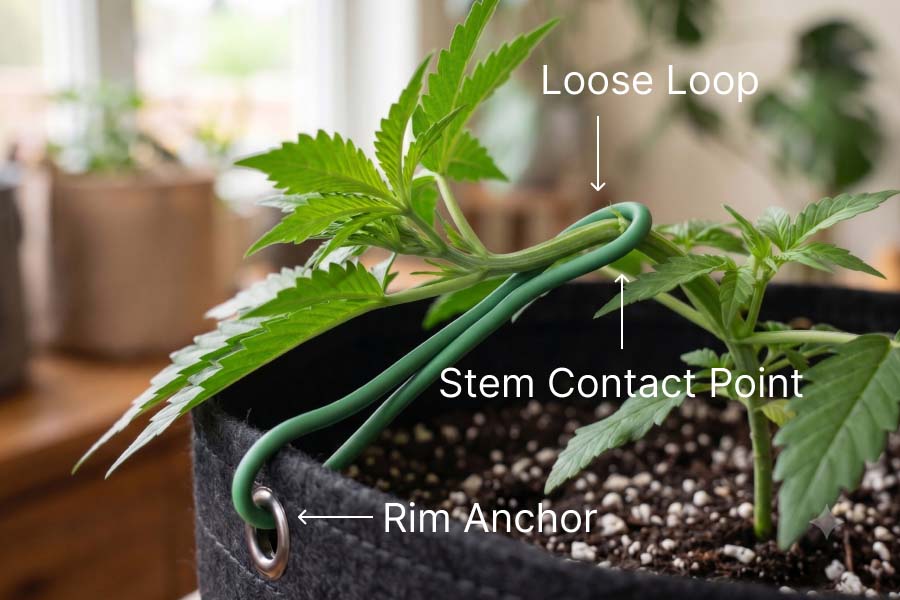
Soft ties and basic tools protect the stem during low stress training and keep bends secure. Plant wire, garden velcro, soft twist ties or clips all hold a branch without cutting into it. Avoid thin string or fishing line because they slice into soft stems under tension. A few stakes or holes around the pot rim give you anchor points for the ties.
Step 2: Make the First Main-Stem Bend
The first bend pulls the main stem down and to one side so the plant grows outward instead of tall. Bend the top of the autoflower cannabis plant gently toward the pot rim and secure it with a tie. The bend exposes the lower nodes to direct light and signals side branches to stretch upward. Make the bend slowly so the stem flexes instead of cracking.
Step 3: Train the Side Branches Outward
Side-branch training spreads secondary growth into an even horizontal layer as the plant fills out. As the lower branches of the autoflower weed plant stretch up, tie each one outward to keep the center open. This stops any single branch from dominating and shading the rest. An even spread gives light a flat canopy to hit instead of one tall cola.
Step 4: Maintain the Canopy Daily
Daily canopy maintenance keeps the autoflower trained as new growth pushes past the ties. Check the cannabis plant each day and adjust ties as branches lengthen and stiffen. Tuck large fan leaves that shade bud sites and re-secure any branch that springs back up.
Small daily tweaks beat one large correction that could stress the plant.
LST Autoflower Week by Week
A week-by-week LST plan times each training move to the autoflower's age-based growth stages. Autoflower cannabis plants pass through seedling, vegetative and flowering stages on a fixed clock, so training tracks those stages.
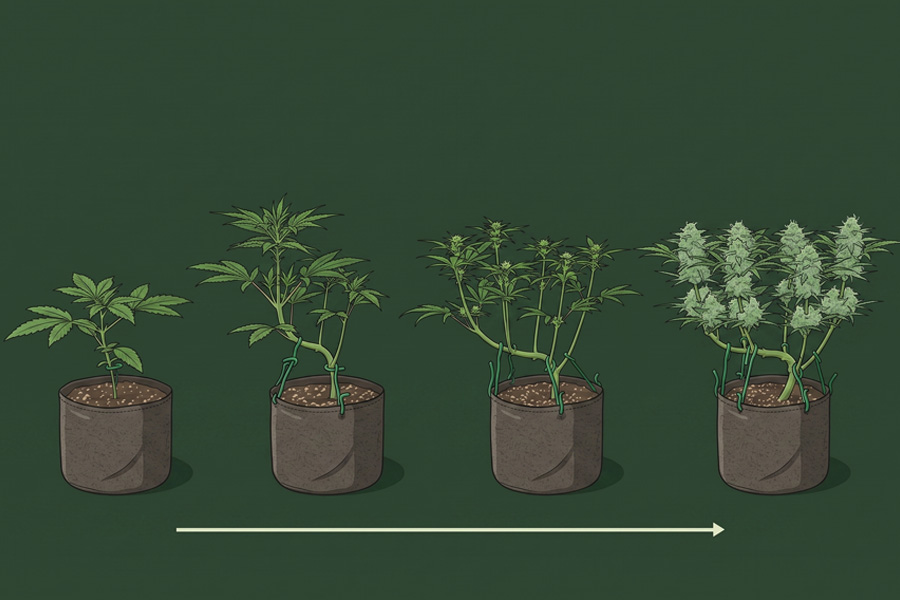
The table below maps common LST actions to the weeks most autos reach each stage. Treat the weeks as a guide and adjust to your plant's node count and stem flexibility.
| Stage | Typical Week | LST Action |
| Seedling | Week 1 | No training; let roots and first leaves establish |
| Early veg | Week 2-3 | First main-stem bend at the third to fourth node |
| Late veg | Week 3-4 | Train side branches outward, even the canopy |
| Pre-flower | Week 4-5 | Light bends only, finish shaping the plant |
| Early flower | Week 5-6 | Stop major LST, tuck shade leaves only |
| Mid to late flower | Week 6+ | No bending, protect swelling buds |
The week numbers shift by genetics, pot size and growing conditions, so read the plant over the calendar. The training window closes as the stem stiffens and buds begin to swell.
LST vs No LST on Autoflowers
LST and no-LST autoflowers differ by canopy shape and light exposure, so the better choice depends on space and effort. A trained autoflower cannabis plant grows wide and flat, which spreads light across more bud sites.
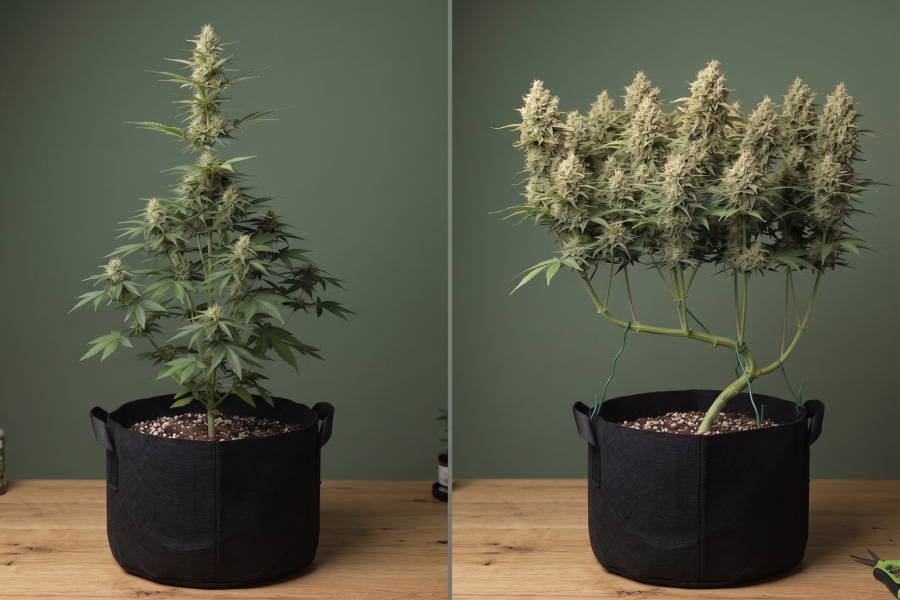
An untrained auto grows tall with one dominant top and smaller lower buds. Both finish on the same age-based clock, so training changes structure rather than total grow time
| Approach | Canopy Shape | Light Exposure | Effort |
| LST | Wide and flat | Reaches more bud sites | Daily checks during veg |
| No LST | Tall with one main top | Concentrated on the top cola | Minimal hands-on time |
Trained plants spread light wider, while untrained plants stay simpler to manage. Growers with limited height or wide lights tend to favor LST, where lawful.
How Autoflower Seeds Connect LST to Your Grow Plan
Autoflower seeds set the timeline that your LST plan has to follow, because age-based flowering fixes the training window before you plant. Buyers comparing seed types should review the autoflower cannabis seeds category to match genetics to their space and timeline.
Growers chasing denser, fuller canopies from training often pair LST with high yield cannabis seeds that respond well to an even light layer. First-time growers who want predictable, all-female plants to train can start with feminized weed seeds, which remove the guesswork of sexing plants midway through a short auto cycle.
If you are still choosing what to grow, the best cannabis seeds for beginners selection groups forgiving genetics that tolerate early training mistakes. You can also browse the full range of marijuana seeds for sale to compare autoflower and photoperiod options side by side before you commit.
Frequently Asked Questions
Can You LST a Photoperiod Plant the Same Way?
Yes. Photoperiod cannabis plants take LST well and give a longer veg window to train them, since they flower on a light-cycle change rather than by age. That longer window means less time pressure than autos.
Does LST Work During Flower on Autoflowers?
Light LST works in early flower, but stop major bends once buds swell. Tucking shade leaves stays fine throughout, while heavy bending after the third or fourth week of bloom risks damaging forming flower clusters.
Is a Step-By-Step LST Diagram Worth Following Exactly?
A diagram helps with the bend direction and tie points, but match the moves to your plant's node count and stem flexibility. Plants from the same pack can reach training stages days apart.