



How to Fix Cannabis Nutrient Burn: Brown Tips & Nute Burn
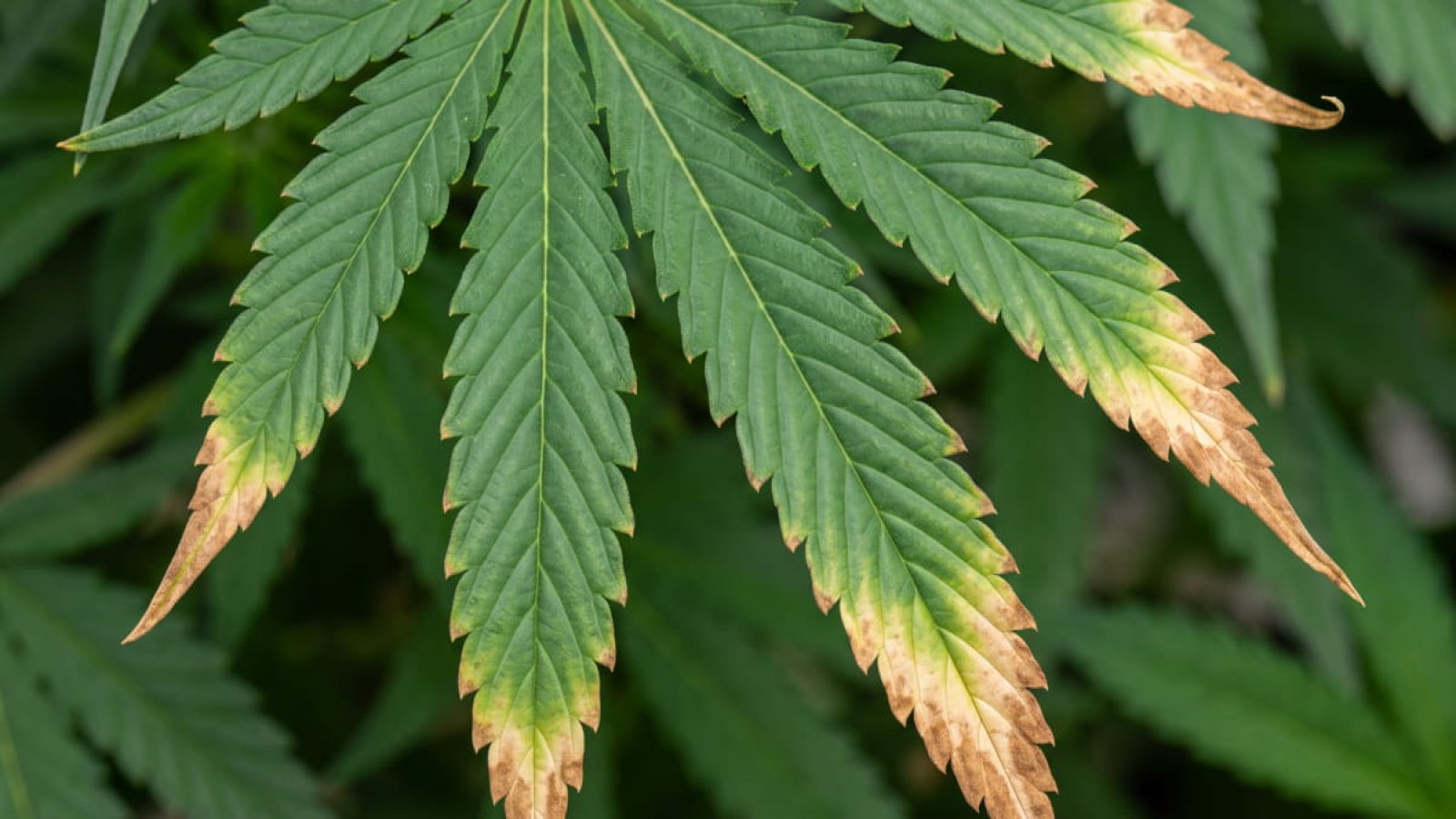
Cannabis nutrient burn shows up as brown, crispy leaf tips caused by too many nutrients building up at the roots. Growers also call it nute burn or fertilizer burn, and it ranks among the most common feeding mistakes new growers run into.
The damage starts at the very points of the leaves and works inward if the nutrient load stays too high.
The good news is that mild cases stop spreading fast once you flush the root zone and cut back the dose. This guide covers how to tell them apart, how to fix burn in soil and hydro, and whether your plant bounces back.
The quick check: if the browning starts at the tips and creeps inward, it is nute burn, so flush with plain pH'd water and lower your dose. If whole leaf edges or the top leaves nearest the light are affected instead, you are likely looking at a deficiency or light burn.
What Is Cannabis Nutrient Burn?
Cannabis nutrient burn sets in when the roots take up more nutrients than the plant can use. The excess disrupts normal water flow through the plant, and the leaf tips scorch as a result. It signals overfeeding, not underfeeding, so the fix is always to pull nutrient levels down.
Nutrients work more like a multivitamin than a food source for cannabis. The real energy source is light, which the leaves convert into growth through photosynthesis. Piling on extra nutrients does not speed growth, and past a certain point it damages the leaves the plant needs to power itself.
What Does Nutrient Burn Look Like on Cannabis?
Nutrient burn appears first as yellow, tan or gold tips that turn rusty brown and crispy as the problem continues. A light case only touches the very tips of the leaves. If nutrient levels stay high, the burn travels inward, and the tips can curl, twist and turn brittle.
The damage shows up on the strongest, best-fed growth rather than on tired lower leaves. You might see it on a single leaf, across one plant, or throughout the whole grow, and one plant burning while its neighbors stay clean is completely normal.
Different plants absorb nutrients at different rates, even at identical feed levels.
What Causes Nutrient Burn in Cannabis Plants?
Nutrient burn results from feeding cannabis higher nutrient levels than it can process. A few situations trigger it most often:
- Overfeeding bottled mineral nutrients: Roots absorb these fast, and many feeding charts overshoot what plants need. Treat the label as a maximum and start at half strength
- A "hot" growing medium: Fresh compost, manure or heavily amended soil can hold more nutrients than a plant can handle. Seedlings are hit hardest but often grow out of it
- A pH out of range: This is a separate issue that locks out nutrients and mimics burn symptoms even when feeding is correct. Correcting the root-zone pH — not cutting nutrients — is what resolves it.
How Do You Identify Nutrient Burn vs Other Problems?
Telling these problems apart comes down to where the damage appears and how it spreads. Reading the location and color pattern correctly points you to the right fix, because feeding less will not help a deficiency and flushing will not help light stress.
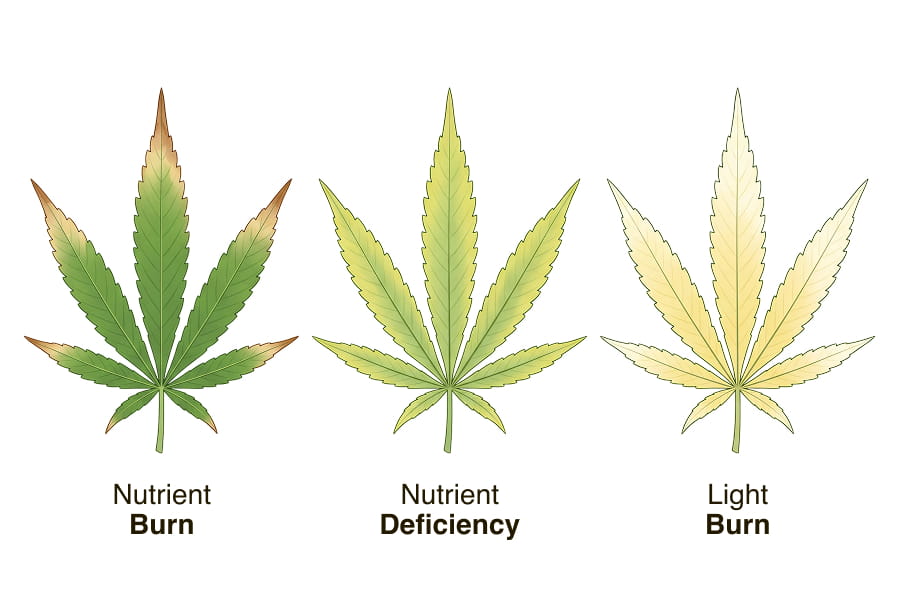
Where the damage starts is your first clue: tips = nute burn, whole/older leaves = deficiency, top canopy = light burn.
The table below sorts the most common look-alikes by where each one starts on the plant.
| Trait | Nutrient Burn | Deficiency (any nutrient) | Light Burn | Reliability |
| Where it starts | Leaf tips, strongest growth | Older or newer leaves, depending on the nutrient | Top leaves under the lamp | High |
| Color pattern | Yellow to brown, crispy tips | Yellowing or fading, often interveinal | Yellow-to-white bleaching | High |
| Progression | Tip inward over days | Varies by nutrient, often gradual | Fast, within 24–48 hours | Medium |
| The fix | Flush and lower the dose | Check and correct pH first, then feed if needed | Raise or dim the light | High |
Use the location of the damage as your first and most reliable signal. Color pattern confirms it, and how fast the problem appeared adds a secondary clue.
Nutrient Burn vs Nutrient Deficiency
Nutrient burn scorches the tips of the strongest leaves, while a nutrient deficiency fades or discolors whole leaves. Burn is a problem of too much; a deficiency is a problem of too little. The two call for opposite responses, which is why misreading them makes the plant worse.
A deficiency also follows nutrient mobility. Mobile nutrients like nitrogen and magnesium get pulled from old growth first, so symptoms start on the lower, older leaves. Immobile ones like calcium and iron show up on the new top growth instead.
Burn ignores this pattern and hits wherever feeding is heaviest, usually the newest vigorous tips.
Nutrient Burn vs Light Burn
Light burn concentrates on the top leaves sitting directly under the lamp, not on the strongest-fed growth where nute burn appears.
When only the canopy leaves nearest a strong LED bleach yellow or white while lower growth stays green, the light sits too close. Light burn also appears fast, often within a day or two of a light change.
Raising or dimming the light fixes light burn, so check your lamp height before adjusting nutrients. Flushing the root zone does nothing for a lighting problem.
Nutrient Burn vs Potassium Deficiency
A potassium deficiency browns the leaf edges and margins, while nutrient burn attacks the tips first. The two look similar at a glance because both produce brown, dry tissue, but the location separates them.
Edge-and-margin browning points to potassium; sharp tip burn on healthy leaves points to overfeeding.
A potassium deficiency often traces back to a pH that blocks uptake, so the fix is getting the root-zone pH back into range rather than adding more nutrients. Treating it as nute burn and cutting nutrients further deepens the deficiency.
Nutrient Burn vs Nitrogen Toxicity
Nitrogen toxicity adds dark-green, downward-clawing leaves on top of the tip burn. It commonly rides along with general nutrient burn, since too much nitrogen is a frequent cause of overfeeding.
The claw - leaf tips bending down like talons - separates it from ordinary drooping caused by watering issues.
When you see burnt tips plus that dark-green claw, treat the nitrogen load specifically rather than the overall feed alone. Flushing still helps, and dropping nitrogen-heavy nutrients addresses the root cause.
How Do You Fix Nutrient Burn on Cannabis?
Correcting nutrient burn takes two moves: clearing the built-up salts from the root zone, then dropping your feed strength so it doesn't happen again. The method differs slightly between soil and hydroponic setups.
Fixing Nutrient Burn in Soil or Coco
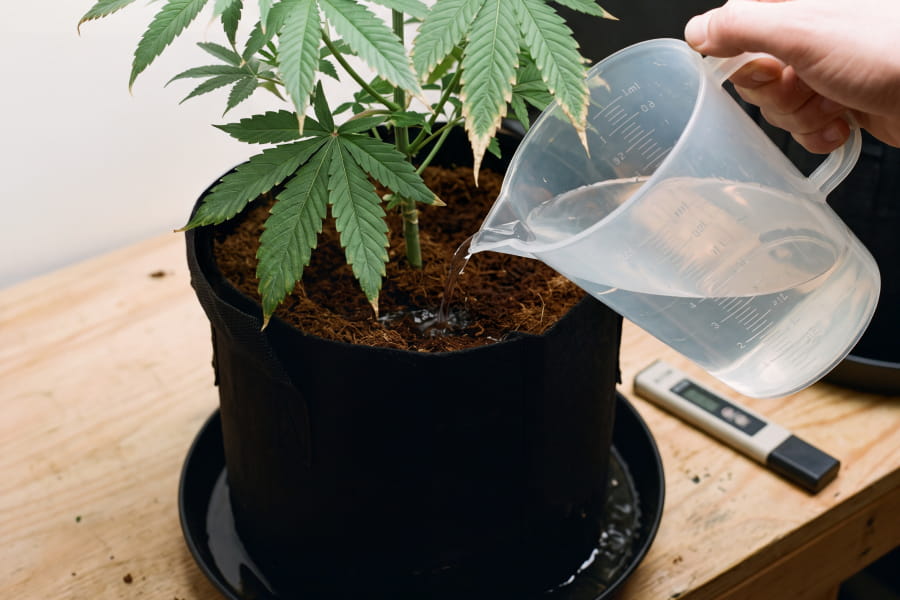
Flush soil or coco with about 3x the pot volume of plain pH’d water, let it drain, then feed at half strength.
A soil or coco grow recovers after a flush with plain, pH'd water at the first sign of burn. Work through it in order:
- Flush the medium. Run roughly three times the pot's volume of plain, pH'd water through the soil to carry the excess nutrients out.
- Let it drain fully. Give the pot time to shed the runoff before you do anything else.
- Resume feeding at half strength. Build back up only if the plant shows it needs more.
If you haven't been adding nutrients and you're in a rich or heavily amended soil, the burn is coming from the medium itself. There's nothing to flush or correct, the plant draws the excess down over a week or two, and new growth comes in clean, though the already-burnt tips stay scarred. Just avoid adding any nutrients on top while it settles.
Fixing Nutrient Burn in Hydroponics
A hydroponic reservoir needs its nutrient solution diluted or replaced at a lower strength. Two paths work:
- Dilute the existing reservoir. Add plain pH'd water to bring the concentration down gradually.
- Or swap it out. Mix a fresh batch at a reduced dose and replace the reservoir entirely.
Move slowly in hydro, since fast swings stress the plant, and the burn usually stops spreading almost immediately once levels drop. A TDS or PPM meter makes this far easier by showing exactly how much nutrient sits in the water.
Checking the reservoir regularly lets you catch rising levels and correct them before the tips ever burn.
Will Cannabis Recover From Nutrient Burn?
Yes, cannabis recovers from mild nutrient burn once you flush the excess and lower the feed.
The leaves already scorched will not heal, that tissue stays brown and crispy for good. Recovery shows instead in the new growth, which comes in clean and green when nutrient levels sit right.
Severe cases are harder. When burn spreads across most of the plant or hits late in flowering, lost leaf mass slows growth and cuts into yield, and the plant may not fully bounce back. Catching it early while only the tips are affected gives the best odds of a clean recovery.
Nutrient Burn by Growth Stage and Plant Type
How much a burn costs depends on the plant's stage — and, for autoflowers, on the plant type itself. Seedlings and flowering plants sit at opposite ends of the risk range, while autoflowers stay sensitive throughout.
- Seedlings burn easily but often recover on their own.
- Flowering plants rebound poorly, making burn most costly here.
- Autoflowers run best on lighter feeding throughout.
Nutrient Burn in Seedlings
In hot, over-amended soil, a seedling's small root system takes in more nutrients than it can use, which is why young plants scorch so quickly. A cannabis seedling planted in a heavily fertilized mix often shows tip burn within days.
Most grow out of it as they consume the surrounding nutrients, provided you add no more on top.
Starting young plants in a mild, lightly fed medium prevents the problem outright. Seedlings need very little feeding early on.
Nutrient Burn in Flowering (Including Late Flower
Flowering plants recover poorly from damage, which makes tip burn more costly the deeper into bloom it happens. Once a plant shifts its focus to fattening buds, it stops replacing damaged leaves, so burn late in flower directly threatens yield.
Feeding needs also shift during bloom, and a dose that was fine in veg can burn a flowering plant.
Burn near harvest carries a second cost: leftover nutrients in the plant can give buds a harsh, chemical taste. A plain-water flush in the final stretch before harvest, where lawful to cultivate, helps clear that out.
Feed conservatively through flowering and watch the tips closely.
Nutrient Burn in Autoflower
Autoflowers prefer lighter feeding than photoperiod plants, so they burn at lower nutrient levels. Their compact size and short life cycle mean they simply use less, and standard feeding charts often overshoot what an autoflower needs. Starting at a quarter to half the recommended dose suits most autos.
Because an autoflower races from seed to harvest on a fixed timeline, it has less room to recover from a setback. Keeping feed light protects that short window.
How Do You Prevent Nutrient Burn?
You prevent nutrient burn by feeding at half strength and building up slowly only if the plant asks for more. Treat every feeding chart as a maximum, not a target. Watch the tips too: the first faint discoloration is your cue to cut back before real damage sets in.
It also helps to know the other feeding problems that look similar, so you treat the right issue the first time. Too much nitrogen is the most common overfeeding culprit: dark-green clawing leaves point toward nitrogen toxicity, while fading or yellowing across whole lower leaves means the opposite problem, a nitrogen deficiency.
Other shortfalls show their own patterns. Browning on the leaf margins rather than the tips often signals a potassium deficiency, rust-colored spots on new growth commonly mean a calcium deficiency, and yellowing between the veins of older leaves points to a magnesium deficiency.
Matching the symptom to the cause keeps you from cutting nutrients when the plant actually needs more.
Start With Seeds That Are Easy to Feed
A healthy grow starts well before the first feeding, with genetics suited to your setup and skill level. Choosing quality marijuana seeds gives you plants with predictable needs, which makes dialing in a feeding routine far easier.
Beginner-friendly feminized cannabis seeds skip the work of identifying and removing male plants, so you can focus on dialing in your feeding. If you'd rather a shorter, simpler grow, autoflowering seeds run on a fixed timeline and do best with a light, conservative feed from seed to harvest.
Frequently Asked Questions
Can Nutrient Burn Kill Your Cannabis Plant?
Mild nutrient burn rarely kills a plant, but severe, untreated burn can. As the damage spreads from the tips across whole leaves, the plant loses the leaf mass it needs for photosynthesis, which stalls growth and can prove fatal in extreme cases. Flushing early keeps a light case from ever reaching that point.
How Do You Flush Nutrient Burn?
Flush nutrient burn by running plain, pH'd water through the growing medium to wash out excess salts. In soil or coco, use about three times the pot's volume and let it drain fully. In hydro, dilute or replace the reservoir with a lower-strength solution, then resume feeding at reduced strength.
What Does Nitrogen Burn Look Like on Cannabis?
Nitrogen burn looks like burnt tips paired with very dark-green leaves that claw or curl downward. Excess nitrogen is a frequent driver of overall nutrient burn, so the two often appear together. The downward clawing separates it from the ordinary drooping caused by over- or underwatering.
Is It Nutrient Burn or pH Burn?
Nutrient burn comes from too much fertilizer, while pH burn comes from a root-zone pH outside the range the plant can absorb. A wrong pH locks out nutrients and can mimic burn or deficiency symptoms even when feeding is correct. Check your water and root-zone pH before assuming overfeeding, because a flush alone will not fix a pH problem.
Why Won't My Weed Burn When I Try to Smoke It?
Weed that won't stay lit is a drying and curing problem, not nutrient burn. Buds that are too moist or poorly cured resist an even burn. If your leaves show brown crispy tips instead, that is nutrient burn, and the fixes above apply.
Do Autoflowers Get Nutrient Burn More Easily?
Yes, autoflowers burn more easily because they need lighter feeding than photoperiod plants. Their small size and short cycle mean they use fewer nutrients, so standard doses often overshoot. Starting at a quarter to half the recommended strength protects them across their brief life span.