



How & When to Top Weed Plants: The Complete Guide to Topping For Bigger Yields

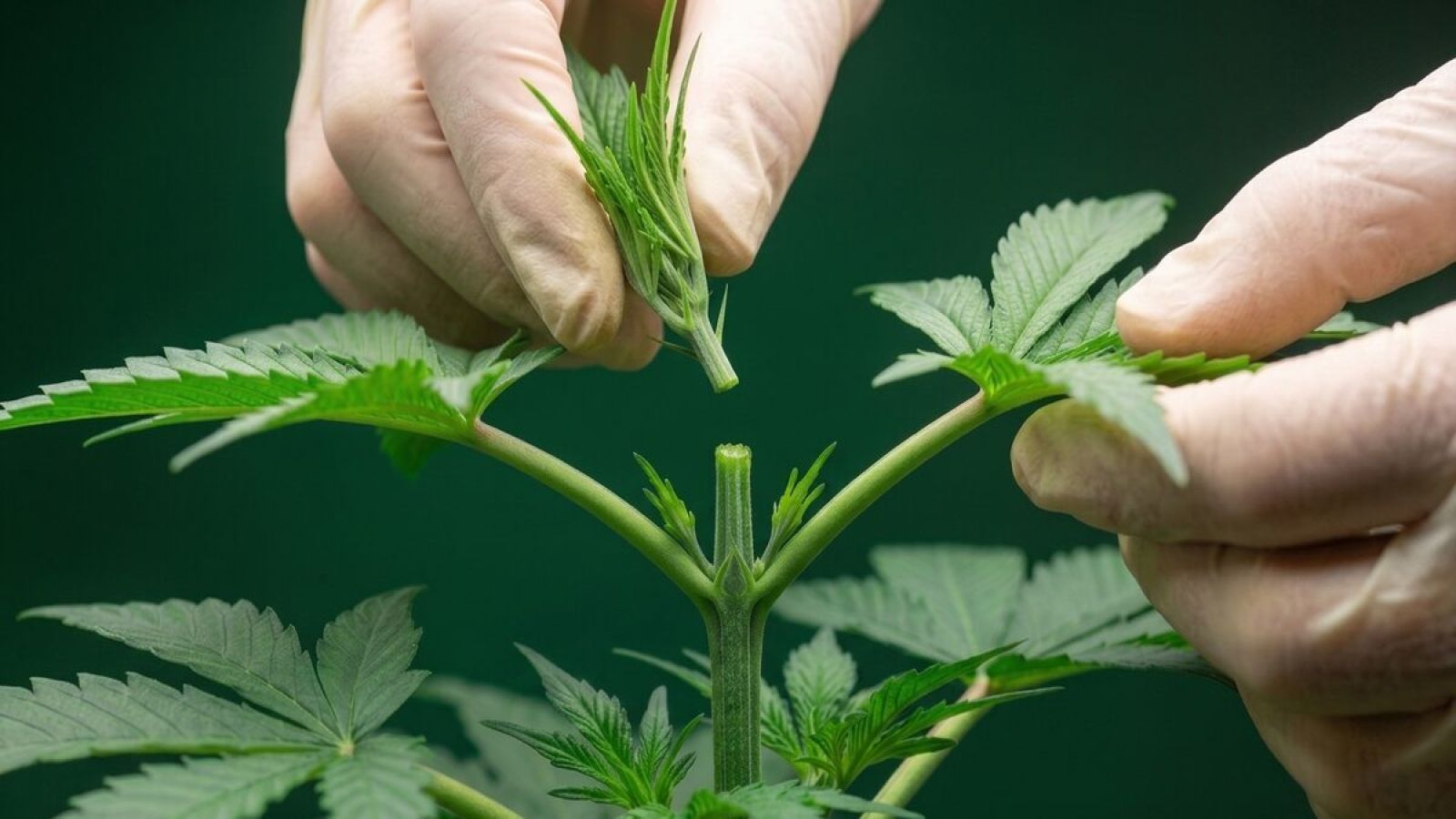
Topping is the easiest way to turn one tall cola into a wider plant with several big colas. This guide covers when to top weed plants, how to make the cut and how topping compares to fimming. You'll also see what changes between topped and untopped plants, plus how to handle autoflowers and avoid common mistakes.
By the end, you'll know exactly when and how to top for more productive cannabis plants and heavier harvests.
What Does Topping Cannabis Plants Mean?
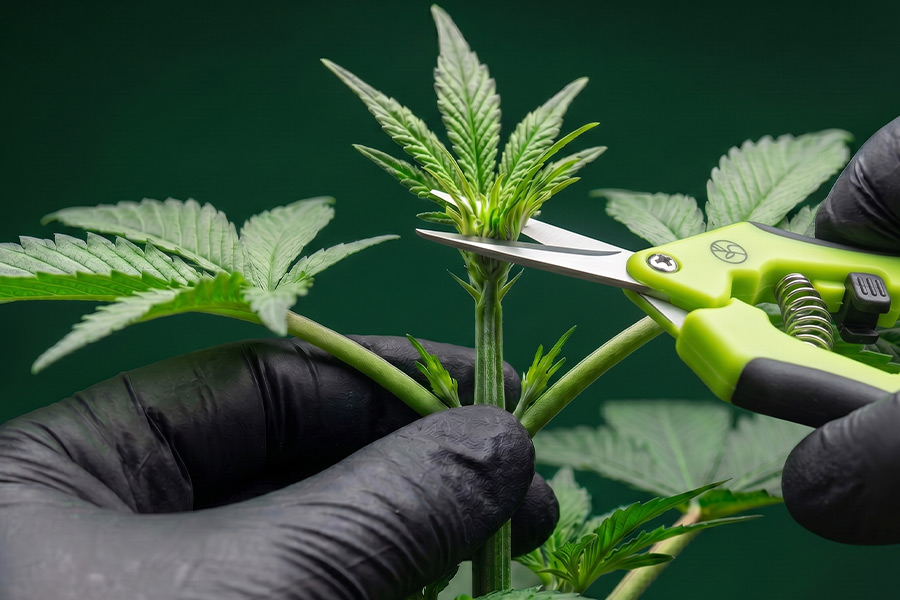
Topping cannabis plants means cutting the growing tip off the main stem to break apical dominance (which is the plant's habit of pushing most of its energy into one central cola). When you remove that top, the main stem stops suppressing the lower shoots and they wake up to push into new growth.
Cutting the tip stops auxin flowing down from the growing point. With that flow gone, the hormone balance shifts and the dormant buds at the nodes below get the signal to break out and start growing. The result is a shorter, bushier plant with several main colas instead of one tall stem.
Topping gives you three main wins:
- More bud sites from several colas instead of one.
- A wider canopy with multiple colas that can be trained level.
- Less wasted lower growth, since energy concentrates at the tops.
Fimming is a lighter version of the same idea, and we'll compare the two further down.
When to Top Weed Plants
Topping weed plants works best during the vegetative stage, after the plant grows 4 to 6 healthy nodes. Top a strong plant only, never a stressed one and never after flowering starts.
Three signs tell you when topping is ideal:
- Node count: how many nodes a plant needs before the cut.
- Indoor and outdoor timing: when to top depending on how you grow.
- The flowering cutoff: when topping is too late to help.
How Many Nodes Should Your Weed Plant Have Before Topping?
Weed plants are ready to top once they grow 4 to 6 healthy nodes. A node is the point where branches meet the main stem. Many growers wait until the 5th node, which leaves enough lower growth to fuel a strong recovery.
You can cross-check with height, since most plants hit this stage around 12 to 18 inches tall. A too-young seedling recovers slowly, so wait a few more days if you're unsure.
When to Top Outdoor vs Indoor Weed Plants
Indoor and outdoor weed plants both get topped during the vegetative stage, but the timing trigger differs. Indoors, you control the light, so top a few weeks before you flip to 12/12, the schedule that starts flowering. This gives the plant time to recover and branch out before buds form.
Outdoors, you follow the sun, so plants flip to flower as daylight shrinks in late summer. Top outdoor plants in late spring or early summer, while they're still in full vegetative growth.
Either way, finish topping with enough time left for a wide canopy to set before flowering.
When It's Too Late to Top Weed Plants
Topping weed plants becomes too late once flowering starts, because the plant stops growing new stems. In the flowering stage, your plant pours its energy into buds instead of fresh branches. Cutting at this point won't create new colas, and it can shrink your final harvest instead. If a plant gets too tall in flower, use gentle low-stress training to bend it rather than cut.
How to Top a Weed Plant Step by Step
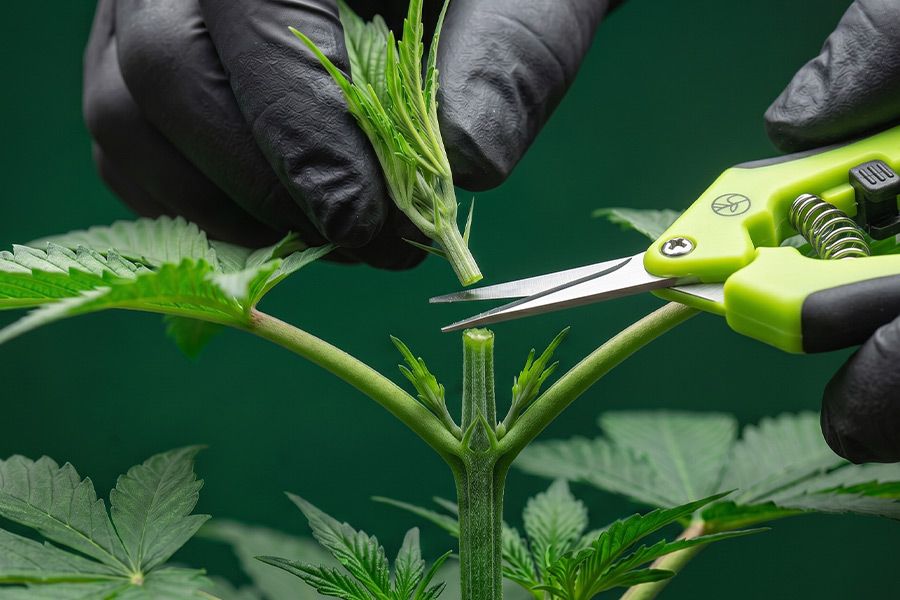
Topping a weed plant takes one clean cut just above a healthy node on the main stem. The same cut works whether you start from seed or buy cannabis clones, since both grow a normal main stem.
Tools You Need to Top Cannabis Plants
To top your cannabis plants, you need a sharp sterile blade or pruning shears and clean gloves. Wipe the blade with alcohol before you cut, since a clean tool lowers the risk of infection. Gloves keep sticky sap off your hands and keep pathogens off the fresh wound.
Steps to Top Your Cannabis Plant
Here are the steps you must take to top your marijuana plant successfully:
- Find the main stem and follow it up to the newest top growth.
- Locate the node just below that top tip.
- Sterilize your blade and put on gloves.
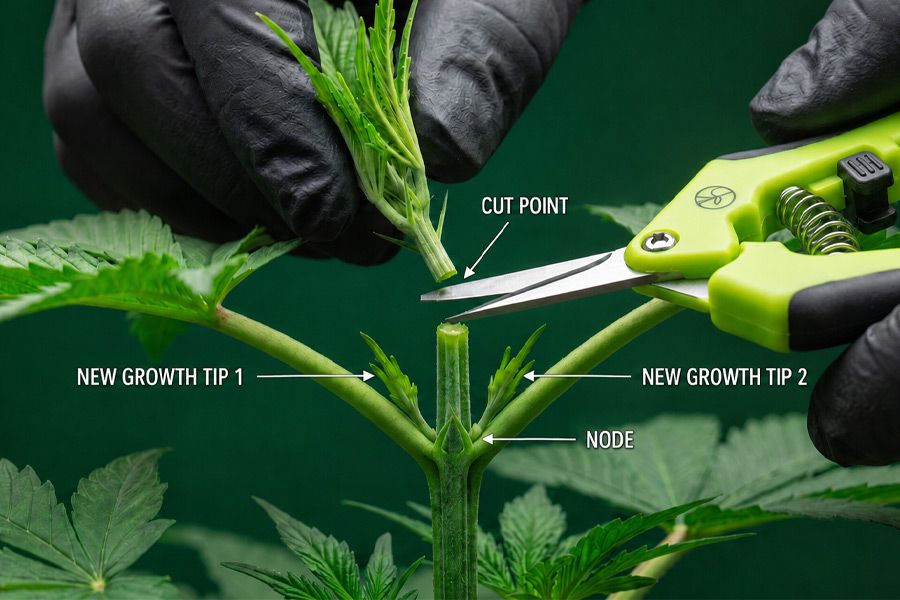
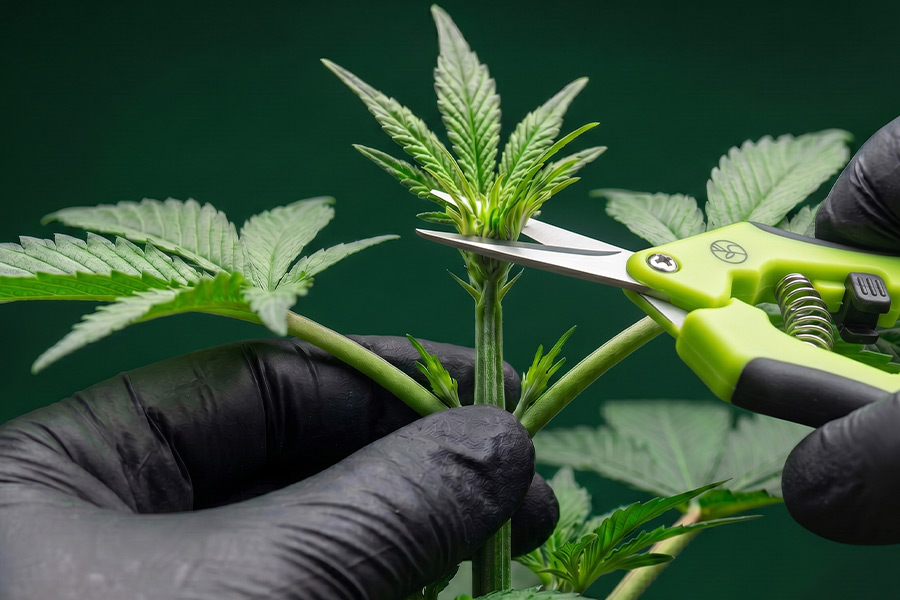
- Cut cleanly at a 45-degree angle just above the node.
- Leave a little stem above the node so the cut dries without harming the branches.
- Let the plant rest for a few days while two new shoots form.
A clean cut sits right above the next node, leaving two growth tips that become your new colas.
After topping, give the plant several days to a week to bounce back before any more training.
Topping vs Fimming: Which Should You Use?
Topping and fimming are two tip-pruning techniques that both create more bud sites, but they differ in how much you cut. Topping removes the whole growth tip and gives you two clean, even colas. Fimming removes most of the tip with a partial cut and can give you around four looser tops.
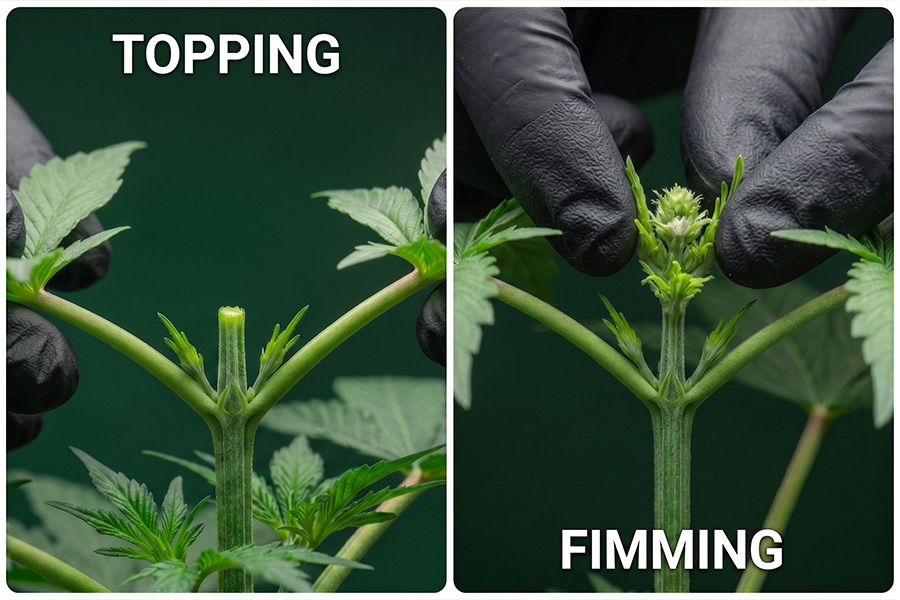
This table compares the two cuts so you can pick the one that fits your plant and preference:
| Trait | Topping | Fimming |
| How much you cut | The entire top growth tip | About 80% of the tip |
| New tops created | 2 even colas | Up to 4 looser tops |
| Stress on the plant | Higher | Lower |
| Recovery time | Slower | Faster |
| Precision | Clean and predictable | Less precise |
| Best for | Even canopy and mainlining | Quick bushing with less shock |
Topping wins for a tidy, symmetrical canopy, while fimming wins when you want more tops with less stress.
What is Fimming Cannabis?
Fimming cannabis is a lighter cut that removes most of the growth tip instead of the whole top. The name comes from growers who meant to top but missed, then liked the bushier result. Because you leave part of the tip behind, the plant recovers faster and pushes out several new shoots.
Topped vs Untopped Weed Plants: What Changes?
Topped weed plants grow wider and bushier with several main colas, while untopped plants grow one tall central cola. An untopped plant grows tall in a Christmas-tree shape, with one dominant cola at the very top.
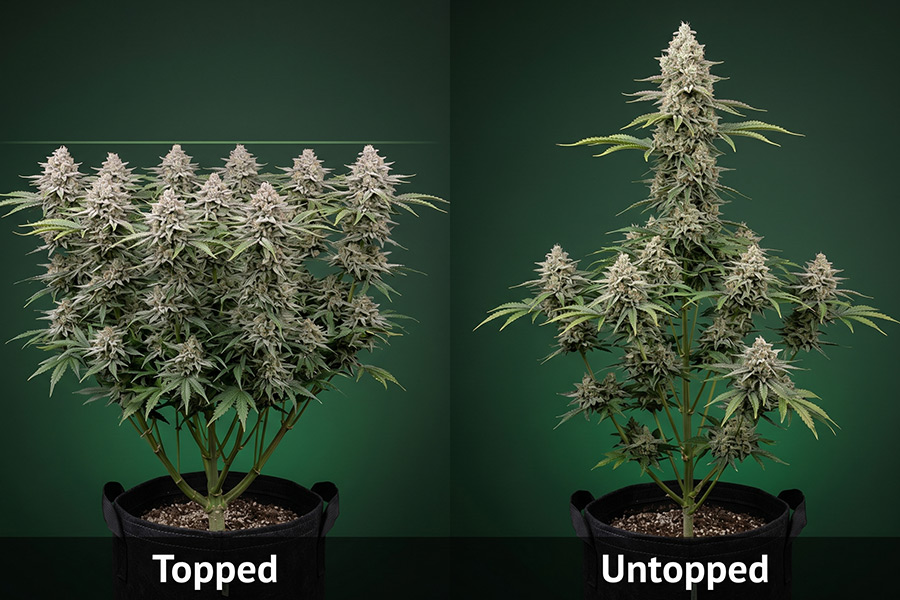
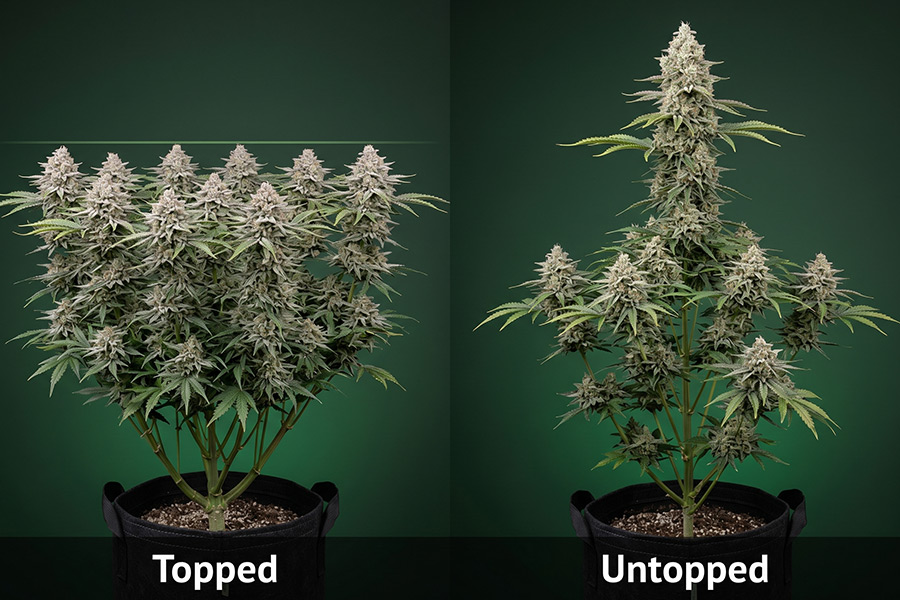
This table shows what changes when you top a plant versus leaving it to grow on its own.
| Trait | Topped Weed Plant | Untopped Weed Plant |
| Canopy shape | Wide and even | Tall and narrow |
| Main colas | Several | One |
| Height | Shorter | Taller |
| Light use | Spread across many tops | Wasted on lower shaded branches |
| Yield potential | Higher | Lower |
| Recovery needed | Yes, a few days | None |
Topping trades a short recovery pause for a wider canopy that uses your grow light far more efficiently.
A topped plant earns its yield in three ways. More colas give you more bud sites, so more flower develops under the same light. An even canopy stops one tall cola from shading the lower branches. And since energy concentrates at the tops rather than lower growth that never sees the light, less of the plant's effort goes to waste.
Reported yield still depends on genetics, your setup and lawful growing conditions, not topping alone.
Can You Top Autoflower Cannabis Plants?
No, most growers skip topping autoflower cannabis plants because autos flower on a fixed schedule and can't recover lost time. Autoflowers switch to bloom based on age, not on a change in the light cycle.
If you grow autoflower cannabis seeds, low-stress training is the safer way to add bud sites without the recovery risk. Photoperiod plants grown from feminized cannabis seeds get a long veg window, so they handle topping far better than autos.
How Many Times Can You Top a Cannabis Plant?
Cannabis plants can be topped several times, as long as you let each cut fully heal first. Most growers wait 1 to 2 weeks between rounds so the plant recovers before the next cut.
Each round can double your tops, taking you from 2 colas to 4, then 8.
Repeated topping paired with low-stress training is the basis of mainlining, a method for a symmetrical canopy. Benefits flatten after 3 to 5 sessions, so stop a couple of weeks before you flip to flower.
Common Topping Mistakes to Avoid
Topping mistakes usually come down to bad timing, dirty tools and a torn cut. Here are the slip-ups to watch for and how to dodge each one.
- Topping too early. Cutting before the plant has 4 nodes can stunt a fragile seedling. A young plant hasn't built the roots or stem strength to bounce back fast. Wait until it's healthy with 4 to 6 nodes, then make the cut.
- Topping in flower. Once buds form, a cut shrinks your harvest instead of helping it. The plant has stopped making new stems and won't grow fresh colas from the wound. If a plant gets too tall in flower, bend it with low-stress training rather than top it.
- Dirty or dull tools. Unclean blades tear the stem and invite infection through the open wound. A dull edge crushes tissue instead of slicing it, which slows healing. Wipe your blade with alcohol and keep it sharp before every cut.
- A crushed or ragged cut. A messy cut heals slowly and leaves the plant open to pathogens. Sawing back and forth mangles the stem and stresses the plant more than it needs. Make one clean pass at a 45-degree angle just above the node.
- Poor recovery support. A stressed plant needs steady light, water and food to bounce back. Skimping on care after the cut leaves the plant slow to push new growth. Feed it a balanced cannabis fertilizer so it can fuel the new bud sites.
- Topping an unhealthy or freshly transplanted plant. Top a strong plant only, never one that's already stressed or just repotted. A weak plant has no spare energy to heal a fresh wound on top of recovering. Give it a week to settle and show healthy growth before you cut.
How Strain Genetics Shape Your Topping Results
Strain genetics decide how a plant branches, stretches, and recovers, which changes how hard you should top.
Short, bushy indica seeds naturally spread wide with compact, horizontal growth, so they often need lighter topping than taller strains do. Tall, stretchy sativa seeds respond well to topping because it tames their height and spreads the canopy wide.
If you’re using high CBD seeds, it works the same as topping high THC plants, since the cut shapes structure, not chemistry. Autoflowers are the exception, since their short life cycle leaves little room for the stress of a cut.
A strong structure starts with strong genetics, so stock up on premium marijuana seeds chosen for eligible adults where home growing is lawful.
Topping Cannabis Plants FAQs
What Week Should You Top Weed Plants?
Weed plants are usually ready to top around week 4 of growth, once they've built enough nodes. Week 3 is often too soon, since the plant is still fragile and recovers slowly. By week 4, a healthy plant has the strength to handle the cut and rebound fast.
What's the Difference Between Topping and Pinching Cannabis?
Pinching cannabis bends or crushes the stem tip with your fingers instead of cutting it off. Topping removes the tip completely, while pinching stresses it to slow growth and encourage branching. Pinching is gentler, but topping gives a stronger, more reliable split into two colas.
When Should You Stop Topping Weed Plants?
Stop topping weed plants at least a couple of weeks before they start to flower. Indoors, that means your last cut comes well before you flip to 12/12. Outdoors, stop in late summer once the days start getting shorter. After that point, the plant needs all its energy for buds, not for healing a fresh cut.