



Early Signs of a Male Plant: How to Spot One Fast

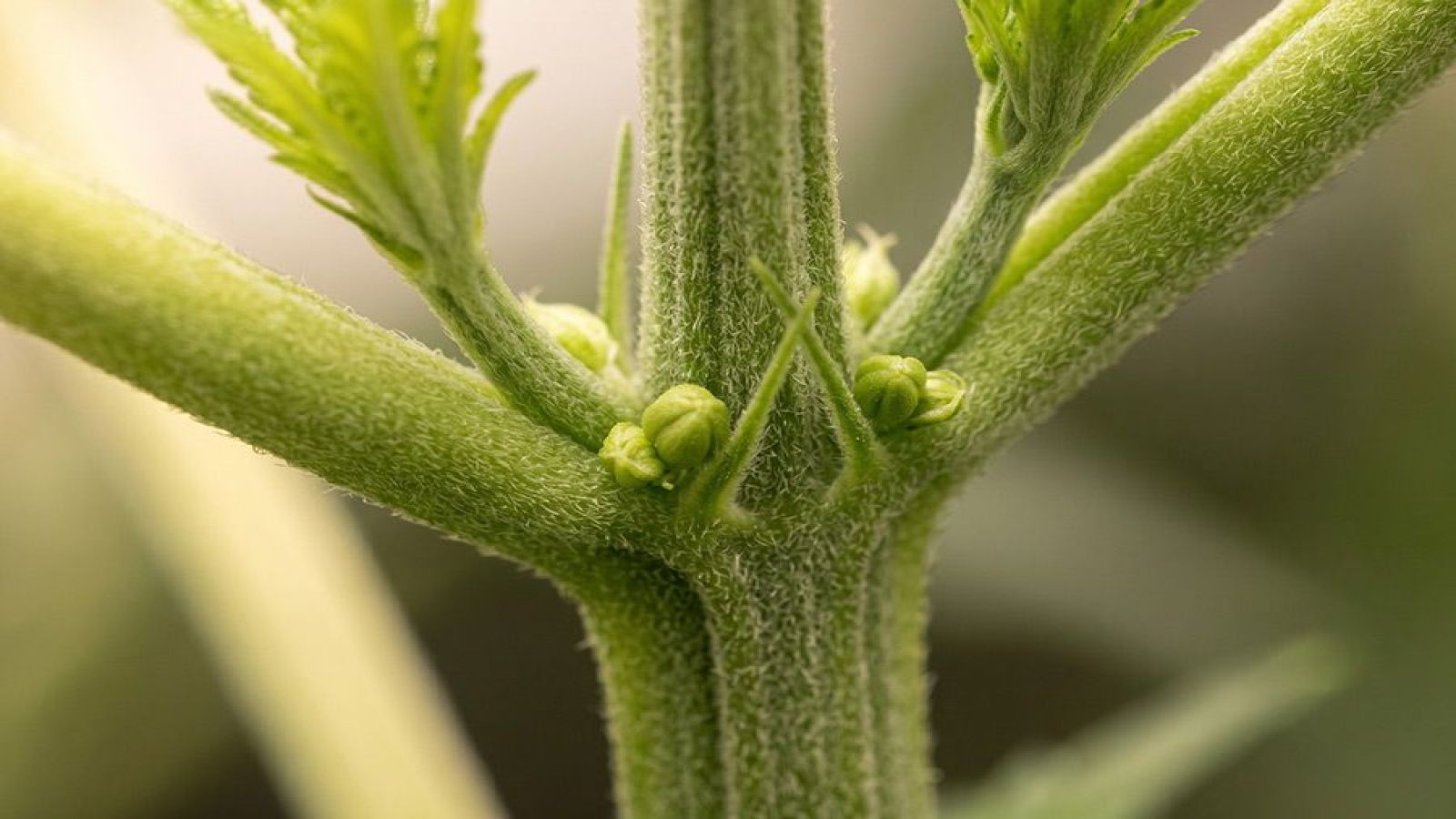
A male cannabis plant shows itself first as small round pollen sacs at the nodes, usually between weeks 3 and 6 from seed.
This guide walks through the earliest male signs, where to look on the plant, how male and female pre-flowers differ and what to do once you confirm a male. By the end you will know how to read the nodes, rank the signals by reliability and act before a male pot plant pollinates your females.
Fast Rule: The Quickest Way to Catch a Male Plant
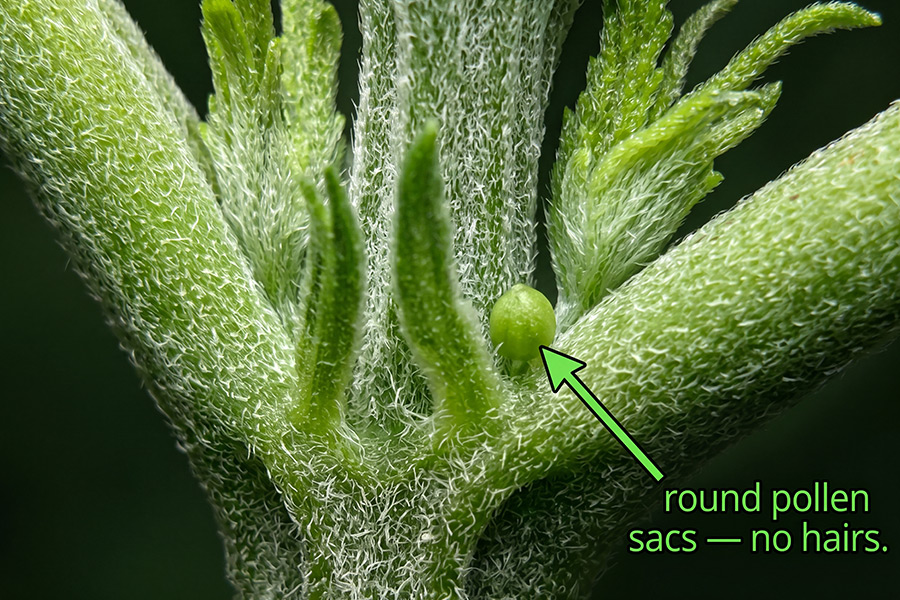
Male cannabis plants reveal their sex at the nodes as small round pollen sacs with no hairs. Female weed plants show one or two thin white hairs (pistils) from a pointed teardrop calyx instead. If a node grows smooth ball-shaped sacs and no white hairs appear after 3 to 5 days, the plant is almost certainly male.
What Are the Early Signs of a Male Plant?
The early signs of a male plant are small round pollen sacs that form at the nodes before flowering. A male cannabis plant grows these sacs where the leaf stems meet the main stalk, and the sacs stay smooth and ball-shaped with no hairs. Male marijuana plants also tend to grow taller and lankier with wider node spacing, though height alone never confirms sex.
Some of these signs confirm a male on their own; others only tell you which plants to inspect first. Here they are, strongest first:
- Round pollen sacs at the nodes: The single most reliable early sign, since only male plants grow them
- No white pistils: Female pre-flowers push out wispy white hairs, so the absence of hairs points male.
- Taller, lankier structure: A secondary clue only, because some sativa strains stretch regardless of sex.
- Wider spacing between nodes: A supporting clue that works alongside the sacs, never on its own.
Round Pollen Sacs at the Nodes
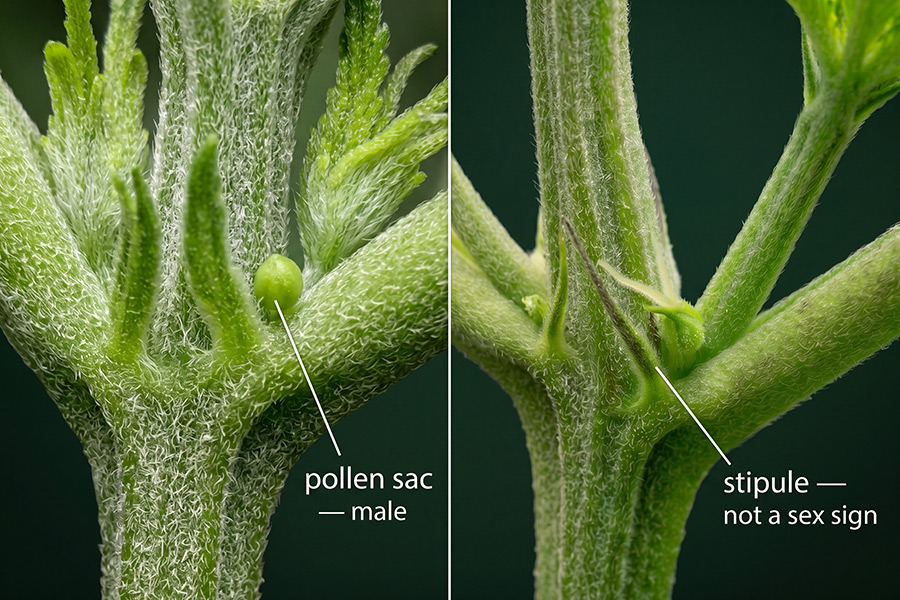
Round pollen sacs are the clearest early sign of a male cannabis plant. The sacs appear at the nodes as smooth, round growths that cluster together like tiny bunches of grapes. Each sac hangs from a short stem and stays closed in the early stage, before it later splits open to release pollen.
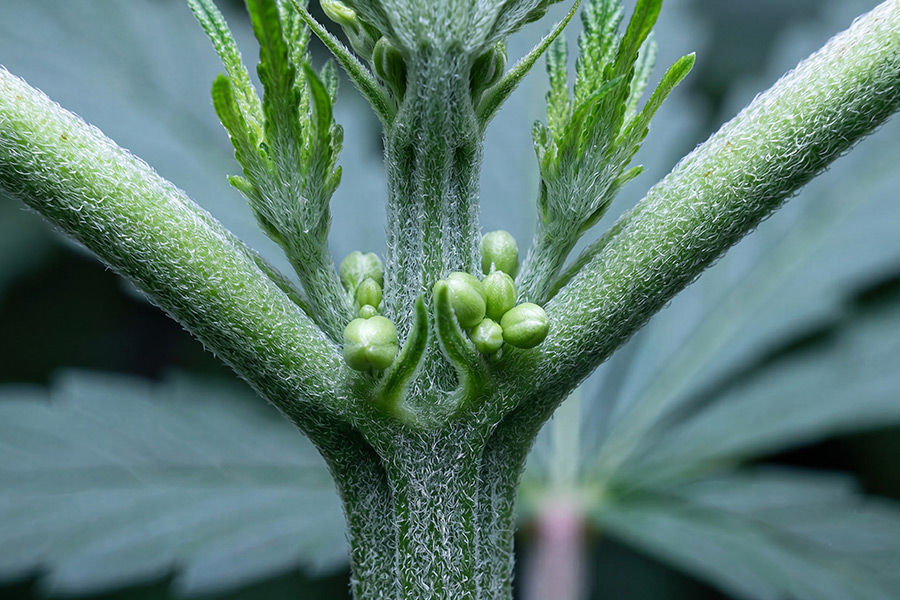
Female pre-flowers never form these smooth sacs, so finding them at the nodes confirms a male.
No White Pistils Emerging
Missing white pistils point toward a male plant when reproductive growth has already started. A female cannabis plant pushes out one or two thin white or translucent hairs called pistils from each calyx within the first few days of pre-flower.
A male pot plant grows its sacs but produces no hairs at all. So if structures are forming at the nodes and no pistils show after 3 to 5 days, the weed plant is almost certainly male.
Taller, Lankier Plant Structure
Taller and lankier growth is a secondary sign of a male plant, not a confirmation. Male cannabis plants often stretch taller than female plants under the same conditions, with thinner stems and more space between nodes.
This trait works only as a screening clue, because some sativa-dominant strains stretch a lot whatever their sex. Use plant height to decide which plants to inspect first, then confirm sex at the nodes.
When Do Male Cannabis Plants Show Their Sex?
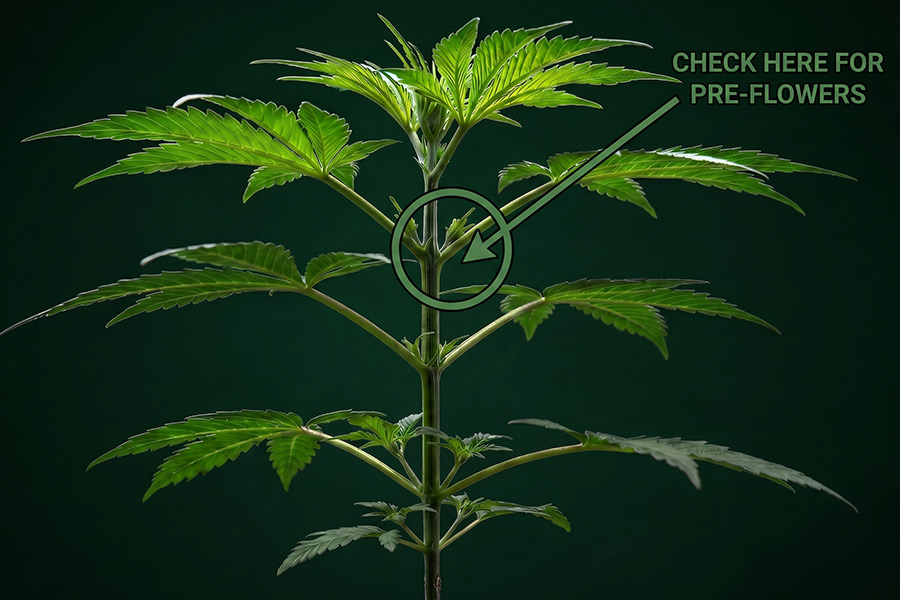
Male cannabis plants show their sex at the nodes between weeks 3 and 6 from seed. The first pre-flowers form in the late vegetative stage, before any light-cycle change, as small growths in the V where a branch meets the main stem. Male pot plants often reveal sex a few days earlier than females, since pollen sacs tend to form before female pistils emerge.
Autoflower plants pre-flower by age rather than by a light flip, so they can show male signs even sooner.
What Does a Male Cannabis Plant Look Like in Early Veg?
A male cannabis plant in early veg looks like a slightly taller plant with smooth round bumps starting at the nodes. The early pre-flower sacs are pale green and small, often the size of a pinhead, before they swell into the grape-like clusters.
Male weed plants in veg carry no white hairs, so the nodes look clean and rounded compared with the wispy look of a female. The plant body often appears more open and stretched, with fewer leaves packed around each node.
How Male Pre-Flowers Differ From Stipules
Male pre-flowers are not stipules. Stipules are small thin leaf-like growths that sit beside the node on both male and female plants and never indicate sex. A male pre-flower sac is rounded, smooth and three-dimensional, while a stipule is flat, pointed and hair-thin.
When in doubt, look for the short stem under the growth: pollen sacs hang from a small stem, and stipules attach flat against the node.
Do Male Cannabis Plants Produce Buds?
No, male cannabis plants do not produce buds. Male weed plants grow pollen sacs (also called balls) at the nodes, and these sacs exist only to release pollen and fertilize female plants.
The dense resin-coated flower clusters people call buds or nugs grow only on female cannabis plants. A male plant can produce a loose flowering structure of clustered sacs, but it never forms the smokable, cannabinoid-rich flower a female grows.
What Does a Male Cannabis Plant Look Like in Flowering?
A male cannabis plant in flowering looks like a plant covered in hanging clusters of pale sacs at nearly every node. By the time a male marijuana plant enters full flower, the small green pre-flower sacs swell into pale yellow, white or sometimes purple clusters. Each mature sac eventually splits open and spills visible pollen onto the surrounding leaves and surfaces.
A male pot plant at this stage carries no thick frosted buds, only these dangling bunches of pollen sacs.
How to Confirm a Male Plant Before You Act
You confirm a male plant by checking the nodes with a magnifier and matching what you see to the table below. A jeweler's loupe or phone macro lens makes the smooth sacs and missing hairs easy to read. Match your observation to the confidence level, then take the matching action so a male weed plant does not pollinate nearby females.
| What you see at the node | Likely sex | Reliability | What to do |
| Round smooth sacs, no hairs | Male | High | Confirmed male — isolate or remove |
| Sacs forming, no hairs after 3-5 days | Male | High | Treat as male — isolate and recheck |
| One or two thin white hairs | Female | High | Female — keep and monitor |
| Taller and lankier than neighbors | Possibly male | Low | Inspect nodes before deciding |
| Wider node spacing | Possibly male | Low | Inspect nodes before deciding |
The table separates the signals you can act on alone (the high-reliability node signs) from the screening clues that only tell you which plants to inspect first. Trust the node inspection over the plant shape every time.
How Plant Sex Connects to Your Cannabis Seed Choice
Plant sex traces directly back to the cannabis seeds you start with, so seed choice decides how much male-hunting you do. Regular cannabis seeds produce a roughly 50/50 mix of male and female plants, which is why growers inspect nodes for weeks and pull males before they pollinate.
The seed type you buy sets that ratio, and a few categories change the early-sexing job entirely. Match the seed type to how much sex-checking you want to do.
Why Feminized Seeds Remove the Male-Plant Search
Feminized cannabis seeds remove the male-plant search because they are bred to grow into female plants almost every time. Because the pollen carries only X chromosomes, the resulting seeds come out female in virtually every case, so growers skip the weeks of node inspection that regular seeds demand.
Feminized seeds keep your attention on plant care and flowering instead of male hunting, which is why many beginners start with feminized cannabis seeds for a flower-focused grow.
How Autoflowering Seeds Change Early Sexing Timing
Autoflowering seeds change early sexing because they pre-flower by age rather than by a light-cycle flip. Autoflower plants reveal pre-flowers on their own schedule, often earlier than photoperiod plants, so male signs can appear within the first few weeks.
The compressed timeline means node checks start sooner, and autoflowering seeds sold as feminized combine speed with a near-certain female outcome. Growers planning a short season use this pairing to cut both waiting time and male risk.
Where Other Seed Types Fit Your Grow
Other seed types fit growers who want specific genetics or effects rather than a 50/50 sex gamble. Indica seeds and sativa seeds describe plant structure and growth pattern, not plant sex, so a tall sativa-leaning plant is not automatically male. Growers focused on lower-THC genetics often compare CBD seeds within the same female-outcome logic.
You can also skip seed sexing altogether by starting from cannabis clones, which are cut from a known female mother plant.
Frequently Asked Questions
Do Male Marijuana Plants Produce Buds?
No. Male marijuana plants grow pollen sacs at the nodes, not buds. The resin-rich flower clusters people consume form only on female plants, where lawful to cultivate.
What Do Male Weed Plant Balls Look Like?
Male weed plant balls are smooth, round sacs that cluster at the nodes like tiny bunches of grapes. They stay closed at first, then split open to release pollen.
Can You Tell a Male Plant Before Flowering?
Yes. Male and female plants show pre-flowers at the nodes between weeks 3 and 6 from seed, before any light-cycle change. Round sacs with no white hairs point to a male.
What Is the Difference Between a Male Pre-Flower and a Stipule?
A male pre-flower is a round sac on a short stem, while a stipule is a flat, thin, pointed growth against the node. Stipules appear on both sexes and never signal a male plant.
Why Remove Male Plants Early?
A male pot plant releases pollen that fertilizes nearby females, which makes those females spend energy on seeds instead of buds. Removing or isolating a confirmed male early protects the seedless flower of your female plants.