



Early Signs of a Hermie Cannabis Plant: How to Spot Them

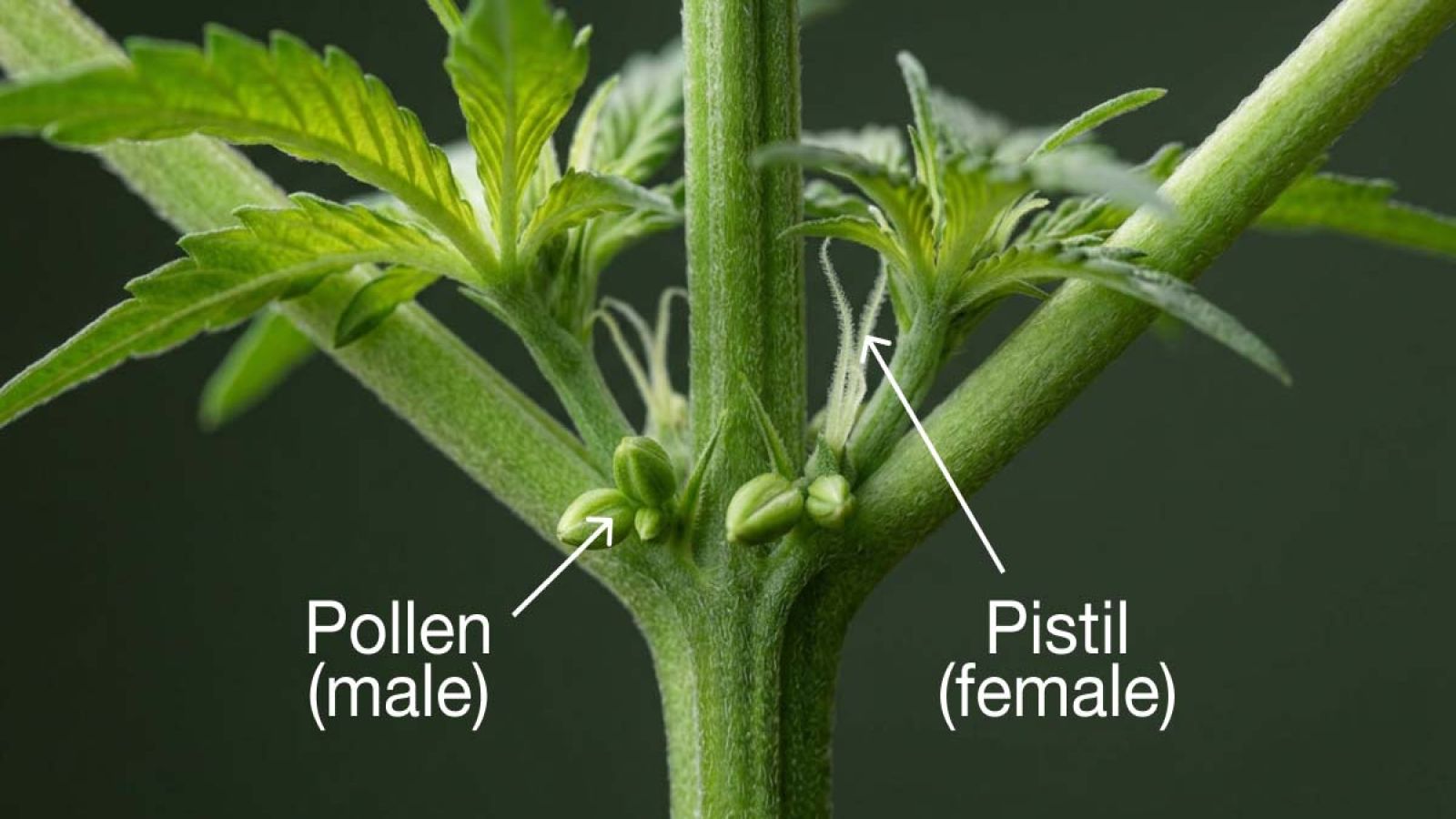
A hermie cannabis plant grows both male and female parts on the same plant, and the male parts release pollen that seeds your buds. Catching that early decides whether you harvest clean flower or a crop full of seeds.
This guide shows you the early signs of a hermie plant, what hermies look like at each flowering stage, why plants herm and what to do the moment you spot one. By the end you will know exactly where to look, which signs to trust and how to protect the rest of your grow.
Fast Rule: Check the leaf nodes and bud sites for two things - small green-yellow pollen sacs that look like tiny bananas or grape clusters. Those are male parts. If a female plant grows them, it is a hermie, and you act before the sacs open and spread pollen.
What Is a Hermie Cannabis Plant?
A hermie cannabis plant is a plant that develops both male and female reproductive parts at the same time. The word "hermie" is grower slang for hermaphrodite, and it describes a female weed plant that starts producing male pollen sacs alongside its normal buds.
That matters because the male parts release pollen, and pollen turns flower into seedy, lower-quality buds. A true female marijuana plant produces only pistils and buds, so any male part on a female plant is the defining hermie trait.
Hermies fall into two patterns growers talk about. Some plants grow full pollen sacs, often called balls, which look like the sacs a male cannabis plant produces. Others grow banana-shaped stamens, called nanners, that push straight out of the buds. Both spread pollen, so both count as hermaphrodite expression.
What Are the Early Signs of a Hermie Plant?
The early signs of a hermie plant appear as small male structures forming where only female parts should be. You find them at the leaf nodes and inside the developing buds, usually as the plant moves into flower. Spotting them early gives you time to act before the pollen sacs split open. The three signs below are the ones worth checking on every plant.
- Pollen sacs at the leaf nodes: the clearest confirming sign, round sacs where the branch meets the stem.
- Banana-shaped stamens in the buds: yellow nanners pushing out of the flower, a high-confidence sign.
- Swollen calyx vs pollen sac: a common false alarm that needs a closer look before you judge.
Pollen Sacs at the Leaf Nodes
Pollen sacs form at the leaf nodes as small rounded balls, usually green to pale yellow, often in grape-like clusters. They appear at the same spots where a female cannabis plant shows its white pistils, which is why the node is the first place to check.
A pistil is a thin white or orange hair, and a pollen sac is a smooth round ball with no hair, so the shape difference is your fastest tell. When a female pot plant grows these sacs, the diagnosis is confirmed - this is a hermie.
Banana-Shaped Stamens in the Buds
Banana-shaped anthers, called nanners, push directly out of the buds as curved yellow or green fingers. Growers watch for nanners because they often skip the sac stage and release pollen fast, sometimes within a day or two of appearing.
A nanner is an exposed anther, the part that actually holds and sheds pollen, so seeing one inside a female bud confirms hermie expression.
Check deep in the flower clusters and near the colas, because nanners hide between the calyxes.
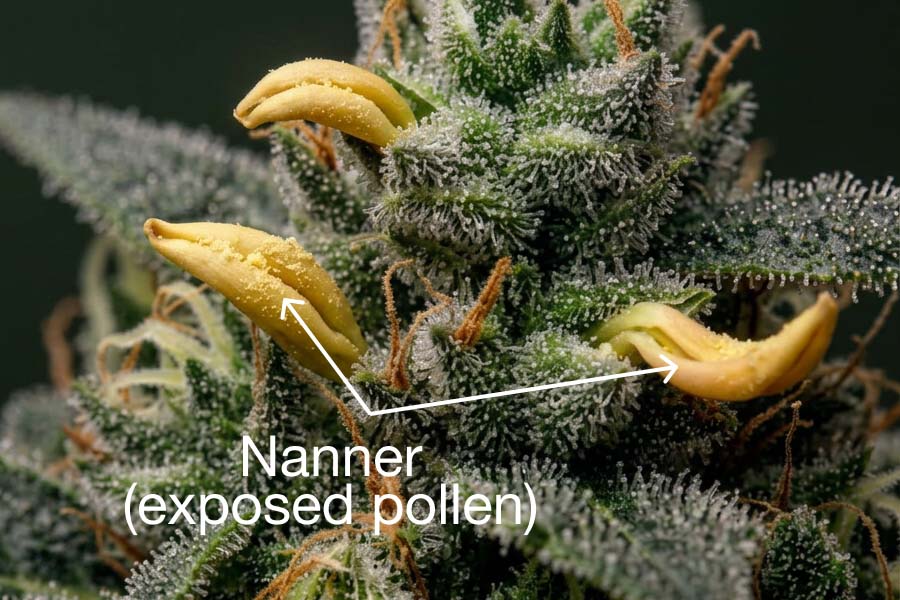
Nanners are curved, smooth and yellow with no white hair. They release pollen quickly, so a single nanner is reason to act.
Swollen Calyx or Hermie? How to Tell
A swollen calyx is not a hermie sign on its own, and confusing the two is the most common mistake growers make. A calyx is the small teardrop-shaped pod at the base of each pistil, and calyxes swell naturally as buds mature and ripen.
The way to tell them apart is the hair - a swollen calyx still has a pistil attached or a pointed tip, while a pollen sac is round, smooth and hairless. When you see a swollen shape with no hair and a clustered ball form, treat it as a suspected pollen sac and inspect the rest of the plant before deciding.
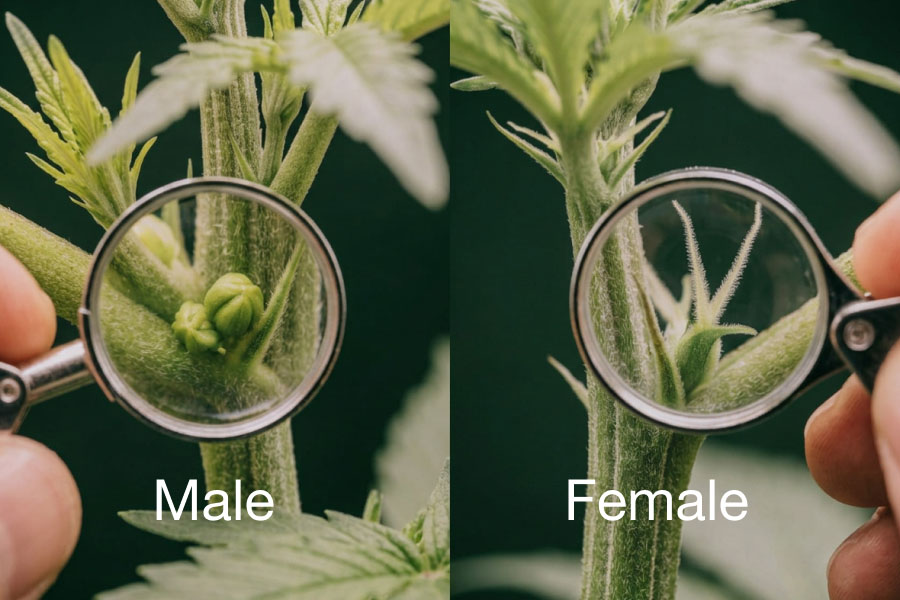
The pistil is the deciding detail. A swollen calyx keeps its hair. A pollen sac is smooth and bald.
What Does a Hermie Plant Look Like in Flower?
A hermie plant in flower looks like a normal budding female with male parts mixed into the same bud sites. The female weed plant keeps growing pistils and forming flower, but pollen sacs or nanners appear among them. The stage of flowering changes how obvious the signs are, so timing matters when you inspect.
Early Flower Hermie Signs
Early flower hermie signs are subtle and easy to miss because the buds are still small and loose. In the first two to three weeks of flower, look at the nodes for tiny round bumps that do not form pistils. These early pollen sacs are pale and smaller than mature buds, so a close look or a magnifier helps.
Catching a hermie in early flower gives the best outcome, because the pollen sacs have not opened yet and the rest of the grow stays clean.
Late Flower Hermie Signs
Late flower hermie signs are easier to see but riskier, because the plant has had longer to release pollen. By weeks six and later, nanners often appear as buds swell and ripen, a pattern growers call late-flower herming.
One caveat here: a few male flowers showing up right at the end of ripeness, on a plant you are about to harvest, are usually a ripeness signal rather than a real threat, since there is no time for viable seed to set before the plant comes down. The danger is a plant still weeks from finishing.
A late hermie may have already self-pollinated, so check the buds for small green seeds forming inside the calyxes. If you find seeds with the nanners, some pollen has already spread, and your response shifts toward damage control rather than prevention.
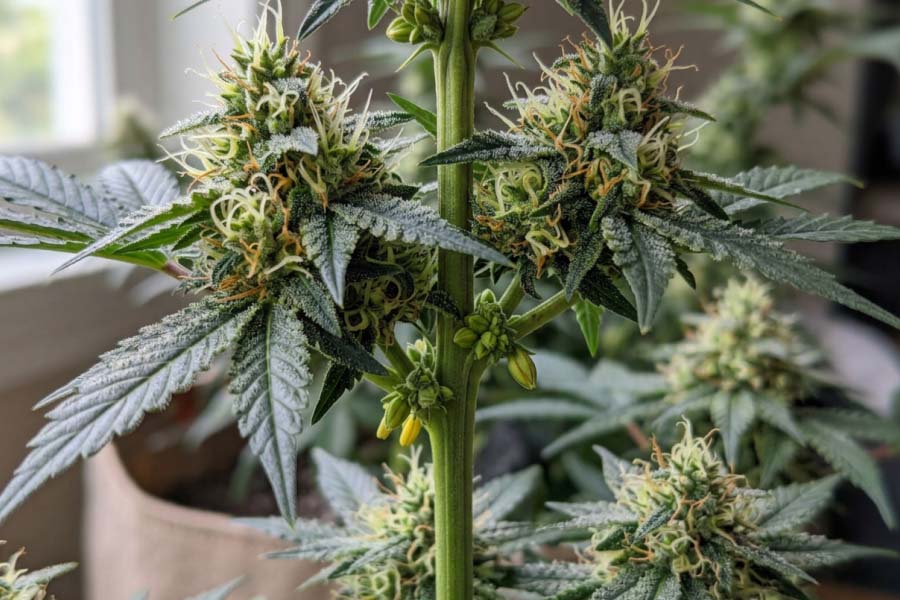
A late-flower hermie carries both sexes on one cola. Seeds forming in the calyxes mean pollen has already moved.
What Causes a Cannabis Plant to Turn Hermie?
A cannabis plant turns hermie when stress or unstable genetics trigger it to grow male parts as a survival response. Stress-driven herming comes from common grow problems, including heat spikes, light leaks during the dark period, late harvest, physical damage and interrupted light cycles.
A plant under that pressure produces pollen to reproduce before it dies, which is why stress is the leading cause. Genetic herming comes from unstable seed lines that carry the trait, so the cause points back to seed quality as much as grow conditions.
Light leaks deserve attention because they are the most preventable cause. A weed plant in flower needs uninterrupted darkness, and even small light intrusions during the dark hours can push a sensitive plant to herm. Keeping the flowering environment stable, where cultivation is lawful, lowers stress-driven herming more than any single fix.
What Should You Do With a Hermie Plant?
A hermie plant should be isolated or removed the moment you confirm male parts, because every hour the pollen sacs stay open risks seeding nearby plants. Move the affected plant away from the grow first, then decide whether to cull it or keep it isolated through harvest.
If you caught it early with only a few nanners, you can sometimes remove the male parts by hand and watch closely, but a plant that keeps producing pollen sacs is usually culled to protect the crop. Where cultivation is lawful, replanting with stable marijuana seeds for the next run is the cleaner long-term fix than nursing an unstable plant.
Do not let a confirmed hermie finish in a shared space. One plant releasing pollen can seed an entire room, so isolation protects the buds you have left.
How Seed Choice Lowers Hermie Risk Before You Plant
Seed choice lowers hermie risk because stable, well-bred genetics carry less tendency to herm under normal grow conditions. Stress prevention handles the environment, but the genetic half of the cause starts at the seed.
Choosing seed types bred for predictable sex expression reduces the genetic share of hermie risk before the plant ever sprouts, where cultivation is lawful.
Where Feminized Seeds Fit Hermie Prevention
Feminized cannabis seeds are bred to grow into female plants almost every time, which removes the male-plant guesswork from a grow. The female outcome matters here because only stable female genetics give you flower without surprise pollen, so a reputable feminized line lowers the genetic share of hermie risk.
Buyers who want predictable female plants can compare feminized cannabis seeds when planning a low-risk grow. Stable genetics lower the odds of herming, but no seed eliminates stress-driven herming, so environment control still matters.
Where Autoflower and Other Seed Types Fit
Autoflower cannabis seeds flower by age rather than by a light-cycle change, which removes one common herming trigger - light-leak stress during a timed dark period. In the context of hermie prevention, the important point is that autoflowers skip the photoperiod flip, so a light leak is less likely to herm them.
Growers comparing timing-friendly options can review autoflower cannabis seed alongside feminized lines. For growers who want to start from known-stable genetics instead of seed, healthy clones from a proven mother offer another route, and you can buy cannabis clones to skip the seed-stability variable entirely.
Frequently Asked Questions
Can You Harvest a Hermie Plant?
Yes, you can harvest a hermie plant, but the buds usually carry seeds and lower quality. If the plant hermed late and only released a little pollen, the flower is still usable for personal yield where lawful. Harvest timing follows the same trichome and pistil cues as any plant, so a late hermie can still finish out.
Are Seeds From a Hermie Plant Worth Keeping?
No, seeds from a hermie plant are not worth keeping for most growers. A hermie passes its herming tendency to its offspring, so those seeds carry a higher chance of herming themselves. Starting fresh with stable genetics gives a more predictable next grow.
Will One Hermie Plant Pollinate the Rest of the Grow?
Yes, one hermie plant can pollinate an entire grow once its pollen sacs open. Cannabis pollen travels easily through the air and on hands and clothing, so a single untreated hermie threatens every female plant nearby. Isolating or removing the plant fast is what stops the spread.