



A Guide to Autoflower Light Schedules: 18/6, 20/4, and 24/0 Explained
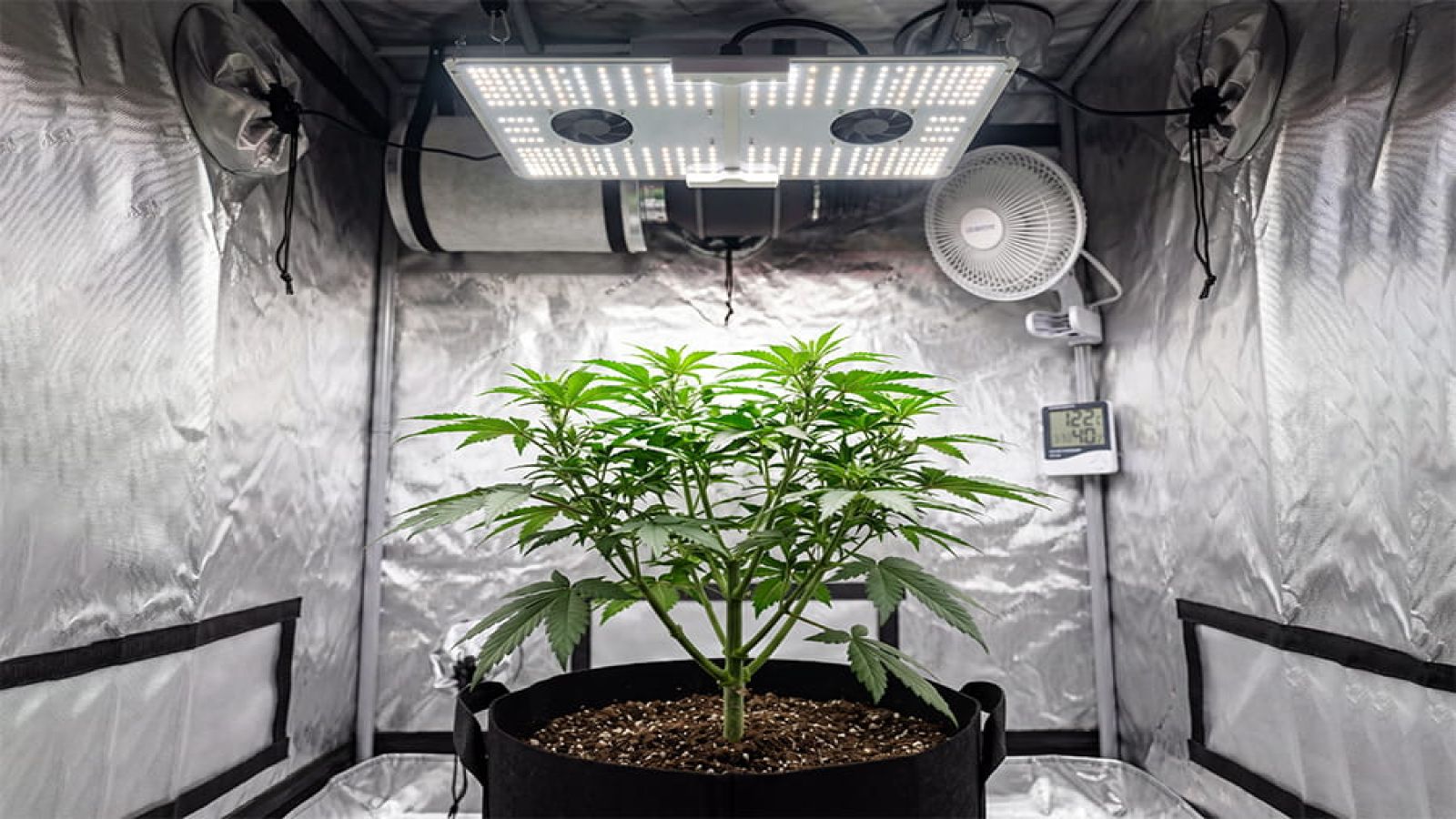
The autoflower light schedule you pick shapes how fast your plants grow, how heavy your harvests run and what you spend on electricity. Autos don't need a light cycle change to flower, so you've got some options: the 18/6 autoflower light cycle is the most popular starting point, but 20/4 and 24/0 are worth knowing, and 12/12 has its place in specific situations.
This guide covers every autoflowering light cycle option, breaks down the trade-offs for each, explains what spectrum your plants need at each growth stage and helps you match your light setup to the right genetics.
What is the Best Light Schedule for Autoflowers?
The best autoflower light schedule is 18/6 for most growers - 18 hours of light and 6 hours of darkness, run from seed to harvest. It delivers strong daily photosynthesis while giving plants a recovery window during the dark period. You'll see reliable vegetative growth, solid bud development and manageable energy bills, especially when you're starting with high-quality autoflower cannabis seeds.
If your grow room runs cool and you've already nailed 18/6, a bump to 20/4 can push yields a little further. Save 24/0 for cold setups where you need the lights to help heat the space.
How Do Autoflower Light Schedules Differ From Photoperiod Schedules?
Autoflower light schedules differ from photoperiod schedules because autoflowering plants flower by age, not by a change in light cycle. Photoperiod cannabis plants need a shift to 12/12 (12 hours light, 12 hours dark) to trigger bloom.
Autos skip that requirement entirely. Their flowering response traces back to Cannabis Ruderalis (a wild subspecies native to the Volga River region of Russia) that adapted to northern climates with short growing seasons - where flowering by age rather than by day length gave the plant a survival advantage.
That difference is what makes schedule flexibility possible with autoflowers. Unlike feminized weed seeds grown from photoperiod genetics, which need a 12/12 flip to bloom, autos will flower and finish on any schedule from 12/12 up to 24/0.
Your job is picking the schedule that fits your room, your budget and your goals.
Autoflower Light Schedule Options Compared: 18/6, 20/4, 24/0, 12/12
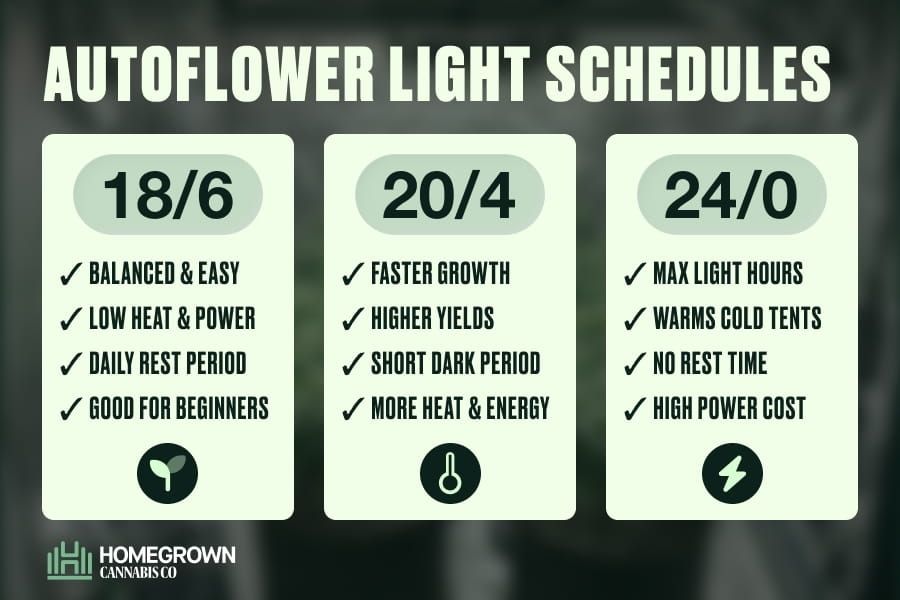
Autoflower growers choose from four main daily light schedules — 18/6, 20/4, 24/0 and 12/12 — each with different effects on growth rate, yield potential and energy use.
Here's what each one does and when to use it:
- 18/6: The most balanced schedule for most setups — strong growth, lower electricity, easier heat management.
- 20/4: A yield-focused step up for experienced growers with cooler, well-ventilated rooms.
- 24/0: Maximum light for cold environments where the fixture also serves as a heat source.
- 12/12: A necessary compromise for mixed-tent grows or tight electricity budgets.
The 18/6 Autoflower Light Schedule
The 18/6 autoflower light schedule gives plants 18 hours of light and 6 hours of darkness every day from seed to harvest. Plants run photosynthesis for 18 hours straight, then enter a dark period where they carry out metabolic recovery and stress repair. That rest window matters - it lets the plant reset before the next light cycle begins.
For most indoor setups, 18/6 hits the best balance of output and efficiency. You use 25% less electricity than 24/0, which adds up over a typical 75-to-90-day grow. Heat management is also easier because you can schedule the dark hours during the hottest part of your day.
It's the right starting point whether you're running your first grow or your fiftieth, and it's the most forgiving option if you hit a problem mid-run.
The 20/4 Autoflower Light Schedule
The 20/4 autoflower light schedule extends daily light exposure to 20 hours, pushing photosynthesis further while keeping a short 4-hour dark period.
The extra 2 hours of daily light can translate to faster vegetative development and heavier yields, but only if your environment can handle it. More light hours mean more heat output from your fixture, so cooling and airflow become more critical.
Pair 20/4 with high yield cannabis seeds to grow auto plants that are actually built to convert those extra light hours into heavier harvests. If your room runs warm at 18/6, don't step up to 20/4 until you've solved the heat first. Start with 18/6 and shift to 20/4 once your plants are thriving and your room temps are stable.
The 24/0 Autoflower Light Schedule
The 24/0 autoflower light schedule eliminates the dark period entirely, running lights continuously from seed to harvest. Plants get maximum daily photosynthesis, which can speed up growth in the right conditions. The main use case is cold grow rooms or garages in winter, where keeping the lights on all night helps maintain temperature without a separate heater.
Outside of that use case, 24/0 rarely pays off. It's the most expensive schedule to run and the one most likely to push sensitive genetics into light stress. You may see leaf tacoing (edges curling upward) or stalled growth if your plants aren't handling continuous light well. If that happens, drop to 20/4 or 18/6 and give them a dark period to recover.
The 12/12 Autoflower Light Schedule
The 12/12 autoflower light schedule gives autoflowers equal hours of light and darkness - a setup usually reserved for photoperiod plants in bloom. Autos will still flower and finish on 12/12, but yields drop noticeably. You're cutting daily photosynthesis roughly in half compared to 18/6, so buds get less energy to develop.
There are three situations where 12/12 makes sense for autos:
- First, you're growing autos alongside flowering photoperiod plants and can't separate them into different rooms.
- Second, you're in a hot climate where running lights for 18-plus hours causes your room to overheat.
- Third, electricity is expensive enough that the energy savings outweigh the yield reduction.
If none of those apply, stick to 18/6 or higher.
What Light Spectrum Do Autoflowers Need?
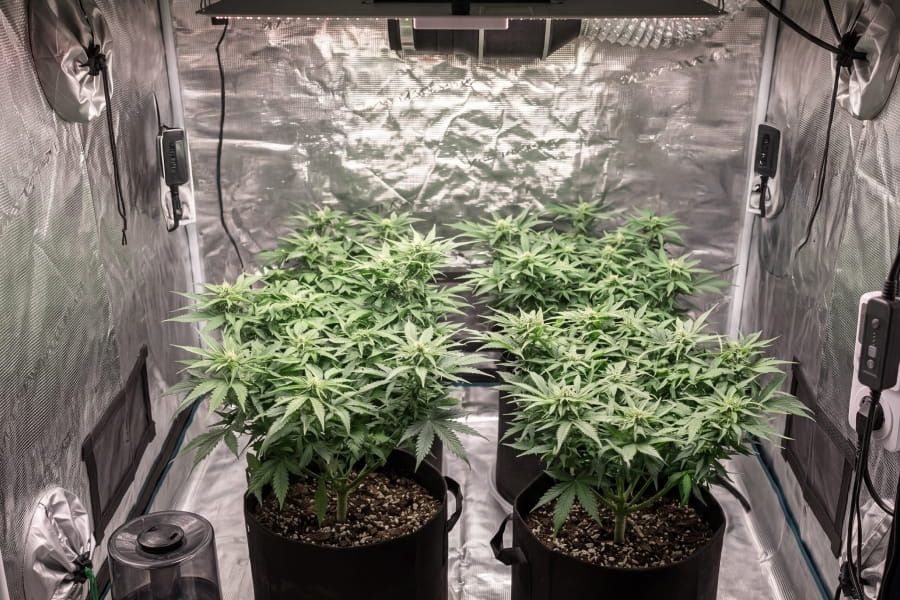
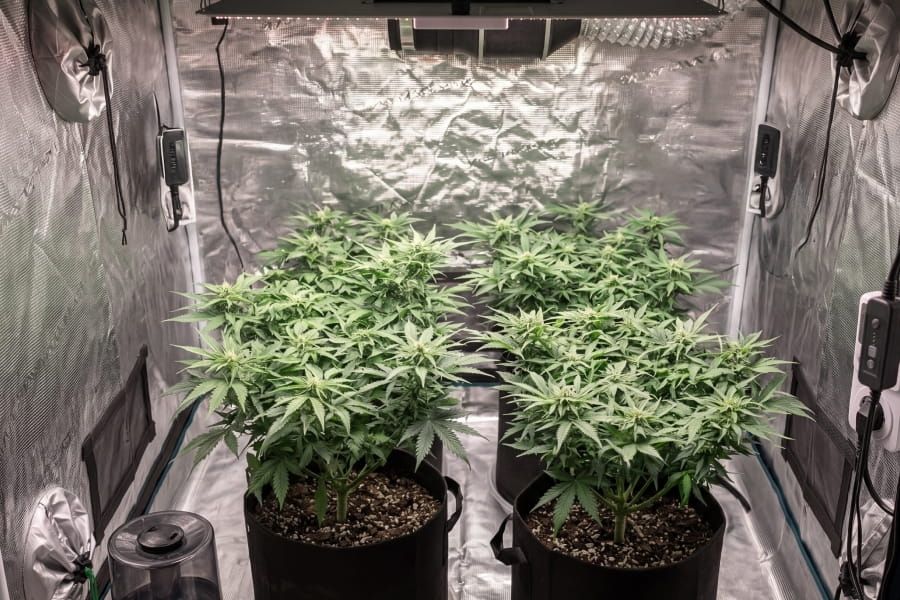
Autoflowers respond to light spectrum across their lifecycle — blue-leaning light in early veg and red-leaning light from pre-flower through harvest.
Spectrum refers to the wavelength range your grow light emits, measured in Kelvin (K) for color temperature and nanometers (nm) for specific wavelengths. This light-response principle applies to all cannabis strains from compact indicas to longer-flowering varieties.
You don't need separate fixtures for each stage if you're running a quality full-spectrum LED. Most modern full-spectrum LEDs cover the wavelengths your plants need across the whole grow, with some dimmable and spectrum-tunable models letting you adjust the ratio manually as the plant moves through lifecycle stages.
Seedling and Veg Stage Autoflower Light Spectrum
Seedlings and vegetative-stage autoflowers benefit from blue-spectrum light in the 5000-6500K range, which supports compact stem and leaf development. Blue-heavy light keeps internodal spacing tight, which builds a stronger plant structure before flowering begins.
For PPFD (Photosynthetic Photon Flux Density — the measure of how many light photons hit your canopy per second per square meter), aim for 200-400 µmol/m²/s during the seedling stage and 400-600 µmol/m²/s once the plant enters full vegetative growth.
Keep your fixture at a safe distance from young seedlings to avoid light burn. A light that's too intense too early stresses the roots and slows establishment.
Flowering Stage Autoflower Light Spectrum
Flowering autoflowers respond to red-spectrum light in the 2700-3000K range, which drives bud formation, resin development and calyx (the bud-forming floral structure at each node) density.
Adding deep red at 660 nm pushes flower development further by targeting the far-red photoreceptors that regulate flowering responses. Target a PPFD of 600-900 µmol/m²/s through mid-to-late flower.
Above about 900 µmol/m²/s, some autos show light stress symptoms — leaf tacoing, bleaching or tips turning light-colored. If you see those signs, raise your fixture a few inches or dim the output before adjusting the schedule. Light stress from intensity differs from light stress from schedule, and the fix does too.
How Autoflower Light Schedule Choice Connects to Seed Selection
Your autoflower light schedule choice connects to seed genetics because how a strain responds to 18/6 vs 20/4 depends on the vigor and stability bred into its seeds. A plant from weak, unstabilized genetics won't extract more from 20 hours of daily light than from 18 meaningfully. The extra hours sit there unused or, worse, push an already-stressed plant closer to the edge.
Stable, high-vigor autoflower genetics are built to absorb more light and convert it into growth and yield. That genetic capacity is what makes the schedule upgrade worth running.
Why Genetics Affect Autoflower Light Response
Autoflower genetics determine how efficiently plants convert daily light hours into biomass and bud. The Cannabis Ruderalis ancestry in autoflowers gives them schedule flexibility, but breeder-stabilized genetics are what maximize that flexibility.
A well-stabilized autoflower from a reputable breeder will run cleanly on 18/6 or 20/4 without the unpredictability you see in first- or second-generation crosses.
Growers who find a winning pheno from a photoperiod batch sometimes turn to cloning cannabis to preserve it across future runs.
Note that autos are very difficult to clone successfully, as the cutting is already set to flower at the same stage as the mother. The light schedule for clones also follows slightly different rules than seeds, so it's worth reviewing before you start propagating.
Choosing Autoflower Cannabis Seeds for Your Light Setup
Autoflower cannabis seeds vary in vigor, yield potential and light-use efficiency — traits that determine how much a light schedule upgrade actually moves the needle.
When you're picking seeds, match the seed's attributes to your planned schedule. A high-yield, high-vigor strain rewards the 20/4 treatment in a well-controlled room. An easy-growing, compact auto runs cleanly on 18/6 and still delivers a solid harvest.
In fact, the 18/6 schedule is the most forgiving starting point for any genetics, including beginner-friendly varieties — where a stable daily rhythm matters more than squeezing out every extra hour of light.
Explore premium marijuana seeds for sale at Homegrown Cannabis Co. to find strains with the vigor and yield potential to match your light setup. Where lawful, eligible adult buyers can find high-quality autoflowers in our catalog and among the best cannabis seeds for beginners, selected for consistency, reported yield potential and documented grow performance.
FAQs
Can You Run Autoflowers on 24/0 the Whole Grow?
Yes, you can run autoflowers on 24/0 from seed to harvest and they'll still flower and finish. Autoflowers don't need darkness to trigger bloom, so continuous light won't stall the lifecycle. The risk is plant stress over a long run.
Some phenotypes handle 24/0 with no issues. Others show leaf tacoing, slowed growth or reduced resin production after a few weeks. Watch your plants closely, and be ready to drop to 20/4 if they start to show signs of stress.
Do Autoflowers Need a Dark Period?
No, autoflowers don't strictly need a dark period to flower, but a dark period does support metabolic recovery. During darkness, plants run repair processes, regulate stress responses and prepare for the next light cycle. Most growers find that 18/6 or 20/4 produces healthier-looking plants than 24/0 over the full grow.
The 6-hour or 4-hour dark window also saves on electricity and reduces heat buildup. It's not essential, but it's usually beneficial.
What Happens If You Change the Light Schedule Mid-Grow?
Changing the light schedule mid-grow is generally safe for autoflowers because their flowering isn't triggered by the schedule. If you shift from 18/6 to 20/4 for a few more light hours, or drop back to 18/6 to manage heat, the plant adjusts without resetting its flowering clock.
Avoid frequent back-and-forth changes, which can stress the plant and slow growth. One deliberate adjustment is fine. Multiple changes in a short window can disrupt growth rhythm.
Can Autoflowers Grow in the Same Tent as Photoperiod Plants?
Yes, autoflowers can grow in the same tent as photoperiod plants, but the shared light schedule limits what you can do. If your photoperiod plants are in flower at 12/12, your autos are stuck at 12/12 too — and that means noticeably smaller yields from your autos.
If your photoperiod plants are still in veg at 18/6, your autos are fine and will flower and finish normally. The simplest solution is to give autos their own space where you control the schedule independently.
What is the Best Autoflower Seedling Light Schedule?
The best autoflower seedling light schedule is 18/6, run from the time the seedling breaks soil. Keep PPFD in the 200-400 µmol/m²/s range for the first 1-2 weeks. Seedlings don't need intense light, and too much can cause light stress before the root system is established.
Once the plant shows its second or third set of true leaves and roots have filled in, you can raise the PPFD toward the 400-600 µmol/m²/s veg range. Hold the 18/6 schedule unless you're intentionally stepping up to 20/4 after the seedling stage.