



What Is Cannabis Ruderalis? The Wild Third Type of Weed

Cannabis ruderalis is the wild, low-THC third type of cannabis, alongside indica and sativa. It grows on its own across cold northern regions and flowers by age instead of by changing daylight.
This guide explains what ruderalis is, where it grows naturally, how it compares to indica and sativa, what the plant looks like and why its genetics matter to growers. By the end you will know why you rarely buy pure ruderalis but use its traits in almost every autoflower seed pack.
What Is Cannabis Ruderalis?
Cannabis ruderalis is classified as a hardy, low-THC type of cannabis that grows wild across the Volga River region of southern Siberia and other cold parts of Russia. It is the third recognized type of the plant, sitting beside Cannabis indica and Cannabis sativa.
Ruderalis stands apart because it flowers based on its age, not on shorter days, and it survives harsh climates with little care. Most growers value ruderalis for that toughness and timing rather than for its buds.
What Does Ruderalis Mean?
Ruderalis describes a ruderal plant, one of the species that colonize recently disturbed ground such as riverbeds, roadsides and abandoned land. The name fits, the plant was first identified growing on the rubble of the Volga riverbed.
The word signals a plant that thrives where others fail. That ruderal habit explains why feral cannabis spreads along ditches and field edges without anyone planting it.
What Is the Scientific Name for Cannabis Ruderalis?
Cannabis ruderalis carries the scientific name Cannabis sativa subspecies ruderalis under most botanical classifications. Some taxonomists treat it as its own species, Cannabis ruderalis, while others fold it into a single Cannabis sativa species with several subspecies.
The disagreement comes from how closely the three types interbreed. For a grower the label matters less than the trait it points to, which is age-based flowering.
Where Does Cannabis Ruderalis Grow in the Wild?
Cannabis ruderalis grows wild across Russia, with its origins traced to the Volga River region of southern Siberia. These regions share short summers, long daylight hours and cold conditions that most cannabis cannot handle.
Wild cannabis plants there had to finish their whole cycle in a few warm weeks, so the populations that flowered fast and early survived. That pressure shaped ruderalis into the short, quick, self-flowering plant growers know today.
Why Feral Cannabis Flowers on Its Own Schedule
Feral cannabis plants flower based on age instead of changing daylight, which is the autoflowering trait. Indica and sativa wait for nights to grow longer in late summer before they start making buds.
Ruderalis could not afford that wait in a northern climate with a short season. So it evolved to begin flowering by age a few weeks after germination, continuing to grow vegetatively as it flowers, regardless of the light.
Indica vs Sativa vs Ruderalis: How the Three Types Differ
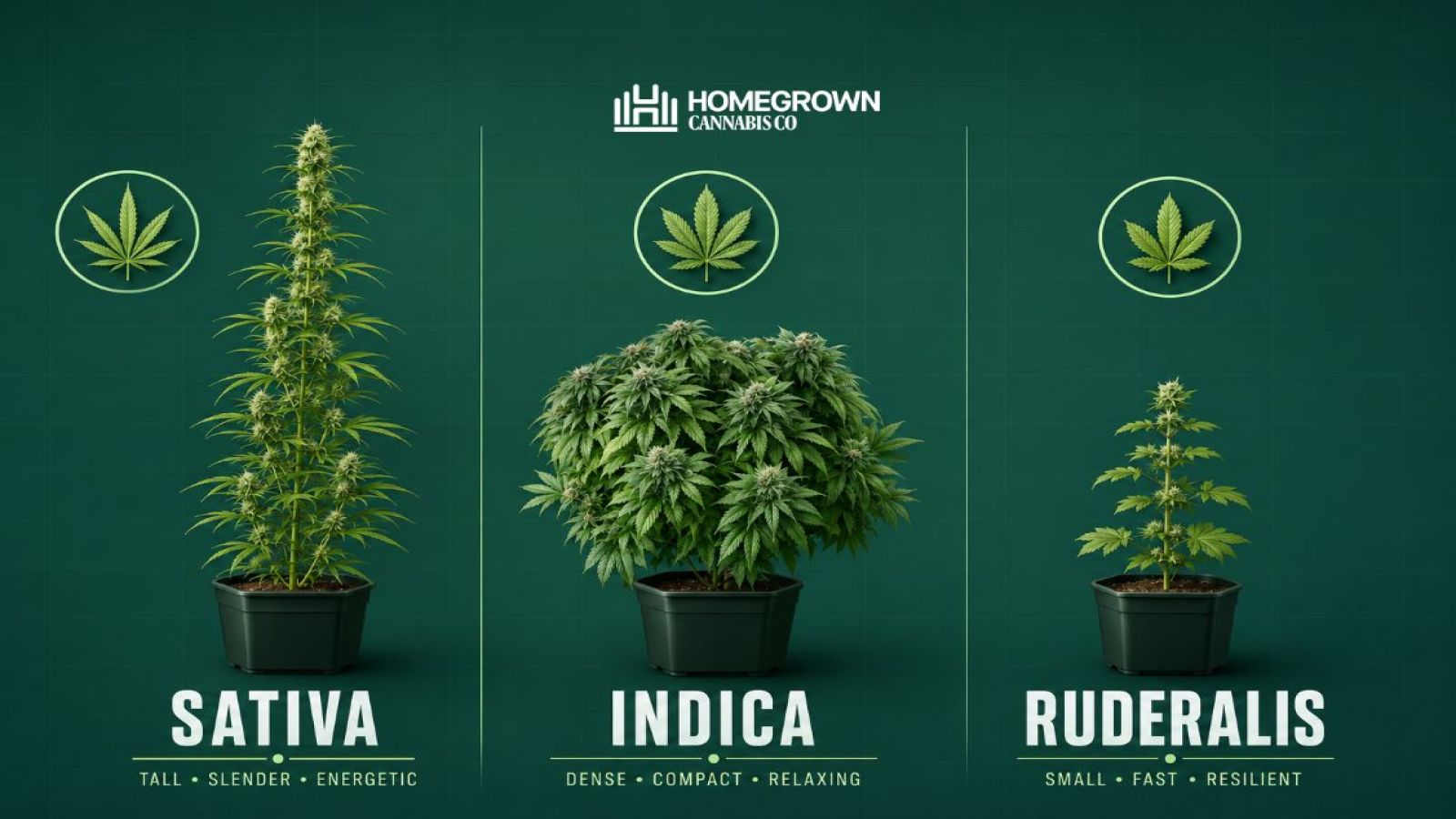
Cannabis ruderalis differs from indica and sativa in height, THC level and flowering behavior. All three belong to the same plant genus and can cross with each other, but they evolved in different climates and carry different traits.
The table below compares the attributes that matter most when you choose seeds, so you can match a type to your space, timeline and goal.
| Attribute | Cannabis indica | Cannabis sativa | Cannabis ruderalis |
| Origin climate | Cool mountain regions | Warm equatorial regions | Cold northern regions |
| Height | Short and bushy | Tall and stretchy | Very short, 1 to 3 ft (30 to 90 cm) |
| Flowering trigger | Shorter daylight | Shorter daylight | Plant age |
| Flowering speed | Medium | Slow | Fast |
| THC level | High | High | Very low |
| Typical use | Resin and yield | High | Genetics for autoflowers |
Indica and sativa supply the potency and yield most buyers want, while ruderalis supplies speed and resilience. Shoppers drawn to the compact, resin-heavy side of the comparison can explore indica seeds, and those who prefer tall, long-flowering plants can look at sativa seeds.
Ruderalis rarely stands alone as a product.
What Does a Cannabis Ruderalis Plant Look Like?
A cannabis ruderalis plant grows short and bushy, usually 1 to 3 feet (30 to 90 cm) tall, with thin stems and small buds. It looks compact and weedy next to the tall, full plants most people picture. The whole plant finishes fast and stays small enough to hide in roadside brush. Its size and quick cycle, not its looks, made ruderalis useful to breeders.
Ruderalis Leaves and Plant Structure
Ruderalis leaves tend to be smaller and broader than the long, narrow blades of most sativas. The plant builds a thin main stem with sparse branching and a loose, open shape. Wild cannabis plants of this type stay low and put little energy into bulk. That lean structure reflects the short season ruderalis evolved to beat.
Full-Grown Ruderalis Buds
Full-grown ruderalis buds stay small, loose and light compared to indica or sativa flower. The nugs form along the stem without the dense, heavy structure that high-yield plants produce. A pure ruderalis plant gives only a small harvest of these airy buds. That low yield is the main reason ruderalis is bred into hybrids rather than grown on its own.
What Are the Effects of Cannabis Ruderalis?
Cannabis ruderalis produces very low THC and higher relative CBD, so pure ruderalis causes little to no intoxicating high. THC is the compound responsible for the strong high people associate with cannabis, and ruderalis simply makes very little of it.
This is why some researchers call it "light weed." Growers who want potency over hardiness usually start with high THC seeds instead of anything ruderalis-leaning.
Are There Pure Ruderalis Strains You Can Buy?
No, pure ruderalis strains are rarely sold because their low THC and small yield limit commercial demand. The plant's value lives in its autoflowering genetics, not in its flower. Breeders almost always cross ruderalis with potent indica and sativa lines instead of selling it on its own.
Since ruderalis yields little by itself, growers chasing volume choose the highest-yielding cannabis seeds among those hybrids.
How Ruderalis Genetics Created Autoflowering Cannabis Seeds
Ruderalis genetics gave modern autoflower seeds their age-based flowering trait. Autoflowering means a plant starts to bud after a set number of weeks instead of waiting for shorter days.
Breeders crossed ruderalis with indica and sativa to create autoflowering weed seeds that finish on age, not light, while keeping the potency of the other parent. Because autoflowers skip the light-cycle switch, they rank among the most beginner-friendly weed seeds for a first grow.
Most autoflower packs also ship as feminized pot seeds, so nearly every plant turns female and produces buds. That pairing of fast flowering and predictable female plants is ruderalis's real legacy. Homegrown Cannabis Co. carries pot seeds across every type for eligible adult buyers where permitted by law.
Frequently Asked Questions
Is Ruderalis the Same as Siberian or Russian Ruderalis?
Yes, Siberian and Russian ruderalis describe the same plant by the regions where it grows wild. These names point to the cold northern habitats that shaped its fast, self-flowering habit. The genetics are ruderalis regardless of the regional label.
Does Ruderalis Get You High?
No, pure ruderalis produces too little THC to cause a meaningful high. Its higher relative CBD and very low THC make it weak in psychoactive terms. The potency in autoflower products comes from the indica or sativa parent, not the ruderalis side.
Are Ruderalis Seeds the Same as Autoflower Seeds?
Not exactly, though the terms overlap. Pure ruderalis seeds are rare and low in THC, while autoflower seeds are hybrids that carry the ruderalis autoflowering trait plus indica or sativa potency. When shoppers search for ruderalis seeds, autoflower seeds are almost always what they actually want.