



The Science of Curing Cannabis: Why Atmospheric Control Matters More Than Storage
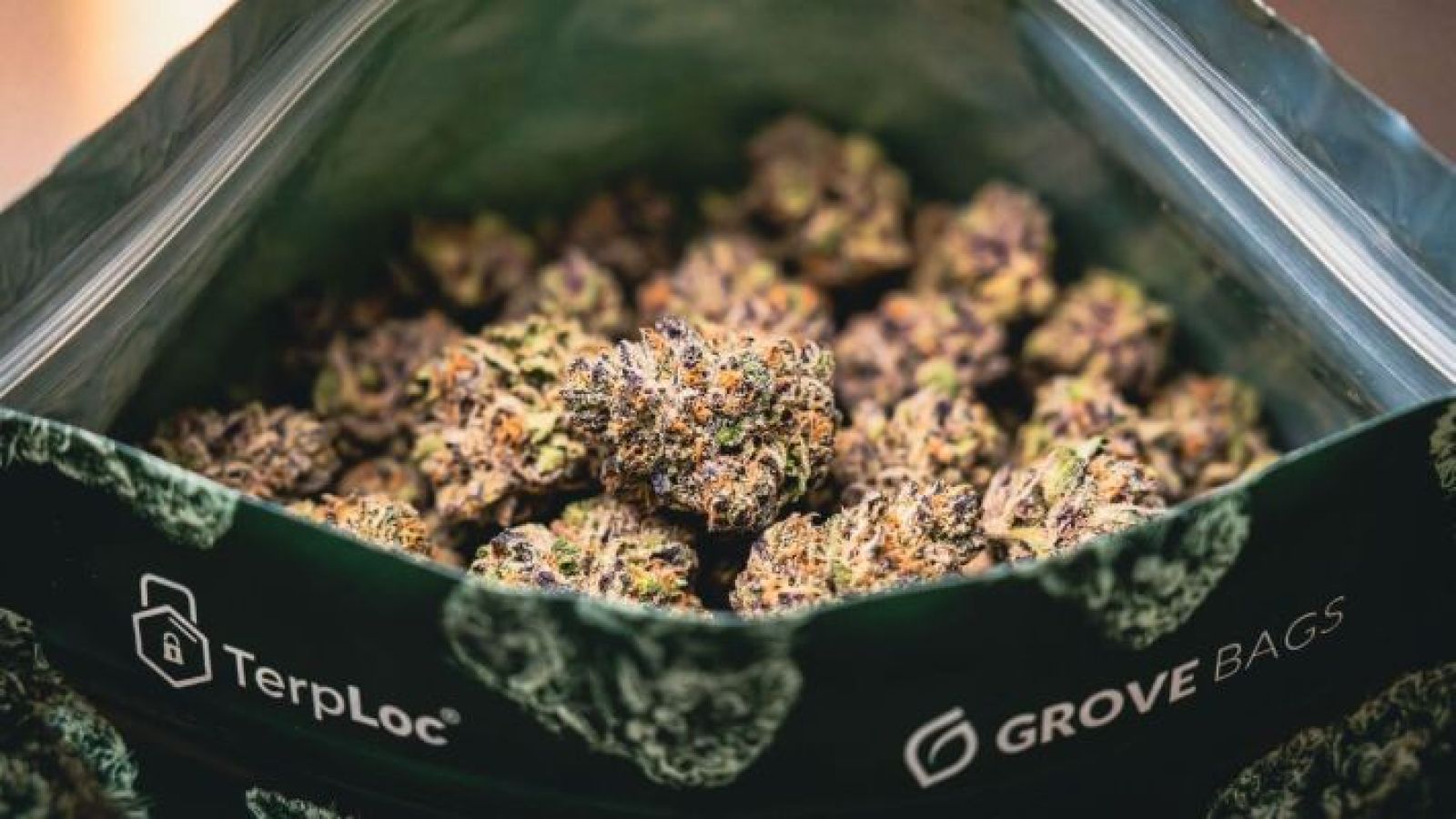
Most growers understand that curing cannabis matters. Fewer understand the biochemistry behind it, and that gap is where quality gets lost.
Curing is not the final step before storage. It is a biological process with specific environmental requirements, and the container you choose either supports that process or works against it. The difference shows up in potency, aroma, smoothness, and shelf life: everything that separates good flower from great flower.
It takes the right elements to grow good cannabis, from starting with great cannabis seeds to ending with a strong harvest, dry and cure. This piece breaks down the science behind the cannabis curing process, explains why conventional methods fall short, and shows how atmospheric control changes the equation.
Why "Storage" Is the Wrong Framework for Curing
The word "storage" implies a passive action: you put something away, and it stays the same until you come back for it. That model might work for grains or dried herbs, but it misrepresents what happens to cannabis after harvest. Curing cannabis is not the preservation of a finished product. Curing is the continuation of a biological process.
After drying cannabis, the plant is still biochemically active. Chlorophyll continues to break down. Residual moisture redistributes throughout the flower. Enzymes work through remaining plant material, converting precursors into the terpenes and cannabinoids that define potency, aroma, and smoothness.
Properly drying and curing cannabis creates the conditions for this process to complete, but only if the environment supports it consistently.
The environment around your cannabis plants is not a neutral backdrop. It is an active variable. Too much moisture and microbial activity become a threat. Too little and the cannabis buds desiccate, terpenes volatilize, and the cure stalls. The window for optimal curing is narrow, and passive containers do nothing to maintain it.
Atmospheric control addresses this directly. Rather than placing freshly harvested flower in an environment and hoping conditions hold, active curing means the container itself participates in maintaining the microclimate the flower requires.
The Problem with Passive Preservation
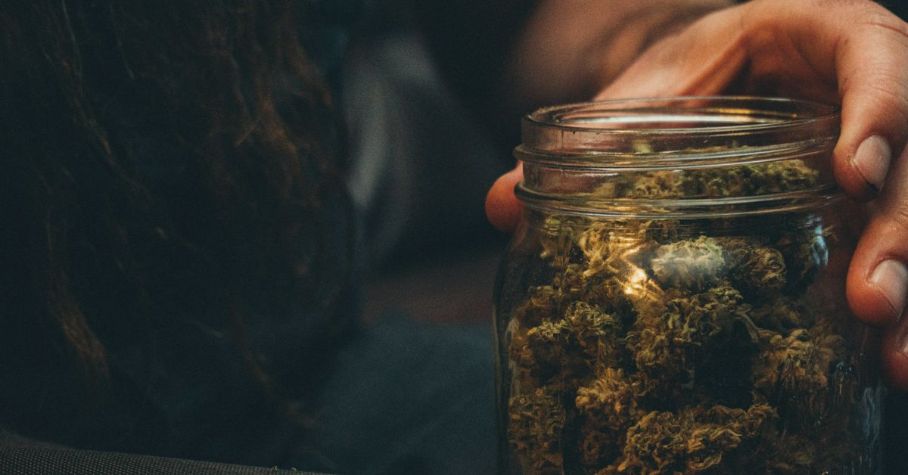
When curing cannabis, most containers share a fundamental limitation: they hold flower, but they do not interact with it. They create a sealed or semi-sealed space and leave the internal atmosphere entirely up to chance. Temperature and humidity levels fluctuate without correction, and the cannabis flower responds to every one of those changes.
Passive preservation assumes that vacuum sealing something away is enough to protect it. For cannabis cultivation, it is not. The biological activity happening inside a curing container requires stable, specific conditions that no passive vessel can reliably provide. What you get instead is an environment that drifts, and flower quality that drifts with it.
Mason jars, mylar bags, and turkey bags are the three most common options for storing cannabis, and each comes with its own failure points.
Mason Jars: Labor-Intensive and Unstable
Mason jars became the default method for curing cannabis because they were available, airtight, and inexpensive. For small personal grows, they function adequately, but that adequacy comes with significant conditions attached.
The core problem with curing jars is manual dependency. Burping (opening the jar to release built-up gases and introduce fresh air) must happen daily during early curing, then regularly for weeks afterward. Miss a session and humidity levels spike, creating conditions where it becomes difficult to prevent mold from taking hold.
Glass mason jars also scale poorly. A larger harvest means dozens of containers, each requiring individual attention. Because glass provides no humidity control on its own, growers typically add humidity packs to compensate, which is an acknowledgment that the container alone is insufficient.
Mylar Bags: No Airflow, No Control
Mylar bags are common for storing cannabis long-term because they block light and maintain a relatively airtight seal. Those same properties make them poorly suited for curing cannabis, where gas exchange and monitoring humidity are critical.
Without a mechanism for oxygen exchange, mylar bags trap the gases produced during biological breakdown. Terpenes degrade in this stagnant environment, and without humidity control, moisture levels depend entirely on how well the drying process was executed beforehand. This variable is difficult to control with precision.
When storing weed, Mylar becomes a solution applied to a curing problem. The two processes have different requirements, and a container optimized for one will consistently underperform at the other.
Turkey Bags: Not Engineered for Cannabis
Turkey bags are breathable, inexpensive, and widely available, which explains their presence in commercial grows. Breathability without control is not an advantage. It means the internal atmosphere simply tracks the external one.
In a tightly controlled drying environment, that might be acceptable. In a real-world grow space where humidity and temperature levels shift throughout the day, turkey bags provide almost no protection against the conditions that degrade cannabis flower. Terpenes volatilize, excess moisture escapes unevenly, and the cure becomes inconsistent.
They were designed for food preparation. Cannabis plants have specific atmospheric needs that turkey bags were never engineered to meet.
What Is Auto-Curing?
The cannabis curing process has traditionally demanded consistent attention and a controlled environment. Auto-curing shifts that responsibility from the cannabis grower to the container, using Modified Atmospheric Packaging to maintain the conditions cannabis flower needs without manual intervention.
Modified Atmospheric Packaging (MAP) is a technology used across food science and pharmaceutical preservation to extend shelf life and long-term storage stability by actively managing the gases surrounding a product.
Rather than sealing something in a static environment, MAP materials interact with the internal atmosphere, absorbing, releasing, or exchanging gases to keep conditions within a defined target range.
Applied to curing cannabis properly, the principle is the same.
The container does not just hold flower, it responds to it. As biological activity produces gases and moisture shifts, the packaging material works to restore balance. The result is a stable microclimate that persists without burping, without humidity packs, and without daily monitoring.
This is the functional difference between auto-curing and passive preservation. The container becomes an active participant in the process. For experienced growers who need consistent, repeatable results across harvests, that distinction is the difference between managing a cure and trusting one.
Inside Grove Bags TerpLoc® Technology
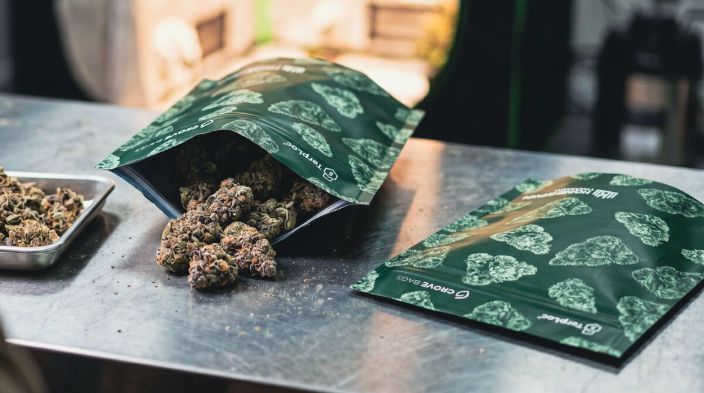
TerpLoc® is Grove Bags' implementation of Modified Atmospheric Packaging, engineered specifically for cannabis. Where generic MAP materials are designed around broad preservation goals, TerpLoc® is built around the precise conditions that protect terpene profiles, cannabinoid stability, and cannabis flower structure through the full curing cycle.
The technology operates through three integrated mechanisms: a controlled microclimate, an anti-static layer, and a regulated oxygen exchange system. Each addresses a specific failure point that passive containers leave unmanaged.
The Microclimate
TerpLoc® maintains internal relative humidity levels within the 58–62% range that supports active curing without creating conditions favorable to mold or microbial growth. This happens through the material itself, not through added humidity control packs or external tools.
That range is not arbitrary. Below 55% RH, terpenes begin to volatilize, and dried buds become brittle. Above 65%, the risk of mold and anaerobic bacteria increases significantly.
The 58–62% relative humidity level is where biological breakdown continues productively, enzyme activity completes, and the cure stabilizes without degradation. Maintaining stable humidity levels within this window is what separates a properly cured cannabis crop from one that degrades in the jar.
The Anti-Static Layer
Cannabis trichomes carry a slight electrostatic charge, which causes them to adhere to the interior surfaces of most containers. In curing jars and standard plastic bags, this means measurable trichome loss each time trimmed buds are handled or shifted inside the packaging.
Grove Bags include an anti-static layer that neutralizes this charge, keeping trichomes on the flower where they belong. For growers focused on preserving both potency and appearance, this is a detail with real cumulative impact.
Oxygen Exchange
Unlike sealed containers that trap internal gases, Grove Bags allow for regulated oxygen exchange through the material. This prevents the internal atmosphere from becoming stagnant while avoiding the over-oxygenation that accelerates terpene degradation in dried buds.
The exchange rate is calibrated to support biological curing activity without introducing the oxidative stress that degrades cannabinoids. It functions as the structural equivalent of burping a jar, continuous, automatic, and precise, providing the gentle air movement the curing process requires without manual input.
Why Stable Atmospheres Protect Terpenes
Terpenes are among the most volatile compounds in cannabis. They define aroma, flavor, and a significant portion of the entourage effect. They are also the first compounds to degrade when humidity and temperature levels are inconsistent.
Most terpenes are lightweight hydrocarbon molecules that evaporate readily at room temperature. An unstable atmosphere does not just slow cannabis curing; it actively strips the flower of the compounds that determine its value.
Proper humidity control slows terpene loss through two mechanisms. First, it reduces the vapor pressure gradient between the flower and the surrounding air, slowing evaporation at the molecular level. Second, it keeps the outer structure of dried cannabis buds intact, maintaining the physical barrier that holds volatile compounds in place.
Over drying is a compounding problem. Cannabis buds that lose too much moisture too fast retain a degraded terpene profile that the curing process cannot recover. Monitoring humidity throughout the drying and curing process is how growers catch this before it becomes irreversible.
Oxygen, Light, and Heat: The Degradation Triad
Oxidation converts both terpenes and cannabinoids into less active compounds over time. Regulating oxygen exchange inside the curing environment limits this degradation without eliminating the airflow the biological process still requires.
Light exposure accelerates cannabinoid breakdown. UV light in particular degrades THC faster than almost any other environmental factor. A consistently dark environment is a baseline requirement from the moment the drying process ends.
Excessive heat compounds both problems, accelerating oxidation and terpene volatilization simultaneously. Lower temperatures and a dark environment are not optional variables in proper curing — they are fixed requirements.
Every hour in an unstable environment is an hour of preventable loss. Cannabis flower cured in a stable atmosphere retains its profile from harvest through consumption, not because quality was added, but because the conditions for degradation were never established.
The Grove Bag Protocol: Preparing Flower for TerpLoc®
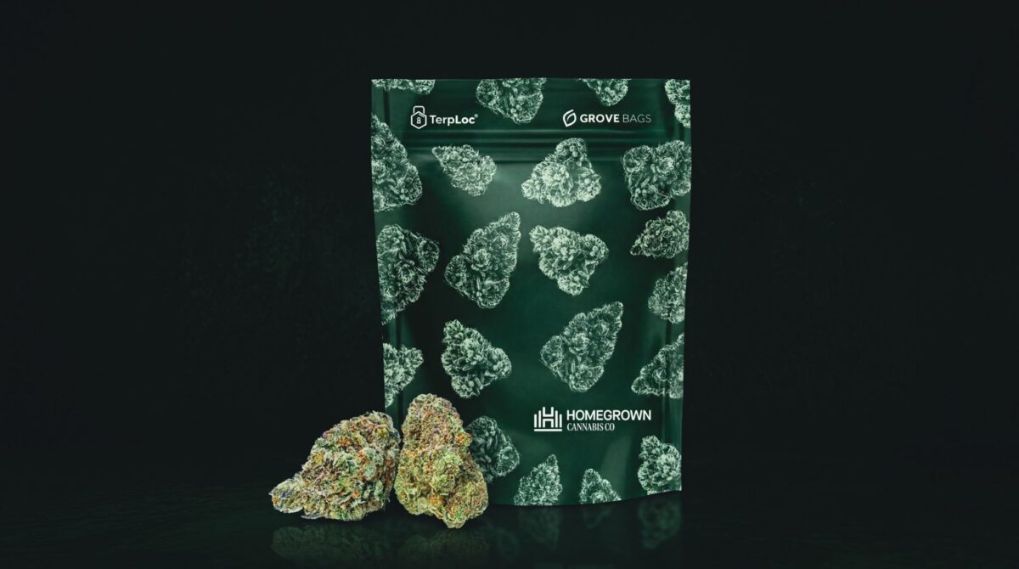
Properly dried cannabis flower requires controlled moisture levels before sealing for effective curing.
Dry to 10–12% Moisture Content Before Sealing
This is the target range where the cannabis curing process can continue inside the bag without generating excess moisture that pushes past the 62% RH ceiling.
The curing process begins the moment the bag is sealed, which means what goes in must be within this window. Improper drying in either direction is the most common reason cures fail. Flower above this range overwhelm the material's moisture management capacity. Below it, the cure has already stalled.
A calibrated hygrometer is the most reliable way to confirm how much moisture remains before sealing. Tactile assessment is inconsistent and experience-dependent. For repeatable results across harvests, measurement is not optional.
A proper drying room setup (controlled temperature, a drying rack with adequate airflow, and a slow drying process) is what sets the correct moisture content before the bag is sealed. Properly drying cannabis in a stable drying environment, with attention to dry trimming and consistent airflow, is what gives TerpLoc® the conditions it needs to work.
Leave 25% Headspace Inside the Bag
Headspace is not unused space. It is part of the atmospheric system. The air volume inside the bag contributes directly to the oxygen exchange and humidity control that TerpLoc® manages.
Overpacking compresses the flower, damages trichomes, and reduces the material's ability to regulate conditions effectively. Check buds regularly after sealing during the first week to confirm the microclimate is stabilizing as expected.
Heat Seal Completely
A partial or weak seal introduces uncontrolled airflow that bypasses the regulated exchange built into the material. Once sealed, the internal atmosphere becomes a closed system that TerpLoc® actively manages. Any breach reintroduces the environmental variability the protocol is designed to eliminate.
Control vs. Guesswork
Every passive curing method places the full burden of environmental maintenance on the grower. Burping schedules, humidity packs, manually drying and curing cannabis weed by feel. These are workarounds for containers that were never designed for the job.
Active atmospheric control does not simplify curing cannabis by removing the science. It makes the cannabis curing process more reliable by embedding the science into the container. The biological process still runs on its own timeline. What changes is the consistency of the environment surrounding it.
In practice, that means:
- No daily burping or manual humidity management
- Trichome preservation through the full curing and long-term storage cycle
- Stable relative humidity maintained within the range that protects terpene profiles
- Repeatable results across harvests without environment-dependent variables
- Properly cured cannabis from seal to consumption
TerpLoc® does not create quality. The genetics, the grow, and the drying and curing process determine what goes into the bag. What the technology does is protect what is already there precisely, consistently, and without guesswork.
For cannabis enthusiasts and growers producing at a level where quality is the standard, atmospheric control is not an upgrade. It is the correct tool for the job.