



A Guide to Feminized vs Autoflower Seeds: Which is Right for You?

The choice between feminized vs autoflower seeds shapes everything — your timeline, your setup and your harvest. Both cannabis seed types produce quality buds, but they work differently and suit different growers. This guide breaks down the key differences between feminized and autoflower seeds based on:
- Light dependency
- Timeline
- Yield
- Plant size
- Cloning
- Beginner suitability
By the end, you'll know exactly which seed type suits your setup so you can start your next grow with confidence.
What Are Feminized Cannabis Seeds?
Feminized cannabis seeds are bred to produce only female plants, eliminating the risk of male plants pollinating your crop. Female plants are the ones that develop the dense, resin-rich buds you're growing for. Without feminized genetics, roughly half your seeds could grow into males - and males don't produce buds.
“Feminized” is used interchangeably to refer to photoperiod plants.
Photoperiod means they flower in response to light cycles, not age. Indoors, you keep them in the vegetative stage - the growth phase - under 18 or more hours of light per day.
When you're ready for them to flower, you switch to a 12/12 cycle: 12 hours of light and 12 hours of darkness. That shift triggers bud production. Outdoors, natural shortening days do the same job as the season turns.
If you’re growing indoors, this light dependency gives you real control. You decide when your plants flower, which means you decide how big they get before they do.
What Are Autoflower Seeds?
Autoflower cannabis seeds flower based on age, not light. They transition from vegetative growth to flowering automatically — typically around weeks 3 to 5 after germination — regardless of how many hours of light they receive.
This trait comes from Cannabis Ruderalis, a subspecies first found growing wild in the Volga River region of the Russian Ural Mountains, where short growing seasons drove adaptation to reproduce quickly without relying on seasonal light changes.
Because autoflowers don't need a light-schedule change to flower, the grow process is simpler. You can keep them under a consistent 18 to 24 hours of light from seed to harvest. You don't manage a photoperiod trigger - the plant handles it on its own.
Autoflowers stay compact, finish fast and tolerate a wider range of conditions than photoperiod plants. That combination makes them one of the most accessible options available, especially for growers working with limited space or time.
Feminized vs Autoflower Seeds: The Key Differences
Feminized seeds and autoflower seeds differ across four core attributes: how they flower, how long they take, how much they yield and how big they grow. Below, you’ll see how each attribute affects your purchase decision directly.
- Light and flowering - how each type triggers bud production.
- Growth timeline - seed-to-harvest speed for each type.
- Yield expectations - what you can realistically expect per plant.
- Plant size and structure - how each type fits your grow space.
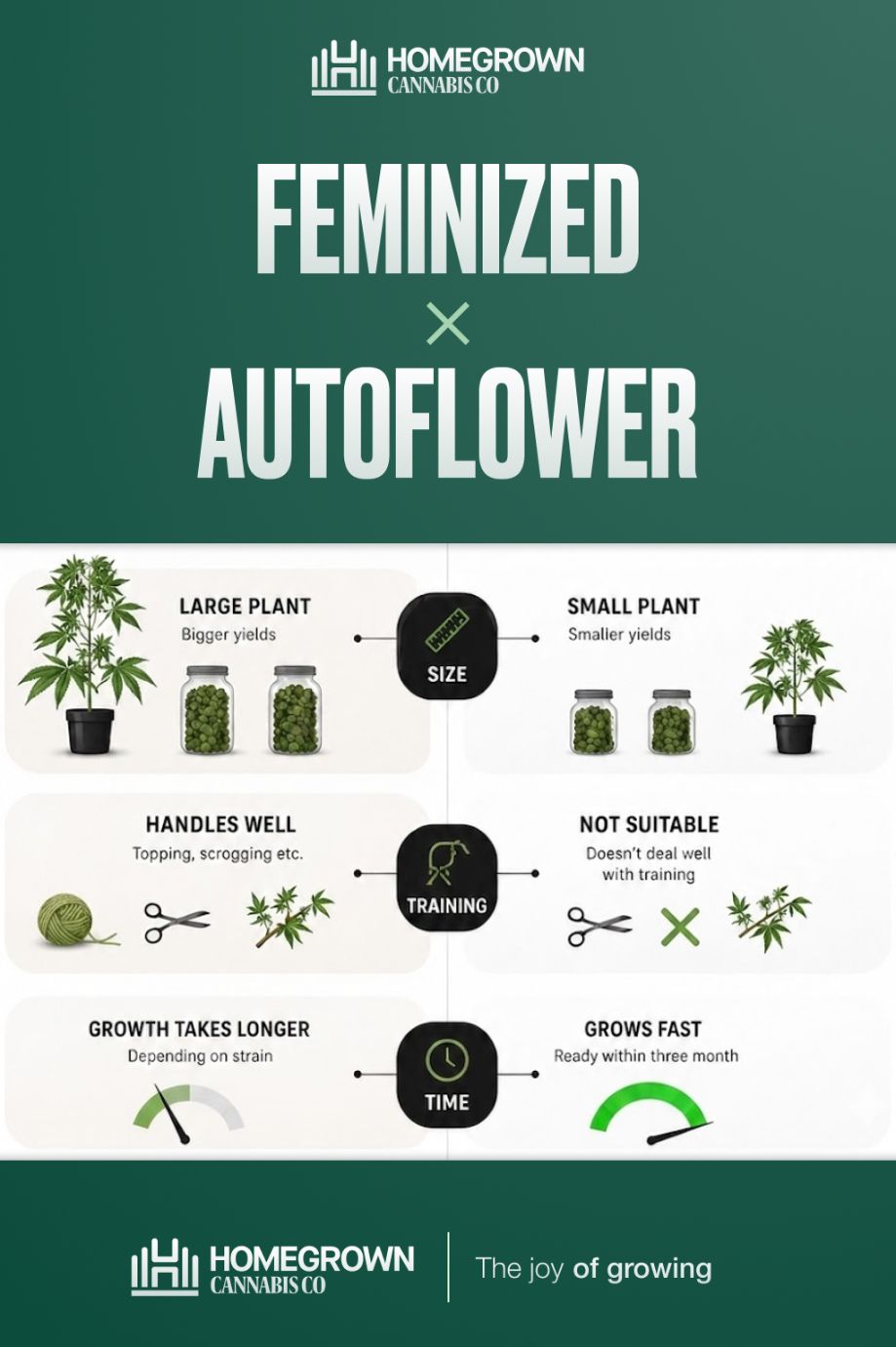
Feminized vs Autoflower Seeds: Light and Flowering
Feminized cannabis seeds require a photoperiod shift to begin flowering. Indoors, that means flipping your lights to a 12/12 schedule — 12 hours on, 12 hours off. The extended darkness signals the plant that the season is changing and it's time to produce buds. Outdoors, this happens naturally as summer days shorten.
Autoflower seeds don't need a light flip. They flower on an internal clock tied to age, not the hours of darkness they receive. You can run them on a steady 18/6 or 20/4 schedule from start to finish, indoors or out. That simplicity is the autoflower's biggest practical advantage for most growers.
Autoflower vs Feminized Seeds: Growth Timeline
Autoflower seeds typically move from seed to harvest in 8 to 11 weeks, though some varieties can run to 13 or 14 weeks. That speed lets you fit multiple harvests into a single outdoor season or run back-to-back indoor cycles without long waits between them.
Feminized seeds take longer because the vegetative stage is under your control. A typical indoor grow runs 4 to 8 weeks of vegetative growth followed by 8 to 12 weeks of flowering, depending on the genetics. That's a total of 3 to 5 months from seed to harvest. Outdoors, photoperiod plants can run from late spring through fall — sometimes longer in warm climates.
The tradeoff is control versus speed. Feminized seeds take more time, but that time builds plant size and yield potential.
Autoflower vs Feminized Yield: What to Expect
Feminized cannabis seeds produce larger per-plant yields than autoflower seeds under optimal conditions. A longer vegetative stage lets feminized plants develop a bigger root system, more branching and more bud sites before they ever flower.
Indoor feminized plants can yield several hundred grams per plant with proper technique, and outdoor plants can exceed that significantly.
Autoflower plants yield less per plant because their compressed lifecycle limits vegetative development. Most indoor autoflowers produce around 50-150 grams per plant, though well-dialed-in grows with modern genetics can push higher.
But the yield gap narrows when you factor in multiple autoflower harvests per season compared to a single photoperiod run. If total volume from one plant matters most to you, feminized seeds win. If speed and cycle frequency matter more, autoflowers hold their own.
Plant Size and Structure
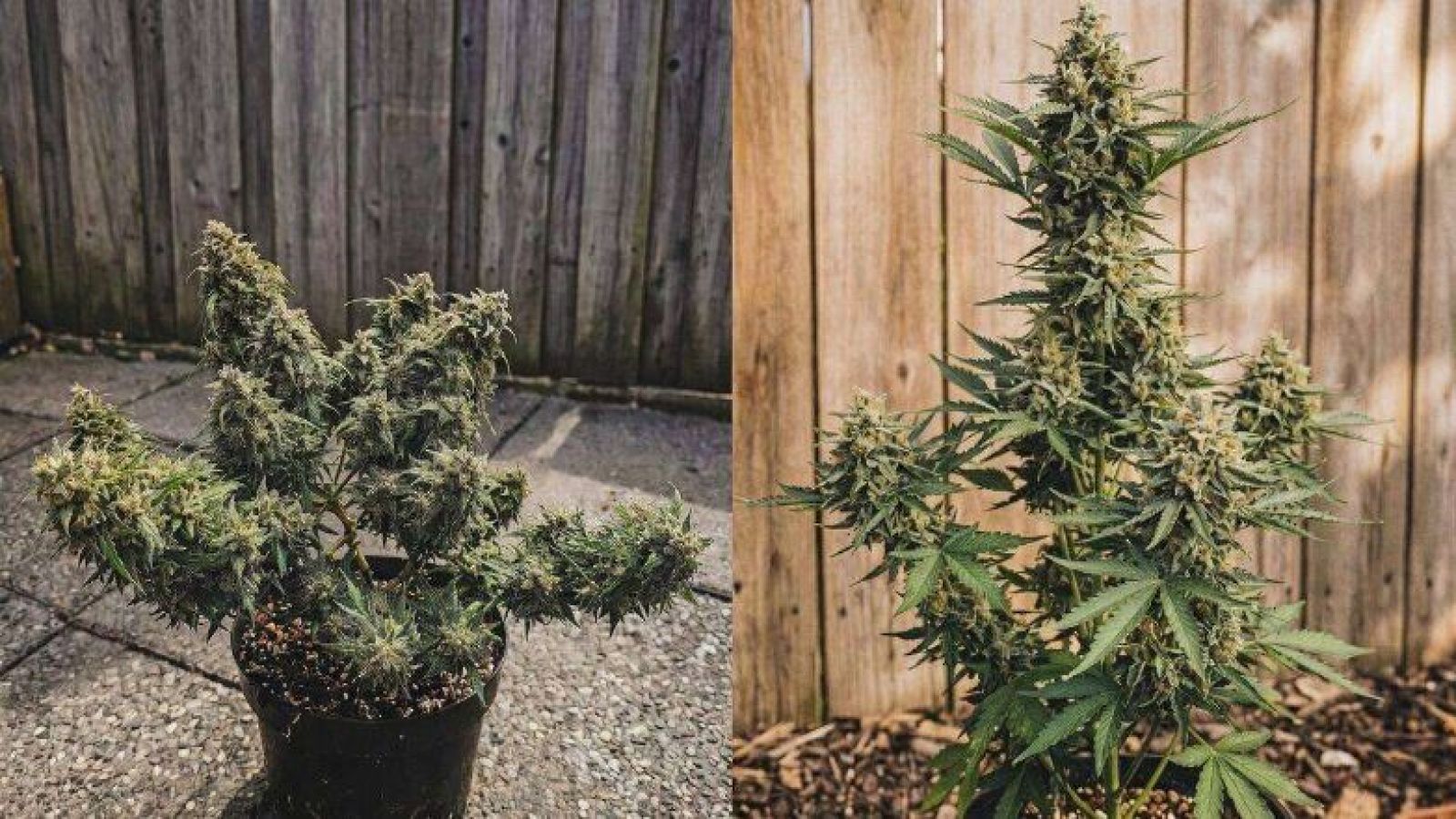
Feminized plants develop taller, branchy structures because their vegetative stage isn't time-limited. Left unchecked, they can grow several feet indoors and reach tree-like proportions outdoors. That size supports heavy yields but demands more space, more training and more management.
Autoflower plants stay compact. Most top out around 60-100 centimeters (roughly 2-3 feet) indoors. Their small footprint makes them easy to manage in tents, closets or any grow space where height is limited. They don't require heavy training or pruning and typically perform well without much structural intervention.
Feminized Seeds vs Autoflower: Pros and Cons
Feminized vs autoflowering seed types carry distinct advantages that fit different grower profiles. Here's a direct comparison across the attributes that matter most:
| Attribute | Feminized Seeds | Autoflower Seeds |
| Flowering trigger | Photoperiod (light cycle change) | Age-based (automatic) |
| Seed-to-harvest time | 3–5 months (typical) | 8–11 weeks (typical) |
| Per-plant yield | Higher | Lower per plant |
| Plant height | Taller (controllable) | Compact |
| Light schedule management | Required | Not required |
| Cloning | Yes | Not practical |
| Beginner-friendly | Moderate | High |
| Multiple harvests per season | Limited (usually 1 outdoors) | Yes (2–3 outdoors possible) |
| Training options | Full range (topping, LST, SCROG) | Low-stress training only |
Pick feminized seeds when your priority is maximum yield per plant, long-term genetic preservation through cloning or the ability to train and shape plants over an extended vegetative period.
Pick autoflower seeds when your priority is speed, simplicity and the ability to run multiple harvests in the same time a photoperiod plant completes one cycle.
Are Autoflower Seeds Less Potent Than Feminized Seeds?
No, modern autoflower seeds produce potency levels that match many feminized varieties available today. Early autoflower genetics from the 2000s carried lower THC levels, which gave autos a reputation for being less potent. That reputation is outdated.
Selective breeding over the past decade has introduced high-potency ruderalis crosses that rival their photoperiod counterparts. Many current autoflower strains test above 20% THC. Potency now depends on the specific strain and genetics, not whether the seed is an autoflower or a photoperiod plant.
If you're comparing two specific strains - one auto, one feminized - look at the reported cannabinoid profile for each rather than assuming seed type predicts potency.
Can You Clone Feminized Seeds? What About Autoflowers?
Yes, feminized cannabis seeds produce mother plants that support cloning where cultivation is lawful. A clone is a cutting taken from a healthy female plant and rooted to create a genetically identical copy. Cloning lets you preserve elite genetics indefinitely, replicate a high-performing plant and skip the germination stage on future grows.
For growers who want consistency across multiple cycles, cloning from a high-quality feminized mother plant is a reliable strategy. At Homegrown Cannabis Co., can also buy ready-to-veg cannabis clones as an alternative starting point to seed germination entirely.
Autoflower plants aren't practical to clone. Because autoflowers flower based on age rather than light, a clone taken from an autoflower carries the same internal clock as its mother.
It'll start flowering almost immediately after rooting, leaving little time for vegetative development. The result is a tiny plant with minimal yield. Most growers start fresh from autoflower seeds each cycle rather than attempting to clone them.
Feminized vs Autoflower: Which Seed Type is Better for Beginners?
Autoflower seeds offer the simpler grow path for first-time buyers. They don't require light-schedule management, they stay small, they finish quickly and they tolerate a wider range of growing mistakes than photoperiod plants do.
You don't have to track a specific flowering trigger or manage a large plant through months of vegetative growth. That lower management load makes autoflowers an accessible starting point.
Feminized seeds ask more of you. You'll need to manage light cycles, watch for signs of stress during a longer vegetative period and make decisions about training and timing. That said, feminized photoperiod plants are more forgiving of setbacks because their longer lifecycle gives them time to recover.
A mistake that derails an autoflower - like overwatering or transplant shock - can be corrected in a feminized plant before it affects the final harvest.
If you're just getting started and want a low-fuss first grow, autoflowers are the practical pick. If you want to develop your skills over a longer grow with a higher ceiling for yield, feminized seeds are worth the extra attention.
Browse our range of marijuana seeds for beginners if you want curated options matched to beginner-friendly grow requirements. And of course, always check federal, state and local rules before starting any home cultivation project.
Feminized and Autoflower Seeds for Indoor and Outdoor Grows
Both feminized and autoflower seeds perform well in indoor and outdoor environments, but each type suits different grow conditions in distinct ways.
Indoor Grows
Autoflowers thrive on a consistent light schedule from start to finish, anywhere from 18/6 through to near-continuous light. They don't need a separate flowering room or a light cycle change, which simplifies a single-tent setup. Feminized plants give you more control — you can dial in an extended vegetative period to maximize plant size before flipping to flower.
Outdoor Grows
Autoflowers offer flexibility that photoperiod plants can't match. Because they're not tied to seasonal light changes, you can start autoflowers earlier in the season and run 2 or 3 full cycles before the first frost.
Feminized outdoor plants follow the natural calendar, typically flowering as summer days shorten and harvesting in fall. They produce larger plants with bigger yields per plant, but you're committed to one main harvest cycle per year. Your grow environment, available space and preferred schedule all point toward one type or the other. There's no wrong answer - it's about which fit is right for your situation.
How Feminized and Autoflower Seeds Compare to Regular Seeds
Regular seeds produce a roughly 50/50 ratio of male and female plants, unlike feminized or autoflower seeds, which are bred to produce female plants reliably. That ratio creates extra work: you need to identify and remove male plants before they release pollen and seed your crop. Most growers focused on bud production don't want that variable in their grow.
Regular seeds aren't obsolete, though. Breeders use them to create new crosses and preserve genetic diversity. Growers interested in producing their own seeds or experimenting with breeding also work with regular genetics.
But for eligible adult buyers focused on a clean harvest of sinsemilla - seedless cannabis buds - feminized seeds remain the standard starting point.
If you're comparing all three seed types and want to explore your full range of options, the weed seeds you’ll find at Homegrown Cannabis Co. cover feminized, autoflower and regular genetics across indica, sativa, and hybrid strains.
FAQs
What is the Difference Between Autoflower and Feminized Seeds?
Feminized seeds are photoperiod plants that flower after a change to a 12/12 light cycle. They typically grow larger, produce higher yields per plant, and require more control over the light schedule. Autoflower seeds flower automatically based on age, finish faster, stay more compact, and do not require light-cycle changes to begin flowering.
Are Autoflower Seeds Feminized?
Autoflower seeds can be feminized or regular (unfeminized). Most autoflower seeds sold today are feminized autoflowers, meaning they're bred to produce only female plants and to flower automatically based on age. "Autoflower" refers to the flowering trigger; "feminized" refers to the sex of the plant. The two traits are independent and can be combined in a single seed.
Which Produces More Yield - Autoflower or Feminized Seeds?
Feminized seeds produce higher per-plant yields than autoflowers. Their extended vegetative stage builds more plant mass and more bud sites before flowering begins. Autoflowers yield less per plant but compensate with faster cycles, making multiple harvests per season possible in the same time a feminized plant completes one cycle.
Can You Grow Autoflower and Feminized Seeds Together?
Yes - you can grow both types in the same space, but it's easier outdoors than indoors. Outdoors, each type follows its own timeline without conflicting with the other. Indoors, the challenge is light schedules: autoflowers run on 18 to 24 hours of light throughout their life, while feminized plants need a switch to 12/12 to flower.
Running a mixed tent means either keeping autoflowers under a suboptimal flowering schedule or keeping feminized plants from reaching their full vegetative potential. Most growers run each type in separate spaces or separate cycles to get the best results from both.